Did you know that the eastern phoebe was the first bird to be banded, meaning when a band was tied around its leg for tracking?
Eastern Phoebes at a Glance
Key Features:
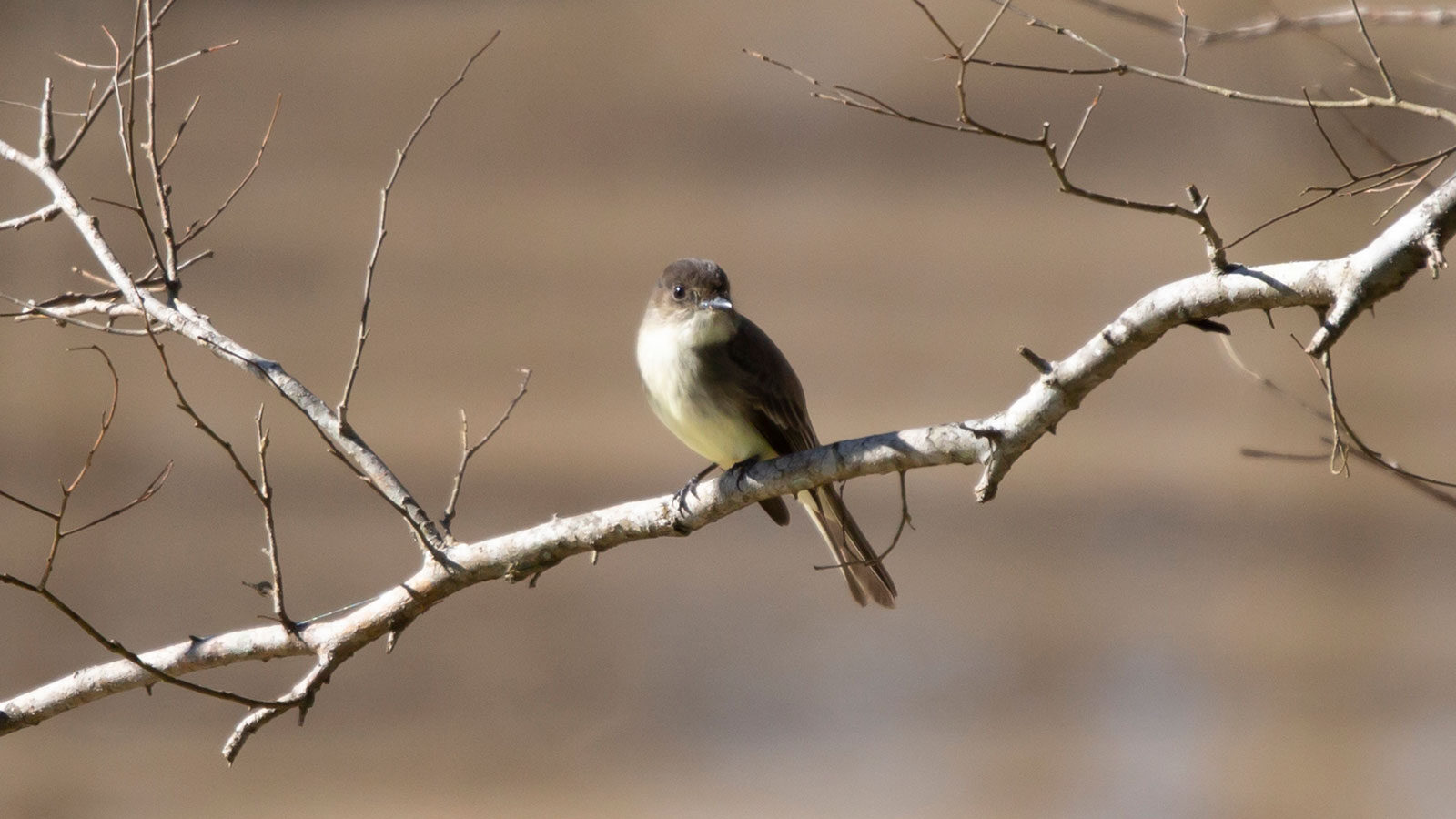
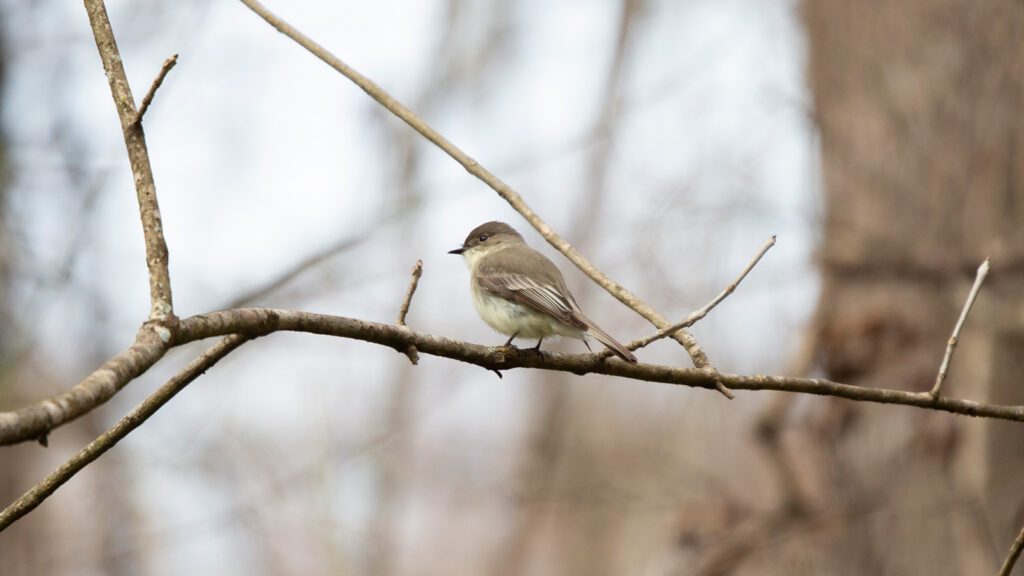
Eastern phoebes are plump brownish-gray birds with white throats, chests, and bellies.
Least Concern - Population Increasing
Habitat:
Open forests suburbs, and farmland near water
nesting habits:
Eastern phoebes build cup-shaped nests in niches and under overhangs out of grass, stems, hair, leaves, moss, mud, and stems.
seasons eastern phoebes are active in our area:
All year
Diet:
Flying insects, millipedes, spiders, ticks, fruit, and seeds
hunting Behavior:
Eastern phoebes forage by catching insects out of the air and and hovering to pick insects and seeds from leaves. Eastern phoebes also perch in shrubbery to eat fruit.
Commonly Confused With:
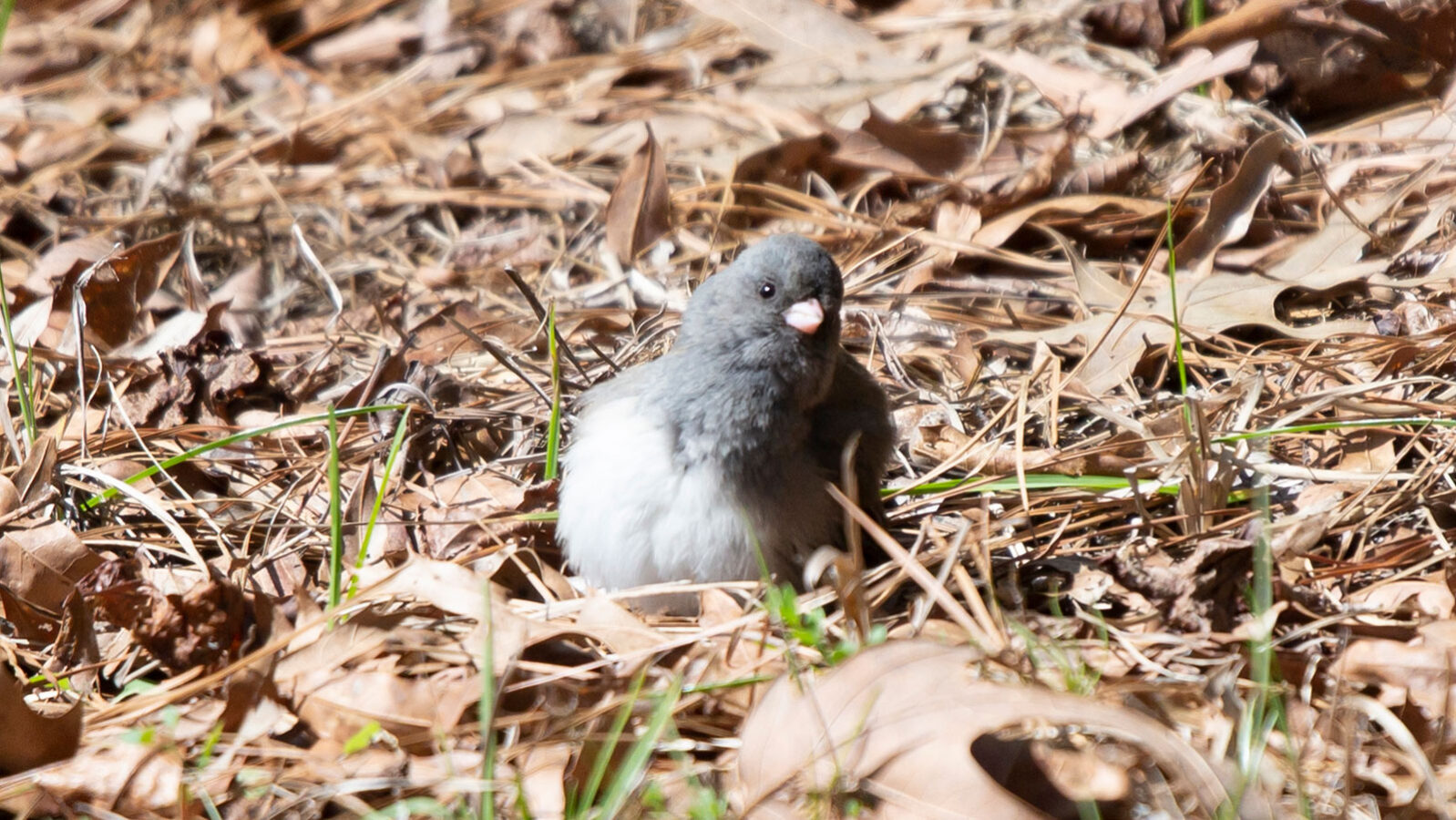
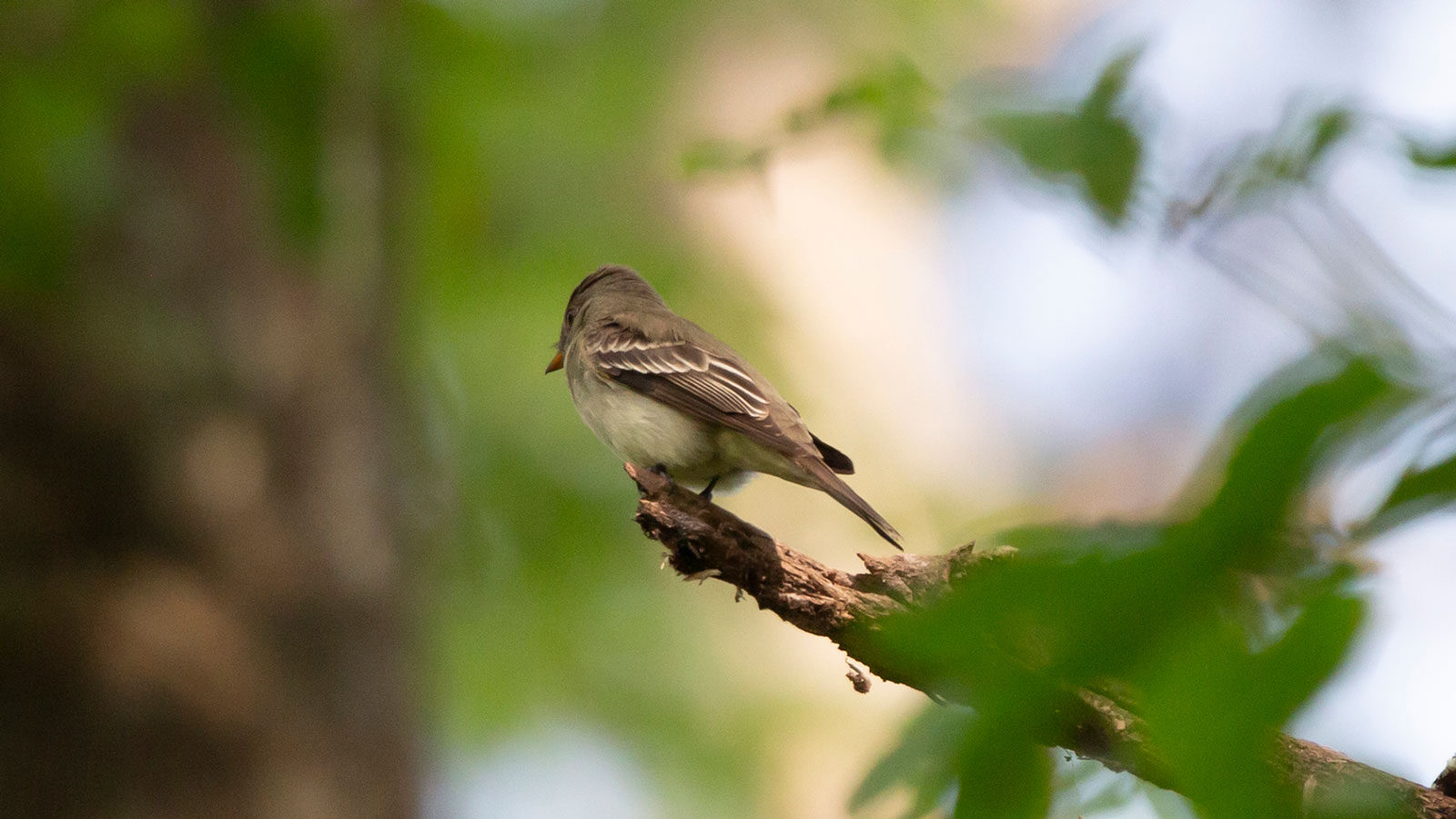
Dark-Eyed Juncos and Eastern Wood Pewees
Eastern phoebes are often confused with dark-eyed juncos because both are plump gray birds.
Eastern phoebes are often confused for eastern wood-pewees because both are small, brown birds.