Fun Fact
Did you know that northern cottonmouths prefer to flee from people and generally only bite when folks handle, step on, or get too close?
Northern Cottonmouths
at
a Glance
Key Features:
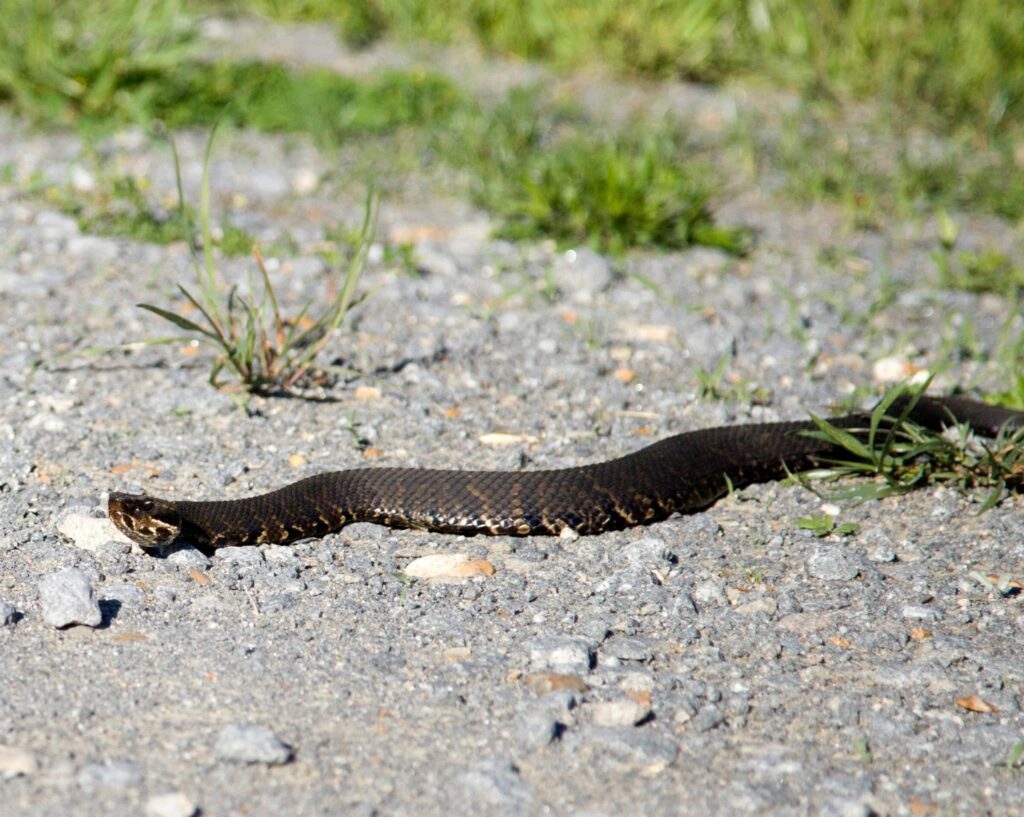
Northern cottonmouths are black, gray, or brown snakes with black lines on their eyes, fat bodies, elongated pupils, pits on their faces, and flat heads.
Least Concern - Population Stable
hunting Behavior:
Northern cottonmouths bite and constrict around their prey.
HABITAT
Creeks, lakes, ponds, swamps, sloughs, delta bayous, ponds and streams in pine flatwoods, pine-palmetto forest, river bottoms, and drainage ditches
NESTING
Northern cottonmouths mate from April to May and give five to nine live births in August to October.
ACTIVE SEASONS
All Year
DIET
Fish, frogs, lizards, baby alligators, turtles, other snakes, small mammals, and birds
Cottonmouths (Agkistrodon piscivorus – aka water moccasins, swamp vipers, and stump tails – and their hypodermic needle-like fangs are some of the most notorious residents of North Louisiana. We’ve all heard the stories: somebody’s out and about, minding their own business, when one of these semi-aquatic pit vipers leaps from the water, wearing a hockey mask and wielding a machete, and proceeds to silently chase its prey for an hour and a half or so.
Don't Get Got Tips
1. Don’t handle, touch, or otherwise engage with a cottonmouth …or, you know, any wild animal.
2. If you get bitten, seek medical care immediately. These snakes can pack a wallop with their potent venom and large size, but as long as you get help immediately, you probably won’t die.
See, super simple.
Is It a Cottonmouth?
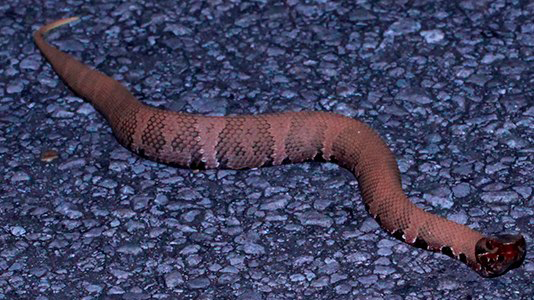
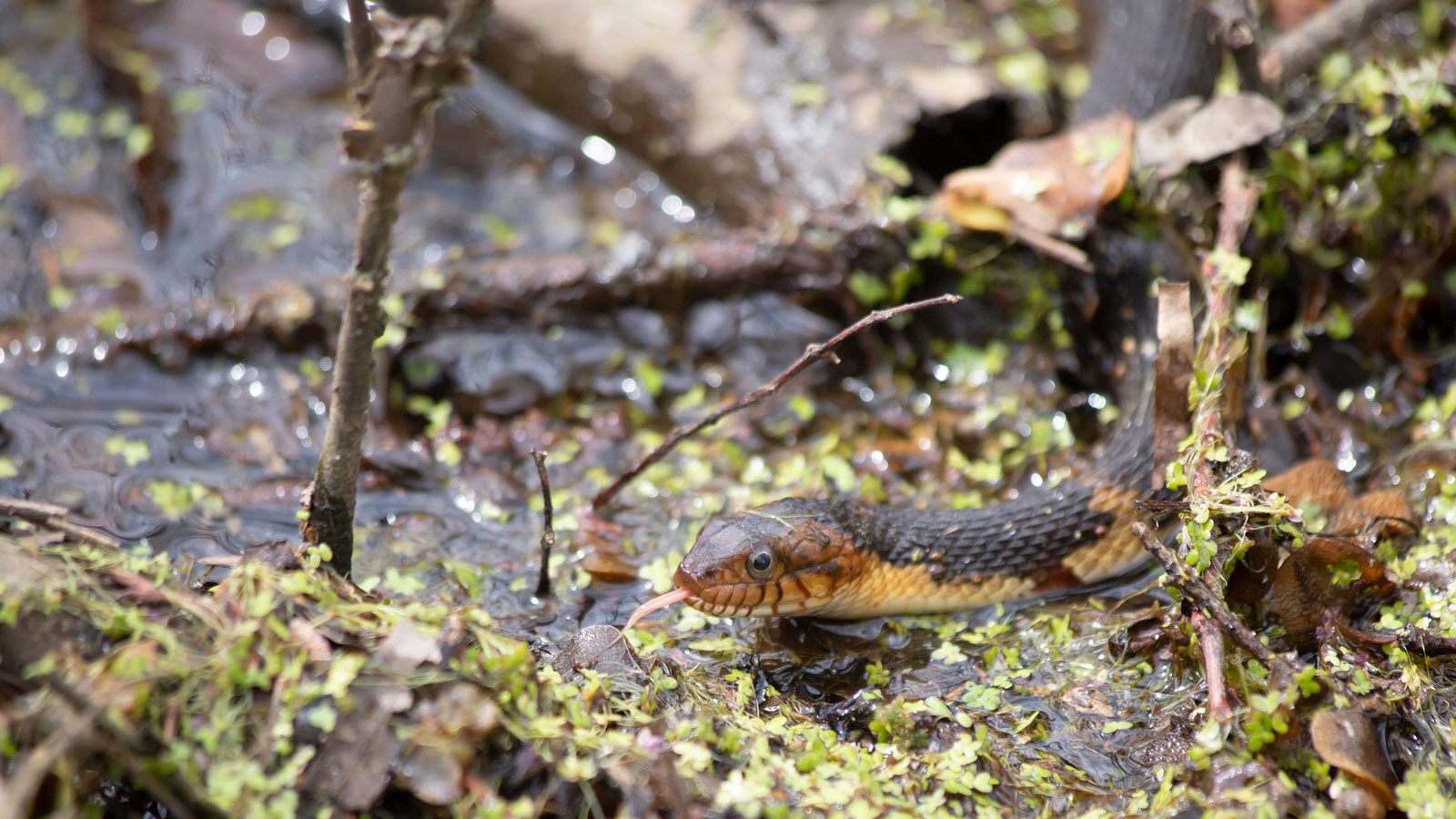
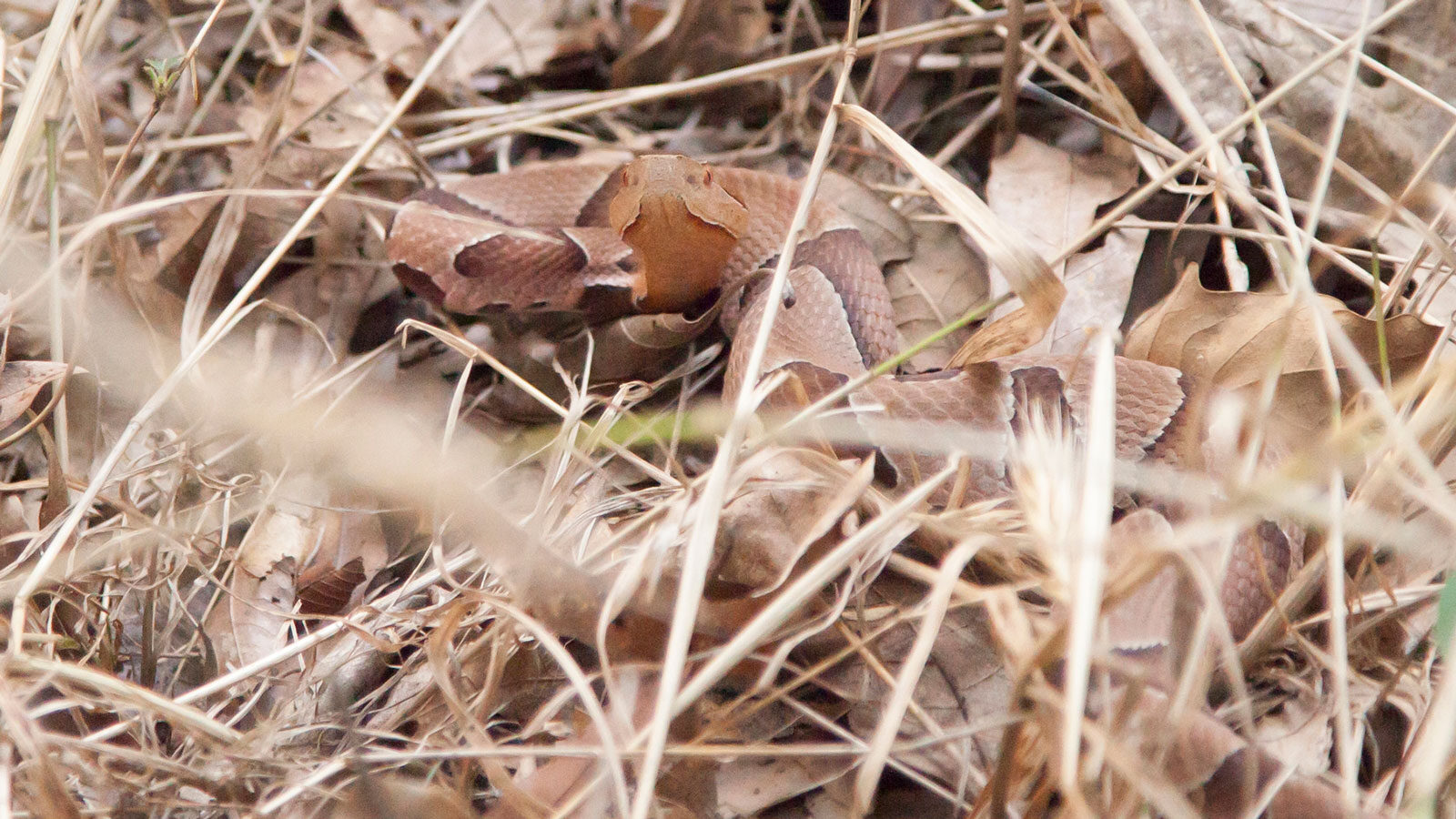
Let’s talk about some of the cottonmouth’s slithery lookalikes. These snakes are pretty unique, and, yet, folks seem to confuse them with all kinds of other snakes, most notably, broad-banded water snakes and eastern copperheads. Why? Well, we think the snafus identifying broad-banded watersnakes and cottonmouths originate in coloration and stomping — or swimming — ground.
Both these snakes can be brown, and they’re both water-loving serpents. But here’s where you can spot the differences – in the sun, cottonmouths have elongated eyes, chunkier bodies, and more even coloring. On top of those differences, broad-banded water snakes tend to have bolder splotches, like they’re trying to make a fashion statement.
You might find yourself mixing up cottonmouths with their copperhead cousins. They sure have some similarities goin’ on. Both of ’em have pits on their faces, and elongated sunny-time eyes. And guess what? They can both be found takin’ a dip in the water or just slithering around on land. But here’s the deal – like broad-banded watersnakes, copperheads are skinnier, shorter cousins, and they sport them hourglass patterns on their backs. On the other hand, cottonmouths are a bit heftier and have a more uniform color. Well, except when cottonmouth young’uns come into play – they can look pretty similar to copperheads. Just keep an eye out for that mask near the cottonmouth’s eye, and that’ll help you tell ’em apart.
See Cottonmouths in North Louisiana
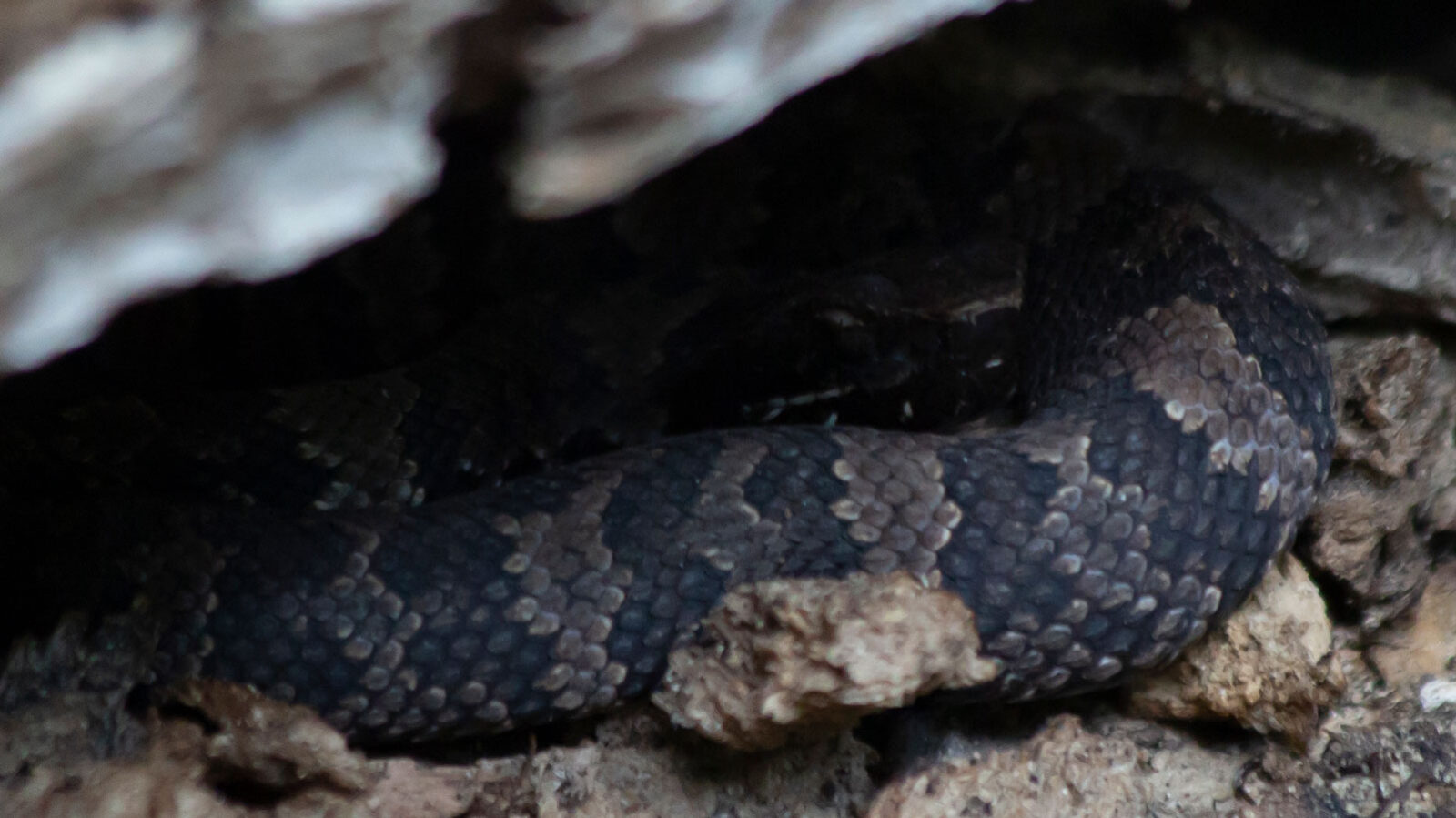
Where Can I Find Cottonmouths in North Louisiana?
These water-loving snakes are masters of our swampy realms, and you can find them pretty much anywhere in this water wonderland’s wetlands, streams, and lakes. They’re surprisingly well-camouflaged in swamp and marsh foliage. But don’t think they’re just water vipers, we can’t tell you how often we’ve spotted them tucked in rotting trees, lounging on vegetation, and basking on branches, palmetto fronds, and well-sunned paths like reptilian Apollos.
With North Louisiana boasting a whopping 131 percent water (we know it’s practically a snake paradise), you can encounter cottonmouths in almost every nook and cranny of the region. So grab your snakeproof boots, put on your adventurer’s hat, and prepare to embark on a thrilling quest to meet these swamp-savvy celebrities. The Red River NWR, Tensas River NWR, Black Bayou Lake NWR, and Russell Sage WMA are our fav spots to find them.
It’s all about admiring from a safe distance – these snakes may not be vicious, but they know how to keep their personal space intact! Just remember to play it cool, give them space, and enjoy the thrill of the cottonmouth encounter!
When Can I Find Cottonmouths in North Louisiana?
Thanks to our temperate 99-degree winters, you can find cottonmouths anytime in North Louisiana. You’re most likely to come across them when temps are between 60 and 85 degrees, but, as we learned just last year, they will come out in temperatures as low as 50 degrees to bask.
Don’t let what you’ve heard about winter hibernation fool you – you’re almost as likely to find these diurnal dudes and divas during the winter as the summer, thanks to brumation and our thousand-degree summers. See, unlike mammals, reptiles and amphibians brumate – meaning they hustle into warm areas and lower their metabolisms in the winter and estevate – meaning they search out cool areas to keep their blood from boiling in the heat of summer.
Cottonmouths switch their schedules to hunt and hang at night when daytime temps are too high, and during the warmest times of the day during the winter. When the temps are just right in the late fall, early spring, and winter, these sun-time superstars soak up the mid-morning and mid-afternoon rays to recharge their cold-blooded batteries.
So, here’s to the cottonmouths – the seasonal masters of brumation and estivation! Whether they’re snuggled in their winter hideouts or cooling off in the summer shade, they’ve got the seasonal game on lockdown. So the next time you encounter a cottonmouth, know you’re in the presence of the reigning champs of weathering North Louisiana’s wild seasons!
What Do Cottonmouths Eat?
- Fishy Delights: Cottonmouths are masters of the waterways, and their favorite aquatic delicacies are fish! Swimming gracefully and stealthily, they patiently wait for unsuspecting fish to swim by, then strike with lightning speed to seize their aquatic feast.
- Froggy Feasts: As connoisseurs of the marshlands, cottonmouths relish the taste of frogs. With their ambush predator skills, they wait quietly for these hippity hoppy morsels to pass by, and with a quick flick of their venomous fangs, a froggy feast is served!
- Snake Supremacy: Oh yes, cottonmouths are not afraid to add a little twist to their diet – they are known to feast on other snakes – even smaller cottonmouths – proving their dominance in the serpent kingdom. They even scavenge on carrion when the opportunity arises.
- A Touch of Land: Cottonmouths are versatile diners, and when they’re not in the mood for aquatic treats, they’ll venture onto land to snag small mammals. From field to swamp, these skilled hunters have an eye for diverse culinary experiences.