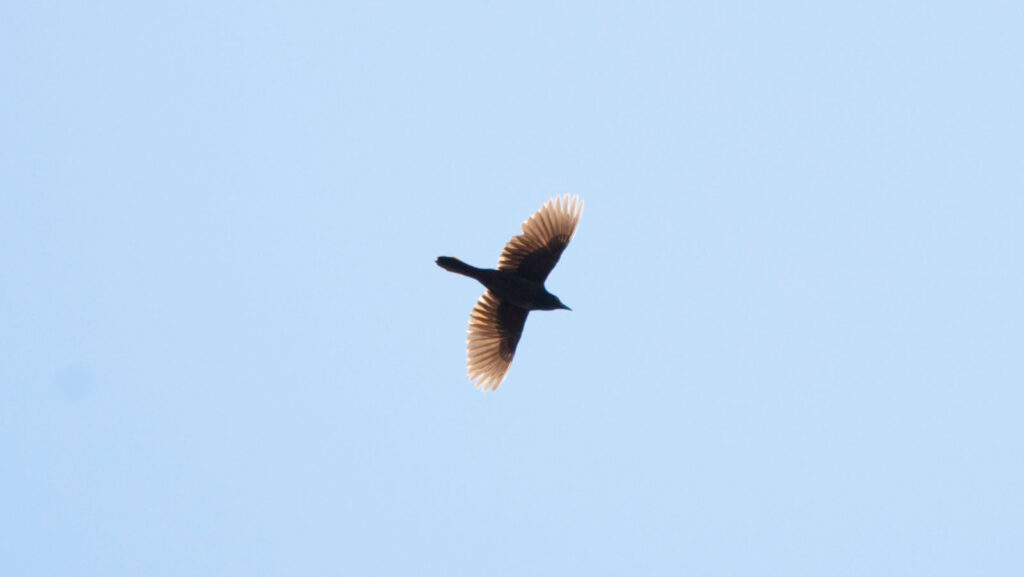
Common grackles build cup-shaped nests in trees, woodpecker holes, barns, osprey nests, and blue heron nests out of cloth, corn husks, grass, hair, leaves, mud, twigs, paper, and string.
seasons common grackles are active in our area:
All year
Diet:
Seeds, fruit, garbage, beetles, caterpillars, crustaceans, fish, frogs, grasshoppers, mice, mollusks, salamanders, spiders, and other birds
hunting Behavior:
Common grackles forage on the ground.
Commonly Confused With:
Brewer's Blackbirds, Brown-Headed Cowbirds, Great-Tailed Grackles, and Rusty Blackbirds
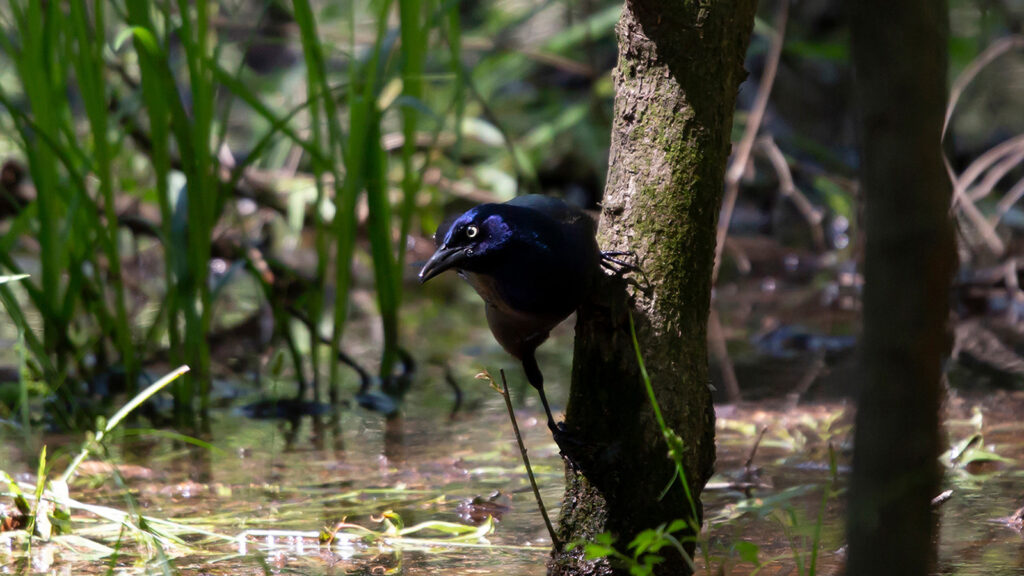
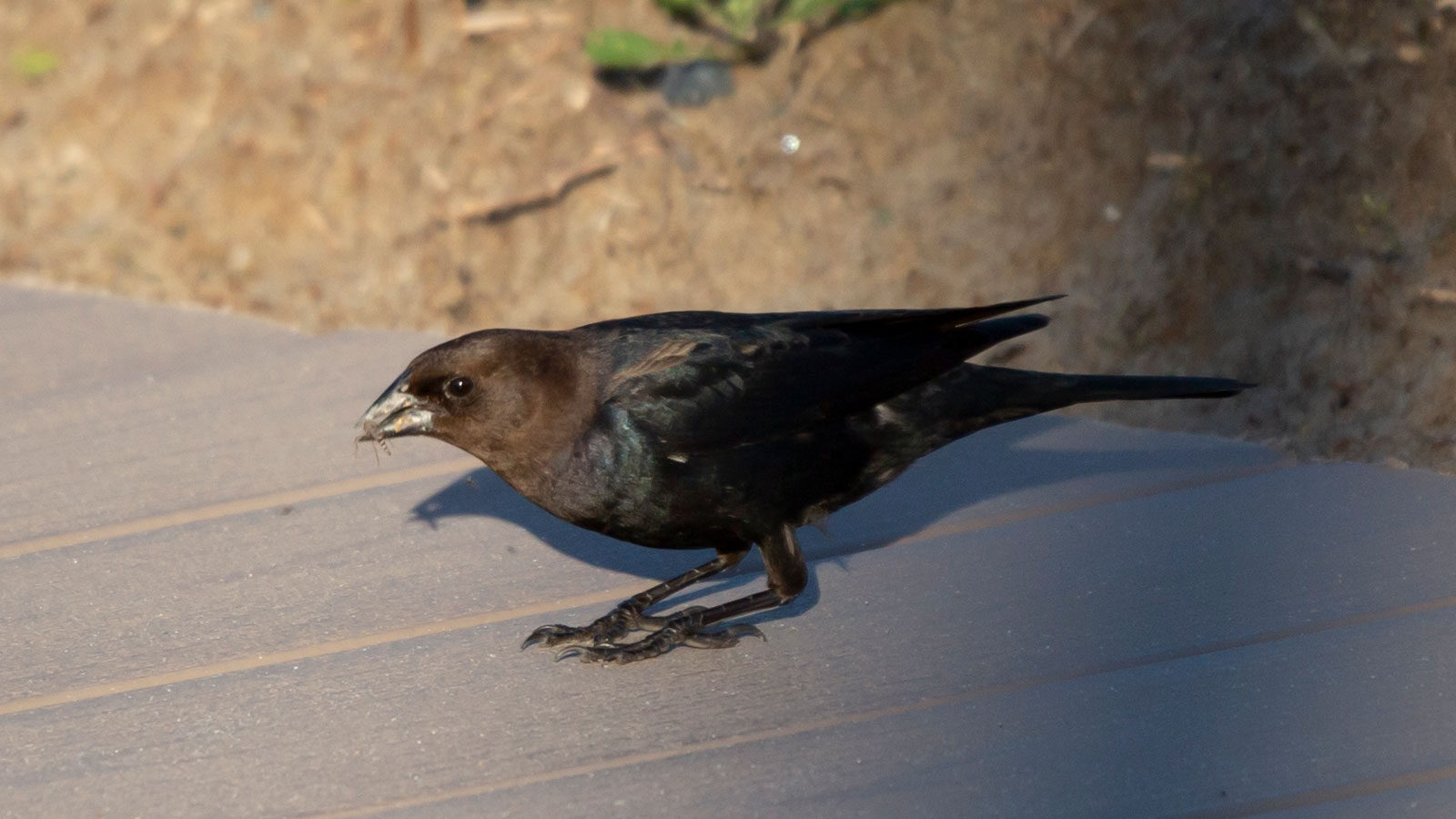
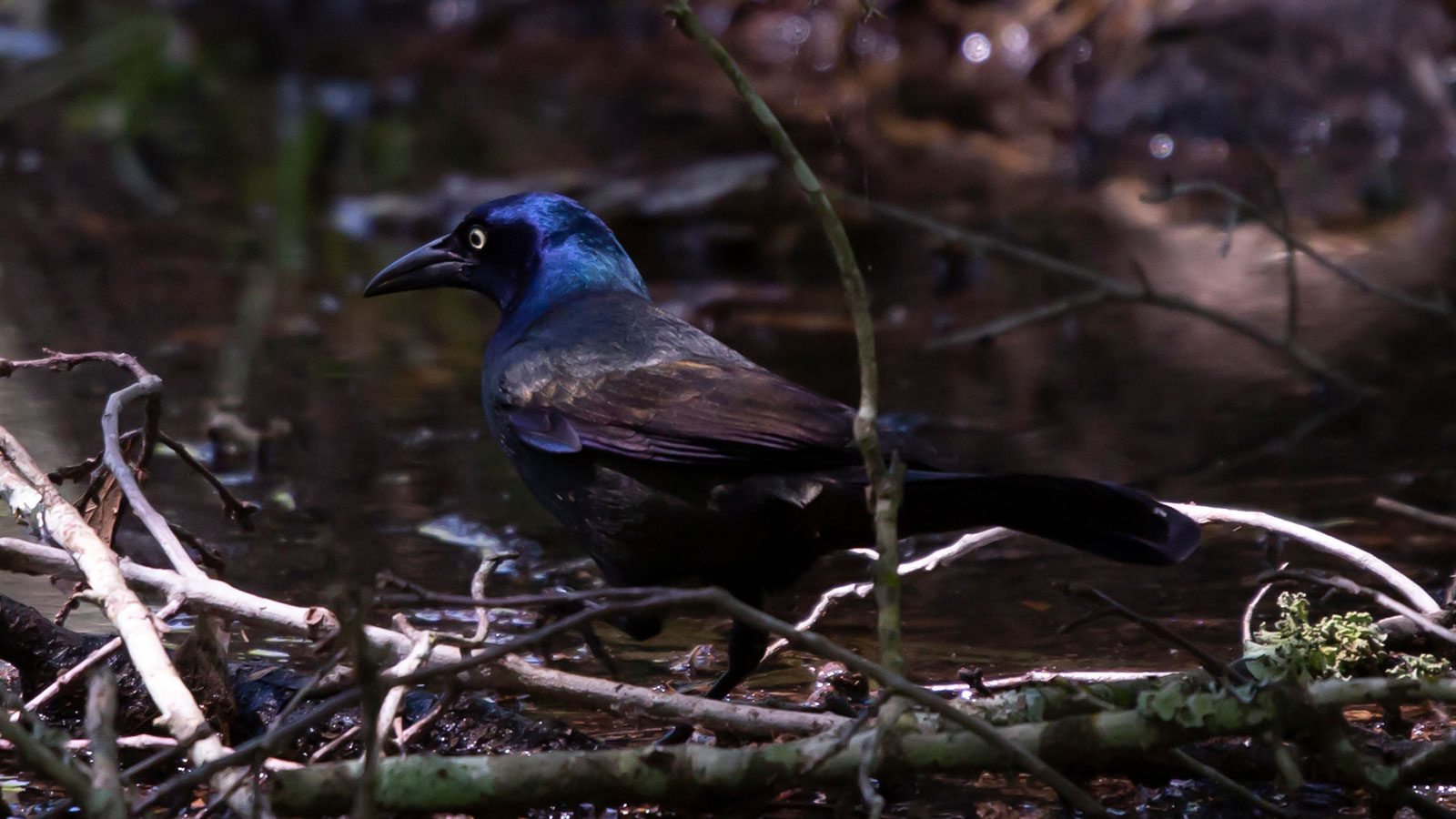
Common grackles are often confused with male brown-headed cowbirds because both have black bodies. Male common grackles have iridescent blue heads. Female common grackles are solid black. Brown-headed cowbirds have brown heads.
Common grackles are often confused with rusty blackbirds because both are black. Male common grackles have iridescent blue heads. Female common grackles are larger with longer tails and larger beaks.