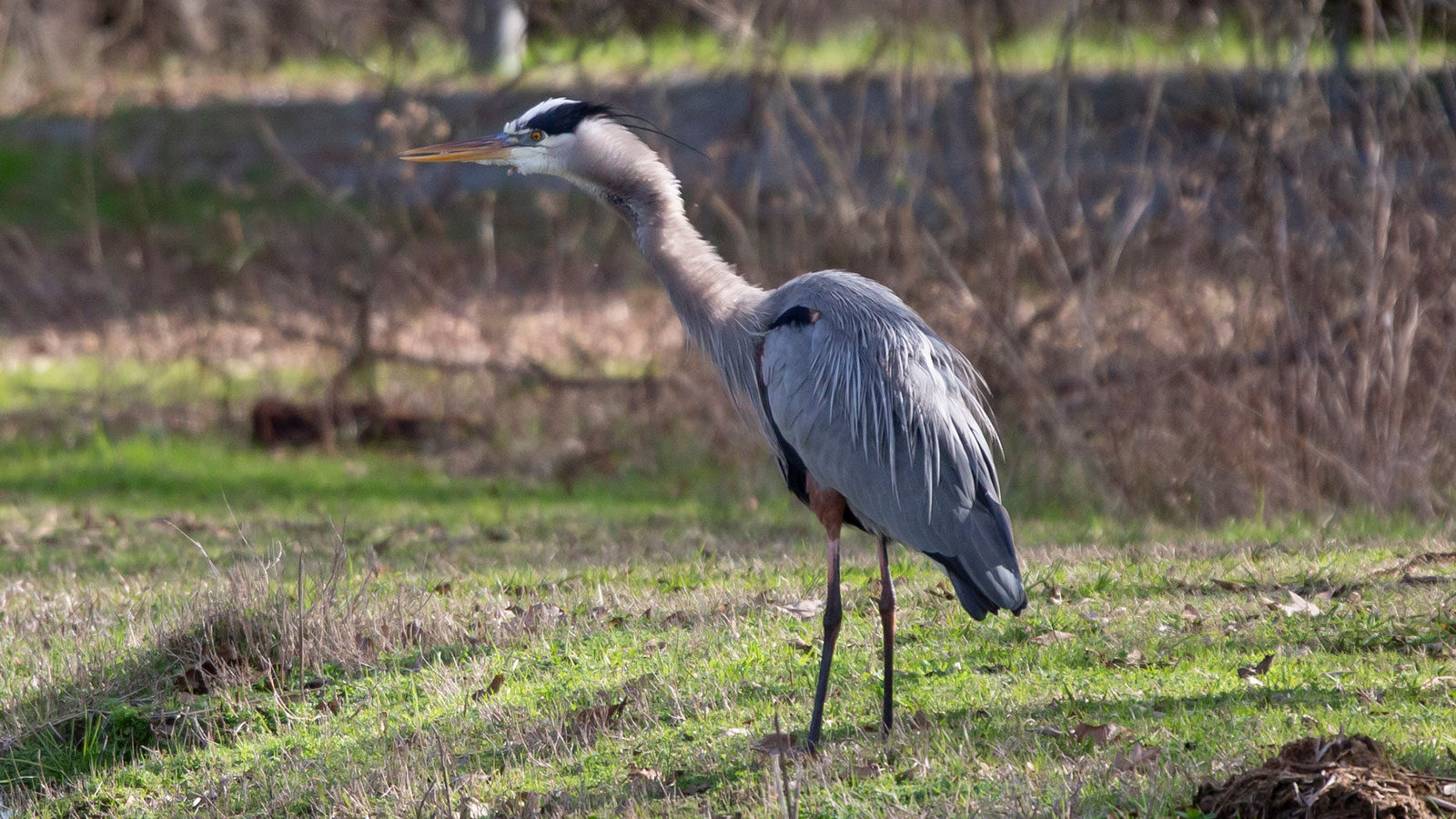
Did you know that adult great blue herons are the largest herons in North America?
Great Blue Herons at a Glance
Key Features:
Great blue herons are large gray-blue birds with black crowns and plumage.
Least Concern - Population Increasing
Habitat:
Grasslands, lake edges, marshes, meadows, and swamps
nesting habits:
Great blue herons build nests in trees or on the ground out of grass, leaves, moss, pine needles, sticks, and twigs.
seasons great blue herons are active in our area:
All year
Diet:
Fish, amphibians, insects, reptiles, small birds, and small mammals
hunting Behavior:
Great blue herons forage in water by waiting and striking.
Commonly Confused With:
Great Egrets, Little Blue Herons, Sandhill Cranes, and Tricolored Herons
Great blue herons are often confused with little blue herons because both are gray-blue birds. Great blue herons have black crowns. Little blue herons have purple heads.
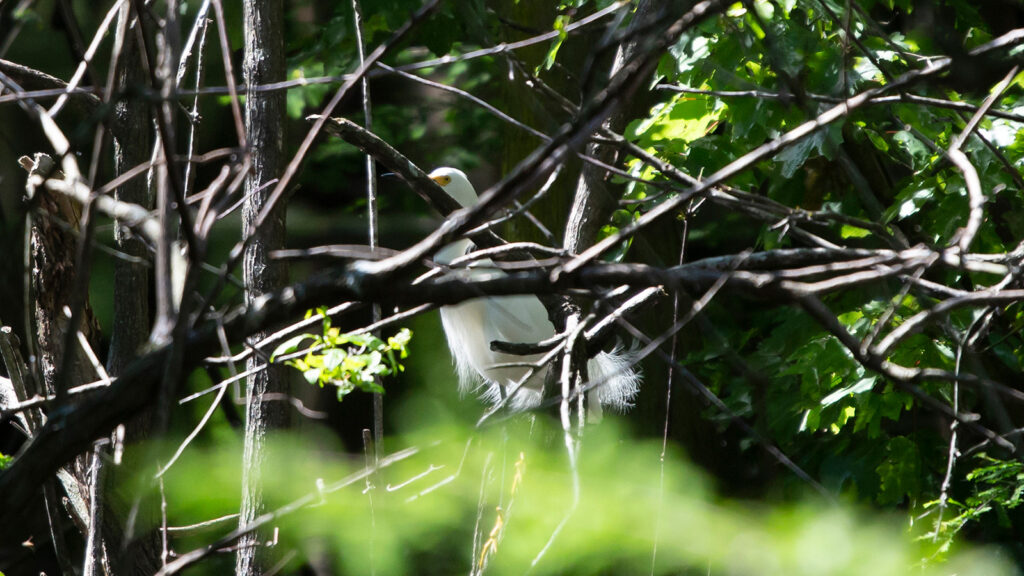
White morph great blue herons are often confused with great egrets because both are white birds. Great blue herons have thicker beaks and lighter legs.