Select a category from the left to start exploring.
Pick a destination on the left to explore the wild.
Learn more about our mission and safety guides on the left.
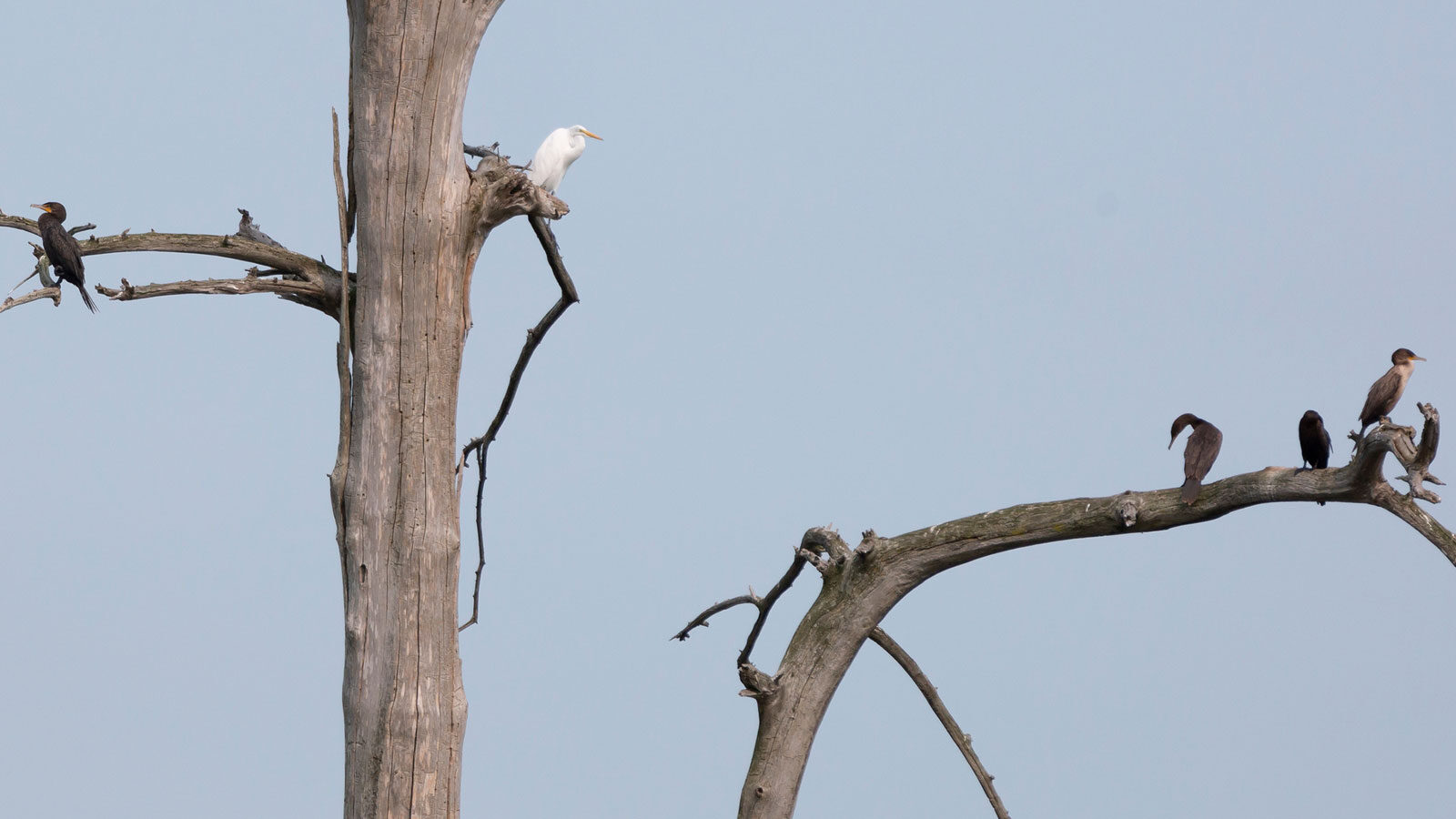
Did you know that double-crested cormorants kill trees with their feces?
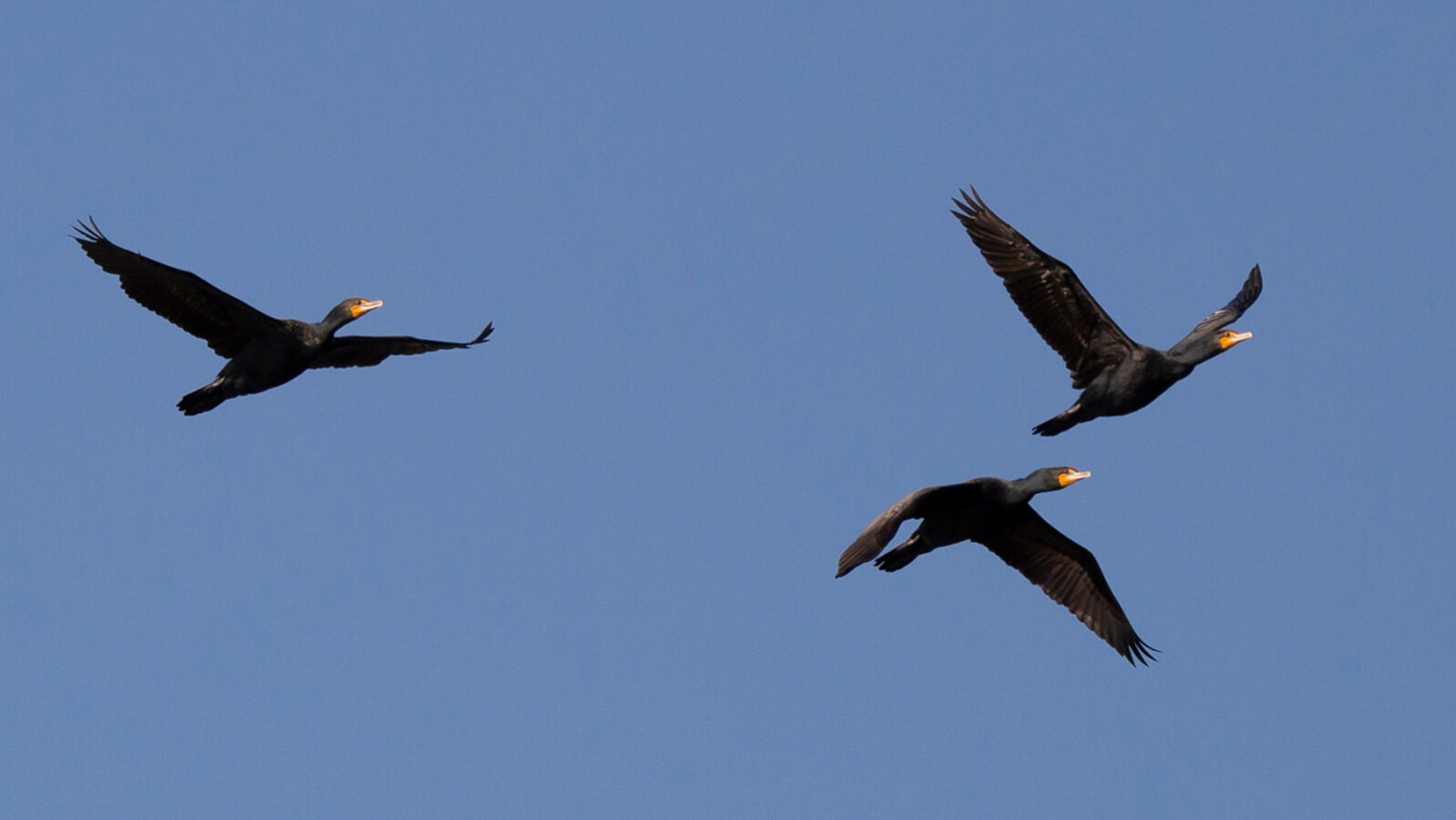
Double-crested cormorants are black with yellow beaks and blue eyes. Least Concern - Population Increasing
Lakes and ponds
Double-crested cormorants build their nests on the ground or treetops out of sticks, bird bones, garbage, and grass.
Spring, fall, winter
Fish, amphibians, insects, and crustaceans
Double-crested cormorants forage by floating on water and making shallow dives.
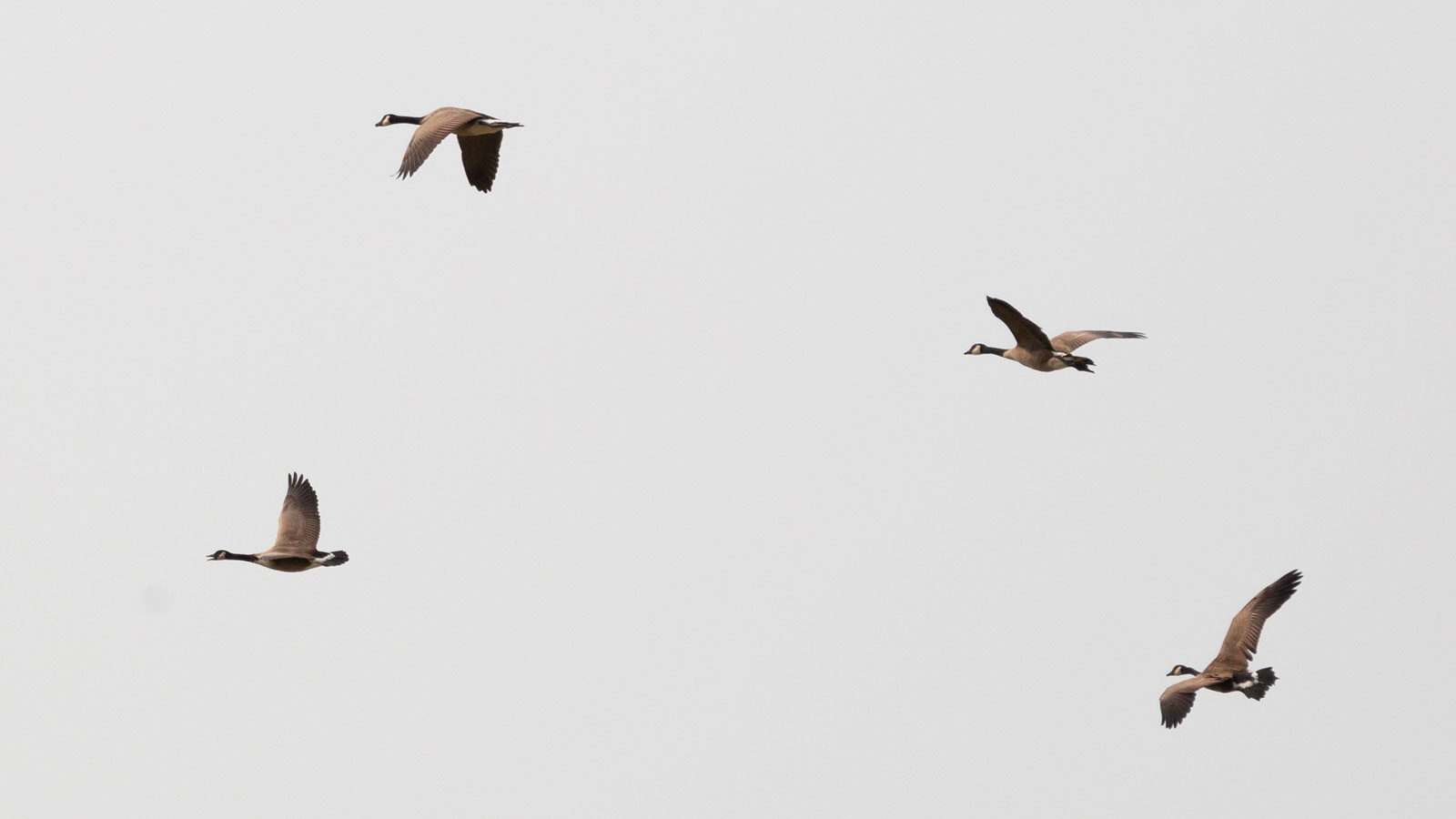
Anhinga and Canada Geese
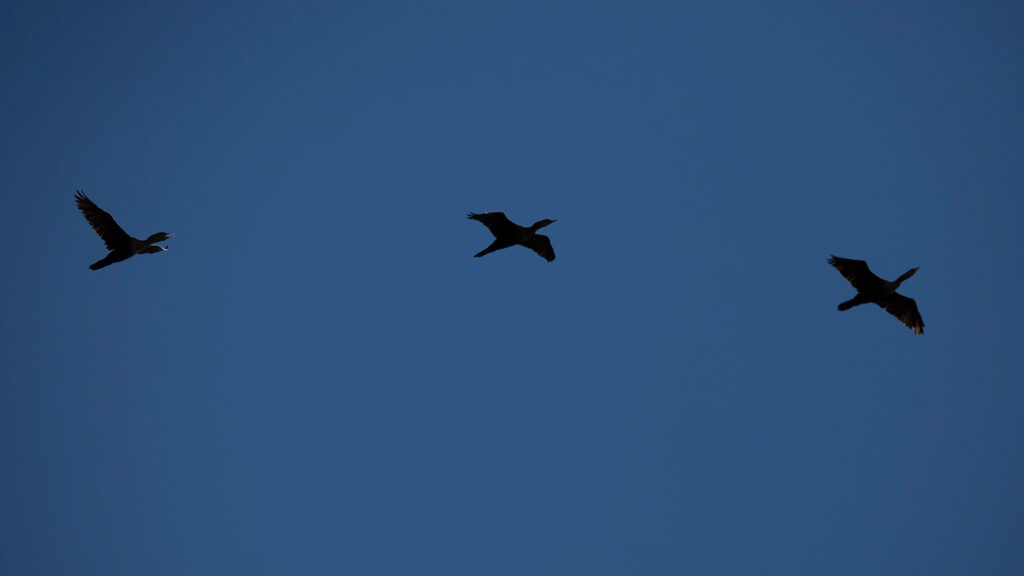
Double-crested cormorants are often confused with Canada geese from a distance because of their shape.
Double-crested cormorants are often confused with anhinga because of their coloration.