Advertisement
Walk to any pond in North Louisiana between May and October and the first dragonfly that flew up to inspect you, hovered at waist height for two seconds like a tiny security guard, and returned to a perch on the nearest weed tip was a blue dasher. Pachydiplax longipennis owned the common-dragonfly title across the 26 parishes the way northern cardinals owned the common-bird title: visible everywhere, vocal about territory, and completely unbothered by the human standing three feet from the perch.
Blue dashers bred at every pond, every lake margin, every ditch with standing water, every retention pond behind every shopping center, and every rain-filled tire rut that held water long enough for a naiad to develop. The dragonfly's tolerance for low water quality, warm water, temporary water, and human proximity put the blue dasher in habitats that the more selective dragonflies avoided, and the dasher's willingness to breed in water a CRAWFISH would side-eye explained why the blue dasher outnumbered every other dragonfly at every North Louisiana pond by a margin that nobody at the pond disputed.
The Chalk-Blue Percher
Mature males wore a chalky, powdery blue pruinescence across the abdomen that developed over several days after emergence and gave the male a frosted appearance the female never matched. A fresh male wore the brown-and-yellow base pattern both sexes shared. A two-week-old male wore full blue pruinescence that obscured the pattern underneath and turned the abdomen into a solid pale blue tube perched on a weed tip. The blue read at binocular distance against any background and caught the scanning eye before any other feature entered the identification.
Green eyes with a metallic sheen wrapped most of the head and gave the blue dasher a jeweled face that photographs consistently failed to capture at the intensity the live view delivered. A blue dasher perched at arm's length on a grass stem showed emerald-green compound eyes that shifted color with the light angle, and the eye color earned more close-range admiration than the blue abdomen because the blue sat expected and the green sat startling.
Females and immature males wore a brown-and-yellow striped pattern on the thorax and abdomen with a pale dorsal stripe running along the top of the abdomen. The female pattern blended into the vegetation at the pond margin better than the male's blue advertised against it, and a female blue dasher perched on a brown weed stem disappeared against the background that the blue male sat in front of without any camouflage attempt.
White face. Both sexes wore a white or pale face (frons) that showed at close range and added a field mark the pruinose abdomen and the green eyes already made unnecessary. A blue dasher's face looked pale enough to notice at three feet and irrelevant at ten feet, and the face color confirmed an identification the abdomen and the behavior settled before the observer got close enough to see the face.
Wing tips on mature individuals showed a dark amber-brown wash at the extreme tips that the fresh individuals did not yet display. The wing-tip darkening progressed with age, and an old male blue dasher with full pruinescence, dark wing tips, and a territorial attitude represented the endpoint of the male maturation sequence that started with a brown-bodied teneral two weeks earlier.
Advertisement
The Perch-and-Sally Hunter
Blue dashers hunted from perches. The hunting technique put the dasher on a prominent weed tip, grass stem, stick, or any elevated surface within three feet of the water, facing the open airspace, scanning for passing insects with the compound eyes that covered most of the head. A gnat, a mosquito, a midge, or a small fly that crossed the dasher's visual field at distances up to six feet triggered the sally: a burst launch from the perch, a grab in the leg basket, and a return to the same perch (or a nearby perch) within two seconds.
The perch loyalty matched the amberwing's loyalty: same stem, same return point, same launch angle, sally after sally, for the entire patrol session. A blue dasher on a favorite perch at a Lincoln Parish farm pond returned to the exact weed tip after every sally, every territorial chase, and every pause, and the observer who found the perch watched the dasher's entire behavioral repertoire from one spot without the dasher or the observer moving more than three feet.
Between sallies, the dasher sat with the wings pressed forward and down in a distinctive "obelisk" posture during hot weather, pointing the abdomen straight up at the sun to minimize the body surface exposed to direct solar radiation. The obelisk posture earned its name from the resemblance to a small monument pointing skyward, and a blue dasher in full obelisk posture on a hot July afternoon looked less dragonfly-shaped and more abstract-sculpture-shaped.
The posture told the temperature. A flat-winged dasher sat in comfortable thermal range. An obelisk dasher sat in overheating range and adjusted the body angle to shed heat rather than absorb it.
The Obelisk and the Flat
Blue dasher body language told the temperature story of every summer day in North Louisiana more honestly than a thermometer. A dasher perched at 9 a.m. with wings spread flat and body horizontal to the perch sat in thermal comfort: absorbing sunlight, warm enough to fly, cool enough to stay. A dasher perched at 2 p.m. with wings pressed forward and the abdomen pointing straight up at the sun sat in thermal distress: too hot, shedding heat, minimizing the body surface that faced the sun.
Flat-to-obelisk transitions tracked the air temperature within a few degrees: below 85 Fahrenheit most dashers perched flat, between 85 and 92 the first dashers started tilting upward, and above 92 every dasher at the pond pointed the abdomen skyward. A field of obelisk-posture dashers on a July afternoon at a North Louisiana farm pond looked less natural-history and more modern-art installation.
On the hottest afternoons (above 95 degrees), blue dashers retreated from the sun-exposed perches to shaded vegetation at the pond margin, and the exposed weed tips that held ten dashers at 10 a.m. held zero at 3 p.m. because the thermal load on an exposed perch exceeded the obelisk posture's ability to compensate.
The dashers moved to the shade, perched under leaves or behind stems, and waited for the afternoon to cool before returning to the exposed hunting perches. A pond that looked empty of dashers at three in the afternoon on a 98-degree July day held the same dashers two hours later when the shadows lengthened and the thermal budget balanced again.
Advertisement
The Morning Warm-Up
Cool mornings reversed the thermal problem. A blue dasher at a North Louisiana pond at 7 a.m. in May perched with wings spread flat on an east-facing stem, angling the body toward the rising sun to absorb maximum solar heat. The flight muscles needed a thoracic temperature above roughly 80 degrees to power the sallying flights, and the cool morning air kept the thorax below the threshold until the sun warmed the body and the perch together.
The warm-up period lasted fifteen to forty-five minutes depending on the morning temperature, the cloud cover, and the perch orientation. A dasher on a sun-warmed rock at 8 a.m. reached flight temperature before a dasher on a shaded grass stem at the same hour, and the perch selection in the early morning reflected the thermal priority: every dasher chose the sunniest surface available rather than the most strategic hunting position. Hunting waited for warmth, warmth came from the sun, and the dasher that found the sun first flew first.
By mid-morning, every dasher at the pond flew, and the warm-up constraints dissolved into a full-speed feeding and territorial session that lasted until the afternoon heat sent the dashers into the obelisk-and-shade sequence. The daily activity pattern at a North Louisiana pond followed the temperature curve: slow start, fast middle, hot retreat, evening recovery, and darkness-grounded.
Everybody's Pond Neighbor
Blue dashers coexisted with every other dragonfly at every North Louisiana pond by occupying a middle-altitude patrol zone that the darners flew above and the amberwings flew below. A pond that supported green darners at head height, blue dashers at waist height, and amberwings at knee height sorted the three dragonfly sizes into three flight levels without any visible negotiation, and each dragonfly fed, patrolled, and mated at the assigned altitude without the other two levels interfering.
The coexistence broke down during territorial encounters between male blue dashers, which got aggressive enough that the combatants locked legs in midair, tumbled toward the water surface, and separated just before impact. Two male blue dashers in a territorial dogfight over a Bossier Parish farm pond spiraled through the waist-height patrol zone with an intensity that scattered every amberwing within ten feet and drew the attention of the green darner patrolling above, and the darner watched the dasher fight without intervening because the dashers sat below the darner's prey-size threshold and the fight did not threaten the darner's altitude.
Female blue dashers visited the male's territory for mating and immediately departed for oviposition at a different section of the pond, and the post-mating oviposition put the female over open water tapping eggs onto the surface in rapid dipping flights that covered twenty to thirty feet of waterline in under a minute. A female blue dasher ovipositing at a North Louisiana pond dipped the abdomen into the water every second, moving forward with each dip, and deposited several hundred eggs across the pond surface in a single oviposition bout.
Males guarded the ovipositing female from rival males by hovering above the female during the egg-tapping flight, and the guard duty put the male in the airspace directly above the dipping female at a distance of six inches to a foot. A tandem pair (male hovering guard, female dipping eggs) at a pond resembled a tiny helicopter escort mission where the escort cared more about other helicopters than about the cargo.
Advertisement
The Pond-Bottom Generalist
Blue dasher naiads lived in the mud, leaf litter, and vegetation at the bottom of every water body the adult visited, and the naiad's tolerance for warm, low-oxygen, nutrient-rich water explained why the adult dasher showed up at ponds the pickier dragonfly species avoided. A blue dasher naiad in the muck at the bottom of a cattle pond with algae on the surface, manure in the runoff, and zero other dragonfly naiads in the substrate survived conditions that killed the naiad of every more sensitive dragonfly.
The naiad ate mosquito larvae, midge larvae, tiny worms, and other small aquatic invertebrates with the standard labium-snap technique. Larval development lasted several months in North Louisiana's warm water, shorter than the one-to-two-year periods the clubtails and darners needed, and the fast development let the blue dasher complete multiple overlapping generations per year at warm-water sites.
A pond that supported one green darner generation per year supported two or three blue dasher generations in the same calendar, and the generational speed advantage put more dasher adults on the wing per season than any other dragonfly at the same pond managed.
The speed also meant a population crash from a late-spring cold snap recovered by midsummer because the surviving naiads emerged, bred, and sent a new generation of naiads into the pond within eight weeks of the crash. A green darner population that crashed in the same cold snap needed a full year to recover the same numbers.
Emergence happened from April through September as successive generations of naiads reached the final larval stage and climbed out of the water. The staggered emergence pattern (rather than the single spring emergence pulse the clubtails used) meant fresh blue dashers joined the adult population throughout the flight season, replacing the adults that died and maintaining the adult count at a plateau from May through September that the single-emergence species could not sustain.
After Dark
Blue dashers roosted in vegetation at the pond margin after sunset, perching on grass stems, weed tips, and low branches with the body pressed close to the perch and the wings folded or spread depending on the overnight temperature.
A roosting dasher at a North Louisiana pond at midnight sat motionless on a grass stem six inches above the waterline, completely vulnerable to any nocturnal predator that found the perch. Raccoons, opossums, and tree frogs all encountered roosting dashers during their nighttime rounds, and the dashers that chose concealed roosting sites in dense vegetation survived the night more reliably than the dashers that roosted on exposed stems.
Dawn the next morning restarted the cycle: warm up, fly, feed, defend, mate, overheat, shade, recover, feed again, roost. The dasher's daily life ran on a loop that the sun controlled at both ends, and the dasher that found the best balance between sun exposure (for flying) and shade access (for cooling) held the territory the longest because the dasher stayed active the most hours per day.
Advertisement
The Mosquito Math
A single blue dasher at a North Louisiana farm pond ate an estimated one hundred to two hundred mosquitoes per day during peak summer months, and a pond that supported twenty perching dashers removed two thousand to four thousand mosquitoes per day from the immediate area without any human intervention, without any chemical application, and without any cost to the homeowner beyond not spraying the pond with insecticide. The math sat simple and the math sat free.
The irony: a homeowner who sprayed the pond to kill mosquitoes also killed the blue dasher naiads in the pond, which removed the next generation of dashers that would have eaten the next generation of mosquitoes. The spray killed the current mosquitoes and the future mosquito-killers simultaneously, and the pond recovered the mosquito population faster than the pond recovered the dasher population because mosquitoes bred faster than dashers.
A sprayed pond had more mosquitoes next month than an unsprayed pond because the spray removed the predators that would have controlled the mosquitoes for free. The chemical did the opposite of the intended effect on the timeline that mattered.
An unsprayed farm pond with a healthy blue dasher population ran its own mosquito control program twenty-four hours a day (naiads ate mosquito larvae underwater while adults ate adult mosquitoes above water) at zero cost, with zero chemicals, and with the side benefit of putting twenty blue dragonflies on the weed tips for the homeowner to watch during evening drinks on the patio. The service came bundled with the dragonflies at no extra charge.
What Hunts the Blue Dasher
Eastern kingbirds, great crested flycatchers, and other sallying birds caught blue dashers from perches above the dasher's patrol zone. A kingbird on a utility wire above a farm pond sallied downward and caught a perching blue dasher off a weed tip with the same technique the dasher used on midges, and the size relationship between the kingbird and the dasher mirrored the size relationship between the dasher and the midge.
Green darners ate blue dashers during patrol. A green darner that descended from head height into the dasher's waist-height zone caught a blue dasher in the leg basket and ate the dasher in flight, and the blue dasher that spent the morning eating amberwings became the afternoon's prey item for the green darner that ate everything smaller than a green darner.
Spiders caught blue dashers in orb-weaver webs strung at the pond margin, and a web at waist height across a gap in the vegetation intercepted the dasher's sallying flight path. Frogs at the waterline caught perching dashers from the same rocks and vegetation the dashers used as hunting perches.
Fish ate blue dasher naiads in the pond at every size class, but the dasher naiad's tolerance for degraded water meant the naiad survived in ponds where the fish populations sat low because the water quality eliminated the fish before it eliminated the dasher. A pond too polluted for bass but not too polluted for blue dasher naiads supported adult dashers at densities the cleaner, fish-stocked ponds did not match.
Advertisement
Six Weeks on the Wing
Adult blue dashers lived roughly four to six weeks in the field, and the short adult lifespan meant the adult population at any given pond turned over completely between June and August. A dasher that emerged in late May and died in early July got replaced on the same weed tip by a dasher that emerged in late June and would die in early August, and the continuous emergence pattern from the pond's naiad population kept the perch occupied without the observer noticing the tenant changed.
The short lifespan packed every adult behavior into a compressed window: territorial claiming (day one or two), mating (as soon as a female visited the territory), oviposition guard duty (immediately after mating), feeding (every day, all day, between territorial and mating duties), and death (four to six weeks after emergence, from predation, weather, or age). A blue dasher's adult life ran at a pace that made the warbler's six-week breeding season look leisurely.
The Everywhere Dragonfly
Blue dasher abundance at North Louisiana ponds reflected the dragonfly's ecological strategy: breed fast, tolerate everything, and put adults on the wing in numbers that compensated for every predator, every bad-weather day, and every naiad the fish ate. A farm pond, a retention pond, a lake margin, a flooded ditch, or a rain-filled pothole in a gravel parking lot. If standing water stayed for two months and the sun warmed it above 70 degrees, blue dashers bred in it.
The ecological flexibility meant the blue dasher served as the default dragonfly for most North Louisiana residents who noticed dragonflies without knowing dragonfly names. "That blue dragonfly at the pond" meant blue dasher in nine out of ten conversations, and the one-in-ten exception meant blue corporal in February or a particularly bold pondhawk in August. The blue dasher held the default slot because the blue dasher showed up at every pond, at every hour, in every month from May through October, and the reliability made "blue dragonfly" and "blue dasher" synonyms across the 26 parishes.
Where to Look
Everywhere water stood in North Louisiana from May through October. Farm ponds, municipal reservoirs, lake margins, retention ponds, beaver ponds, drainage ditches, backyard water gardens, and any standing water with emergent vegetation at the edge. The blue dasher perched on the tallest weed tip at the waterline and scanned for insects from a height of one to three feet, and the perch position caught the eye before the blue abdomen or the green eyes entered the identification.
Black Bayou Lake NWR, Poverty Point Reservoir State Park, Lake Claiborne, Caney Lakes, and every farm pond in the 26 parishes supported blue dashers during the flight season. The dragonfly bred wherever water stood long enough, and water stood long enough almost everywhere.
Backyard birders with a pond, a birdbath, or even a consistently wet spot in the yard attracted blue dashers without trying, and the dasher's tolerance for close proximity to houses, patios, and outdoor furniture put the dragonfly within arm's reach of anyone who sat near water during summer afternoons.
Advertisement
Watching the Dasher's Day
A full day at a North Louisiana farm pond during July revealed the blue dasher's complete daily cycle without the observer changing position. Dawn: no dashers visible, all perches empty. By 8 a.m.: first dashers appear on east-facing stems, wings spread flat, warming up. By 9:30 a.m.: full activity, sallying from every weed tip, territorial chases every few minutes.
Noon: obelisk posture starts appearing on the hottest-exposed perches. By 2 p.m.: most dashers shifted to shade or full obelisk, activity reduced. By 4:30 p.m.: activity resumes as afternoon heat breaks. Dusk: dashers return to roosting vegetation, activity drops to zero with the light.
The cycle repeated every sunny day from May through October with the consistency of a factory shift schedule, and the observer who learned the timing arrived at the pond during the peak window (nine to noon) rather than during the thermal shutdown (two to four in the afternoon) and got five times more dasher activity per visit.
Rainy days collapsed the entire cycle into zero. A dasher perched in the vegetation during rain waited for the sun the same way the dasher waited for warmth at dawn, and a rainy afternoon at a North Louisiana pond that supported thirty active dashers on a sunny morning supported zero active dashers until the rain stopped and the sun dried the perches. The dashers reappeared within minutes of the last drops, and the transition from empty pond to full pond happened faster than the transition from rain to sun because the dashers sat ready while the clouds still debated.
Photographing blue dashers gave beginning dragonfly photographers the best success-to-effort ratio in the odonate world because the dasher sat still, tolerated close approach, returned to the same perch after every sally, and wore a color that popped against every green or brown background the weed tips offered.
A phone camera at eighteen inches captured the blue abdomen, the green eyes, and the wing-vein detail that the binocular view showed but the memory forgot, and the photograph from a North Louisiana farm pond gave the new dragonfly watcher a species confirmed, a skill learned, and a reason to visit the next pond.
The obelisk posture earned its own photographic category because the pose looked strange enough that non-dragonfly people assumed the photograph showed a dying or injured insect rather than a healthy dragonfly performing routine climate control. A blue dasher in full obelisk posture on a bright July afternoon, abdomen pointed straight at the sky, wings pressed forward, looked nothing at all the way a dragonfly usually looked, and the photograph of the obelisk posture started more conversations about dragonfly behavior than any photograph of normal perching ever managed.
Where to Learn More
Dennis Paulson's Dragonflies and Damselflies of the East covers the blue dasher's identification, obelisk posture, and the pruinescence development that changed the male's appearance from brown to blue over the first two weeks of adult life.
OdonataCentral.org maintained records and photographs for the blue dasher's Louisiana distribution, confirming the dragonfly's presence at every water body type across every parish with standing water.
Advertisement
Experiencing This Dragonfly: Accessibility Notes
Blue dashers make no sound human ears detect, but the dragonfly's abundance, close-perching habit, and tolerance for human proximity made visual detection easier than any other dragonfly at North Louisiana ponds. A seated observer at any accessible pond edge during summer saw blue dashers on every weed tip within binocular range, and the dasher's perch-and-return behavior gave repeated close-range viewing opportunities without the observer needing to move.
For anyone with mobility limitations, the blue dasher perched within three feet of the waterline at every accessible North Louisiana pond. A park bench, a fishing pier, a wheelchair-accessible boardwalk, or a vehicle parked near a pond all put the observer within blue-dasher range during any summer afternoon. The dasher perched at waist-to-knee height on the nearest vegetation, and a seated observer at the water's edge watched the dasher's entire behavioral cycle from a comfortable chair.
Meta Title: Blue Dasher in North Louisiana: The Dragonfly That Already Claimed Your Pond | NLW Meta Description: The blue dasher perches on every weed tip at every North Louisiana pond, wears chalk-blue pruinescence over emerald eyes, hunts from a favorite perch with two-second sallies, and outnumbers every other dragonfly at the water. Focus Keyphrase: blue dasher North Louisiana Secondary Keywords: blue dasher dragonfly, Pachydiplax longipennis Louisiana, blue dasher identification, blue dasher obelisk posture, blue dasher pruinescence, North Louisiana dragonflies, pond dragonfly Louisiana, blue dasher habitat, blue dasher hunting, common dragonfly Louisiana OG Description: The blue dasher perches on every weed tip at every North Louisiana pond from May through October, wears chalk-blue pruinescence over emerald-green eyes, hunts from a favorite perch with two-second sallying flights, and outnumbers every other dragonfly at the water by a margin nobody bothered to dispute. Slug: blue-dasher-north-louisiana
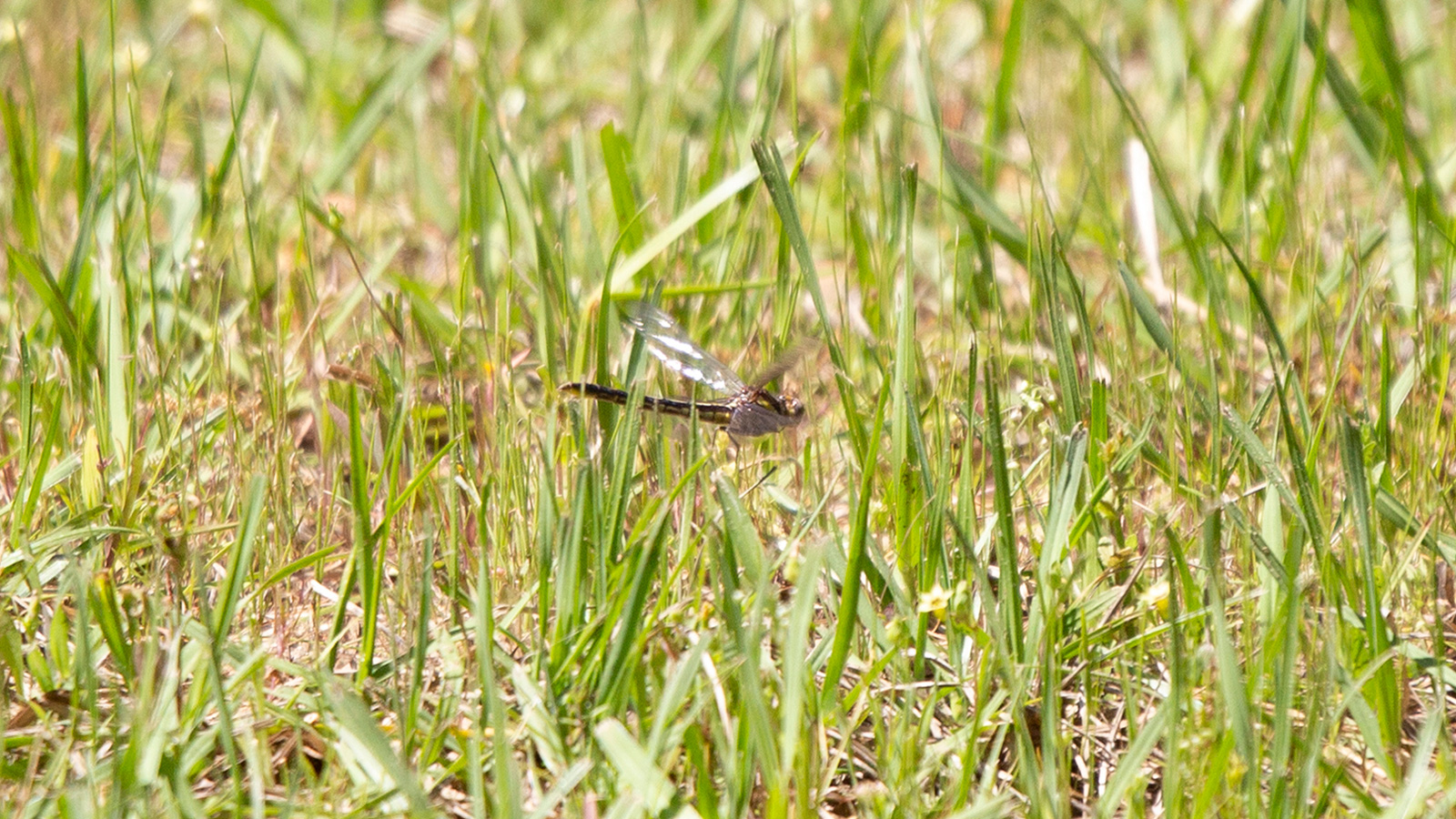
Photo Gallery

Advertisement
Accessibility
## Experiencing This Dragonfly: Accessibility Notes
Blue dashers make no sound human ears detect, but the dragonfly's abundance, close-perching habit, and tolerance for human proximity made visual detection easier than any other dragonfly at North Louisiana ponds. A seated observer at any accessible pond edge during summer saw blue dashers on every weed tip within binocular range, and the dasher's perch-and-return behavior gave repeated close-range viewing opportunities without the observer needing to move.
For anyone with mobility limitations, the blue dasher perched within three feet of the waterline at every accessible North Louisiana pond. A park bench, a fishing pier, a wheelchair-accessible boardwalk, or a vehicle parked near a pond all put the observer within blue-dasher range during any summer afternoon. The dasher perched at waist-to-knee height on the nearest vegetation, and a seated observer at the water's edge watched the dasher's entire behavioral cycle from a comfortable chair.
Meta Title: Blue Dasher in North Louisiana: The Dragonfly That Already Claimed Your Pond | NLW Meta Description: The blue dasher perches on every weed tip at every North Louisiana pond, wears chalk-blue pruinescence over emerald eyes, hunts from a favorite perch with two-second sallies, and outnumbers every other dragonfly at the water. Focus Keyphrase: blue dasher North Louisiana Secondary Keywords: blue dasher dragonfly, Pachydiplax longipennis Louisiana, blue dasher identification, blue dasher obelisk posture, blue dasher pruinescence, North Louisiana dragonflies, pond dragonfly Louisiana, blue dasher habitat, blue dasher hunting, common dragonfly Louisiana OG Description: The blue dasher perches on every weed tip at every North Louisiana pond from May through October, wears chalk-blue pruinescence over emerald-green eyes, hunts from a favorite perch with two-second sallying flights, and outnumbers every other dragonfly at the water by a margin nobody bothered to dispute. Slug: blue-dasher-north-louisiana
Advertisement