About Snakes
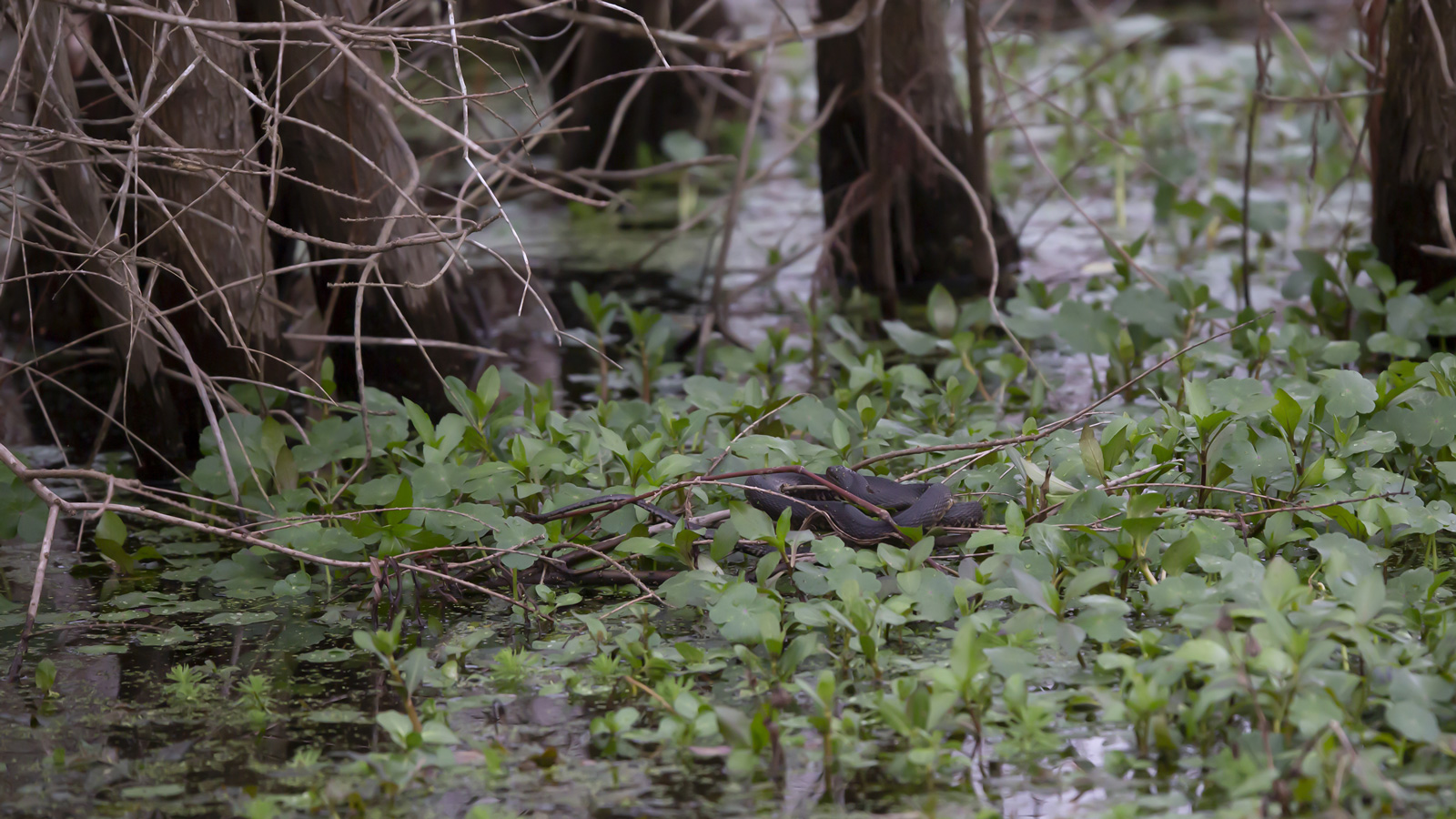
You see a flash of black and yellow at the edge of a pond and then it’s gone — into the water, into the grass, somewhere you aren’t looking anymore. That was a ribbon snake. That’s usually how it goes.
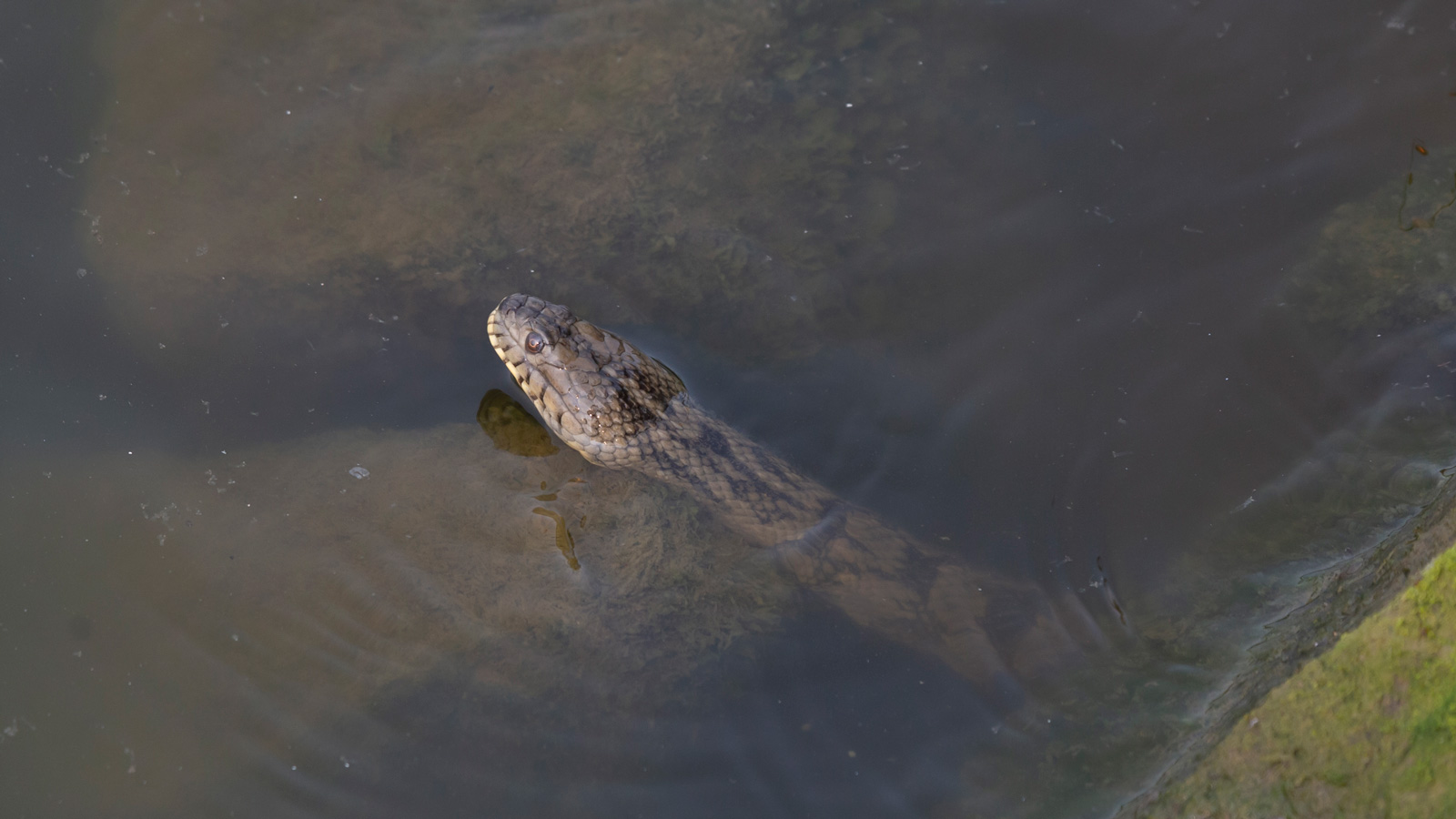
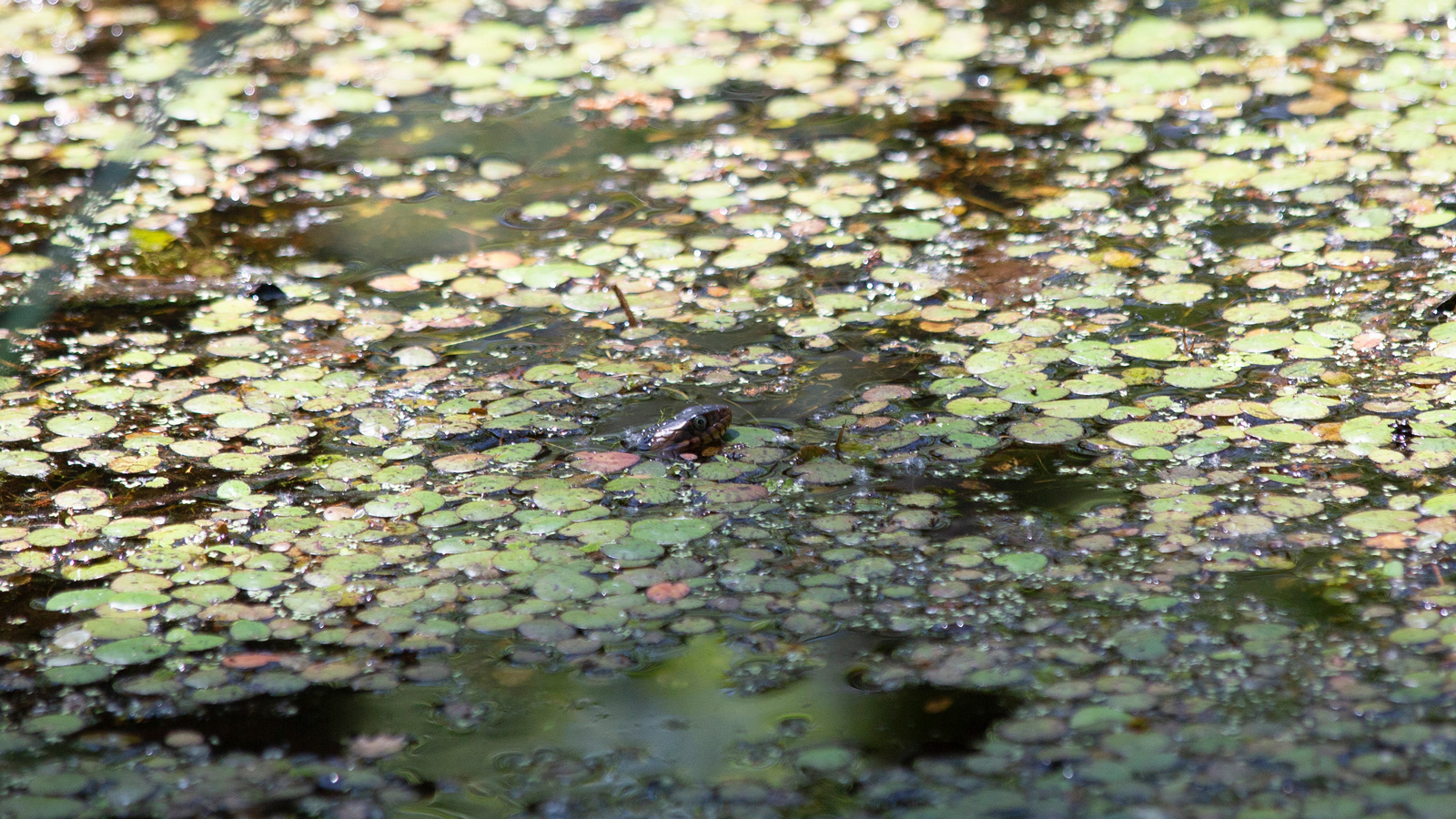
Thamnophis ribbon snakes are slender, striped, built for speed, and spend their lives at the water’s edge hunting frogs and small fish in North Louisiana’s wetlands, swamps, and bayous. They are technically garter snakes — same genus, same general shape, same striped pattern — but slimmer, longer-tailed, and more aquatic than most of their garter snake relatives. The difference between a garter snake and a ribbon snake is the difference between a sedan and a sports car. Same basic concept, different execution.
North Louisiana has two ribbon snake species that occupy the same general habitat but require different amounts of luck to find. The eastern ribbon snake is common and widespread — probably in the nearest pond right now. The orange-striped ribbon snake is rare, patchily distributed, and exciting enough that a confirmed sighting is worth documenting and reporting. Both are non-venomous, harmless to humans unless you are a frog, and fast enough to disappear before you’ve finished registering what you were looking at. The speed is not an exaggeration. These are snakes that make the decision to leave and act on it in the same instant, and by the time you’ve processed "that was a ribbon snake" the ribbon snake is already in the water or the grass or somewhere you are no longer looking.
Orange-Striped Ribbon Snake
Thamnophis proximus proximus is the rare one. Its range runs from New Mexico and the Gulf Coast north through Oklahoma, Kansas, Arkansas, and into Missouri — and Louisiana is at the eastern edge of all that, which is a polite way of saying the snake is at the end of its territory and the population shows it. Patchily distributed. Smaller numbers. The kind of distribution where you can visit suitable habitat repeatedly and never find one, and the one time you do find one, it’s a story you tell.
The name delivers exactly what it promises: a bright yellow-to-orange stripe running down the center of the back, against a body that is black or very dark brown. The contrast is dramatic. The head is black with a yellow or orange spot on top and a white bar in front of the eyes. The belly is pale yellow or greenish-white, unmarked. The snake looks like it was designed to be noticed, which works against it when the thing doing the noticing is a hawk.
Adults average 20 to 30 inches but feel smaller because the build is pencil-thin. Put a three-foot copperhead next to a two-foot ribbon snake and the copperhead looks like it eats more. The tail takes up about a third of total body length — long even by ribbon snake standards, and one of the features that separates ribbon snakes from their stockier garter snake relatives.
Orange-striped ribbon snakes are active April through October near permanent water — ponds, swamps, slow-moving streams, marshes — with aquatic vegetation and good cover. They hunt by sight and smell along the water’s edge, catching frogs, tadpoles, salamanders, small fish, and occasionally insects. Black Bayou Lake NWR near Monroe, Kisatchie National Forest, Lake Claiborne State Park, Poverty Point Reservoir State Park, and Tensas River NWR all have suitable habitat and documented sightings — though "documented sightings" here means "someone found one and reported it and everyone was appropriately excited about it."
Mating happens in spring after emergence from brumation. Females give live birth to 4 to 24 young in August or September. Young are born at 7 to 9 inches, fully developed, immediately independent. Lifespan reaches 10 years in captivity; average wild lifespan is probably 4 to 6 years given the predator list.
Eastern Ribbon Snake
Thamnophis saurita is the one you’ll actually find. It’s present wherever there’s permanent water in North Louisiana, which in practice means it’s at every pond, bayou, swamp, lake margin, and roadside ditch with vegetation. Superficially similar to the orange-striped but a distinct species — different enough that herpetologists separated them, similar enough that most people wouldn’t notice from ten feet.
The body is jet black with three bright yellow stripes — one dorsal running down the centerline of the back, one lateral on each side. The yellow is vivid and lacks the orange tones of the orange-striped ribbon snake, which is the most useful field distinction in good light. Between the back stripe and each side stripe there are two rows of black spots visible at close range. The belly is greenish-white or pale yellow, unmarked.
Adults run 18 to 26 inches, similarly slender to the orange-striped, with the same long tail making up approximately one-third of total length. Eastern ribbon snakes are pursuit predators — they chase prey rather than waiting in ambush — and the build reflects that. They are fast and agile in ways that ambush hunters like copperheads are not.
Eastern ribbon snakes are genuinely common. Black Bayou Lake NWR, D’Arbonne NWR, Kisatchie National Forest, Red River NWR, Lake Claiborne State Park, Lake Bistineau State Park, Tensas River NWR — and essentially any wetland, pond, stream, or bayou in North Louisiana with permanent water. They are among the most frequently encountered snakes near water in North Louisiana and can be found basking on logs, swimming across ponds, or moving along shorelines during warm months. They are not shy about being visible and will bask in full sun in ways that more secretive snakes avoid. The boldness works because their primary defense is speed rather than concealment — a ribbon snake that sees you from 20 feet has enough runway to be gone before you take two steps.
Mating is in spring. Females give live birth to 4 to 27 young in late summer or early fall, averaging 10 to 12. Young are 7 to 9 inches at birth, fully developed with adult coloration. Sexual maturity at 2 to 3 years, with males maturing slightly earlier than females. Growth is fastest in years one and two and slows significantly after maturity. Lifespan in the wild runs 4 to 6 years for most individuals, though some reach 10. Captive ribbon snakes have exceeded 10 years — a lifespan that wild individuals rarely achieve given the predator list.
Winter brumation from November through March in underground refugia — burrows, root channels, spaces under logs — sometimes communally with other garter snakes. Emergence in spring is triggered by consistently warmer temperatures, which means early warm springs produce earlier ribbon snakes and a cold April can keep them underground until conditions improve.
How to Tell Them Apart
Found a black snake with yellow stripes near water? It’s an eastern ribbon snake. Eastern ribbon snakes are everywhere. Orange-striped ribbon snakes are not. Start there and work backward if something doesn’t fit.
The most useful visible distinction is stripe color: orange-striped ribbon snakes have yellow-to-orange dorsal stripes; eastern ribbon snakes have vivid yellow stripes without orange tones. This is genuinely helpful in good light at close range. From a distance or in poor light, it’s less useful.
Eastern ribbon snakes also have two rows of black spots between the back and side stripes that orange-striped ribbon snakes lack or have very faintly. If you can see those spots, that settles it. Most field encounters don’t provide observation conditions that close, which is why probability and stripe color are more practical starting points.
If you find what you think might be an orange-striped ribbon snake, photograph it carefully, note the exact location, and report it to Louisiana Department of Wildlife and Fisheries. Orange-striped ribbon snakes are rare enough that documented sightings contribute meaningfully to understanding their distribution.
Commonly Confused With
Common Garter Snake — Similar striped pattern but thicker body and shorter tail. The tail-length ratio is the most reliable field distinction: ribbon snake tails make up about one-third of total body length; garter snake tails are shorter, around one-quarter. If the snake looks chunky, it’s a garter snake. If it looks like it’s been on a restricted diet, it’s a ribbon snake.
Queen Snake — Small, semi-aquatic, striped. Similar enough to cause brief confusion. The belly is the separator: queen snakes have a yellow stripe along the lower edge where belly scales meet side scales; ribbon snakes don’t. Queen snakes also stick almost exclusively to rocky streams, which narrows things down considerably.
Juvenile Racer — Young racers have spotted patterns that can look like ribbon snake patterns from a distance. Adults are plain black or blue-gray and nothing like a ribbon snake. If what you saw was gone before you could confirm anything, it was probably a racer. Racers are faster and they know it.
The Call: Nothing
Ribbon snakes are silent. Nothing to hear. Males find females during breeding season by following scent trails rather than calling, which is the snake equivalent of tracking someone by GPS instead of shouting their name — more effective, no noise.
When grabbed, ribbon snakes release foul-smelling musk from cloacal glands. The musk is effective at encouraging mammalian predators to release them, which achieves the snake’s immediate goal. The snake is then released and can flee, which is the whole point. It does not make the experience pleasant for whoever is holding the snake, which is also the point.
Some ribbon snakes play dead when captured — going limp and lying motionless. This is less common in ribbon snakes than in hog-nosed snakes but does occur. Whether it works depends on the predator. A raccoon may lose interest in a limp, apparently dead snake. A heron will eat a limp snake with the same enthusiasm it eats a live one.
What They Eat
Frogs, toads, tadpoles, salamanders, small fish, insects, earthworms, and small CRAWFISH. Ribbon snakes chase prey down rather than waiting for it, which means they burn through food faster than ambush hunters like copperheads and need to eat more often — several times a week during warm months, which is a lot of frog mortality over a season.
They swim well and will chase prey into water — cornering tadpoles and small fish in shallow areas where the bank limits escape routes. A ribbon snake working the edge of a pond with emergent vegetation is doing coordinated hunt work: flushing frogs from the shoreline into the water, where other frogs have already been driven, using the geometry of the habitat to limit escape options. Whether this is strategy or just persistence producing the same result is a question herpetologists have opinions about.
Young ribbon snakes eat the same prey as adults but start with smaller items: tadpoles, very small frogs, and insects until they grow large enough to handle larger prey.
The saliva contains mild compounds that help immobilize small prey. This is not medically significant to humans and is not something to factor into encounters with ribbon snakes. The teeth are tiny, the jaw is small, and a ribbon snake bite — which only happens if you pick one up and it feels cornered — causes minor scratches that you would not notice if you weren’t aware they happened. Ribbon snakes do not bite people in the field. They leave the field.
Life Cycle
Ribbon snakes mate in spring after coming out of brumation. Females give live birth in August or September — 4 to 27 young depending on the species and the size of the female, averaging around 10 to 12. Young are 7 to 9 inches at birth and look exactly like adults. There is no parental care. The female gives birth and the young leave, and that is the end of any relationship between them.
Females can store sperm through winter and fertilize eggs the following spring when conditions are good — a useful trick for a snake whose breeding season and optimal birth season don’t align neatly.
Ribbon snakes brumate from November through March in underground refugia — mammal burrows, root channels, rock crevices, spaces under logs — sometimes communally with other garter snakes and ribbon snakes. Brumation sites near water are preferred, and the same sites may be used year after year by the same individuals. They emerge in spring when temperatures consistently stay above 60 degrees, and the first warm week of March at any Louisiana wetland typically brings ribbon snakes out onto logs and shoreline vegetation before most other snake species have stirred.
Predators
The predator list is long: hawks, owls, herons, egrets from the air. Raccoons, opossums, skunks, foxes, coyotes, bobcats, minks on land. Kingsnakes, ratsnakes, and cottonmouths are fellow snakes that eat them. Alligators, large fish, and snapping turtles take them in water. Being slender and fast and found near water puts ribbon snakes at the intersection of several food webs simultaneously.
The primary defense is speed. Ribbon snakes are among the fastest snakes in North Louisiana and rely on early detection and immediate flight. They dash into water and swim to safety or disappear into dense vegetation before a predator can close the distance. The stripes create optical confusion when the snake is moving through vegetation at speed — the pattern breaks up the outline and makes it harder for a predator to track the body and predict where the head is going. A ribbon snake at full speed through shoreline vegetation is genuinely difficult to follow visually, which is why predators that hunt by sight have a harder time with them than with slower, less striped snakes.
Why Ribbon Snakes Are Worth Finding
Ribbon snakes eat a lot of frogs. A lot. Several times a week during warm months, every week, all season. Add that up across a healthy ribbon snake population in a wetland and it’s a significant amount of frog pressure — which keeps frog numbers in check, which keeps the insects frogs eat in check, which keeps the whole system from tipping in directions that benefit nobody. This is not glamorous work. Ribbon snakes don’t get credit for it. They just do it continuously for their entire active season and then brumate and do it again next year.
They are also on the menu for herons, hawks, kingsnakes, cottonmouths, alligators, and most of the other predators in the wetlands they share. A wetland where ribbon snakes are declining is a wetland that’s telling you something, usually before the larger and more noticeable species start showing the same signal.
The threats are the usual ones: wetland drainage, water quality degradation, road mortality along wetland corridors, and the reflexive killing of snakes by people who don’t distinguish between a harmless ribbon snake and something that requires more caution. Ribbon snakes are easy to identify as harmless if you look at them for two seconds. They are also easy to kill without looking, which is the problem.
Accessibility
Eastern ribbon snakes are genuinely easy to find compared to most North Louisiana snakes. They are out during the day, near open water, visible while basking on logs, and they swim across ponds in plain sight. The challenge is not finding them — it is staying far enough back that they don’t flush before you’ve had a good look. Approach slowly, stop before they register movement, and give them a minute before moving closer.
For visitors with mobility limitations, vehicle-based observation from refuge roads at Black Bayou Lake NWR, D’Arbonne NWR, and Kisatchie National Forest is productive during spring and fall mornings. Ribbon snakes bask on logs and shoreline vegetation visible from road pull-offs adjacent to water.
For visitors who are blind or have low vision, ribbon snakes produce almost no acoustic signal in the field. A sighted companion scanning shoreline vegetation and logs during morning hours can locate basking snakes and direct attention to them. The snakes’ habit of swimming across open water makes them visible against the water surface in a way that shoreline snakes are not.
Where to Find Ribbon Snakes in North Louisiana
Eastern ribbon snakes: anywhere with permanent water. Black Bayou Lake NWR near Monroe, D’Arbonne NWR near Bastrop, Kisatchie National Forest, Red River NWR, Lake Claiborne State Park near Homer, Lake Bistineau State Park near Doyline, Tensas River NWR in Madison Parish — and every city park pond, golf course water feature, and residential wetland in the region. Scan shorelines with emergent vegetation, check logs near water, watch for swimming snakes crossing open water.
Orange-striped ribbon snakes: Black Bayou Lake NWR, Kisatchie National Forest, Lake Claiborne State Park, Poverty Point Reservoir, and Tensas River NWR all have documented habitat and documented sightings. Bring patience and calibrate your expectations accordingly. Finding one is genuinely good luck. The sighting is worth reporting to LDWF because the distribution data for this subspecies in North Louisiana is sparse enough that each confirmed location adds real value to the picture.
Spring — April through May — and fall — September through October — are peak seasons for both species. Morning hours are most productive. Warm humid days after rain are particularly good because amphibian prey is active and the snakes are hunting. Summer shifts activity toward early morning and evening; midday heat pushes them into shade.
The snake you see swimming across a pond at 8 AM on a warm April morning is almost certainly an eastern ribbon snake. It will be gone before you finish locating your binoculars. This is fine. There will be another one. Eastern ribbon snakes are common, they are active during the day, and any decent wetland in North Louisiana is holding more of them than you can see at any given moment. The patience required to observe them is less than the patience required to find most North Louisiana snakes — it is really just a matter of arriving early, moving slowly, and not rushing the shoreline scan.
Frequently Asked Questions
Are ribbon snakes venomous? No. Eastern and orange-striped ribbon snakes are harmless, non-venomous garter snakes.
Which ribbon snake is common in North Louisiana? The eastern ribbon snake is common and widespread. The orange-striped ribbon snake is rare and patchily distributed.
How do I tell a ribbon snake from a garter snake? Ribbon snakes are slimmer, more aquatic, and have longer tails, with the tail making up about one-third of total body length.
What do ribbon snakes eat? Mostly frogs, tadpoles, salamanders, small fish, insects, worms, and small crawfish.
Should I report orange-striped ribbon snake sightings? Yes. Confirmed sightings are useful because the subspecies is rare and distribution data in Louisiana remains patchy.
Snakes of North Louisiana: The Complete Local Guide
North Louisiana has more than 40 snake species. Six are venomous. The rest are working hard, minding their business, and would appreciate it if you’d stop screaming.
Somebody in North Louisiana, right now, is texting a photograph of a snake to everyone they know. The snake is on the porch, or in the garden, or — God help them — inside the garage, and the question being texted is some variation of "IS THIS THING GOING TO KILL ME." The people receiving the text are responding confidently and incorrectly. The snake, unaware that its photograph is circulating, is trying to locate the gap in the siding it came in through and get back out before any of this escalates further.
This is the standard North Louisiana snake encounter, and it plays out hundreds of times a day across the region from March through October. The fear is real. The danger, in the vast majority of cases, is not.
North Louisiana has somewhere north of 40 snake species. Six are venomous. Six. The other 34 or so range from entirely harmless to actively beneficial — eating rodents in your barn, hunting copperheads in your woodpile, keeping the toad and frog population from staging a coup in your garden. The problem isn’t that North Louisiana has a lot of dangerous snakes. The problem is that North Louisiana has a lot of snakes that people can’t identify and therefore assume are the dangerous kind, which leads to a lot of very alarmed people and a lot of very dead rat snakes that were just trying to commute.
This guide is going to fix that. We’re going to cover the venomous species you actually need to know, the harmless species that keep getting blamed for things they didn’t do, how to tell them apart in the field when your adrenaline is already running, what to do when you find one, what to do in the bad scenario where someone gets bitten, and — eventually, by the end of this — maybe talk you into finding the whole situation interesting rather than terrifying. That last part is ambitious. We’re going to try anyway.
What Snakes Are Actually Doing Out There
Before we get into the identification guide, here’s the argument for why any of this matters beyond your personal anxiety management.
Snakes are running pest control operations across North Louisiana on a scale that no human exterminator can match, at a price point nobody can beat, and with results that your local mouse population finds extremely discouraging. The rat snake in your barn is handling more rodents per year than the average snap trap array. The kingsnake in your woodpile is actively hunting copperheads and cottonmouths — kingsnakes are immune to pit viper venom and eat venomous snakes with the enthusiasm of a creature that has never been inconvenienced by them. The little garter snake in the compost is eating the slugs and the field mice and the things you also don’t want in there.
Kill the harmless snakes around your property and you have more rodents, more insects, and — this is the genuinely ironic part — more venomous snakes, because you’ve removed the animals that were keeping them in check. The ecosystem does not reorganize itself around your preferences. It just removes the pieces you broke and shows you what the imbalance looks like.
The other thing worth knowing is that snakes are, as a group, deeply committed to avoiding you. The behavioral reality of almost every snake encounter is that the snake was trying to not be seen, something went wrong with that plan, and it is now trying very hard to resolve the situation by leaving. The encounters that go badly — defensive bites, defensive strikes — almost always involve a human who decided that the snake’s exit strategy wasn’t happening fast enough and tried to accelerate it by poking, grabbing, or attempting to kill the snake. The snake’s response to that is not aggression. It’s self-defense. There is a difference, and it matters for how you think about the interaction.
The Venomous Six — Learn These Cold
Six species. That’s what you actually need to be able to identify on sight in North Louisiana. Not the full forty-plus. Not every subspecies and regional variation. Six animals, all of which are distinctive enough that a few hours of looking at photographs will give you reliable recognition in the field. This is genuinely not that much to ask of someone who spends time outdoors in the region.
Four of the six are pit vipers, which share a family resemblance that makes them easier to learn as a group: heavy bodies, broad triangular heads that look like they were designed by someone who wanted you to notice them from a distance, heat-sensing pits between the eye and nostril, and keeled scales that give them a dull, rough appearance rather than the smooth sheen of most harmless snakes. Learn the group first, then the individuals.
The Pit Vipers
Eastern Copperhead (Agkistrodon contortrix) — Venomous — Most Common Bite Species
The copperhead is the snake most responsible for North Louisiana snakebite statistics, and it earns that distinction entirely through camouflage rather than aggression. The pattern — chestnut hourglass crossbands on a pinkish-tan background — is not decorative. It is a direct imitation of dappled light and shadow on a leaf-littered forest floor, and it works so well that people step on copperheads they were looking directly at and simply did not process as a snake. That’s not user error. That’s millions of years of successful camouflage evolution.
Adults run 24–36 inches, copper-colored head, hourglass crossbands narrower on top and wider on the sides. Young copperheads have a bright sulfur-yellow tail tip — they wiggle it to lure prey, which is either impressive or deeply unsettling depending on your tolerance for snakes that have already developed strategies before they’re six inches long.
Copperheads turn up in hardwood forest and pine-hardwood transition zones, creek bottoms thick with debris, rocky hillsides, brush piles, and the occasional suburban woodlot that backs up against trees. More common in the hill parishes than the flatlands. Their primary defense strategy is to stay exactly where they are and let the camouflage handle it, which is why the standard copperhead encounter involves someone nearly putting their foot on one rather than seeing it from across the yard. Watch where you step in leaf litter. Watch where you put your hands around logs and debris. This is the main ask.
Bite is painful and requires medical attention. Rarely fatal in healthy adults. The copperhead is not trying to bite you — it just doesn’t want to be stepped on, which is a reasonable position for any creature to take.
Northern Cottonmouth (Agkistrodon piscivorus) — Venomous — Water Moccasin
The cottonmouth has a reputation for aggression that is significantly larger than the evidence supports, and that reputation has gotten a lot of harmless water snakes killed by people who were not actually looking at a cottonmouth. What’s true about the reputation: cottonmouths are notably less interested in retreating than most snakes. When a cottonmouth decides you’re too close, it coils, flattens its body, and opens its mouth wide to show you the white interior — the behavior that earned the name. That is a warning display, not a prelude to launching itself across the bank at you. Back up and it resolves. Stand there and argue with it and the situation escalates entirely on your own initiative.
Heavy-bodied, 30–48 inches, adults often so darkly patterned that the crossbands are barely visible — some old adults look nearly uniform dark brown or black. The head is large, broad, and emphatically triangular. The open-mouth display, when it happens, is diagnostic and unmistakable. Young cottonmouths are brighter, with more obvious banding and the same yellow tail tip as young copperheads.
Found in every warm-water aquatic system in North Louisiana — bayous, cypress swamps, lake margins, flooded timber, drainage ditches, and slow rivers. Sunning on logs and branches over the water. Kayakers and paddlers on North Louisiana waterways will encounter cottonmouths with some regularity; the correct response is to paddle wide of them and continue with your day. The venom is serious — potent hemotoxic and cytotoxic, significant tissue damage, genuine medical emergency — and nearly every bite involves someone who made a deliberate choice to interact with the snake rather than the snake initiating anything.
Timber Rattlesnake / Canebrake (Crotalus horridus) — Venomous — Largest Venomous Snake in Region
The Timber Rattlesnake is the one that earns the drama. Adults reach 36–60 inches with a body thick enough to make you recalibrate your sense of what a snake can look like, a pattern of dark chevron crossbands on gray or brown, and a rattle at the tail that produces a dry, buzzing, absolutely unmistakable sound that will stop you mid-step regardless of how many times you’ve heard it described. The Gulf Coastal Plain population — historically called the Canebrake — often shows a rusty-orange dorsal stripe running the length of the body that makes it even more visually distinctive.
The interesting thing about Timber Rattlesnakes is that they are, temperamentally, remarkably patient animals. They will often simply hold still when a person comes near rather than rattling or retreating — the rattle is reserved for when they’ve decided the situation has gone far enough. When they do rattle, they are communicating, not attacking. The appropriate response to a rattling rattlesnake is to back away slowly and feel genuinely grateful that the snake warned you, because it didn’t have to.
Less common than the copperhead or cottonmouth — finding one in North Louisiana is a notable event. Hardwood creek bottoms, cane thickets, and the Kisatchie forest drainages are the most likely locations. The venom is serious business: large venom yield, potent hemotoxic and sometimes neurotoxic components, the kind of bite that determines your afternoon plans for the next several days and involves a medical team making decisions about antivenom. Go to the emergency room.
Western Pygmy Rattlesnake (Sistrurus miliarius streckeri) — Venomous — Small and Easy to Overlook
Everything about the Pygmy Rattlesnake is scaled down except the attitude. Adults reach 15–24 inches — small enough to be dismissed as a juvenile of something else, which is a mistake — with a gray to reddish-brown pattern of dorsal blotches and a rusty mid-dorsal stripe. The rattle is tiny and produces a faint, insect-like buzzing that is genuinely easy to miss, particularly in leaf litter or grass. This is the venomous snake most likely to go unnoticed until someone’s foot is already in the wrong place.
Longleaf pine uplands and pine flatwoods are the home turf — Kisatchie’s longleaf districts are prime habitat, and encounters there are more common than most people realize because the snake is small and cryptic and the rattle doesn’t carry. Bite is medically significant and requires a hospital visit. "It’s just a little one" is not a medically sound assessment.
The Other Two
Eastern Coral Snake (Micrurus fulvius) — Venomous — Neurotoxic
The coral snake is the venomous species North Louisiana residents are least likely to encounter and most likely to misidentify when they do, because it looks nothing like the pit vipers and everything like the harmless scarlet kingsnake and scarlet snake. The pattern is distinctive: bold red, yellow, and black bands running the full length of the body, with a black snout. The rule that works for Louisiana specifically — "red touch yellow, kill a fellow; red touch black, friend of Jack" — refers to which color bands are adjacent to each other. Coral snake: red bands touch yellow bands. Scarlet kingsnake: red bands touch black bands. The snake’s head is narrow and blunt, not triangular — it looks, honestly, more like a decorative object than a venomous reptile, which is part of why people pick them up.
Largely fossorial — it spends most of its time underground or under cover objects, hunting other small snakes and lizards, and it is secretive enough that many people who spend years in prime habitat never find one. When they do encounter people, coral snakes typically try to hide their head and wave their tail around as a distraction, which is a behavioral strategy that is endearing if you know what you’re looking at and alarming if you don’t.
The venom is neurotoxic — different from the pit vipers, blocking nerve transmission rather than destroying tissue, with the genuinely unsettling feature of delayed onset. Someone bitten by a coral snake may feel fine for several hours. That apparent fine-ness is not medical reassurance. It is a window during which antivenom can work. Use it. Any coral snake bite goes directly to the emergency room, no waiting to see how it develops.
Eastern Hognose Snake (Heterodon platirhinos) — Rear-Fanged / Mildly Toxic — The Best Show in North Louisiana
Technically the hognose is rear-fanged with mild venom that works on toads — its primary prey — but poses no meaningful threat to humans. It’s in this section because its defensive behavior gets it reported as a dangerous snake with enough regularity that it has earned an explanation, and because that defensive behavior is, objectively, one of the more entertaining things happening in the North Louisiana natural world.
The hognose is stout, 20–33 inches, with an upturned shovel-shaped snout for digging up toads. Pattern is variable — tan, gray, brown, blotched, sometimes nearly black — and the upturned nose is the thing to look for. When threatened, it does the following, in order: spreads and flattens its neck into a cobra-like hood while hissing loudly, makes dramatic mock strikes with its mouth closed (it is bluffing; it knows it’s bluffing; it is hoping you don’t know it’s bluffing), and then — if none of that worked — rolls completely onto its back, opens its mouth, lets its tongue loll out, and plays dead with absolute conviction. If you flip it upright, it rolls back over. If you flip it upright again, it rolls back over again, because apparently a live snake would not do that and the hognose has committed to this story. It is one of the purest performances in nature and it is free.
This is the snake most commonly reported as a "spreading adder" or "puff adder" in North Louisiana, neither of which is a real species here. It is a hognose. Let it finish its performance and move on. It has earned the exit.
The Innocent Bystanders Everyone Blames
The North Louisiana snake that gets the most grief is the one that isn’t doing anything wrong. The following species are harmless, ecologically valuable, and collectively responsible for more unnecessary alarm and unnecessary death-by-shovel than every venomous species combined — because they’re the ones that look enough like something dangerous that people don’t stop to check.
Black Racer (Coluber constrictor) — Harmless — Most Frequently Killed Harmless Snake
The Black Racer is large, fast, glossy black, and when cornered it vibrates its tail in dry leaves and strikes repeatedly — which is enough for most people to make a series of incorrect decisions about what they’re looking at. What they’re looking at is a slender, smooth-scaled snake that eats rodents, lizards, and frogs for a living and has no interest in anyone who isn’t one of those things.
The tail vibration is worth knowing about: several harmless species vibrate their tails when threatened, producing a rattling sound in leaf litter. This is not a rattle. It is a behavioral bluff using whatever acoustic material is available. The Black Racer, the rat snake, and the hognose all do it. None of them have rattles. A rattlesnake has a rattle — a segmented keratinous structure at the tail tip that produces a very specific dry buzzing regardless of substrate. After you’ve heard a real rattle, you will not confuse it with a Black Racer in leaves. Until then, back up and look carefully.
The Black Racer’s primary distinction from the cottonmouth — the species it’s most often confused with — is everything about its body shape. Slender, not heavy. Fast-moving, not defensive-standing. Head barely distinct from neck, not broadly triangular. White chin on a black body. It looks like a different kind of snake entirely after you know what you’re seeing.
Rat Snake (Pantherophis obsoletus) — Harmless — The Barn Snake. Do Not Kill.
The rat snake is the largest snake most North Louisiana residents will ever encounter — adults commonly reach 42–72 inches, which is enough snake to produce a strong reaction in people who weren’t expecting it. Adults are typically black or very dark gray, sometimes with faint pattern remnants. Young rat snakes are a different animal visually — strongly blotched gray and brown with a pattern that gets them killed regularly by people who mistake them for copperheads. The blotches on a young rat snake are more angular and higher-contrast than a copperhead’s hourglasses, the head is not distinctly triangular, and the pattern fades toward the tail rather than sharpening. After you’ve seen both, the difference is clear. Before you’ve seen both, it’s worth a second look.
Rat snakes climb. They are in the rafters, in the barn, in the birdhouse, in the occasional attic, on the fence post you weren’t expecting anything to be on, up in trees at heights that will surprise you. A rat snake in your outbuilding is the best mouser on your property. The name is not a metaphor.
Banded Water Snake (Nerodia fasciata) — Harmless — Killed Daily in Mistaken Identity Cases
If there is one identification to get right in North Louisiana, this is the one. The Banded Water Snake is heavy-bodied, aquatic, and patterned with dark crossbands on brown — which is exactly the description of a cottonmouth, which is why it gets killed at a rate that would be embarrassing if the people doing it knew what they’d actually killed. It is not a cottonmouth. Here is the fast version of how to tell:
A cottonmouth, when disturbed, tends to stay put and display. A Banded Water Snake, when disturbed, immediately drops off whatever it’s sitting on and swims away fast. The snake that dived into the water and fled the moment you appeared was not a cottonmouth. The cottonmouth would still be there, watching you, deciding whether you needed a warning.
The Banded Water Snake will also musk and bite if you pick it up, which: don’t pick up water snakes you can’t identify, but also, a bite from a Banded Water Snake requires soap and water, not antivenom. The distinction matters quite a bit.
Diamondback Water Snake (Nerodia rhombifer) — Harmless — The One That Falls Into Boats
The Diamondback Water Snake is the aquatic species most likely to introduce itself to you in a dramatic and unpleasant way — specifically by dropping out of overhanging vegetation into your canoe or kayak as you paddle underneath it, which is a thing that happens in North Louisiana waterways with enough regularity that it has its own section in our paddling guide. The snake in question is harmless. The experience is startling. The story is excellent.
Adults reach 30–48 inches with a chain-link or diamond pattern along the back and a heavily patterned belly. They will flatten their heads defensively, which makes them look more triangular and more venomous than they are — another harmless snake that has figured out that looking dangerous has some survival benefits. A heavy, patterned, defensive water snake that just fell out of a tree into your boat is almost certainly a Diamondback Water Snake. Use your paddle to encourage it back overboard. Accept what has happened. Continue paddling.
Eastern Kingsnake (Lampropeltis getula) — Harmless — Actively Hunts Venomous Snakes. Do Not Kill This Snake.
The Eastern Kingsnake is glossy black with white or yellow chain-link banding, 36–48 inches, and the single most useful snake you can have on your property if your concern is venomous snakes. It is immune to pit viper venom. It eats copperheads, cottonmouths, and rattlesnakes. It does this on purpose, with preference, apparently enjoying it. A kingsnake in your woodpile is doing something that directly reduces your risk from the venomous species on this list, and the irony of killing the kingsnake because you found a copperhead near it is the kind of outcome that makes herpetologists genuinely sad.
Scarlet Kingsnake (Lampropeltis elapsoides) — Harmless — Red Touches Black. Not a Coral Snake.
Small — 14–20 inches — with bold red, black, and yellow banding that closely mimics the coral snake pattern. Close enough that people have been genuinely confused at distance and in photographs. The distinction that matters: in the Scarlet Kingsnake, red bands touch black bands. In the coral snake, red bands touch yellow bands. The Scarlet Kingsnake’s nose is red; the coral snake’s nose is black. "Red touch black, friend of Jack" holds for Louisiana. It is one of those natural selection stories where a harmless animal has evolved to look like a dangerous one and is succeeding at it so well that it occasionally gets killed by people who know the dangerous one exists, which undermines the whole strategy but doesn’t seem to have stopped it from working.
Telling Them Apart Without Getting Close Enough to Check
A handful of myths about snake identification circulate in North Louisiana with a confidence that bears no relationship to their accuracy.
"All water snakes are cottonmouths." There are at least six water snake species in North Louisiana. One is venomous. If you operate on the assumption that every water snake is a cottonmouth, you will be wrong the vast majority of the time and will have killed a lot of harmless animals in service of that error. Learn what a cottonmouth looks like specifically and let the others live.
"Triangular head means venomous." The Banded Water Snake, the Diamondback Water Snake, the hognose, and several other harmless species flatten and widen their heads defensively to appear more dangerous. Head shape on an alarmed snake is the least reliable identification feature available to you. The coral snake, meanwhile, has a relatively narrow head that doesn’t read as threatening at all. Head shape alone has gotten harmless snakes killed and given people false confidence about coral snakes. Stop using it as your primary indicator.
"Bright colors mean danger." The copperhead, which causes more bites than any other North Louisiana venomous snake, is brown. The scarlet kingsnake, which is bright red and yellow, is harmless. Color is not a reliable safety indicator.
The fast reference guide:
Pit vipers have broad, triangular heads that look like arrowheads; heavy, thick bodies relative to their length; keeled scales with a dull, rough surface; and tails that taper abruptly. Rattlesnakes have a rattle — an unmistakable dry buzz regardless of what substrate they’re on. When threatened, they hold position; cottonmouths gape; rattlesnakes rattle.
Most harmless species have narrower, more oval heads with a gradual transition into the neck (unless they’re defensively flattening it); slender to moderate bodies (water snakes are the exception); often smooth, glossy scales; and tails that taper gradually. Their tail vibration in leaves is a bluff, not a rattle. When threatened, they usually flee fast — water snakes drop and swim, racers move away quickly, hognose snakes put on a production.
The single most useful behavioral distinction: cottonmouths stand their ground and display. Banded and Diamondback water snakes drop off their perch and swim away the moment you appear. If the water snake fled, it was almost certainly not a cottonmouth.
The best identification tool isn’t a checklist — it’s familiarity. Spend an afternoon looking at photographs of the six venomous species and the six harmless ones most commonly confused with them. Look at them in different lighting, different angles, different ages. Build a mental image of the whole animal rather than checking features one by one. When you’ve seen enough photographs of what a cottonmouth actually looks like — that heavy body, that broad dark head, that posture — the Banded Water Snake stops looking like one. That’s the goal.
Free identification help that actually works: iNaturalist — photograph the snake from a safe distance and submit it; the AI gives an initial ID and the Louisiana naturalist community confirms it, usually within the hour. The Facebook group "Herps of Louisiana" is an active Louisiana herpetology community where a photo gets a confirmed ID from people who know North Louisiana snakes better than anyone — friendly, not judgmental about the fear. The LSU Museum of Natural Science has range maps and photographs for every species in the state.
You Just Saw One. Now What.
The protocol for a snake encounter is four words: stop, look, back up. Everything else is commentary on those four words, but the commentary matters because the thing that gets people bitten is almost never the first step of the encounter — it’s what they decide to do after it.
Stop. The startle-and-run response is understandable and frequently makes things worse — stumbling backward, landing closer to the snake than you started, stepping on a second snake you hadn’t noticed while retreating from the first. One beat. Find out exactly where the snake is before you move anywhere.
Look. You don’t need to identify species at this point. You need to answer: where is it, is it moving toward me or away, is it in the water or on land, is it doing anything that looks like a defensive display. A slender snake moving actively away from you in any direction is almost certainly harmless and has already resolved the situation. A heavy-bodied snake in water that is holding its ground and watching you is worth more distance.
Back up. Six feet is a reasonable working distance from any unidentified snake. A three-foot copperhead has a realistic strike range of about 12–18 inches; six feet gives you a comfortable margin and enough visual distance to work on identification without anyone’s heart rate requiring medical attention. Move slowly. Sudden movements close to a snake are the proximate cause of most defensive strikes.
What you should not do. Don’t try to kill it. This is the rule that prevents the largest category of snakebites in North Louisiana, because the majority of venomous bites in the region involve a human who decided to kill the snake rather than leave it alone. A snake you leave alone will be gone in a few minutes. A snake you try to kill with a shovel or a stick is a snake with excellent reasons to defend itself and a strike range that will surprise you.
Don’t try to move it unless you know what you’re doing. "I was going to relocate it off the path" precedes a meaningful percentage of snakebite stories. If it needs to move, give it time to move on its own. They generally do.
Don’t reach under logs, boards, or debris without looking first. Don’t step over a log without looking at the other side. Don’t put your hands into dark spaces in snake country. These habits take about three seconds per log and become automatic.
If It Goes Wrong — and Usually It Doesn't
Most North Louisiana snake encounters end with the snake leaving and everyone going about their day. Occasionally they don’t. Here’s what to actually do, because the folk remedies that circulate in rural Louisiana are wrong and some of them are wrong in ways that cause additional injury.
What to do: Go to the emergency room. Now. This is the entire protocol. Everything else is what you do while getting there.
Stay calm — elevated heart rate circulates venom faster. Keep the bite site below heart level during transport. Remove rings, watches, and anything constrictive near the bite before swelling makes this impossible. Note the time of the bite. Photograph the snake from a safe distance if you can do so without risk — species ID helps the hospital select antivenom. Call Louisiana Poison Control at 1-800-222-1222 while someone else drives you to the ER.
What not to do — and why each one is wrong:
Do not cut and suck the wound. Studies show this removes less than 2% of venom while introducing bacteria and damaging tissue. No medical authority has recommended this in decades. It is a movie thing.
Do not apply a tourniquet. Concentrating venom in one limb with a tourniquet causes severe localized tissue damage and has caused amputations.
Do not apply ice. Vasoconstriction concentrates venom and worsens tissue damage. The cold feels like it should help. It makes it worse.
Do not use a suction device. Controlled studies show these are ineffective and potentially harmful. Throw the snakebite kit away.
Do not give whiskey. "Give them a drink" is persistent Louisiana folk medicine that thins blood, raises heart rate, and speeds venom circulation. It is not a treatment. It is the opposite of a treatment.
Do not wait for symptoms before going. Coral snake bites can have delayed onset of several hours. The absence of immediate symptoms is not reassurance. It is a window of time during which antivenom works. Use it.
When They're Out and Where to Expect Them
Snake activity in North Louisiana follows temperature the way most cold-blooded animals follow temperature — if you understand the weather, you understand the snakes.
Spring is the first active period and the most intense one. Snakes emerge from winter brumation in March as temperatures climb, immediately hungry and immediately mobile, and April and May produce more snake sightings than any other two months of the year. This is also when the aquatic species become conspicuous along the bayou and swamp systems — a paddle on Lake Bistineau in April will produce cottonmouth sightings with regularity, and this is normal and manageable with appropriate paddling distance.
Summer shifts snake activity to the margins of the day. Midday in July is too hot for most species, and they respond to this the same way any sensible creature does — by doing their business at dawn and dusk and spending the afternoon somewhere cool. Encounters in the middle of the day decrease; encounters at dawn, dusk, and after dark on warm pavement increase. The snakes crossing rural roads at night in summer are thermoregulating on warm asphalt, which is an efficient strategy that ends badly for everyone when a car is involved.
Fall brings a second activity peak — snakes feeding heavily before the winter slowdown, moving through the same leaf-littered forest floor they’ve always occupied, and in October crossing paths with every hunter and hiker who has also decided that October is the best month to be outside in North Louisiana. The copperhead in the October woods is doing nothing different from what it always does. There are just more people walking through its living room.
Winter is not snake season but it is not entirely quiet either. Snakes enter brumation in cold weather but warm spells in January and February bring them out to bask, which surprises people who believe snakes are categorically absent in winter. They aren’t. They’re just mostly warm somewhere inconvenient to see.
The Part That Might Actually Change Your Mind
Here is the thing about snake fear that nobody says directly: most of it is unfamiliarity. Not the snakes, not the venom, not some deeply wired survival instinct that modern humans should honor. Unfamiliarity. You don’t know what you’re looking at, so everything looks potentially fatal, so you respond to a Black Racer in the garden the same way you would respond to a cottonmouth in your bedroom, which is not a calibrated response and costs you a lot of unnecessary adrenaline per year.
The people who are comfortable outdoors in North Louisiana snake country are not braver than you. They have just seen enough snakes to know what they’re looking at. They can glance at a water snake on a log and say "Banded Water Snake" without their heart rate changing, not because they have no fear response but because their brain has the information it needs to make an accurate assessment and is making it. That is learnable. It takes an afternoon with photographs and a willingness to slow down rather than react, and it pays dividends in every outdoor experience you have in North Louisiana for the rest of your life.
After the fear drops to a manageable level, the snakes get interesting. The behavioral complexity of a hunting rat snake working through a barn rafter system. The thermal ecology of a cottonmouth choosing exactly the right log to maximize morning sun exposure. The extraordinary camouflage of a copperhead in October leaves — the specific aesthetic achievement of an animal that has refined its disguise across millions of years to match the exact forest floor of the habitat it lives in. The hognose’s theatrical death performance, which is objectively more committed than most community theater you’ve seen. These are interesting animals doing remarkable things that most people walk past in a state of anxiety that prevents them from noticing any of it.
You don’t have to love snakes. You don’t have to pick them up or take photographs or feel warmly toward them as a category. You just have to know what six of them look like so the other thirty-five stop being a source of unwarranted stress every time you go outside. That’s a reasonable ask. The North Louisiana forest will be considerably more enjoyable on the other side of it.
The snake on your porch is almost certainly a rat snake or a racer or a hognose getting ready to perform the best show in your neighborhood. The snake on the bayou bank is almost certainly a banded water snake that was sunning itself before you interrupted. The snake in the October leaves you nearly stepped on is possibly a copperhead, which is the one case in this whole guide where the alarm is warranted, which is why we told you to watch where you put your feet in leaf litter and meant it. Six species to know. Thirty-five to leave alone. One afternoon of photographs between you and a fundamentally better time outdoors in North Louisiana.
Accessibility
Snake observation is usually visual, sudden, and safest from a distance. For visitors with mobility considerations, vehicle-based observation on quiet forest roads during warm spring and fall weather can be the safest and most practical option; do not leave a stable surface or reach into cover to get closer.
For visitors who are blind or have low vision, most snake encounters are not sound-based. The useful access information is procedural: stay on clear paths when possible, use a cane or trekking pole to check the ground ahead in leaf litter, avoid placing hands into unseen spaces, and ask sighted companions to describe where the snake is before anyone moves. Rattlesnakes may provide an audible warning, but many venomous species do not, so absence of sound should never be treated as absence of snakes.