Advertisement
Fun Facts
Did You Know?
Mallard — The male shoveler's green head causes casual observers to call it a mallard at a glance. One look at the bill ends the confusion. A mallard bill is unremarkable. A shoveler bill is an event. Blue-winged teal — Shares the blue wing patch, but the shoveler is noticeably larger and the bill is completely different. The female blue-wing has a blue wing patch and a small, normal-shaped bill. The female shoveler has a blue wing patch and a bill that takes up a substantial portion of her face. Female mallard — Female shovelers and female mallards are similarly mottled brown at distance,…
If This Animal Could Talk...
"Watch closely, respect my space, and let my habitat explain the rest of the story."
The northern shoveler (Spatula clypeata) solved a problem every other dabbling duck still has. All of them filter food from the water to some degree — it's what flat bills do. The shoveler built a bill specifically for this purpose, scaled it up to something that looks faintly absurd on a medium-sized duck, lined it with 110 comb-like projections called lamellae per side, and set itself apart from every other dabbling duck in the marsh as a dedicated filter-feeder with equipment no competitor can match. The bill is unmistakable. It is wide, flat, spatulate, widening toward the tip in a shape that looks like someone attached a serving spoon to a duck's face. The drake's bill is black. The hen's is orange with dark markings. Both are large enough to be the first thing you notice about the bird, and both work the same way — skimming just below the water surface or swinging side to side through the murky shallows while the lamellae sieve out crustaceans, plankton, aquatic invertebrates, and seeds at a rate and efficiency that no other dabbling duck's bill can match. North Louisiana gets shovelers from October through March, in numbers that make them one of the more consistently…
What Is the Northern Shoveler Often Confused With?
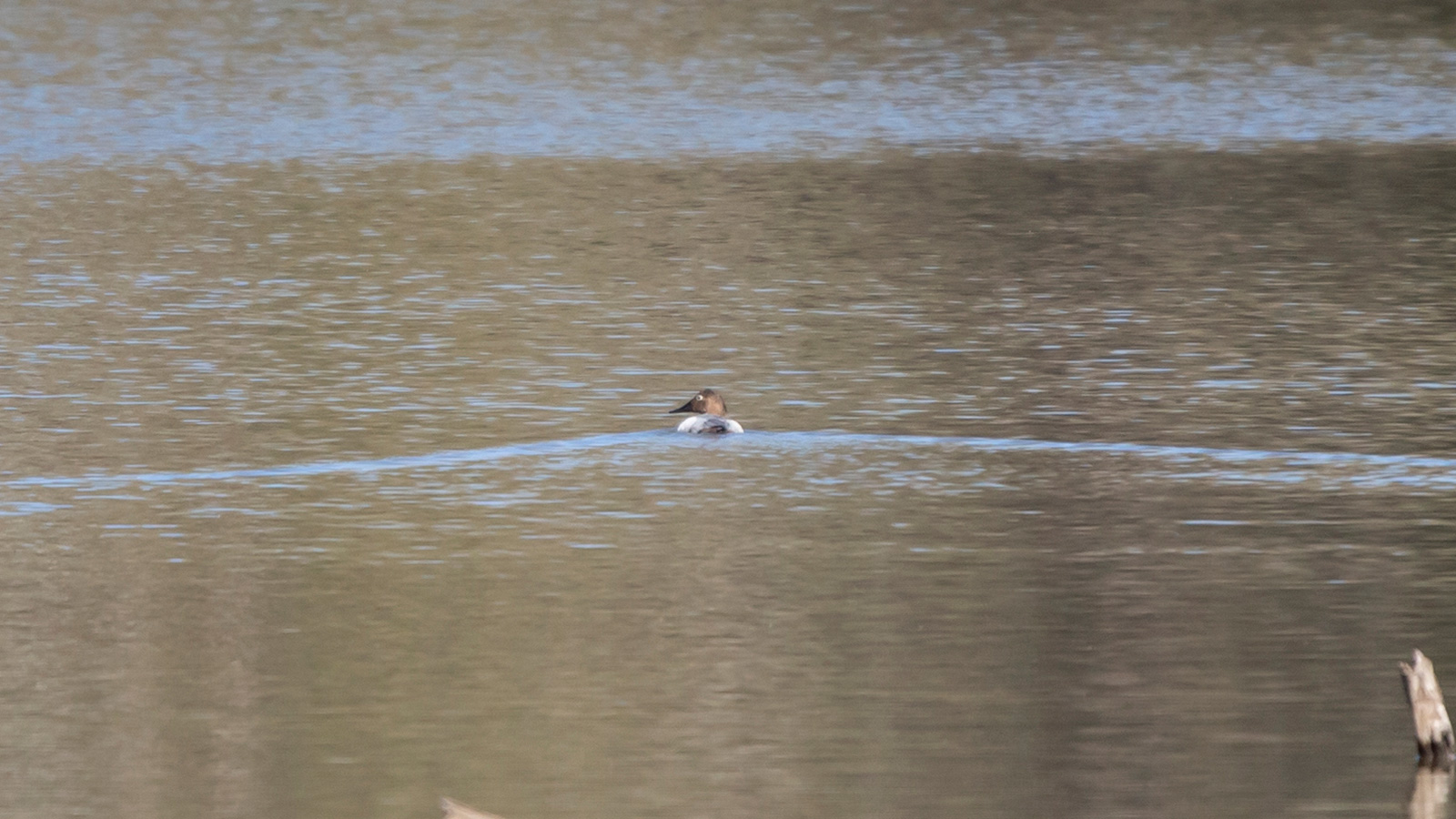
The drake in breeding plumage has a dark iridescent green head, bright yellow eyes, a white breast, and rich chestnut-brown sides and belly — a color combination that would be striking on any duck and is especially striking when presented on a bird that is simultaneously carrying what appears to be a small orange traffic cone on its face. The back is dark. There is a white flank patch just forward of the black rump and vent. In flight, the male shows a powder-blue wing patch on the upper wing and an iridescent green speculum with a white border — the same general wing pattern as the blue-winged teal, but on a significantly larger bird. The female is mottled brown overall with a large orange bill that is her most distinctive field mark. She resembles a female mallard in body pattern but the bill separates her immediately. The female's forewing is gray-blue rather than the bright powder-blue of the male, but still visible in flight. Both sexes sit low in the water with the bill angled toward the surface — a characteristic feeding posture that makes the bird look like it's perpetually searching for something it dropped. The body sits level but the front half seems heavier, which it essentially is. Eclipse males look more like females, retaining the yellow eye but replacing the green head with brown. The bill remains black, which separates eclipse males from females at close range. By October and November when birds arrive in Louisiana, most males are back in full breeding plumage and are fully identifiable by the green head and yellow eye — though the bill would identify them at any stage regardless of head color.
Drag the handle left and right to compare Northern Shoveler side by side with the species it gets mistaken for most.
1 of 3
Advertisement
Accessibility
Accessibility
Shovelers are accessible for observation from road access points and levee roads at managed impoundments because they use open shallow water that is often visible from vehicles. The spinning feeding behavior is observable from levee roads at reasonable distance — a rotating cluster of ducks on an impoundment surface is visible from 200 yards when conditions are calm. The large orange bill of the female and the large black bill of the male are visible through binoculars at distances where body plumage detail is ambiguous. Bill size and shape are the primary identification features and they work at range.
The male's took-took call is soft but distinctive in quiet conditions. The feeding behavior produces audible surface activity — the skimming sound of bills working the water surface — that is detectable at close range in calm mornings. At a productive shallow impoundment with a good shoveler concentration, the combination of surface activity sounds and low bill-skimming calls provides a reasonable acoustic profile for the species before visual confirmation.
The spinning formation also produces a distinctive pattern of wing sounds and surface noise as the group rotates — unlike the random splashing of ducks moving individually, the shoveler group produces a rhythmic, continuous sound that has a directionality to it.
Advertisement
Frequently Asked Questions
Does Northern Shoveler live in North Louisiana?
Yes. North Louisiana gets shovelers from October through March, in numbers that make them one of the more consistently present winter ducks on managed impoundments. In North Louisiana in winter that means the moist soil management units at the NWRs and WMAs, the flooded agricultural fields in the river parishes, and any shallow water body that looks unpromising to a duck with a normal bill and productive to one with 110 lamellae per side. There is no duck in North Louisiana that combines medium size with that bill profile.
How do you identify Northern Shoveler?
The drake in breeding plumage has a dark iridescent green head, bright yellow eyes, a white breast, and rich chestnut-brown sides and belly — a color combination that would be striking on any duck and is especially striking when presented on a bird that is simultaneously carrying what appears to be a small orange traffic cone on its face. The back is dark. There is a white flank patch just forward of the black rump and vent. In flight, the male shows a powder-blue wing patch on the upper wing and an iridescent green speculum with a white border — the same general wing pattern as the blue-winged teal, but on a significantly larger bird. The female is mottled brown overall with a large orange bill that is her most distinctive field mark. She resembles a female mallard in body pattern but the bill separates her immediately. The female's forewing is gray-blue rather than the bright powder-blue of the male, but still visible in flight. Both sexes sit low in the water with the bill angled toward the surface — a characteristic feeding posture that makes the bird look like it's perpetually searching for something it dropped. The body sits level but the front half seems heavier, which it essentially is. Eclipse males look more like females, retaining the yellow eye but replacing the green head with brown. The bill remains black, which separates eclipse males from females at close range. By October and November when birds arrive in Louisiana, most males are back in full breeding plumage and are fully identifiable by the green head and yellow eye — though the bill would identify them at any stage regardless of head color.
What does Northern Shoveler eat?
The shoveler built a bill specifically for this purpose, scaled it up to something that looks faintly absurd on a medium-sized duck, lined it with 110 comb-like projections called lamellae per side, and set itself apart from every other dabbling duck in the marsh as a dedicated filter-feeder with equipment no competitor can match.
Both are large enough to be the first thing you notice about the bird, and both work the same way — skimming just below the water surface or swinging side to side through the murky shallows while the lamellae sieve out crustaceans, plankton, aquatic invertebrates, and seeds at a rate and efficiency that no other dabbling duck's bill can match. A spinning flock on a productive impoundment will hold position for extended periods, working the same shallow area repeatedly while the filter-feeding is productive.
Is Northern Shoveler dangerous to people?
Courtship and Nesting
Several males typically court a single female, with each male swimming away from her in short bursts or taking short flights, attempting to lead her away from the group. The female indicates her choice by following one of them, which sounds straightforward but apparently requires multiple males conducting simultaneous auditions before she decides. The pair bond then forms. It holds through much of incubation — the male stays longer than most dabbling ducks before departing to molt, which is either devotion or an unusually drawn-out exit, depending on how you read it.
The pair bond forms and holds through incubation, which is longer than most dabbling ducks — the male remains with the female later into the nesting period than most species before departing to molt. The nest is built on dry ground near water, in short grass, lined with down. Clutch size is 9 to 12 pale olive eggs. Incubation by the female runs 21 to 27 days. Ducklings fledge at 52 to 60 days — longer than most dabblers, reflecting the time needed to develop the specialized bill to functional size.
A half-grown shoveler duckling has a bill that already looks large relative to its body, and watching the bill reach functional proportion as the bird grows is a study in developmental priority. The filter apparatus comes online before much else does, which is the correct order of operations when your entire feeding strategy depends on it.