About Finches
Four finch species in North Louisiana, every one of them powered by seeds, every one of them drawn to your feeder, and every one of them generating at least one identification argument per winter that ends with two birders staring at the same bird and arriving at different conclusions. The finch family in North Louisiana runs on sunflower seeds, nyjer, carotenoid pigments, and a willingness to fight over a tube feeder port that the bird did not pay for and will not share.
Two live here year-round. Two visit in winter. One of the visitors shows up every winter reliably. The other shows up when the spruce trees in Canada fail to produce enough cones, which means the bird's North Louisiana appearances follow a boom-and-bust schedule that nobody in Louisiana controls and everybody in Louisiana notices.
The Lineup
House finch. Year-round resident in every parish. The male wears red on the head and chest, streaky brown flanks, and a personality that treats your hanging basket as a studio apartment. Every eastern house finch descended from pet shop birds released on Long Island in 1940. The continental colonization that followed represents one of the most successful avian invasions in North American history, and the bird shows no sign of stopping.
Purple finch. Winter visitor, October through April. The male wears raspberry-wine red washed across the entire body, not just the front. The female wears the boldest face pattern of any streaky brown finch at the feeder: white eyebrow stripe, dark cheek patch, crisp streaking. The purple finch breeds in Canadian boreal forest and winters in North Louisiana in numbers that fluctuate with the northern cone crop. Some winters bring dozens to every feeder. Other winters bring a handful.
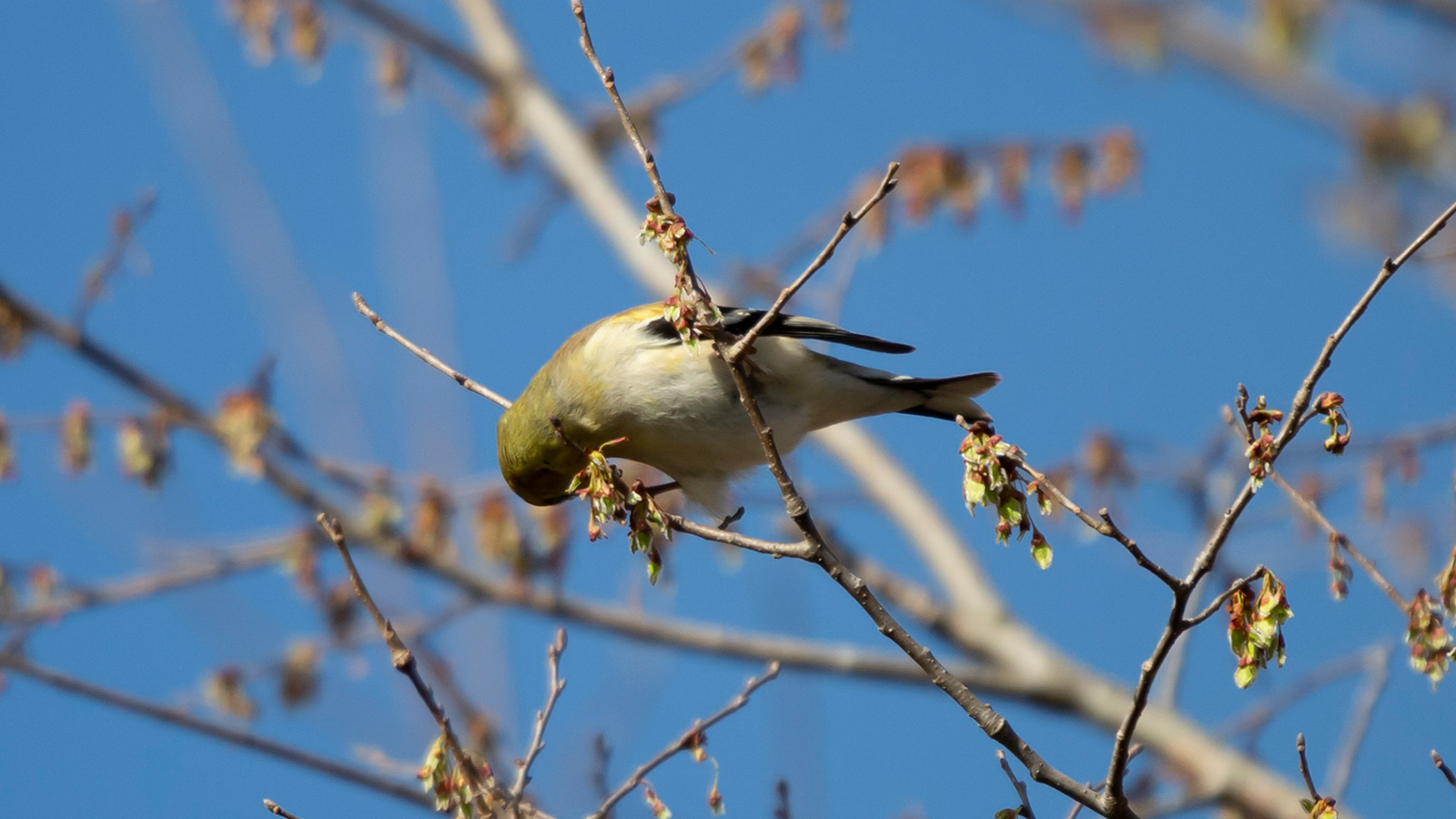
American goldfinch. Year-round resident and winter host to northern migrants. The male transforms from screaming canary-yellow with a black cap in summer to dull olive-brown in winter, producing a seasonal costume change that makes the bird look staged. Nests in July and August because the thistle seeds that feed the chicks do not ripen until midsummer. Every other bird in North Louisiana considers the goldfinch late. The goldfinch considers the goldfinch on schedule.
Pine siskin. Irruption-year winter visitor from the boreal forest. Brown, heavily streaked, with hidden yellow wing-stripes that flash during flight and during the feeder arguments the bird initiates within minutes of arrival. Shows up in enormous numbers during years when the Canadian cone crop fails. Shows up in zero numbers when the cone crop succeeds. The Winter Finch Forecast published each September predicts which kind of year North Louisiana gets.
The Feeder Community
All four species visit tube feeders with sunflower or nyjer seed, which means a well-stocked feeding station in any North Louisiana town during a good irruption winter can host all four finches simultaneously. The house finch dominates sunflower tubes. The goldfinch dominates nyjer tubes. The purple finch visits both. The pine siskin invades both during irruption years and fights for every port with an aggression that the other three species did not expect and cannot match per ounce.
The feeder creates a controlled observation environment where the identification differences between species play out at arm's length. A house finch male next to a purple finch male shows the red-versus-raspberry color difference. A winter goldfinch next to a pine siskin shows the plain-versus-streaky comparison. A purple finch female next to a house finch female shows the bold-face-versus-plain-face difference that separates the two species faster than any other field mark. The feeder turns the field guide into a live-action demonstration. Sunflower seeds fund the demonstration.
The Color Confusion
The house-finch-versus-purple-finch argument drives more backyard birding confusion than any other species pair in North Louisiana. Both males wear red. Both females wear brown streaks. Both visit the same feeders. The differences: house finch male wears red on the front with sharp brown streaking on the flanks. Purple finch male wears wine-red washed over the entire body with softer, blurred streaking. House finch female wears a plain face. Purple finch female wears a bold eyebrow stripe and dark cheek patch.
Adfinch's seasonal molt creates a different confusion: the summer bird and the winter bird look so different that beginning birders treat them as separate species until someone explains the molt. A screaming yellow bird with a black cap in June and a dull olive-brown bird at the same feeder in December belong to the same species in different costumes. The field guide shows both. The feeder shows the transition between them every March and October.
The pine siskin creates confusion only with the winter goldfinch, and only at nyjer feeders where both species feed side by side. Streaky bird equals siskin. Plain olive-brown bird equals goldfinch. Yellow wing flash during flight equals siskin. No yellow wing flash equals goldfinch. Buzzy "zzzreeee" call equals siskin. "Per-chick-o-ree" call equals goldfinch. Two species, two sounds, two streaking patterns, no overlap.
The Disease at the Feeder
Mycoplasmal conjunctivitis circulates in the house finch population and spreads to the other three finch species at shared feeders. The disease produces swollen, crusty, weeping eyes that impair vision and eventually kill the bird through starvation or predation. A house finch with conjunctivitis at a feeder port deposits bacteria on the perch, and the next bird that lands on the same perch picks up the bacteria. Every finch species that shares the feeder shares the risk.
Feeder hygiene reduces transmission. Clean feeders with a ten-percent bleach solution every two weeks, remove feeders temporarily if sick birds appear, and let the feeder dry completely before refilling. The disease spread through the infrastructure that humans built for the birds. The management starts with the same infrastructure.
When They Show Up
House finch: year-round. Every month, every parish, every feeder.
American goldfinch: year-round, with winter numbers boosted by northern migrants. Peak feeder attendance December through February. Peak visual spectacle June through August when the males wear yellow.
Purple finch: October through April. Numbers vary with the boreal cone crop. Some winters bring heavy numbers. Others bring light.
Pine siskin: November through March, irruption years only. Zero birds in non-irruption years. Check the Winter Finch Forecast in September.
Where to Start
A tube feeder with black oil sunflower seeds and a separate tube feeder with nyjer seed, hung within view of a window or porch, will produce every finch species that North Louisiana currently hosts. The sunflower tube draws house finches and purple finches. The nyjer tube draws goldfinches and pine siskins. Both tubes draw all four species at varying rates. The investment: two feeders, two types of seed, and the patience to learn which bird wears which red and which streaky brown bird flashes yellow in the wings.
For field viewing, weedy roadsides, agricultural field edges, and forest edges with berry-producing shrubs produce winter finch flocks away from feeders. The calls from overhead, "cheep" for house finch, "pik" for purple finch, "per-chick-o-ree" for goldfinch, "zzzreeee" for pine siskin, sort the species in flight before any visual field mark becomes relevant.
Experiencing These Birds: Accessibility Notes
All four species come to feeders, which makes the finch group the most accessible bird family in North Louisiana for observers with mobility limitations. A tube feeder within view of a window, porch, or accessible outdoor area brings every species to the observer. The house finch and goldfinch provide year-round feeder attendance. The purple finch adds winter attendance. The pine siskin adds irruption-year winter attendance. No trail, no hike, no special equipment beyond the feeder and the seed.
The house finch's warbling song, the goldfinch's "per-chick-o-ree" flight call, and the pine siskin's buzzy "zzzreeee" all sit at mid-range frequencies that most people hear clearly. The purple finch's metallic "pik" flight call cuts through ambient noise at close range. All four species produce enough vocal output at feeders that the sounds become familiar background within the first week of feeder watching. The ears learn the feeder soundtrack. The eyes learn the color differences. The identification skills build from the same chair, at the same window, across the same winter.