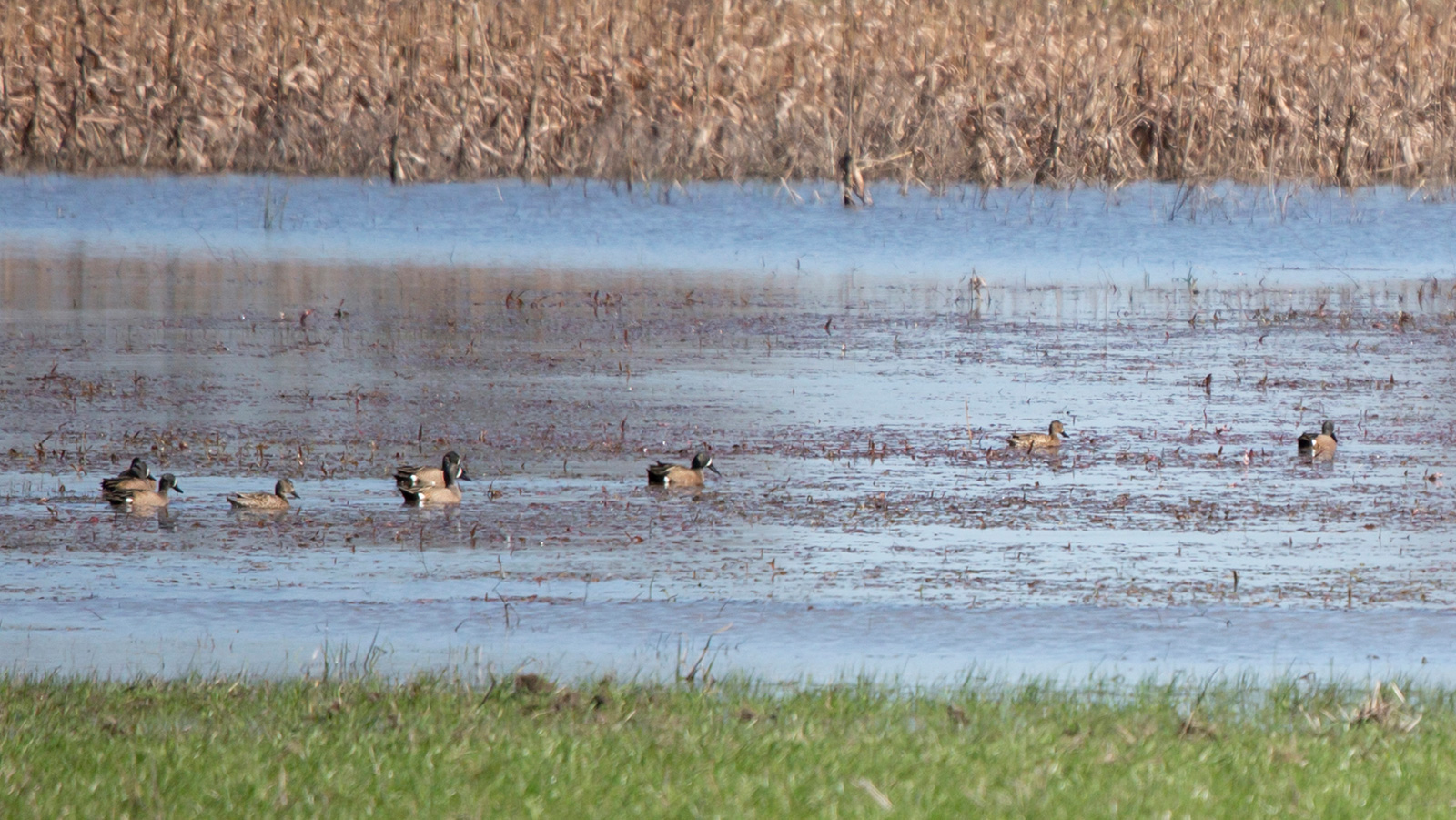
About Waterfowl
If you're staring at a field that was loaded with ducks yesterday and empty today, don't worry. They weren't kidnapped and you're not about to get a ransom letter. The water moved an inch and you didn't notice.
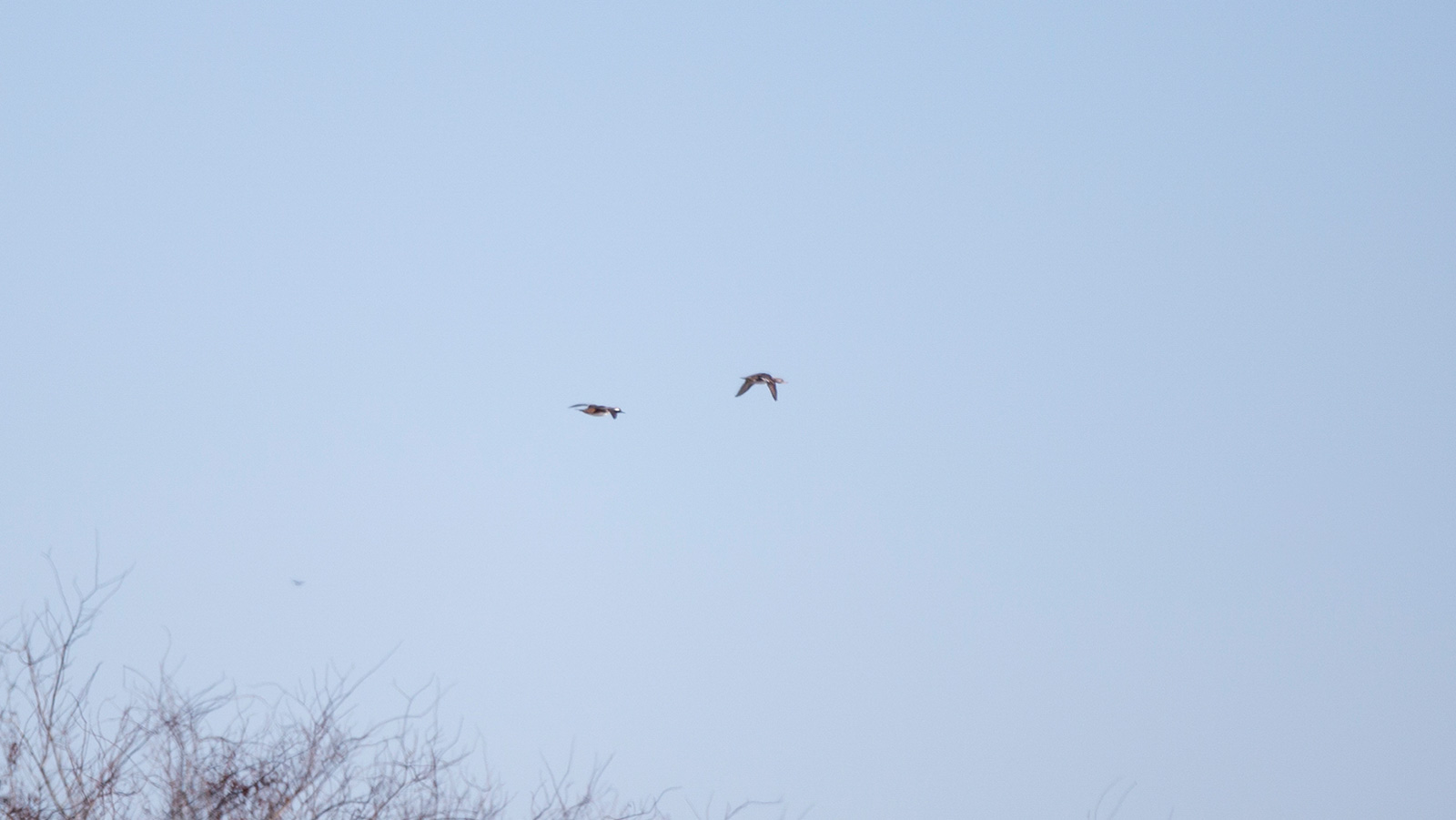
That inch doesn't sound impressive until you watch what it does. A shoveler flock spread wide over shallow suspension at sunrise can reorganize into a tight rotating cluster by mid-morning once wind roughens the surface just enough to keep fine material lifted where those spoon bills can pull it cleanly. Teal weave through the outer edges, skimming slightly firmer ground that won't hold bigger bodies. Pintails stretch along exposed ridges that still let them tip without swimming. Same acre. Three feeding styles. All shifting once depth crosses a line most people never measure.
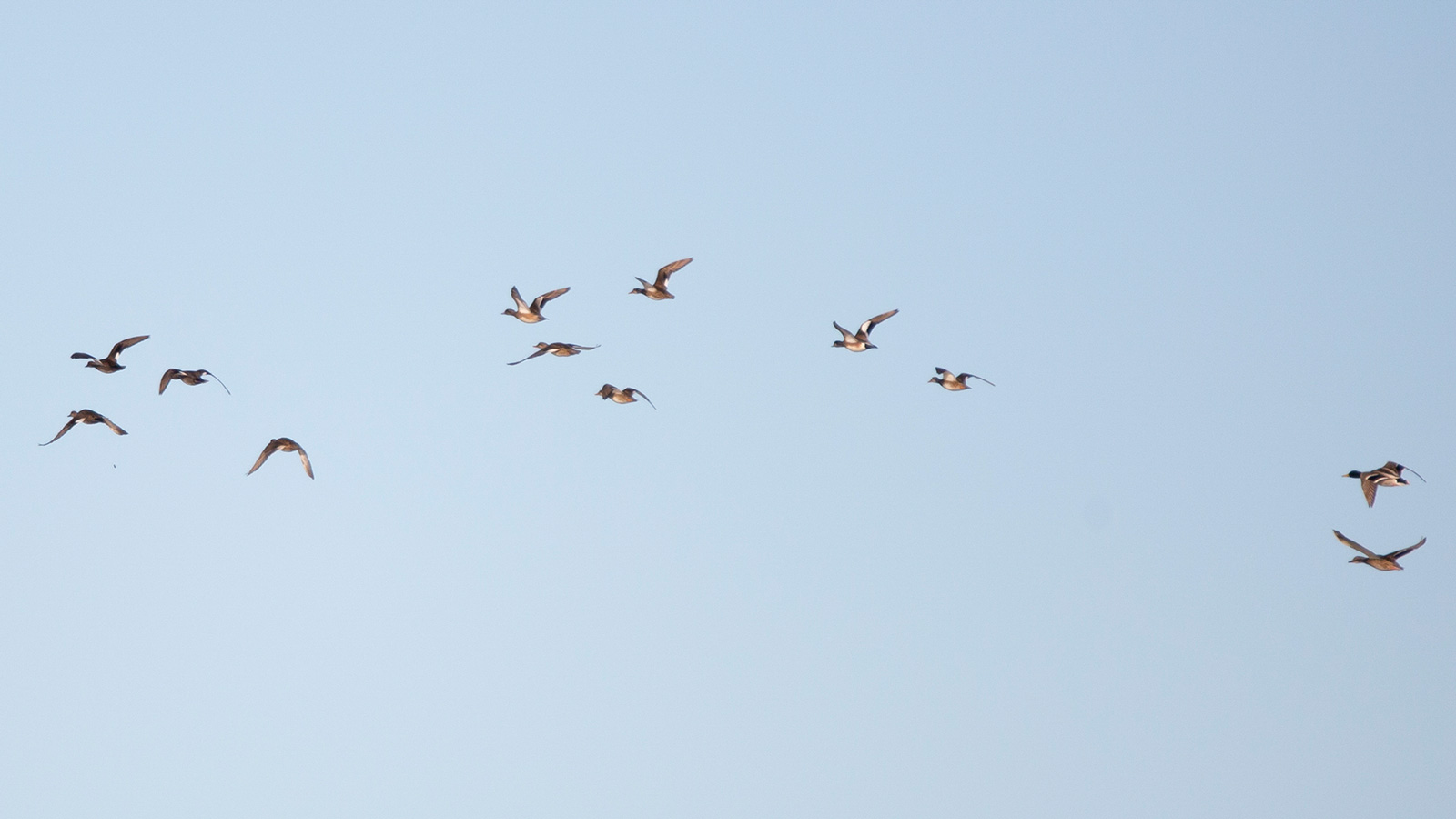
That's what dabblers are built for here. Mallards, gadwall, teal, pintails, shovelers — they work the top layer of shallow water and reach down instead of disappearing under it. When that bottom slips just out of reach, they don't argue or linger; they drift toward slightly higher ground where their bills can still hit. What looked evenly dotted at dawn tightens into narrow feeding seams by lunch because the working depth narrowed, not because birds vanished. If you're still staring at yesterday's coordinates, you're the one who stayed put.
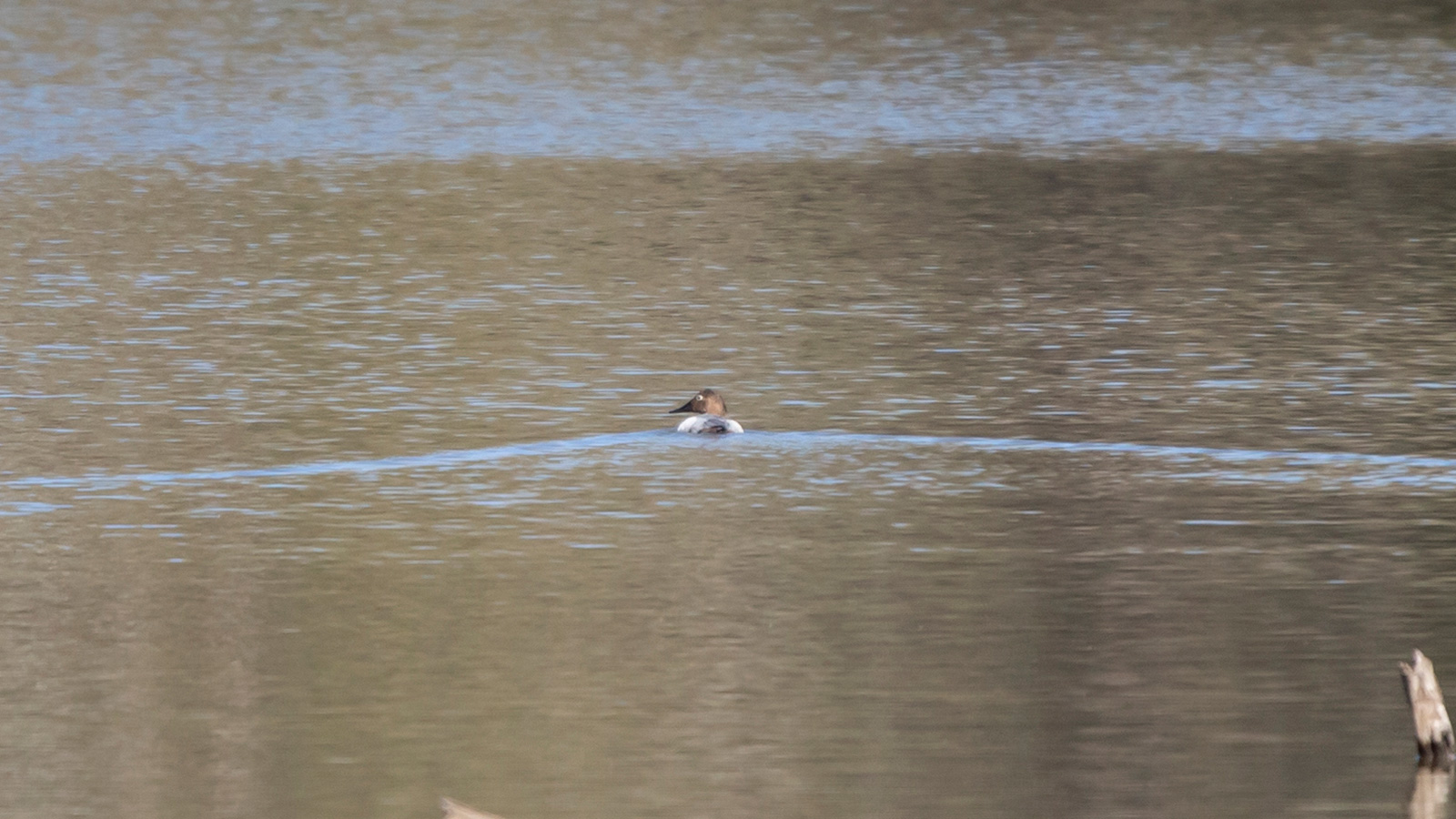
Divers don't play that shallow game at all. Ring-necked ducks sitting on D'Arbonne need enough depth to submerge completely, and when they dive they vanish in a clean line and resurface yards away like nothing happened. Wind stacking against a shoreline pulls them into thicker rafts along that edge, while calmer water spreads them into long smears that make counts feel smaller. The number didn't change; the spacing did. You just read the shape wrong.
Whistling ducks refuse to behave like either group. Black-bellied whistlers spend summer loafing along shallow edges and perching where you don't expect ducks to perch at all, then shift toward slightly deeper stretches when exposed mud expands along the margins. After a heavy rain spreads water back across those edges, they drift outward again and thin into spots that looked empty a week earlier. They don't tip like mallards and they don't dive like ring-necks. They wade, paddle, and reposition in loose, noisy groups that look half tropical and half Delta.
Geese add a different kind of spectacle. A snow goose flock near Tallulah can blanket soybean residue at first light, heads down and bodies tight as they clip stalks in a forward push that reshapes the entire field surface. Once the height drops below payoff, the flock lifts in a single rolling sheet and settles into the next patch that still stands tall enough to matter. If you stay planted in the first field, you'll swear the region emptied out. Follow them, and you'll see the same pattern repeat across miles.
All of them respond to the same simple rule: depth, surface disturbance, and forage height decide where they stand next. Raise shallow water enough to thin the feeding layer and dabblers slide. Drop reservoir levels enough to change diving efficiency and divers shift along the contour. Drain sheet water from a harvested field and teal drift toward the next shallow pocket still holding coverage. Flood timber pockets after rain and wood ducks expand outward from deeper cover into newly usable ground.
That's not mystery and it's not chaos. It's precision layered across inches and feet, with each group tuned to slightly different limits and constantly adjusting once those limits move. If you stand long enough, you stop asking where they went and start asking what changed.
When Catahoula Rearranges Itself Without Leaving
Catahoula doesn't flip like a switch. It shifts in inches that change where birds can actually work. A slow rise spreads shallow water across fresh growth and lets shovelers fan wide, sweeping suspended life across acreage that looked dry weeks earlier. Let that water creep just a little deeper and the same birds pull toward slightly higher ridges where their bills still reach comfortably without swimming. What felt evenly scattered at sunrise tightens into visible seams by mid-morning, and if you don't walk the ridge you'll think numbers dropped.
A sudden push does something different. When river stage jumps fast and depth increases overnight, dabblers compress toward firmer ground that keeps their feeding range intact. Teal cluster along outer edges where depth still lets them tip instead of paddle. Pintails line up along exposed bands that stand just high enough to matter. Nothing left the basin. The working depth narrowed.
Late-season drawdown flips the pattern again. As shallow edges retreat, invertebrates concentrate along shrinking margins and shovelers spin through thickened suspension near that retreating line. Gadwall crop exposed growth that sits half-submerged, while teal dart through the same space in tighter bursts than they did weeks earlier. The flat doesn't empty. It condenses before lift-off north.
Managed Water Without the Management Speech
Units like Yates make depth differences obvious because they sit side by side. One cell holds five inches with steady wind stirring the surface, and teal gather in loose clusters that pulse with every gust. The next cell sits just a few inches deeper and looks perfect from the levee, but feeding thins enough that birds drift elsewhere. From the road it feels inconsistent. On the water it's precise.
Pressure reshapes it quickly. A few volleys on one edge lift birds into the air, and they settle into the quiet side that hasn't seen movement yet. What looked empty fills, and what looked crowded thins without losing total bodies. If you only count the loud cell, you miss the redistribution happening across the fence line.
Drain that same unit too quickly and shallow bands narrow fast. Teal and shovelers tighten into visible feeding lanes before shifting toward neighboring water still holding workable coverage. Nothing dramatic happened. The depth line slid.
Prairie Math Shows Up in January
What you see in January often started in May. When prairie potholes across Saskatchewan and North Dakota fill with spring rain, nesting success jumps and broods survive at higher rates. Those young birds move south months later, and winter density across North Louisiana reflects that wet season whether people connect the dots or not. A heavy January at Catahoula often traces back to water thousands of miles away.
Drought cuts the pattern in reverse. Fewer broods survive, and winter feels thinner even when local water looks perfect. You can have shallow flats lined up beautifully and still see lighter numbers because production started low. The basin didn't fail. The hatch did.
Climate variability adds another wrinkle. A wet prairie spring followed by a dry Louisiana fall spreads birds thin across temporary sheet water that doesn't last long. Good production paired with shallow local water concentrates birds tightly into managed cells and visible seams. The overlap doesn't always align cleanly, which keeps things interesting.
Predators Change Geometry
Raptors don't remove huge percentages of birds, but they absolutely change where birds stand. A bald eagle cruising low over Catahoula pulls a tight cluster into a fast shuffle that spreads across a wider swath of water before settling again. Peregrines slicing over a Delta field send teal into tight, twisting bursts that break the even pattern they held seconds earlier. The birds return once the threat passes, but the spacing rarely resets exactly the same.
Even alligators in warmer months alter slough behavior. Wood ducks shift away from narrower margins where depth shrinks enough to limit escape routes. Whistlers keep slightly more distance from exposed banks when movement breaks the surface unexpectedly. The flock reshapes first and relaxes later.
Predation pressure doesn't empty flats. It reorganizes them.
The Birds People Misread Most
Gadwall get mistaken for hen mallards constantly, especially in mixed winter flocks. Stand close enough and you'll notice gadwall sit slightly smaller and carry a more uniform gray pattern, while hen mallards show warmer tones and a thicker body profile. When depth tightens and flocks compress, that distinction becomes easier to see because birds stack closer together. Spread them thin across wide water and the difference blurs.
Ring-necked ducks and scaup cause similar confusion on reservoirs. Ring-necks sit with a sharper peaked head profile and often hold slightly tighter raft formations along wind-stacked edges. Scaup spread flatter and often mingle loosely when surface conditions smooth out. The moment wind shifts, the raft reshapes and that head silhouette becomes easier to catch.
Black-bellied whistling ducks get labeled "escaped something" every summer. They aren't. They perch comfortably, stand tall, and move in loose groups along shallow edges, especially after rainfall spreads water across bottomland margins. Once you watch them adjust to depth the way dabblers do, the confusion fades.
Pintails and hen mallards trip people up in flooded flats when birds stretch long across shallow seams. Pintails look sleeker, with longer necks and a cleaner silhouette, especially when they tip in water that barely covers their legs. Hen mallards appear heavier and more compact, and when depth increases just enough to force more paddling, the difference in posture becomes obvious.
Teal add another layer of confusion because they don't sit still long enough to be polite about it. Blue-winged teal flash through shallow sheet water in September and again during spring migration, while green-winged teal dominate tighter winter flocks. In mixed groups, green-wings hold slightly chunkier bodies and move in tighter feeding bursts, especially when depth narrows to that five-inch sweet spot. Blue-wings look slimmer and carry a quicker, more nervous energy across thin sheet water that won't last long.
The trick with all of them isn't memorizing a field guide. It's watching how they react when something shifts. A two-inch rise pulls dabblers tighter, making side-by-side comparison easier. A wind shift stacks divers into thicker rafts where head shape becomes visible. A drained field pushes teal into concentrated pockets that reveal body size differences. Identification gets easier when birds compress, and harder when they spread.
Not Ducks, Still Part of the Show
Coots churn shallow water in tight packs, their constant paddling thickening surface material and drawing dabblers closer into feeding lanes. They don't tip elegantly and they don't dive like ring-necks, but their movement alters how suspension behaves across a flat. A coot-heavy corner often pulls shovelers into tighter circles simply because the water stays stirred.
Grebes operate deeper and quieter. They sit low, slice across open stretches, and vanish with barely a ripple before resurfacing yards away. On calm reservoir mornings, their movement cuts clean lines across diver rafts without scattering anyone. Add wind and those same birds hug quieter edges where surface disturbance doesn't interfere with diving rhythm. They aren't technically ducks, but they share the water and shift with the same depth cues.
Wild Isn't the Same Thing as the Birds Begging for Bread
North Louisiana holds two very different kinds of waterfowl, and they don't behave the same once water changes. Out on Catahoula or a Delta field near Tallulah, wild birds shift when depth moves a few inches or when forage height drops below payoff. At a city pond in Monroe or Ruston, a completely different cast often stands around waiting for someone to tear open a bread bag.
Muscovy ducks lead that confusion more than anything else. They stand tall, heavy-bodied, with red facial caruncles that look almost sculpted on, and they perch comfortably in trees or along rooftops in ways that surprise people who expect mallard posture. They aren't native to North Louisiana, but they survive easily because winters rarely punish them hard enough to thin numbers. When shallow pond edges shrink, they don't redistribute across subtle depth lines the way wild dabblers do; they stay near human-provided food and loaf where pressure stays low.
Domestic mallards add another layer of visual noise. You'll see all-white birds, patchy chocolate-and-black birds, oversized birds with thicker necks and rounded profiles that look slightly overbuilt for long migration. They descend from wild stock, but generations of selective breeding changed proportions and behavior. When water drops in a park pond, they don't slide toward deeper pockets to maintain feeding range. They shuffle toward the bank and wait for the next handout.
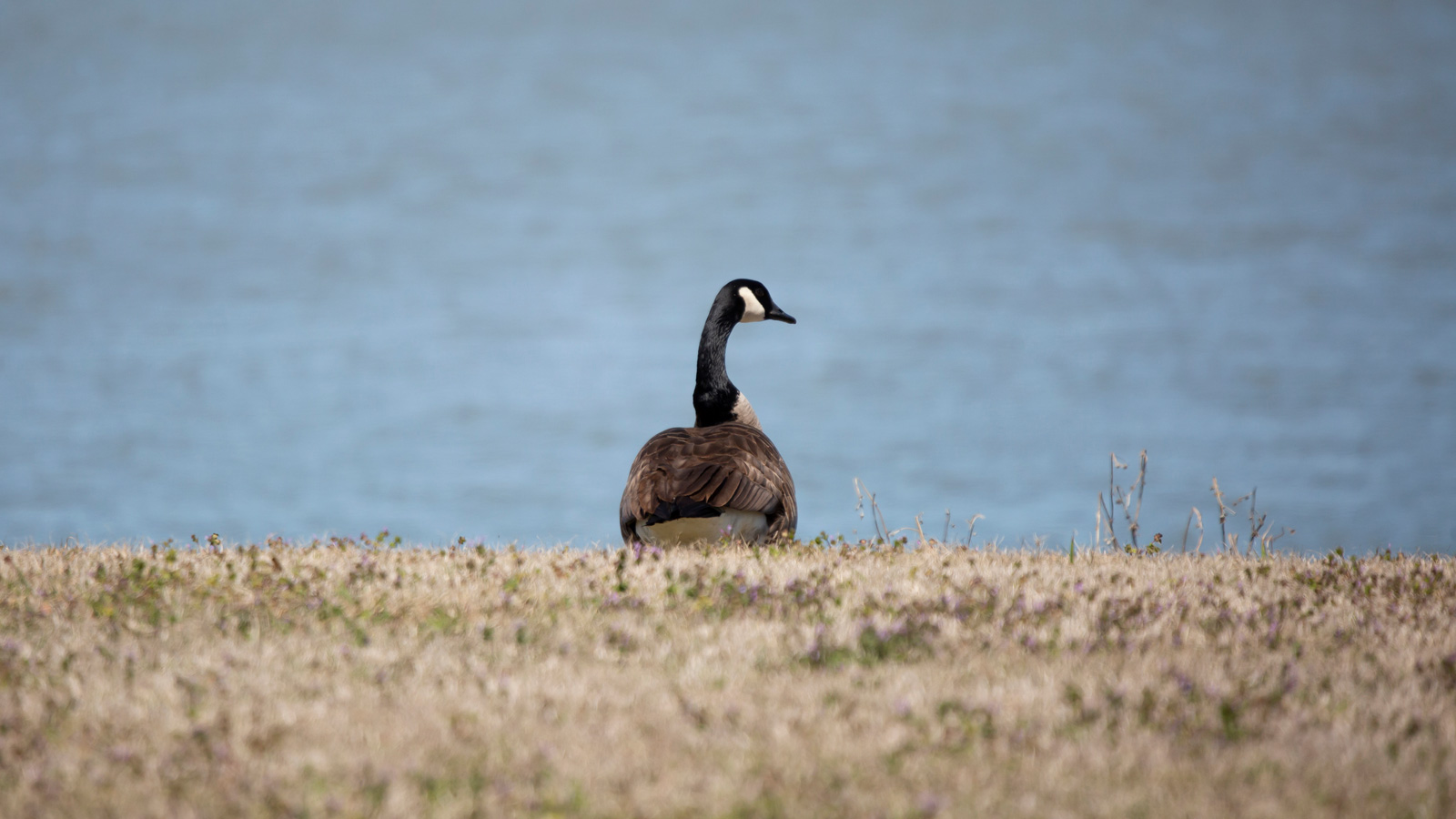
Egyptian geese complicate things further. They aren't geese in the same sense as Canada geese — they're technically shelducks native to Africa, released ornamentally and scattered across the South. They hold upright posture, sharp eye patches, and strong territorial behavior that keeps them anchored to small water bodies year-round. When depth shifts in a retention pond, they reposition within that same footprint rather than lifting across fields the way migratory geese do once forage changes.
The reason domestic and ornamental waterfowl thrive here comes down to climate and water persistence. Mild winters reduce the mortality that harsher northern states impose. Retention ponds, golf course water features, and suburban lakes hold steady depth year-round instead of fluctuating with river stage or agricultural drainage. Stability favors birds that don't need to migrate and don't rely on precise shallow feeding windows.
Wild birds move when inches matter. Domestic birds linger when bread matters. That's the difference, and once you've seen it you can't unsee it.
The Seasonal Shape of It
October feels steady until you start watching closely. Early teal that stitched thin sheet water in September now mix with gadwall and pintails across gradual refill at Catahoula, and the feeding geometry gets layered instead of frantic. Let water creep deeper over a few days and the flock pulls toward slightly higher ridges, tightening into seams that didn't exist the week before. Add a north wind and the surface changes texture fast. Nothing dramatic announces the shift. The birds just reorganize around inches you probably never measured.
By November, numbers grow but patterns stay precise. Fresh arrivals layer into existing flocks, spreading across shallow flats that still hold workable depth while divers continue building rafts on deeper reservoirs. A cold push tightens things quickly, and shallow edges that felt spacious compress into visible feeding lanes. On reservoirs, wind does most of the visual lying — a stiff blow stacks ring-necks into thick rafts against one shoreline, turning open water into a dark oval that looks heavier than yesterday. Calm flattens the surface and spreads that same group into a longer smear, making counts feel lighter even though no one left.
December builds pressure from the north without asking permission. Freeze lines farther up the flyway push new birds into already active flats, and shallow ground that felt roomy suddenly carries tighter spacing. Snow geese start layering more heavily across Delta fields at the same time. Residue that looked untouched in November begins thinning under steady feeding, and flocks lift and settle more often as forage height changes across neighboring tracts.
January exposes every shortcut assumption. A three-inch rise across shallow flats can pull dabblers toward slightly higher ridges in a matter of hours, tightening broad scatters into dense visible bands. Drop reservoir levels just enough to change diving comfort and ring-necks shift along contour lines without leaving the lake. Cold air also sharpens predator movement — eagles cruising low over Catahoula scatter tight clusters into low shuffles that spread birds across wider water before settling again.
February pulls water back in slow retreat. As shallow edges recede, feeding lanes narrow and concentrate birds into visible seams along shrinking margins. Shovelers spin through thickened suspension near the retreating edge, while gadwall and pintails crop exposed vegetation that now sits half-submerged. Teal dart through those same lanes in shorter, sharper bursts, taking advantage of concentrated invertebrates before lift-off north.
Summer isn't the offseason it looks like from the outside. Wood ducks remain in bottomland sloughs, sliding deeper into timber pockets when shallow edges warm and shrink under summer heat. After heavy rain spreads water outward again, they fan back into newly flooded ground that looked empty under dry conditions. Black-bellied whistling ducks keep the noise level up through the warm months, loafing along shallow margins and redistributing once rainfall spreads coverage back across the edge. The movement stays subtle, but it's constant.
Accessibility
Watching waterfowl in North Louisiana does not require a boat, waders, or a hunting license. Catahoula Lake has road access along the eastern edge that provides views across shallow flats from a vehicle. Yates Unit and other Atchafalaya and Delta WMA cells have levee roads where birds are visible without leaving pavement. The D'Arbonne system offers lake access points where diver rafts can be glassed from shore during winter.
For visitors who are blind or have low vision, the waterfowl experience in North Louisiana is substantially auditory. Black-bellied whistling ducks are loud enough to identify from considerable distance, producing a whistling multi-note call that is unmistakable. Snow geese flocks produce continuous calling that carries across entire fields. Teal flocks move with audible wing noise. A winter morning at Catahoula in December or January, with windows down near any active shallow flat, delivers a layered soundscape that requires no visual component to be striking.
Frequently Asked Questions
When are ducks in North Louisiana?Teal start arriving in September when thin sheet water spreads across harvested fields. By October and November, gadwall, pintails, shovelers, and mallards layer into shallow flats. Divers build rafts on deeper reservoirs once surface temperatures settle. January and February often hold peak density, but numbers track depth and forage more than calendar dates.
Are wood ducks and whistling ducks here year-round?Yes, but their positions shift constantly. Wood ducks stay in bottomland sloughs through summer and spread outward after heavy rain. Black-bellied whistling ducks follow similar depth cues. Their presence is consistent; their exact location is not.
What's the difference between dabbling ducks and diving ducks?Dabblers feed in shallow water by tipping forward without fully submerging. When water gets too deep to reach the bottom, they slide toward shallower ground. Diving ducks need depth to disappear completely and resurface yards away. Watch what happens when water level changes and the difference becomes obvious immediately.
Why do ducks seem to disappear overnight?They usually didn't leave the region. A two- or three-inch change in shallow water can tighten feeding lanes and pull birds toward slightly higher ridges, leaving yesterday's flat looking empty. On reservoirs, a wind shift spreads diver rafts thin across broader water and makes numbers look smaller without losing a single bird.
Why do some winters feel slow even when water looks good?Local depth may line up perfectly while prairie breeding production ran low the previous spring. If nesting success in Canada dropped because of drought, fewer birds enter the flyway months later. January density here often reflects May rainfall thousands of miles away.
Are the ducks at city parks wild?Some are, but many are domestic or mixed birds. Domestic mallards often show bulkier bodies, odd color patterns, and tolerance for close human presence that wild birds avoid. Wild migratory birds redistribute quickly when depth or disturbance changes. Domestic birds linger near predictable food sources regardless of conditions.
What water levels are best for ducks at Catahoula?Shallow water holding roughly five to eight inches across flats allows dabblers to feed efficiently without swimming. When depth rises beyond comfortable reach, flocks slide toward slightly higher ridges. During gradual drawdown, narrowing margins concentrate feeding activity and tighten visible seams.