About Moths
Most butterfly observers in North Louisiana see more moths than they realize.
The moth that circled the porch light last July, the brown triangle resting on the window screen in August, the pale green luna that appeared on the gas station wall one May morning and stopped everyone who walked past: all of them belong to the moth community that operates parallel to the butterfly community, often at the same sites and on the same host plants, but at different hours and in numbers that dwarf the butterfly fauna by any measure.
North Louisiana holds hundreds of moth species. The 26 species on this site represent a starting point rather than a comprehensive list, focused on species that North Louisiana observers encounter commonly, species with interesting natural history that connects to the region's plant communities and seasonal patterns, and species that reward attention beyond the initial encounter. Silk moths, tiger moths, dagger moths, measuring moths, and the tent-forming caterpillar moths: each group represents a different evolutionary strategy within the enormous Lepidopteran radiation that North Louisiana's diverse native plant communities support.
Why Moths Differ From Butterflies
The comparison between moths and butterflies produces more exceptions than rules, but some patterns hold well enough to be useful. Most North Louisiana moths fly at night or at dusk, using light sources as orientation cues that pull them toward artificial lights after dark and explain the porch-light community most observers know better than any moth by name.
Most butterflies fly by day, using sunlight for orientation, thermoregulation, and mate location. That diel division sends the two groups to different observation conditions: butterflies at open-habitat flower stands in morning sunlight, moths at lights, at bait, or at dawn when freshly settled individuals rest on surfaces before flying back to daytime roosts.
Antennae distinguish the groups reliably: butterfly antennae end in a club or knob, moth antennae show either feathery plumose structure in males of many species or tapered filiform structure without the terminal club. Wing resting posture differs: most butterflies rest with wings closed vertically or spread flat, most moths rest with wings held tent-like or flat against the resting surface. Neither rule holds absolutely, some moths rest with wings partially vertical, some butterfly resting postures look moth-like, but the antenna shape resolves any ambiguity when visible.
The Silk Moths
North Louisiana's silk moths, family Saturniidae, include the luna moth, the imperial moth, the io moth, and the polyphemus moth as regularly encountered species alongside the less common cecropia and other large silk moths. These species fly at night, are attracted to lights, and produce caterpillars that represent some of the most impressive insects in the region in terms of size and coloration.
Luna moth caterpillars reach three inches on sweet gum, black walnut, and persimmon. Imperial moth caterpillars approach four inches on pine and various hardwoods. The silk moth caterpillars as a group represent the upper end of caterpillar size in North Louisiana's insect community.
Adult silk moths do not feed, they emerge from the cocoon with enough fat reserves to complete mating and egg laying without eating. The adult silk moth that appears at a porch light lives on reserves accumulated during the caterpillar stage, survives for one to two weeks as an adult, and dies after completing reproduction. That non-feeding adult life stage means silk moths appear at lights rather than flowers, making light trapping and porch lights the primary observation method rather than flower-stand watching.
The Tiger Moths
Tiger moths, family Erebidae subfamily Arctiinae, include some of North Louisiana's most distinctive and familiar moth species. The Isabella tiger moth, known as a woolly bear caterpillar in its larval stage, flies in fall and produces the caterpillar that North Louisiana children have observed crossing roads since before anyone named it a moth.
The salt marsh moth, the Virgin tiger moth, and the harnessed moth add to a tiger moth community that covers open habitats and woodland edges with adults that fly at night and occasionally come to lights.
Tiger moth caterpillars are often hairy, using the hair as a defense against predation by making themselves difficult to eat. The hairs of woolly bear caterpillars can cause skin irritation in humans who handle them carelessly, which produces the common advice to avoid touching them, advice that overstates the risk but reflects a real if mild irritant property.
The moths themselves produce chemicals that make them distasteful to bat predators, and several species emit ultrasonic clicks that interfere with bat echolocation, representing one of the most extraordinary predator-prey adaptations in North Louisiana's nighttime insect community.
The Dagger Moths
Dagger moths, genus Acronicta and related genera in family Noctuidae, include a diverse group of moths whose caterpillars carry elaborate hair pencils and dorsal tubercles that make them distinctive despite the adults' relatively plain gray-brown wing coloration. The afflicted dagger moth, the smeared dagger, and other North Louisiana Acronicta species produce caterpillars that appear on oak, cherry, willow, and other native trees through summer and fall, often encountered on the tree trunk or on vegetation below the host plant when they descend to pupate.
Adult dagger moths fly at night and come to lights, resting during the day in bark crevices or on rough bark where their cryptic gray wing pattern with dagger-like black streaks provides camouflage against tree surfaces. The name "dagger moth" refers to those black streaks on the forewing, which appear as dark dagger-shaped marks against the pale gray forewing ground color on most species in the group.
The Geometrid Moths
Measuring moths, family Geometridae, produce the inchworm caterpillars that most North Louisiana children have at some point held on a finger and watched move. The looping walk that inchworms produce, grasping with the rear prolegs and extending the front of the body forward before bringing the rear up, reflects the absence of the middle prolegs that other caterpillars use for crawling. Geometrid caterpillars compensate for those absent prolegs with the looping movement that names the common caterpillar and earns the adult moths their family name.
Adult geometrid moths, with their relatively thin bodies and broad, often intricately patterned wings, represent some of the most aesthetically striking moths in North Louisiana's light-trap community. Species like the false crocus geometer, the chickweed geometer, and the dotted-line angle moth display patterns of fine lines, bands, and spots on wing surfaces that rival butterfly coloration in complexity and exceed it in fine detail.
Moths and North Louisiana's Plant Community
Every moth species breeds on specific host plants, and the North Louisiana moth community maps directly onto the region's native plant diversity. Silk moths on native hardwoods. Dagger moths on native oaks and cherries. Buck moths on oaks in the longleaf pine uplands. Tent caterpillar moths on native cherry and apple trees. The moth community, examined at the host plant level, represents one of the most detailed biological records of which native plants grow where in the region and in what condition.
An oak tree with diverse moth caterpillar diversity, including silk moths, dagger moths, and geometrid moths on the same tree through the season, carries a healthy, complex invertebrate community. An oak tree with no moth caterpillar activity represents either an isolated individual without the connectivity to the broader plant community that sustains moth diversity, or a tree under chemical stress that suppresses the caterpillar community that native birds depend on during breeding season.
The moth community at a North Louisiana oak tree tells a story about that tree's ecological condition that no other quick observation method delivers.
How to Find Moths in North Louisiana
White lights, particularly UV-producing blacklights or mercury vapor lights, attract moths after dark at any North Louisiana site with vegetation nearby. Sheets hung in front of lights at woodland edge sites on warm, calm, overcast nights without moonlight produce the most diverse light trap results. Peak moth activity occurs from spring through fall with the highest species diversity in summer, when the combination of warm temperatures and abundant host plant growth sustains the largest caterpillar populations and produces the most adult emergence.
Sugar baiting, painting a mixture of fermented fruit, molasses, and beer on tree bark in woodland edge settings, attracts moths that feed on fermenting plant material rather than nectar or nothing at all. That technique produces species that rarely visit lights, adding depth to the moth community picture that light trapping alone misses.
Dawn surveys, checking surfaces around lights and on vegetation near porch lights during the first light of morning when moths have settled but not yet departed for daytime roosts, produce resting individuals in postures that allow detailed examination of wing patterns and body structure without the motion blur of active flight at lights.
The Seasonal Calendar
North Louisiana moth activity peaks in May, June, July, and August, when warm nights and high plant diversity produce the largest flying populations at light stations. September and October bring fall migrants to some moth groups and maintain good diversity at lights as temperatures remain warm through most nights.
November at sheltered sites in the southern parishes still produces moth activity on warm evenings. December through February produces the deepest trough in moth diversity, though even in winter, mild nights draw geometrid moths and a few noctuid species to lights at bottomland woodland edge sites in the south.
That seasonal arc, extending across nine to ten months of significant moth activity in the southern parishes and seven to eight months in the northern upland parishes, provides observation opportunities across a much longer active window than most butterfly observers realize. The difference between butterfly and moth seasonal windows narrows when the full moth active season gets considered alongside the full butterfly active season. Moths start earlier in the year and end later in many species, filling calendar gaps that butterfly observers experience as a slow season.
Native Plants and Moth Diversity
The connection between native plant diversity and moth species richness at a North Louisiana site moves stronger than the same connection for butterflies. Most butterfly species use a limited host plant range. Most moth species also specialize, but the total number of moth species using any given native plant, oak, black cherry, native grass, native composite, exceeds the butterfly count using the same plant by substantial factors.
A North Louisiana property with ten native tree species supports a moth community an order of magnitude richer than a property with ten introduced ornamental species, even if both properties provide equivalent adult nectar resources for butterflies.
That moth-native plant relationship means that native plant restoration at North Louisiana residential, agricultural, and conservation sites improves moth community richness measurably and quickly. Native oaks added to a suburban landscape begin producing geometrid and noctuid caterpillar populations within the first growing season.
Native cherries produce dagger moth and sphinx moth breeding habitat. Native grasses produce grass moth and tiger moth breeding populations. Each native species added represents a moth community building block. The moth diversity follows the plant diversity with a lag of one to two growing seasons.
Accessibility
Moths at artificial lights after dark come to any outdoor light source at North Louisiana sites with adjacent vegetation, making light-based moth observation possible from any residential property, campsite, or roadside stop with a working light. Dawn surveys at the same light sources require no equipment beyond arriving before full daylight. Sheet-and-light setups at woodland edge sites from spring through fall provide the most controlled conditions for systematic moth observation and photography.
The Night Shift's Ecological Footprint
The combined biomass of moth caterpillars at North Louisiana woodland edge sites through the spring and summer growing season exceeds the caterpillar biomass of all butterfly species combined by orders of magnitude. That imbalance reflects the species richness and individual abundance of moths relative to butterflies in any temperate North American landscape, not a peculiarity of North Louisiana conditions. Butterflies produce the visible, daytime-accessible observation record. Moths produce most of the actual caterpillar food web.
Understanding that food web dependency, nesting bird to caterpillar to moth host plant, reframes what a mature oak at a woodland edge means ecologically. The tree is not background. It hosts hundreds of moth caterpillar species through the growing season, feeds the nesting bird community from that caterpillar production, and participates in the regional food web as an active ecological engine rather than a passive landscape element. The light sheet makes that engine partially visible for the first time for most observers who sit with it.
Starting with Light Sheets
The setup for a good North Louisiana moth observation session involves a white sheet hung vertically, a UV or mercury vapor bulb positioned to backlight the sheet, and a warm night above 65 degrees with overcast sky conditions. Run the light from dusk through midnight. Photograph everything that arrives on the sheet surface. Submit to iNaturalist with location data. Return the following night.
That sequence, repeated through the summer at woodland edge sites throughout the upland and bottomland parishes, builds a personal moth observation record that contributes directly to the regional database. Each submission receives expert review. Each confirmed identification adds to the distribution picture for that species. The light sheet produces data that no amount of daytime observation at the same site would generate, because the moth community at any North Louisiana site operates almost entirely at night.
Seasonal Patterns
Spring silk moths in March, April, and May produce some of the most spectacular moth observation available at North Louisiana light sheets. Luna moths, Polyphemus moths, Promethea moths, and Io moths all appear at lights during their spring flight periods, and the sheer size and wing pattern of the silk moth family produces immediate observer engagement.
Summer noctuid moths, including the diverse Catocala underwing moths with their patterned hindwings hidden under cryptic gray or brown forewings, peak from June through August. The underwings provide their own identification puzzle: dozens of species with similar forewing pattern but distinctive hindwing color and pattern combinations that reward the observer who learns to separate them.
Fall moths, with decreasing diversity through September and October as temperatures cool, include species not present earlier in the season and continue the light sheet season until frost ends flight. The complete seasonal arc, spring silk moths through fall late-season species, spans the moth calendar at any single North Louisiana woodland edge site.
Light Trapping as a Window
Moth diversity in North Louisiana reveals itself most efficiently through light trapping at woodland edge sites on warm, humid, moonless nights with little wind. Those conditions, which feel unremarkable to a human observer standing at the sheet, produce optimal moth flight activity: warm enough for sustained flight, dark enough for light disorientation, and calm enough for moths to hold position at a light source rather than being blown off course.
Setup simplicity contributes to light trapping accessibility. A blacklight bulb, available at hardware stores and online, suspended in front of a white sheet at the edge of any North Louisiana woodland from late April through October produces results within an hour of darkness. The moths arrive without invitation. They settle on the sheet, on nearby bark, on vegetation next to the light. Dawn surveys the following morning find the overnight visitors still resting before departing to daytime roost sites.
The North Louisiana moth community at a woodland edge sheet changes through the season. May and June produce the largest silk moths. July and August produce the highest species counts from multiple families simultaneously. September and October produce the final waves of noctuid moths and geometrids before cold temperatures reduce flight activity. A series of light sessions across the full season, at the same site, documents the seasonal succession of species that makes each month's moth community different from the last.
Citizen Science and Moths
North Louisiana's moth fauna remains considerably less documented than the butterfly fauna at equivalent sites, reflecting the nighttime activity pattern that reduces casual observer encounters and the general unfamiliarity with moth identification that discourages documentation even when encounters occur. Both gaps close the same way: more observations submitted to iNaturalist with photographs clear enough for expert review.
The threshold for useful moth documentation does not require species-level identification before submission. iNaturalist's expert reviewer community includes Lepidoptera specialists who can identify most North Louisiana moth species from photographs taken at lights, providing identifications that the submitting observer may not be able to make independently. Submitting the photograph and letting the expert community identify it produces a regional record whether or not the submitter knew what species landed on the sheet. Every record contributes. The regional picture builds one light session at a time.
Starting the List
That most practical first step in North Louisiana moth documentation: pick a location, run a light, and photograph every moth that arrives. Submit the photographs to iNaturalist for expert identification. Repeat across seasons.
The location determines the moth community accessible. A property adjacent to bottomland hardwood forest produces a different community than a suburban lot surrounded by maintained lawn and ornamental plantings. Both produce moths. The bottomland forest edge produces more species. Rural locations adjacent to native habitat produce the most diverse communities. Whatever location the observer has regular access to represents the right starting point.
iNaturalist's AI identification assistance suggests species names for moth photographs, providing a starting point for review by expert Lepidoptera identifiers who confirm or correct AI suggestions for most commonly encountered species. The confirmation step matters: moth AI identifications require expert review more often than butterfly AI identifications because regional moth diversity exceeds training database coverage for many species groups. Submitting without requesting identification review leaves the record unconfirmed. Selecting "request expert identification" in the observation settings routes the observation to Lepidoptera reviewers who work through regional backlogs consistently.
North Louisiana's moth documentation gap closes one photograph at a time. The moths fly every warm night. The light attracts them. The photograph captures them. The record grows.
The Caterpillar Food Web in Detail
The connection between moth caterpillar abundance and breeding bird success in North Louisiana operates at a level of specificity that most naturalists have not encountered. Chickadee nestlings in the region need caterpillars of a specific size range, typically the small to medium caterpillars that fit easily in the adult bill and can be transported to the nest in numbers that meet nestling caloric needs.
Large caterpillars, like late-instar sphinx moth larvae, require dismemberment before transport. Small caterpillars, like first-instar geometrid caterpillars, require many trips to deliver adequate calories. Medium caterpillars, the inch-long to two-inch range that represents peak productivity for nesting small birds, come overwhelmingly from oak-feeding and edge-shrub-feeding moth species.
That timing overlay matters as much as the size range. North Louisiana's breeding bird community nests from March through July, with most species peaking in April and May when oak caterpillar emergence tracks new leaf growth. Oak moth caterpillar abundance peaks in May and early June in the upland parishes, coinciding with the period of maximum nestling growth across the nesting bird community.
That timing, refined over evolutionary time in both the oak caterpillar community and the nesting bird community, produces the phenological match that makes oak woodland edges the most good nesting bird habitat in the region.
A North Louisiana woodland edge site that loses its native understory shrubs through herbicide treatment, eliminating the shrubby host plants for dozens of additional moth species beyond the oak-associated ones, reduces caterpillar availability in the months before and after the oak peak, potentially producing caterpillar gaps during the nesting season that affect bird productivity even if the oaks themselves remain. The caterpillar food web moves on diversity as well as abundance.
The Larger Moth Community
Beyond the species covered individually in this section, North Louisiana's moth community includes a dozen silk moth species, hundreds of noctuid species, and extensive geometrid, tortricid, and micro-moth communities that most observers never encounter. The silk moth community alone includes the luna moth, Actias luna, one of the most spectacular insects in North American, and the Polyphemus moth, Antheraea polyphemus, which exceeds most North American butterflies in wing area. Both appear at North Louisiana light sheets from March through early summer.
The underwing moths, Catocala species, include dozens of North Louisiana representatives with cryptic gray or brown forewings that conceal brilliantly patterned hindwings in red, orange, yellow, or white with black banding. Disturbing a resting underwing reveals the hindwing flash that may startle a predator long enough for the moth to escape. The hindwing patterns serve defense in the wild and produce some of the most photographically compelling moth images available at North Louisiana light sheets.
Getting to those species needs the light sheet and the willingness to examine what arrives. Both are available to any North Louisiana naturalist who wants them. The moth community has always been there, at every woodland edge, on every warm night, producing caterpillars that feed the birds and adults that pollinate the night-blooming flowers. The light sheet makes the community visible. Everything else follows from deciding to look.
The Light and the Landscape
A UV black light on a white sheet at a North Louisiana property edge represents a sampling station for whatever moth community lives within flight range. That range extends further than most observers assume: many large moths fly a mile or more in a single night, and the community at a light station on any given night draws from the full landscape within that radius.
A porch light at a rural property adjacent to bottomland hardwood captures moths from the bottomland forest, the adjacent agricultural field, the hedgerow between them, and the suburban planting two properties over simultaneously.
That spatial integration means the light station record reflects the moth community of the surrounding landscape rather than only the immediate property. A light station run at the same location across multiple years tracks how the landscape-level moth community changes as native habitat increases or decreases in the surrounding area.
Adding native trees to a property improves the moth community, but the improvement appears at the landscape scale because moths from the broader area use the property's light as a sampling point regardless of whether they bred there. The landscape context shapes what arrives at any given light.
What the Moths Ask For
North Louisiana moths collectively ask for native plant diversity in the landscape, reduced light pollution that interferes with navigation and mating behavior, and reduced pesticide application in the areas where they breed and feed. Each of those conditions connects to land management and land use choices that individual property owners, farmers, and conservation managers make across the landscape scale at which moth populations actually operate.
A single property managed for native plant diversity contributes to the regional moth community in proportion to its size and the landscape context around it. A neighborhood of native-plant yards contributes more than the sum of individual properties. A conservation area managed for longleaf pine and bottomland hardwood diversity contributes the most, producing the moth community diversity that fragmented residential and agricultural landscapes does not replicate at comparable scale.
North Louisiana already holds the habitat base that supports a rich native moth fauna. The longleaf uplands in the northern parishes, the bottomland hardwood forests in the southern parishes, and the agricultural mosaic connecting them provide breeding habitat for hundreds of moth species that the current iNaturalist record documents at a fraction of their actual diversity. Closing that gap costs nothing except observer attention and the willingness to turn on a light after dark.
Common North Louisiana Moths by Season
Spring brings the first silk moths to lights: luna moth adults in April at woodland edge sites, polyphemus moths at May lights, eastern tiger swallowtail-sized rosy maple moths in April and May with pink-and-yellow coloration that makes them the most visually arresting moth at any North Louisiana spring light session. The dagger moths begin in May, the first of the Acronicta species that continue through summer. Geometrid moths appear from the first warm nights of spring through fall.
Summer produces the maximum species richness at North Louisiana light stations. July and August nights at a woodland edge sheet yield the most species per session of any time of year, with multiple dagger moths, multiple geometrids, noctuid moths in the largest family in North America, tiger moths in the Arctiinae, and occasional spectacular visitors: sphinx moths hovering at flowers in the beam from the light, massive imperial moth adults the size of a hand spread flat, clearwing sphinx moths that look more like bumblebees than moths.
Fall narrows the community but does not end it. Noctuid moths continue into October, and some geometrid species fly through the first cold fronts of the season. The last lights of October produce fewer species than July but not zero. The moth calendar ends gradually rather than with a hard stop, different species making their last appearance at different points through the cooling progression of fall.
Moth Diversity and Native Plants
North Louisiana's moth fauna directly reflects the region's native plant diversity. Each moth species depends on one or a small number of host plant species for caterpillar development. The luna moth needs sweet gum, black walnut, or persimmon. The polyphemus moth uses oaks and various hardwoods. The imperial moth needs pine and mixed hardwood. The dagger moths need specific oak and cherry species. The geometrid moths span the range from pine specialists to generalists on multiple deciduous trees.
That plant-moth connection means that a North Louisiana property with diverse native trees and shrubs sustains a more diverse moth community than a property with a monoculture turf lawn. Every native plant species added to a residential landscape adds potential moth host plants that sustain caterpillar populations that sustain the insectivorous birds that breed there.
The moth community at a light station in April or May, examined alongside the bird community at the same property in May and June, tells the story of how those two communities connect through the caterpillar link that most observers never see explicitly.
Starting the List
That minimum equipment for a North Louisiana moth observation list: one UV-producing blacklight bulb, one white sheet, and any warm night from late April through October at a site with trees. The setup costs under fifty dollars. The return, species lists that grow across seasons, identifications that develop from expert review of submitted photographs, and an entirely new dimension of the North Louisiana natural history that most observers have never accessed, exceeds that investment by any measure that matters in natural history.
That first night at the sheet produces something new within an hour. The first moth list starts building. The first iNaturalist submissions start receiving identifications from experts who know the species and want more records from the region. The community grows. North Louisiana's moth fauna remains less well documented than it deserves for a region with this plant diversity and this climate. Every new observer who sets up a sheet changes that, one session at a time.
The Moths Were Always There
Every North Louisiana naturalist who switches on a porch light on a warm June evening and pays attention to what arrives on the wall discovers a community that was already operating without observation. The moths were flying before the light went on. They will fly after it goes off. The light makes a fraction of the community visible for a few hours without changing what the community does or how many individuals participate in it.
That observation, the light revealing what was already present, describes the starting point for moth engagement rather than the end point. The porch light or the light sheet produces the first encounter with the community. The second encounter, learning what species were present, what host plants they use, and what ecological function they serve, comes from the photograph and the iNaturalist review.
The third encounter, returning to the same site and understanding which species appear in which months and how abundance changes with season, builds the phenological picture. The fourth encounter, connecting the moth species on the sheet to the trees and shrubs in the surrounding landscape and to the nesting birds in the adjacent woodland, produces the ecological understanding that makes the moth community meaningful beyond the aesthetic experience of the light sheet.
North Louisiana's moth community rewards each stage of that progression. The initial encounter needs only a light source and attention. Every stage after that needs only time and observation. The moths provide everything else.
Accessibility
North Louisiana's moth community is accessible at every porch light and outdoor fixture throughout the region. Adults at exterior lights present on lit surfaces from dusk onward without terrain challenge. Light sheets at woodland edge sites require minimal setup and produce dramatically higher diversity than porch lights alone. Warm, humid, overcast nights from May through September produce peak moth diversity at light sources throughout the region.
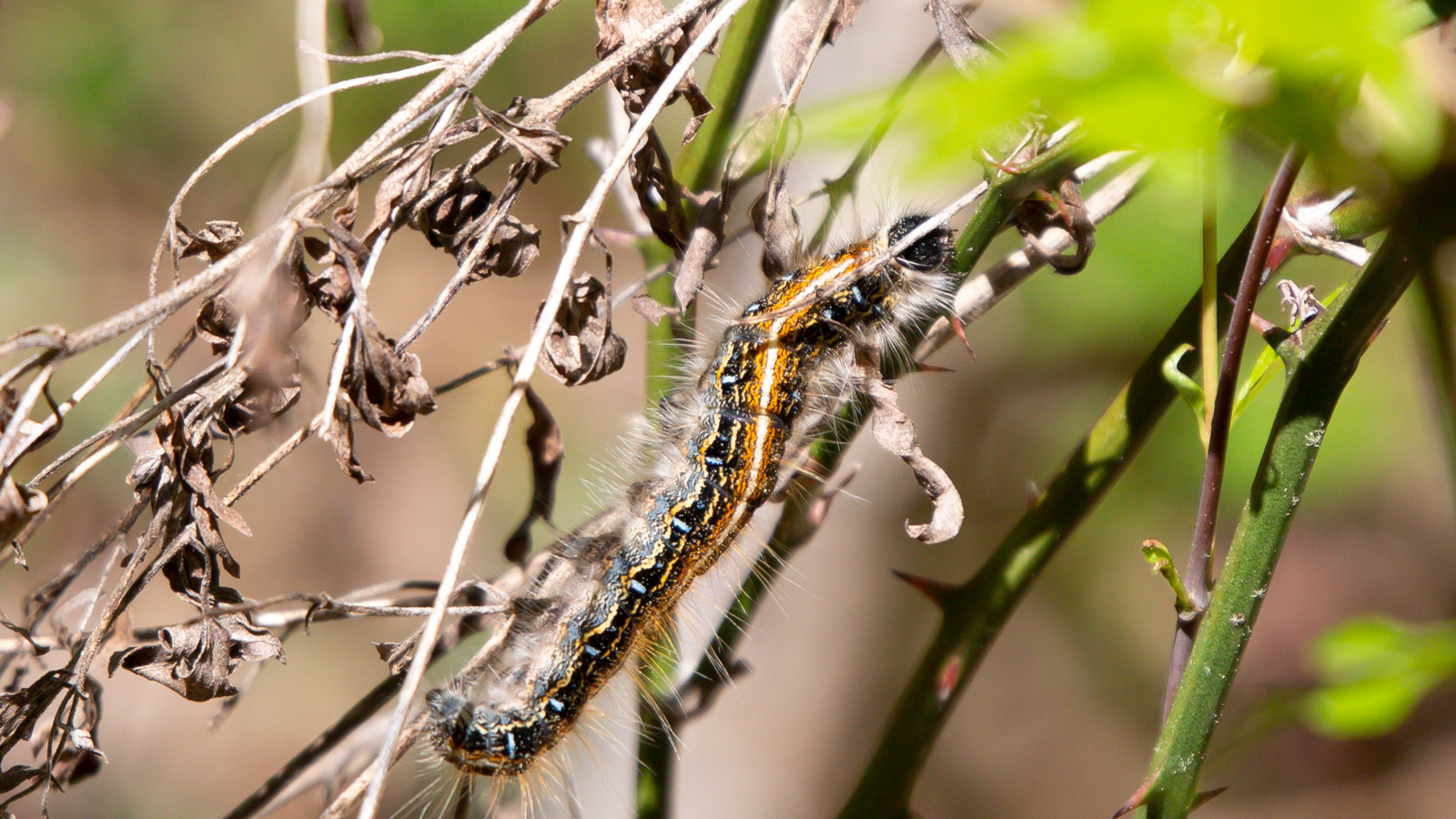
Moth caterpillars, including eastern tent caterpillar colonies on cherry and fall webworm webs on pecan and sweet gum, present at accessible branch height along maintained road shoulders and paths throughout the region without any specialized setup.
More Information
The North American Moth Photographers Group at mothphotographersgroup.msstate.edu maintains the most comprehensive online North American moth identification database. iNaturalist accepts moth observations from all life stages with expert Lepidoptera review. Butterflies and Moths of North America at butterfliesandmoths.org carries Louisiana range data for documented moth species across multiple families.