About Sparrows
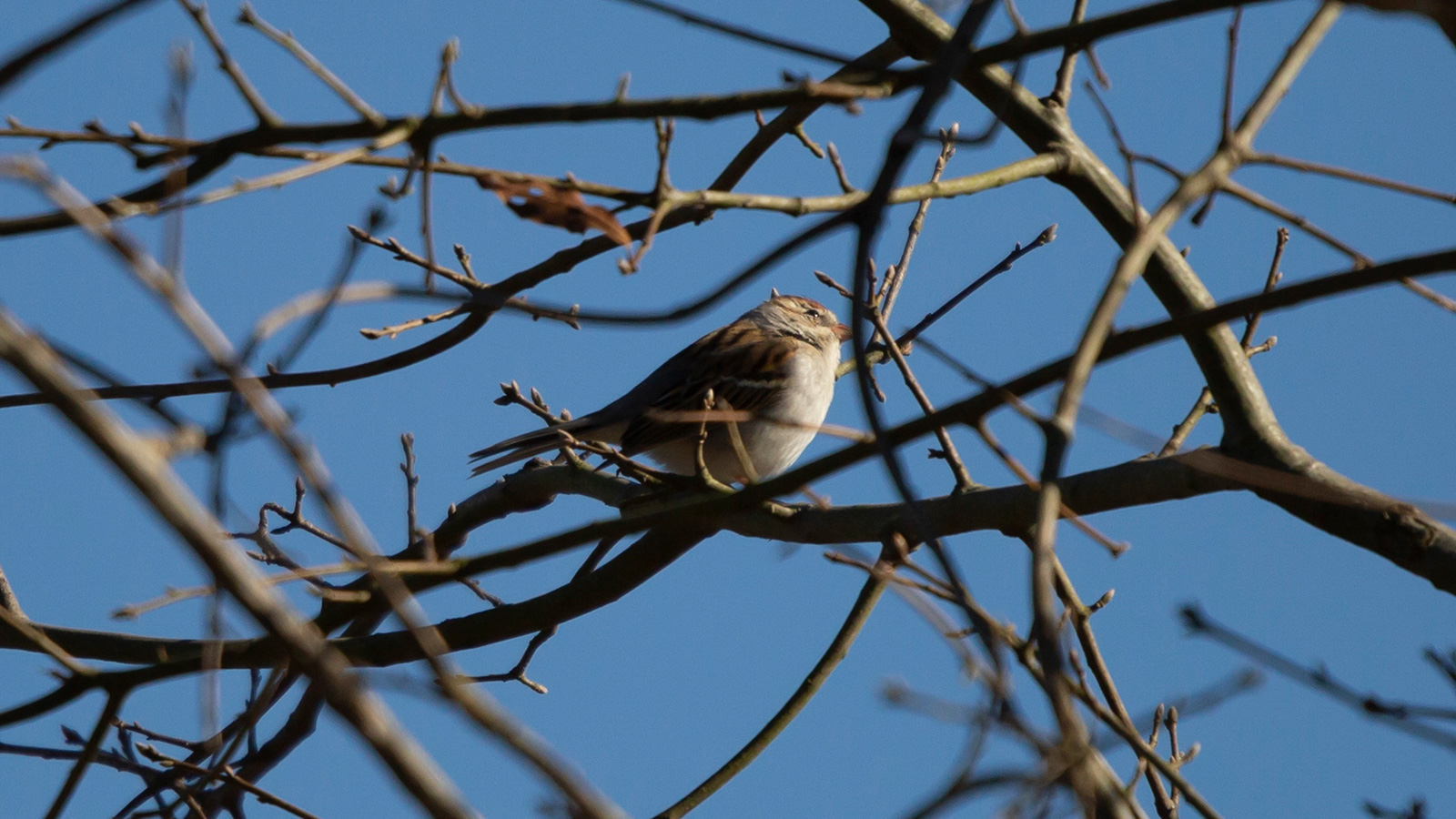
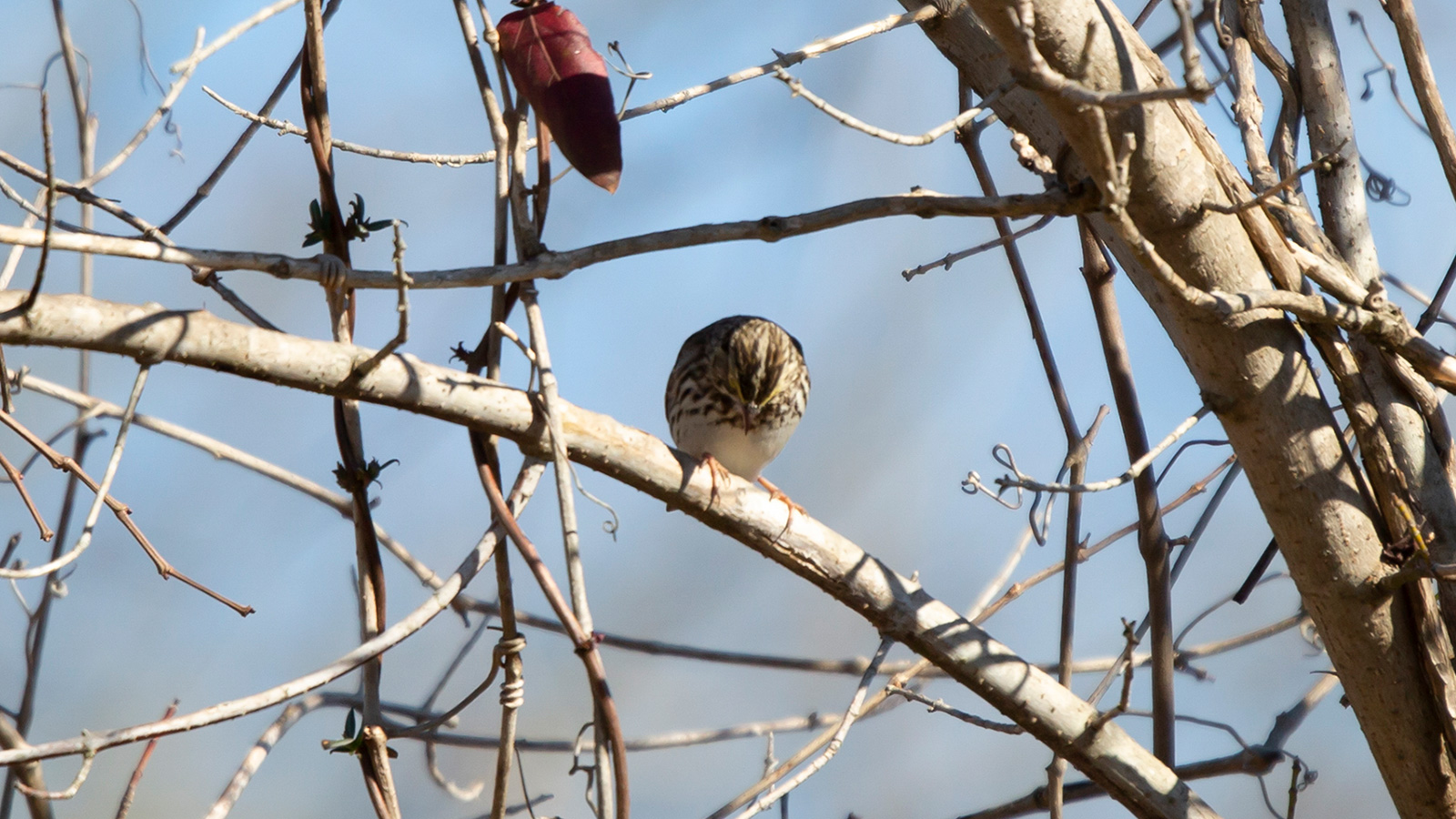
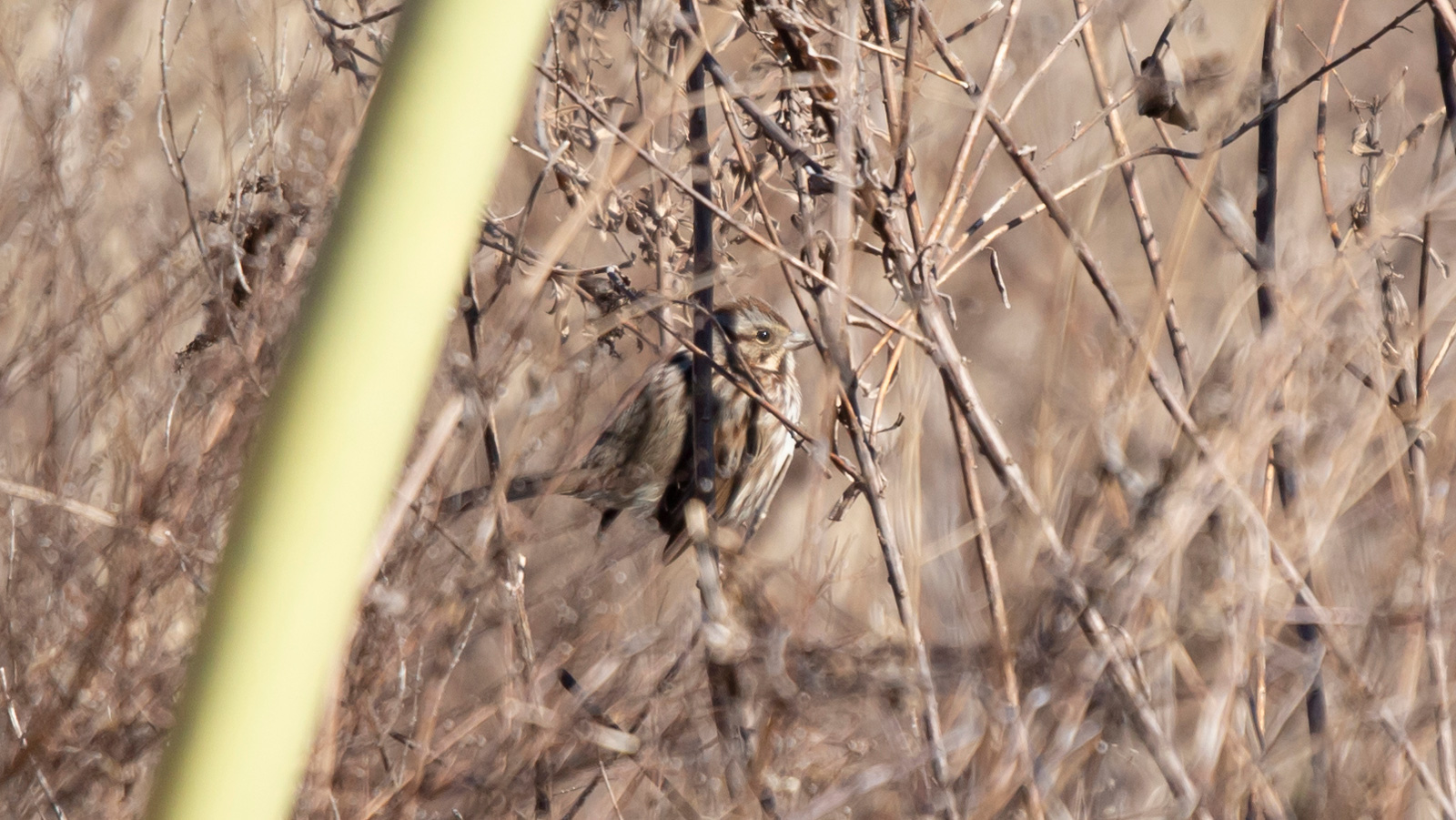
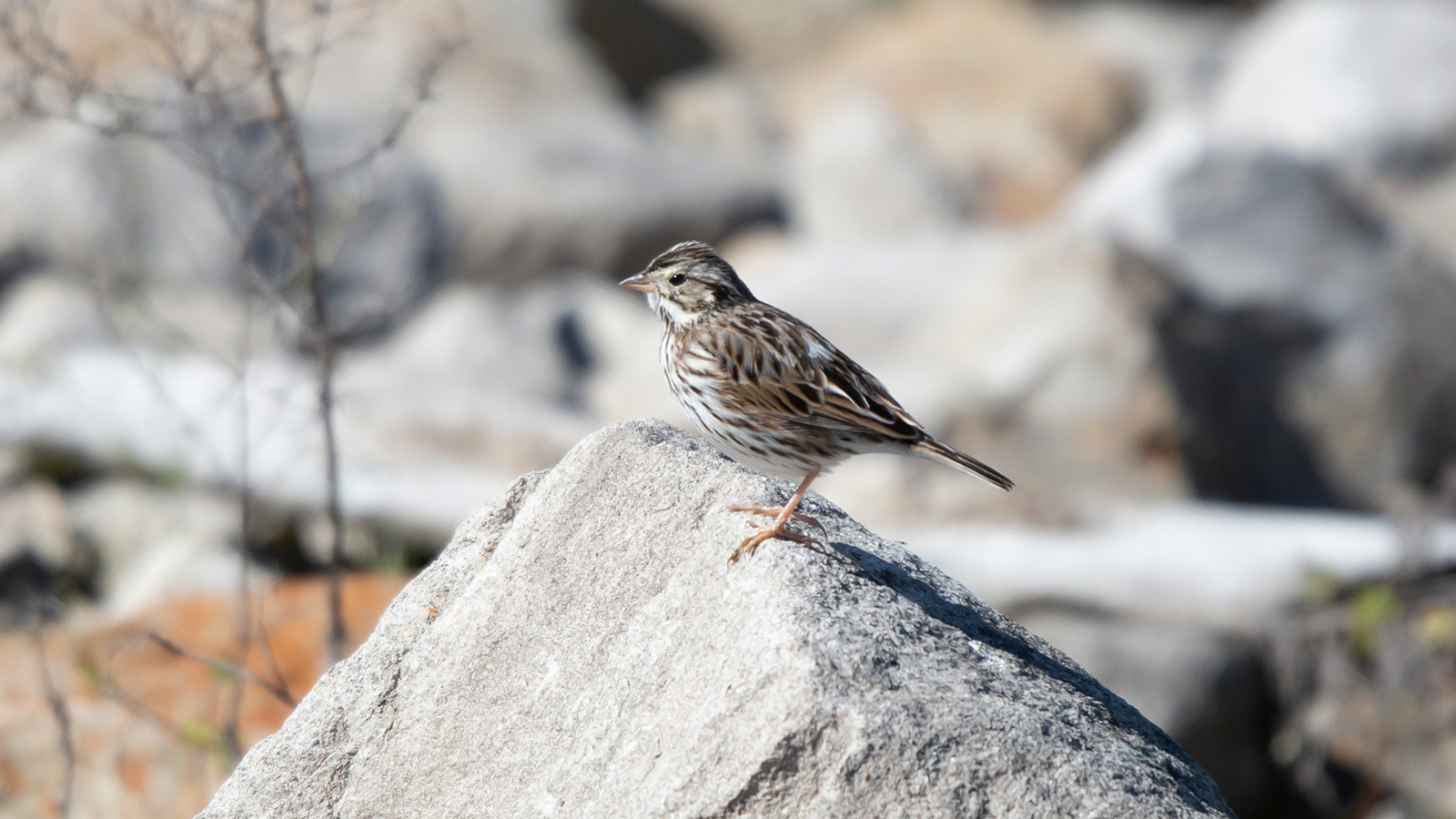
North Louisiana's sparrow family fills every brushpile, every weedy field, every cattail margin, and every parking lot in the 26 parishes with brown, streaky, ground-feeding birds that humble beginners and veterans at roughly equal rates. Fourteen of them show up regularly, and the whole group dressed in shades of brown, tan, gray, and rufous with streaked breasts, striped crowns, and a collective refusal to sit still on an exposed perch for longer than three seconds. You either love the puzzle or you throw the field guide at the brushpile and drive home.
The Winter Invasion
North Louisiana's sparrow population explodes between October and April, when breeding populations from across Canada and the northern United States migrate south and fill the region's fields, hedges, and brushy edges with a density of small brown birds that the summer months do not approach. Dark-eyed juncos arrive from the boreal forest. White-throated sparrows arrive from the northeastern woodlands.
White-crowned sparrows arrive from the tundra and the montane West. Fox sparrows arrive from the boreal forest's deepest thickets. Savannah sparrows arrive from the northern grasslands and the Arctic. The resident song sparrows and eastern towhees that stayed year-round suddenly share their habitat with a winter sparrow community that outnumbers the summer community by a factor of three or four, and every hedgerow that contained two sparrow species in July contains eight in January.
The winter sparrow community sorts by habitat with enough consistency that a birder who learned the habitat tastes can predict which sparrow occupies which microhabitat before the binoculars come up. The juncos scratch through leaf litter at the brushpile edge. The white-throated sparrows scratch through deeper leaf litter in the hedge interior. The white-crowned sparrows feed on the ground near the hedge margin. Fox sparrows dig through the deepest leaf pile under the densest shrub.
Song sparrows work the brushy ditch edge near water. The chipping sparrow picks seeds from the open lawn. The savannah sparrow flushes from the short-grass field beyond the fence. The swamp sparrow chips from the cattail margin. Each bird carved a niche from the same general landscape, and each bird stays faithful to that niche throughout the winter.
The Ground-Level World
Every sparrow in North Louisiana feeds on or near the ground. Hawks hit them from above, cats hit them from the side, snakes hit them from below, and the whole family learned to deal with it. If you want to attract sparrows to a feeder, keep it low: ground-scattered seed, a platform tray, and dense cover within diving distance. A feeder designed for sparrows sits at knee height or lower.
Escape cover within two body-lengths makes the difference between a feeder that gets visited and a feeder that gets ignored. Millet, cracked corn, and sunflower seed on or near the ground beat hanging tubes at chest height every time. Sparrows feed below the knee. Meet them where they already planned to eat.
Most of the family scratches for a living. Juncos, white-throated sparrows, white-crowned sparrows, fox sparrows, song sparrows, and eastern towhees all kick both feet backward simultaneously to clear leaf litter and expose seeds. The towhee scratches hardest. The junco scratches lightest.
The fox sparrow scratches loudest. Chipping sparrows and savannah sparrows skip the scratching entirely and pick seeds off the surface. The swamp sparrow probes mud instead of scratching leaves. Same family, same ground, completely different table manners.
The Identification Ladder
The fourteen sparrows sort into difficulty tiers that roughly correspond to the observer's experience level.
Start with the easy five, the birds that identify on sight without field guide consultation: the dark-eyed junco (gray and white, pink bill, white tail flash), the white-throated sparrow (striped crown, yellow lores, white throat), the white-crowned sparrow (bold black-and-white crown stripes), the eastern towhee (black or brown hood, rufous flanks, white belly), and the house sparrow (gray crown, black bib on males, found in parking lots). These five birds wear distinctive plumage patterns that separate them from every other sparrow at feeder distance, and a beginning birder who learned these five completed a third of the sparrow roster in the first afternoon.
The moderate tier contains the birds that identify with binocular observation and one or two field marks: the fox sparrow (big, rufous, heavy breast streaking with central spot), the song sparrow (medium, heavily streaked, long pumping tail), the savannah sparrow (yellow supraloral spot, fine streaking, short tail), and the swamp sparrow (rufous wings, clean gray breast, marsh habitat). These four birds demand closer looks and specific field-mark checks, but each bird carries at least one feature that tells it from the rest at close range.
Then there are the five birds that keep experienced birders humble: the chipping sparrow in winter plumage (loses the rufous cap, looks generic), the clay-colored sparrow (nearly identical to winter chipping sparrow), the Lincoln's sparrow (buffy breast with fine streaks, hides in damp thickets, gives you three seconds), the vesper sparrow (white outer tail feathers during flight, otherwise resembles the savannah sparrow), and the spotted towhee (rare vagrant that looks almost identical to the eastern towhee without the white back spots). These five birds demand patience, practice, and a willingness to let some individuals fly away unidentified rather than forcing an incorrect call.
The Habitat Map
The fourteen sparrows spread across North Louisiana's landscape by moisture, vegetation density, and how much humans messed with the ground:
Open fields and agricultural land: savannah sparrow, vesper sparrow, chipping sparrow (winter flocks)
Brushy edges, hedgerows, and suburban yards: dark-eyed junco, white-throated sparrow, white-crowned sparrow, song sparrow, fox sparrow, eastern towhee, spotted towhee
Damp thickets and wet brushy margins: Lincoln's sparrow
Marshes, cattail stands, and flooded edges: swamp sparrow
Parking lots, feed stores, and fast-food restaurants: house sparrow
The habitat map stays consistent enough that a birder who checked the habitat before checking the bird already narrowed the identification to three or four candidates. A sparrow in a cattail stand: swamp sparrow. A sparrow in a parking lot: house sparrow. A sparrow in a hedgerow: six candidates, but the binoculars sort the six faster than the binoculars sort fourteen.
How They Got Here
All fourteen sparrows that regularly show up in North Louisiana reached the region through four different paths. The song sparrow, the eastern towhee, the chipping sparrow, and the house sparrow live in North Louisiana year-round as breeding residents. The dark-eyed junco, the white-throated sparrow, the white-crowned sparrow, the fox sparrow, the savannah sparrow, the vesper sparrow, the swamp sparrow, and the Lincoln's sparrow winter in North Louisiana after breeding across Canada and the northern United States. The clay-colored sparrow passes through during migration without staying for the full winter in most years. The spotted towhee shows up as a rare vagrant from the western United States with no predictable schedule.
The four paths produce four different seasonal windows, and the sparrow community at any given North Louisiana location changes makeup month by month. July contains song sparrows, eastern towhees, chipping sparrows, and house sparrows. October adds juncos, white-throated sparrows, white-crowned sparrows, fox sparrows, savannah sparrows, vesper sparrows, swamp sparrows, Lincoln's sparrows, and clay-colored sparrows.
January contains the full winter roster minus the clay-colored sparrow (which passed through in October). April subtracts the winter visitors one by one until July returns the community to the four year-round residents. The calendar determined the roster. The roster determined the identification challenge.
Where to Start
A backyard feeder with ground-scattered white millet and black oil sunflower seed near a dense hedge in any North Louisiana yard produces the core winter sparrow community (juncos, white-throated sparrows, song sparrows, and white-crowned sparrows) within the first two weeks of cold weather. Adding a platform tray produces fox sparrows and eastern towhees. Adding a birdbath produces bathing views that improve identification at close range. The backyard feeder approach puts the beginner birder face-to-face with six to eight sparrow species at distances where the field marks read clearly, and the feeder investment pays identification dividends through the entire winter.
Want the field sparrows? Savannah sparrows, vesper sparrows, and clay-colored sparrows live in the open country the feeder never touches. Drive parish roads through the delta parishes, stop at weedy field edges, and walk until the small brown birds start flushing ahead of you.
Want the wet-habitat birds? Swamp sparrows and Lincoln's sparrows hide in the cattail margins and damp thickets around pond edges, drainage ditches, and NWR boundaries. You will get your boots muddy. The sparrows will make you earn the identification. The family covers every habitat in North Louisiana, and the birder who covers every habitat in North Louisiana meets the entire family.
Where to Learn More
Cornell Lab of Ornithology's All About Birds covers every sparrow on this list with range maps, call recordings, and identification guides. The Macaulay Library hosts audio for all fourteen species, and learning the chip notes before hitting the field cuts identification time in half. Sibley's Guide to Birds gives the side-by-side sparrow comparisons that make the brown-streaky-bird puzzle solvable, and the Spizella comparison page alone justifies the purchase for anyone birding North Louisiana in winter. eBird's regional frequency charts for the 26 parishes show exactly when each sparrow arrives, when each sparrow peaks, and when each sparrow leaves. The charts turn guesswork into a calendar, and the calendar turns a weedy field into a targeted search.
Experiencing This Group: Accessibility Notes
Sparrow chip notes sit across a range of frequencies and volumes, and most of the fourteen species call at levels most people hear without difficulty. The junco's metallic "tik," the white-throated sparrow's sharp "pink," and the song sparrow's heavy "chimp" all carry well through vegetation and locate the bird before the binoculars find it. Higher-pitched chips (savannah sparrow, vesper sparrow) may challenge people with age-related hearing changes, but the louder species in the group cover enough of the sound range that a mixed winter flock gives away its location by ear even if the quieter members stay silent.
For anyone with mobility limitations, the backyard feeder approach puts six to eight sparrow species within view of a porch chair or a window seat between October and April. Juncos, white-throated sparrows, white-crowned sparrows, fox sparrows, song sparrows, and eastern towhees all visit ground-level feeders near dense cover, and the bold plumage patterns on most of these species read clearly at feeder distance without magnification. The field sparrows (savannah, vesper, clay-colored) and the wet-habitat sparrows (swamp, Lincoln's) live in habitat that rarely comes with accessible paths, but parish road ditches with cattails put swamp sparrows at eye level from a vehicle, and open agricultural fields put savannah and vesper sparrows within binocular range from a parked truck. The sparrows will not come to you. The feeder birds will. The field birds need you to come to them, and the truck counts.
Meta Title: Sparrows in North Louisiana: Fourteen Birds, One Color Palette, Zero Patience | NLW Meta Description: North Louisiana's fourteen sparrow species fill every field, hedge, marsh, and parking lot with brown, streaky, ground-feeding birds that test every birder's patience and reward every birder's persistence. Focus Keyphrase: sparrows North Louisiana Secondary Keywords: North Louisiana sparrows, sparrow identification Louisiana, winter sparrows Louisiana, sparrow species North Louisiana, sparrow identification guide, Louisiana sparrow list, sparrow feeder Louisiana, ground-feeding birds Louisiana, streaky brown birds Louisiana, sparrow habitat North Louisiana OG Description: Fourteen sparrow species fill North Louisiana's fields, hedges, marshes, and parking lots with brown, streaky, ground-feeding birds that sort by habitat, season, and the birder's willingness to check the breast streaking one more time. Slug: sparrows-larks-longspurs-north-louisiana