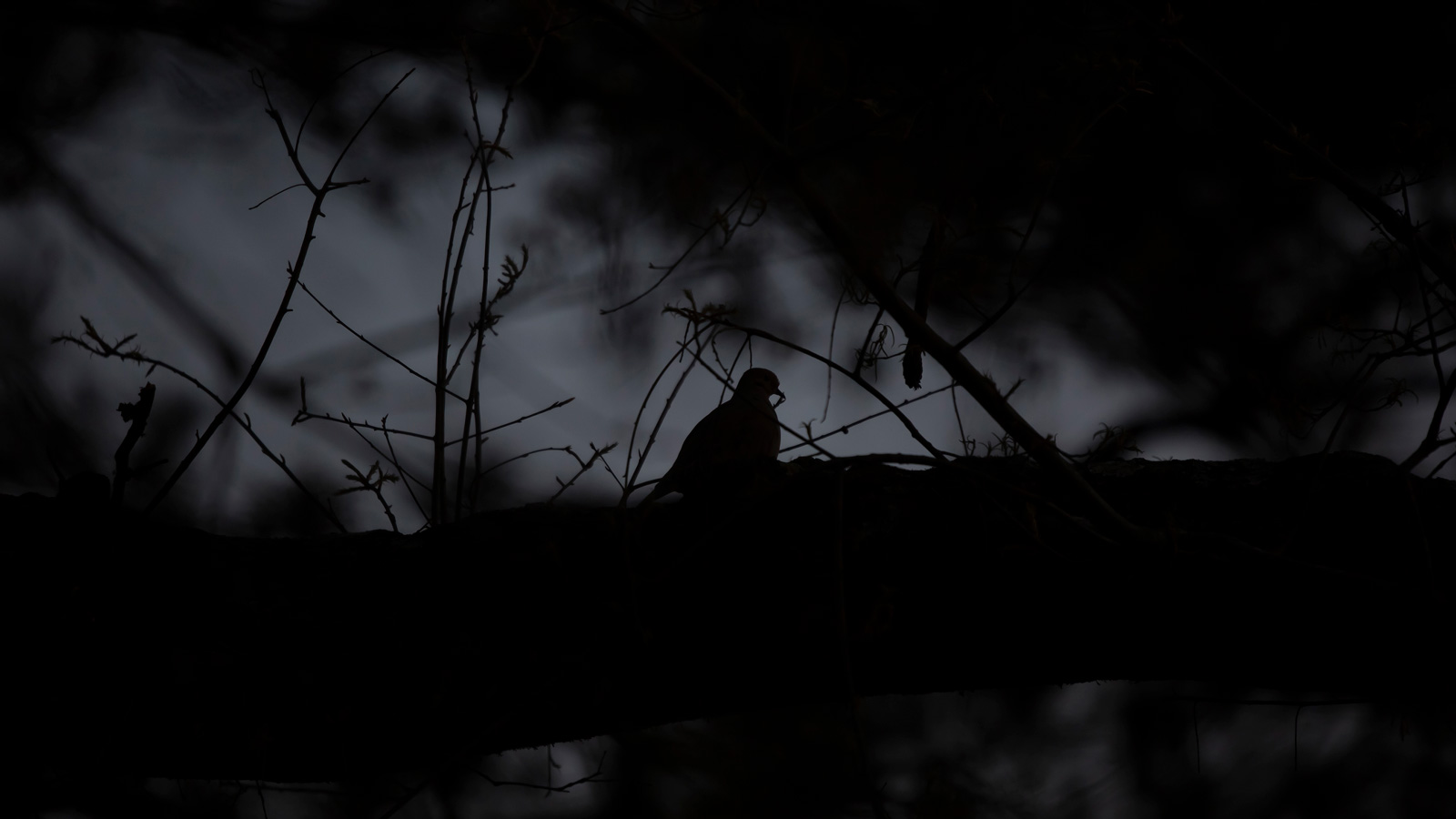
About Doves
Doves and pigeons are the birds that everyone recognizes and almost nobody respects. They coo from power lines. They strut through parking lots. They explode out of brush piles when you're walking through a field and scare the soul out of your body with the whistling sound of their wings. They're so common, so familiar, and so deeply embedded in the human-modified landscape that most people have stopped thinking of them as wildlife at all — they're just part of the scenery, like squirrels or mailboxes.
That's a mistake. The dove and pigeon family (Columbidae) is one of the most ecologically interesting, culturally significant, and historically dramatic bird families on the planet. Rock pigeons have been partnered with humans for over 5,000 years — longer than most dog breeds. Mourning doves are the most heavily hunted bird in North America, with an annual harvest exceeding 20 million.
Eurasian collared-doves pulled off one of the fastest range expansions in modern ornithological history, colonizing an entire continent in about 30 years. And the passenger pigeon — once the most abundant bird in North America, with flocks that darkened the sky for days — went from billions to zero in less than a century. Doves and pigeons are not boring. We've just been looking at them wrong.
Doves vs. Pigeons: There Is No Difference
Here's a fact that surprises people: there is no taxonomic distinction between doves and pigeons. They're all Columbidae. The common names are arbitrary and inconsistent — larger species tend to be called "pigeons" and smaller ones "doves," but the cutoff is cultural, not biological. A rock pigeon and a mourning dove are as closely related as two species in the same family can be, and calling one a "pigeon" and the other a "dove" is a human invention based on nothing more than size and vibes.
All Columbidae share key traits: plump bodies, small heads, short bills with a fleshy cere at the base, strong flight muscles, and the ability to produce "crop milk" — a protein-rich secretion from the lining of the crop that both parents use to feed their young. Crop milk is unique to pigeons and doves (and flamingos, weirdly) and allows them to raise chicks without depending on an insect food supply, which is one reason they can breed in almost any season and almost any habitat.
They also share the cooing vocalization that defines the family. Every dove and pigeon coos, and the coo is produced by a specialized vocal organ called the syrinx. The cooing repertoire varies by species — mourning doves have their mournful "oo-ah-coo-coo-coo," Eurasian collared-doves have their repetitive three-note "coo-COO-coo," and rock pigeons have their guttural, burbling coo — but the basic mechanism is the same across the family.
The North Louisiana Lineup
North Louisiana hosts five regular dove and pigeon species, spanning the range from deeply native to recently invaded to fully domesticated-gone-feral. Mourning doves are the natives — the original, the most abundant, and the most hunted. They've been here since before humans arrived and they'll be here long after we've stopped arguing about them.
Eurasian collared-doves are the invaders — a non-native species that arrived in the 1980s and spread across the continent with a speed that would embarrass most intentional introductions. White-winged doves are the expanders — historically a Texas and Mexico bird that has pushed steadily eastward into Louisiana over the past two decades. Common ground doves are the tiny ones — barely bigger than a sparrow, easily overlooked, and declining in parts of their range. Rock pigeons are the ferals — the domesticated species that escaped centuries ago and now owns every overpass, bridge, and grain elevator in the region. Together, they make North Louisiana one of the more dove-rich areas in the southeastern United States, with year-round cooing, seasonal hunting pressure, and a fascinating mix of native, invasive, and feral species occupying different niches in the same landscape.
Accessibility
Doves are everywhere you already are. Parking lots, power lines, backyard feeders, rooftops, the gravel shoulder of every parish road in every parish. You don't go to the doves. The doves come to you.
The five species in this section are identifiable by ear alone, which makes them one of the best bird groups for anyone who navigates the world by sound. Mourning doves coo in slow, mournful phrases that sound like someone sighing through a flute. Collared-doves repeat a loud three-note "coo-COO-coo" from every rooftop in every town, all day, every day. White-winged doves produce a deeper, rhythmic "who-cooks-for-you" that's distinctly different from the other two once you've heard all three back to back. Ground doves give a soft, rising "woo-oo" from fence posts barely above the grass. Rock pigeons burble and coo from under every bridge, their collective murmuring amplified by the concrete above them into a sound that fills the underpass like an engine idling. Five species, five voices, zero need to leave the car.