About Backyard Birds
North Louisiana's common yardbirds did not wait for an invitation. The cardinal claimed the hedge. The mockingbird claimed the rooftop. The blue jay claimed the feeder and the attitude. The Carolina wren claimed the flowerpot, the grill cover, the toolbox, and anything else with a gap large enough to stuff a nest into. These birds breed in your yard, feed in your yard, sing in your yard at hours you did not approve, and defend territories that include your porch with a conviction that suggests the birds read the property deed and disagreed with the ownership section.
A North Louisiana backyard with a feeder, a hedge, and a tree hosted more bird drama per square foot than most nature preserves hosted per acre, and the drama played out year-round without intermission.
The common yardbird category covers the birds that most North Louisiana residents see daily without trying: the species that feed at backyard feeders, nest in ornamental shrubs and yard trees, sing from rooftops and utility wires, and tolerate human proximity with the indifference of animals that coevolved with suburban sprawl and found the arrangement acceptable. These birds did not adapt to yards. These birds were built for yards, and the yards followed the blueprint the birds already occupied.
The Cast
Northern cardinals own the backyard color category. Male cardinals wear the red that every other backyard bird wished it could carry, and the female cardinal wears a warm brown-olive that disappears into the hedge the moment the bird stopped moving. A cardinal pair at a sunflower feeder in any North Louisiana yard between January and December sat the most predictable backyard bird encounter in the 26 parishes. The bird stayed year-round. The bird visited daily. The bird sang "birdy-birdy-birdy" from the top of the crape myrtle at sunrise. The neighbors learned the schedule without wanting to.
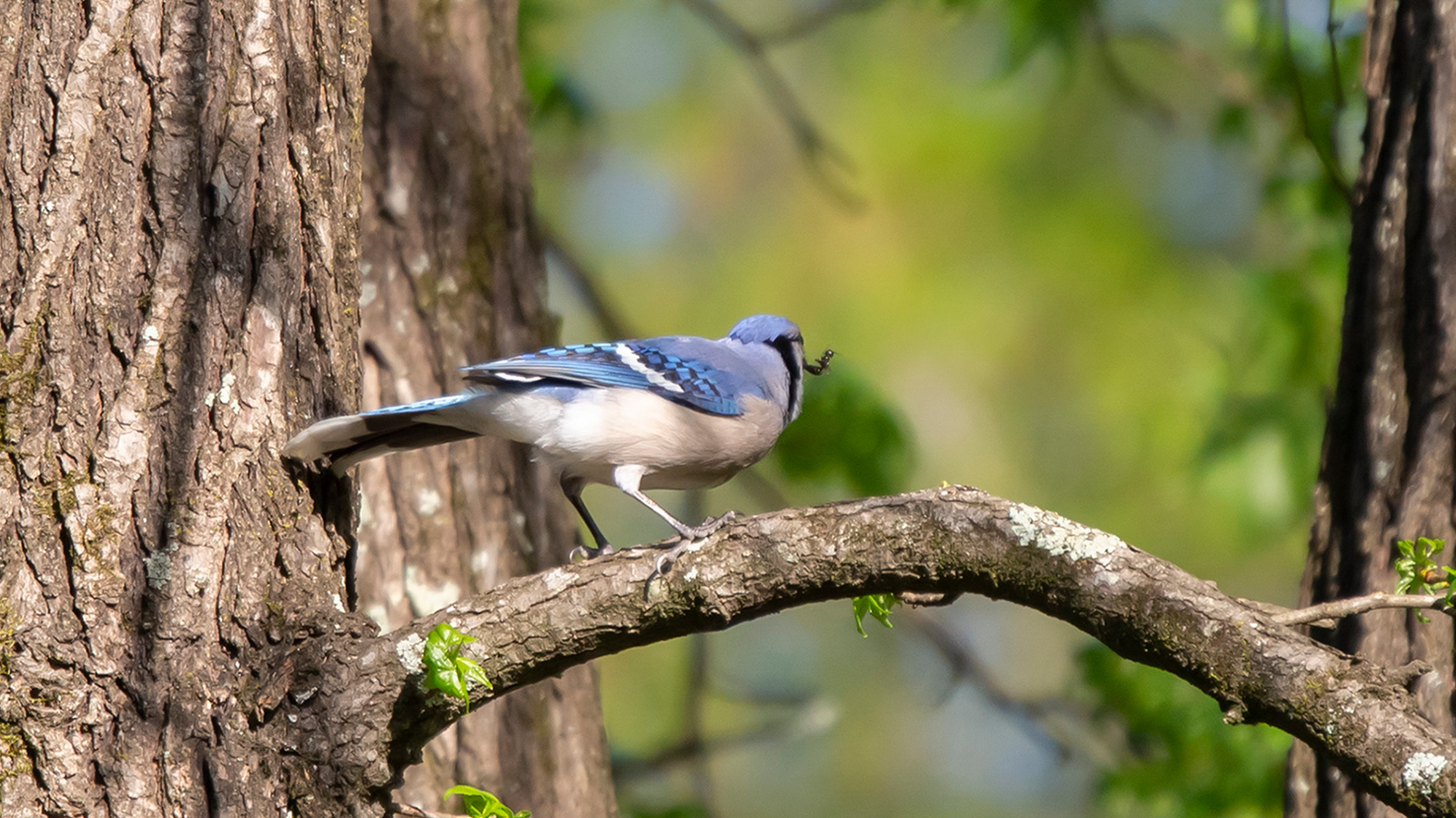
Blue jays brought the noise. A blue jay at a feeder announced the arrival, evaluated the competition, and displaced every smaller bird within reach before eating a single sunflower seed. The blue jay's repertoire included hawk imitations accurate enough to scatter the feeder crowd, which cleared the feeder for the blue jay's exclusive use. Whether the hawk call served as deliberate deception or accidental talent remained debated among researchers and resented among the chickadees that fled the feeder every time.
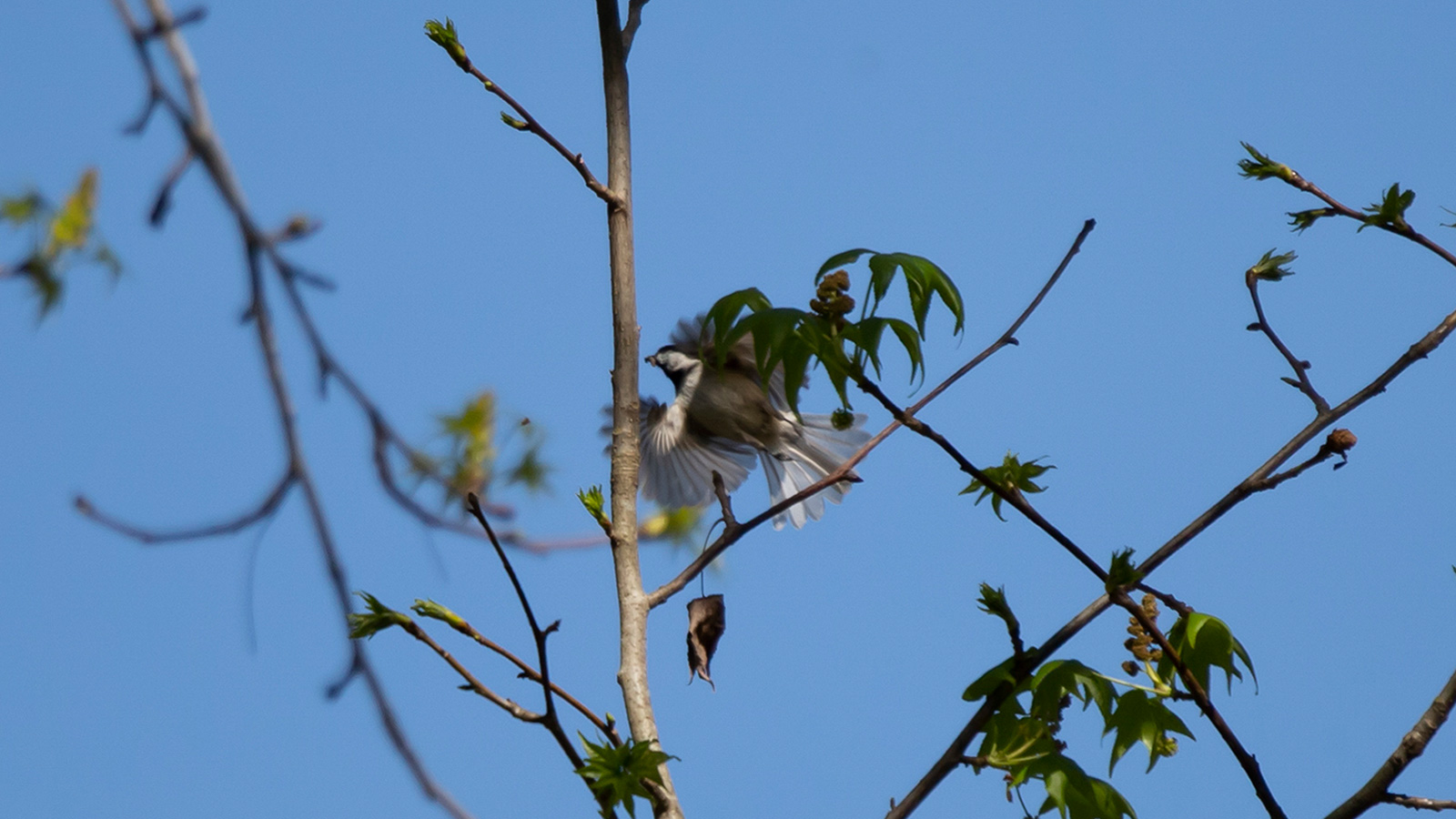
Carolina chickadees and tufted titmice traveled as a pair (the species pair, not the mated pair) through suburban canopy from tree to tree, announcing the passage with a constant stream of "chick-a-dee-dee-dee" and "peter-peter-peter" calls that located the flock before the binoculars came up. A backyard feeder stocked with sunflower seed attracted both species within the first day, and the two birds visited the feeder in the same order every morning: chickadee first (bold), titmouse second (cautious), and both birds flew to a nearby branch to crack the seed in private rather than eating at the feeder. The feeder functioned as a takeout window.
Northern mockingbirds defended the yard with a territoriality that bordered on municipal overreach. A mockingbird that claimed a holly tree defended the berries against every other bird in the neighborhood with dive-bombing attacks that spared no species, no size class, and no human who walked too close during nesting season. The mockingbird sang all night during breeding season. The mockingbird sang other birds' songs during breeding season. The mockingbird sang car alarms and cell phone ringtones during breeding season. The neighborhood survived. The neighborhood did not enjoy the process.
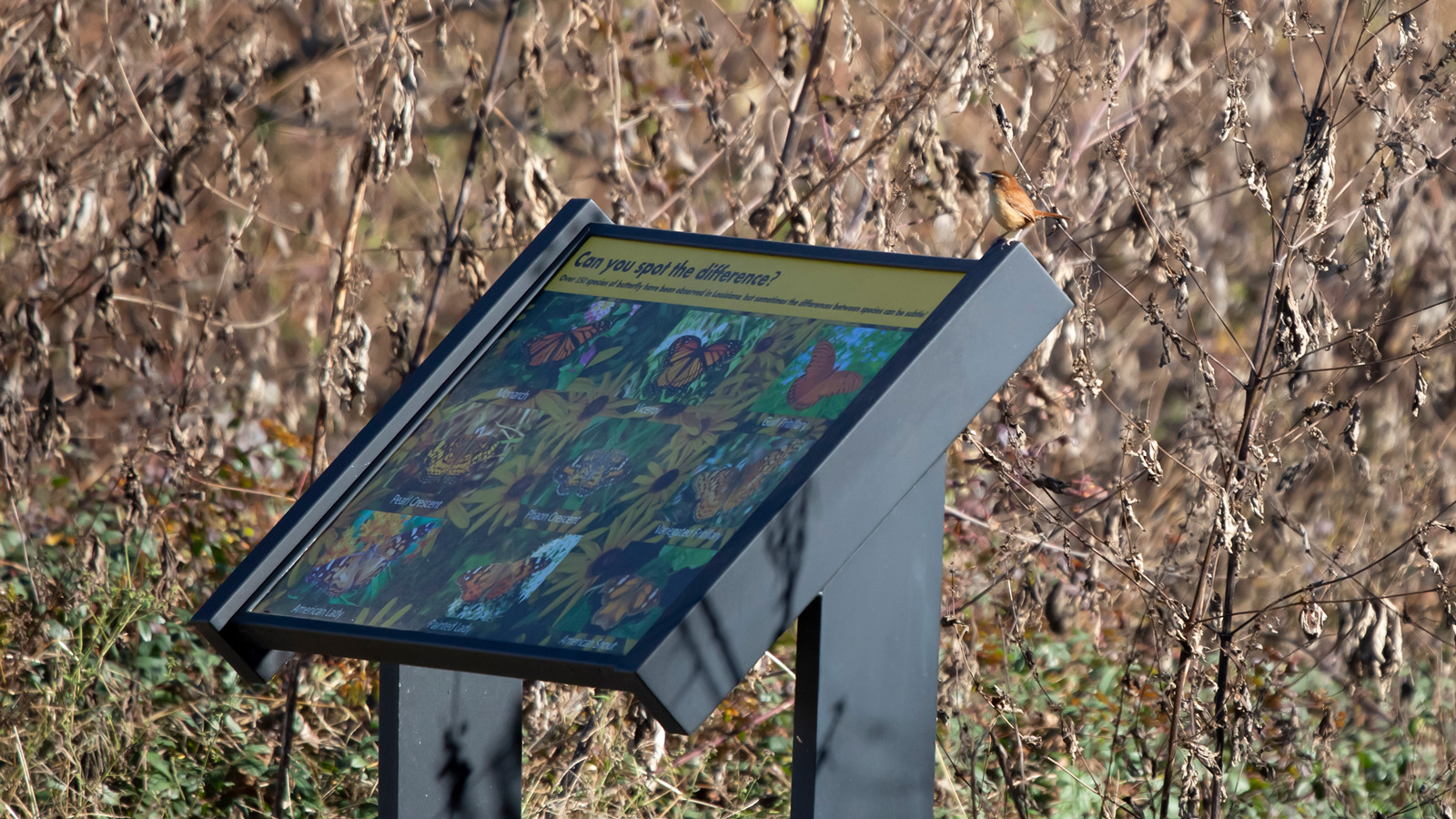
Carolina wrens sang "tea-kettle tea-kettle tea-kettle" from every shed, carport, and porch railing in every parish year-round, and the wren's nest-site selection included every container, shelf, pocket, and crevice the bird found on the homeowner's property. A Carolina wren nest in a hanging fern, in a mailbox, in an old boot on the porch, in the pocket of a jacket left on a hook, or in the engine compartment of a truck that did not start for three weeks all represented standard nest-site choices for a bird that treated every human structure as a potential nursery.
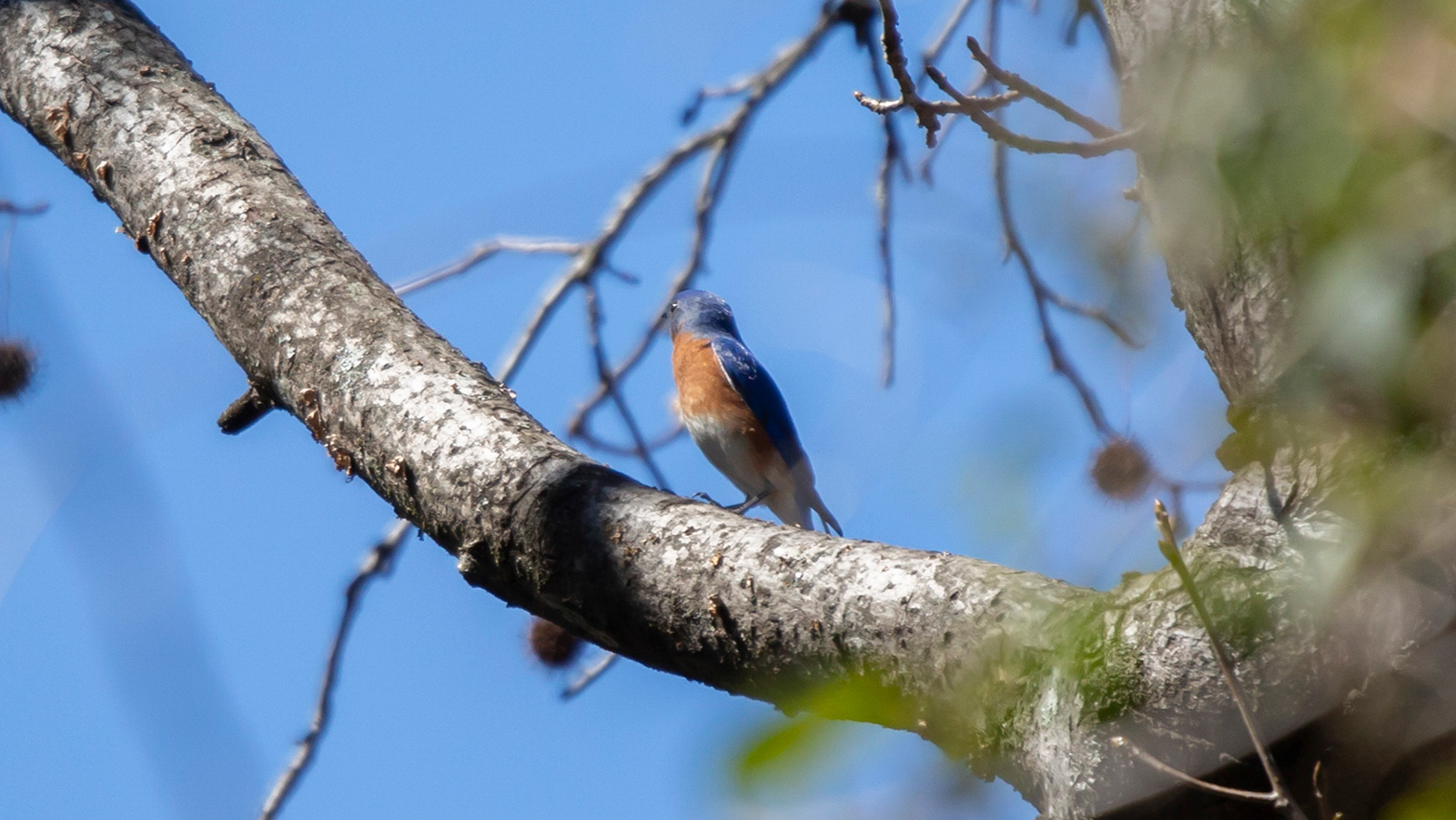
Eastern bluebirds occupied nest boxes, fence-post cavities, and natural tree holes across the region's more open habitats, and a nest-box trail along a pasture fence in any North Louisiana parish produced breeding bluebirds from March through August with the consistency that justified the box installation.
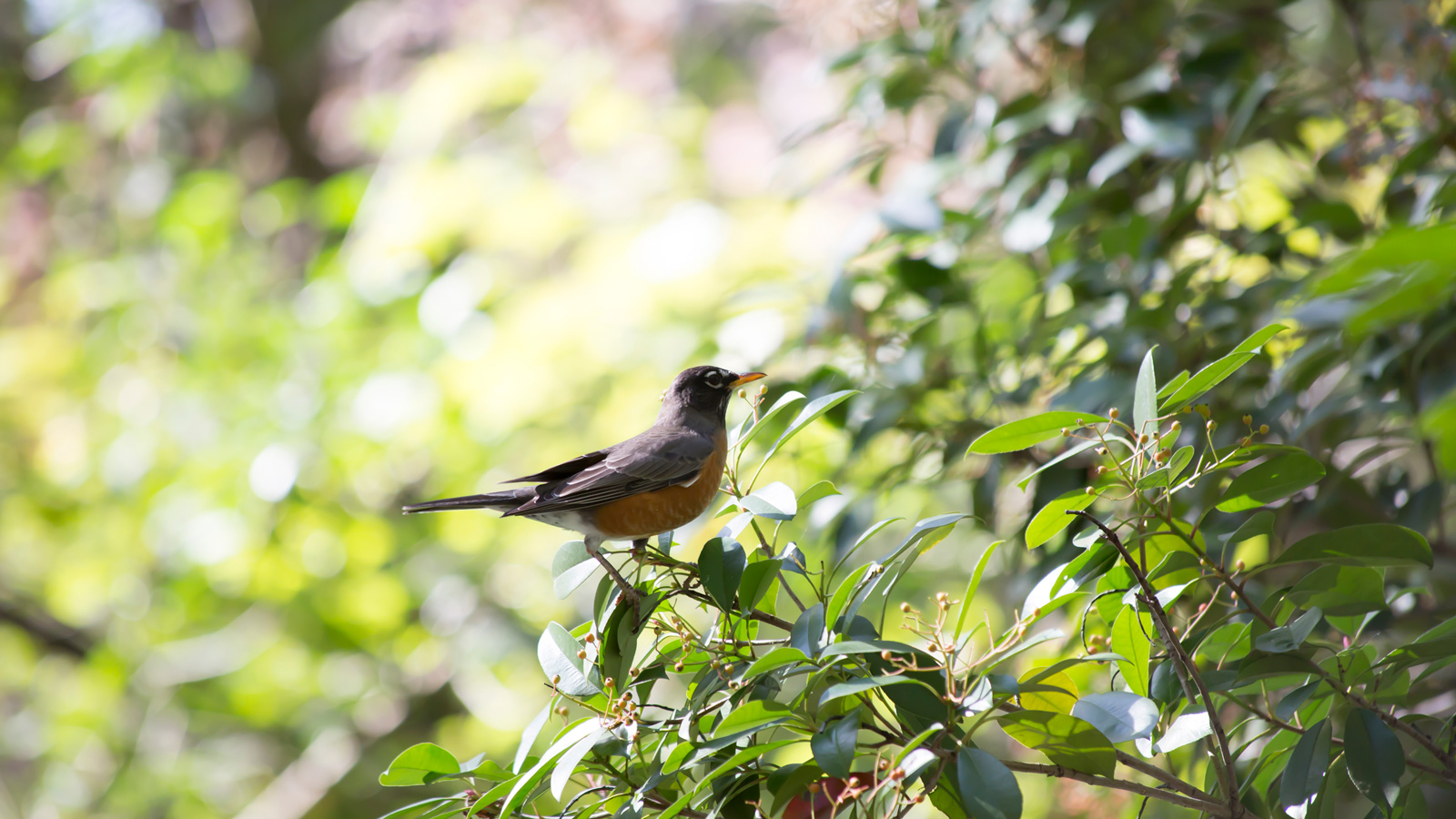
American robins fed on lawns, nested in yard trees, and pulled earthworms from the grass with a technique that involved running, stopping, tilting the head, and pulling that looked more choreographed than improvised. A robin on a Ruston lawn in March performed the worm-extraction sequence fifty times per hour and made the sequence look identical every time.
Red-bellied woodpeckers visited suet feeders, peanut feeders, and sunflower feeders across every parish, announcing the approach with a rolling "kwirr" call that identified the bird before the bird reached the feeder. The red-bellied woodpecker's tongue extends two inches past the bill tip, and the tongue's barbed end extracts insects from bark crevices that the bill opened. The bird brought a spear to a bug fight and won every engagement.
The Feeder Economy
A backyard feeder stocked with black oil sunflower seed, suet, and white millet served the entire common yardbird community in a single station. Sunflower seed drew cardinals, blue jays, chickadees, titmice, and woodpeckers. Suet drew woodpeckers, nuthatches, and wrens. Millet scattered on the ground drew juncos, white-throated sparrows, and mourning doves. The three-food combination covered the dietary preferences of every common yardbird in North Louisiana and cost less per month than a streaming subscription that delivered less entertainment. A feeder near a window produced a daily wildlife show that renewed automatically and never ran out of episodes.
Water completed the feeder station. A birdbath with moving water (a dripper, a fountain insert, or a recirculating pump) attracted every yardbird in the territory plus species that the feeder alone did not attract, and the sound of dripping water pulled birds from two hundred feet with an effectiveness that no seed variety matched. A cardinal that ignored the feeder for a week visited the birdbath on day one.
Dense cover near the feeder completed the trifecta: food, water, cover. A hedge within ten feet of the feeder gave every visiting bird an escape route when the Cooper's hawk arrived, and the hawk arrived at every productive feeder eventually. A feeder without nearby cover fed the hawk. A feeder with nearby cover fed the birds. The placement mattered more than the seed brand.
The Year-Round Show
North Louisiana's common yardbirds do not migrate (with the exception of the winter sparrow additions that the sparrow landing page covered). The cardinal, the mockingbird, the blue jay, the chickadee, the titmouse, the Carolina wren, the bluebird, the robin, and the red-bellied woodpecker live in the same yard, on the same territory, through every month of the year. The cast did not change between seasons. The behavior changed. Spring brought singing, nesting, and territorial aggression. Summer brought fledglings begging at the feeder. Fall brought molting and berry consumption. Winter brought feeder dependency and mixed-species flocks.
The same birds did different things in every season, and the backyard birder who watched the same feeder through all four seasons watched a different show every quarter without the cast changing.
Accessibility Notes
Every bird in the common yardbird category lives within view of a window, a porch, or any accessible outdoor space in North Louisiana. The backyard feeder station brought the birds to the observer at the observer's convenience, and the daily visits created observation opportunities that no other birding approach matched for accessibility, consistency, or comfort. A feeder near a window required zero trail access, zero hiking, zero early mornings, and zero effort beyond filling the feeder and sitting in the chair. The birds came to the food. The food sat next to the window. The window sat next to the chair. The chair did the rest.