

Advertisement
Fun Facts
Did You Know?
Kestrels hunt from two primary strategies: perch-hunting (sitting on a wire or fence post and scanning the ground, then dropping on prey spotted below) and hover-hunting (flying over open ground, stopping in midair to hover on rapidly beating wings while scanning the ground, then plunging feet-first onto prey)
If This Animal Could Talk...
"Watch closely, respect my space, and let my habitat explain the rest of the story."
American kestrels are the smallest falcon in North America and the most colorful raptor in North Louisiana, and they are disappearing for reasons that nobody has definitively identified despite decades of research. Falco sparverius — roughly blue jay-sized, painted in a striking combination of rusty-red, slate-blue, and cream that makes the bird look like it was designed by an artist working with a generous palette and absolutely no commitment to the concept of camouflage — has declined approximately 29 percent across the entire continental United States between 1986 and 2019 according to the most comprehensive integrated population modeling effort ever conducted using Breeding Bird Survey data.
The southeastern subspecies (F. s. paulus), which includes North Louisiana's breeding population, has declined an estimated 82 percent since 1940. A falcon that once perched reliably on every other power line, hunted grasshoppers from every other fence post, and nested in every available cavity across North Louisiana's open landscapes has become measurably and undeniably less common with each passing decade across North Louisiana and the broader Southeast, and the cause of the continent-wide decline remains, in the words of the raptor biologists who study the species most intensively, largely unknown.
Photo Gallery
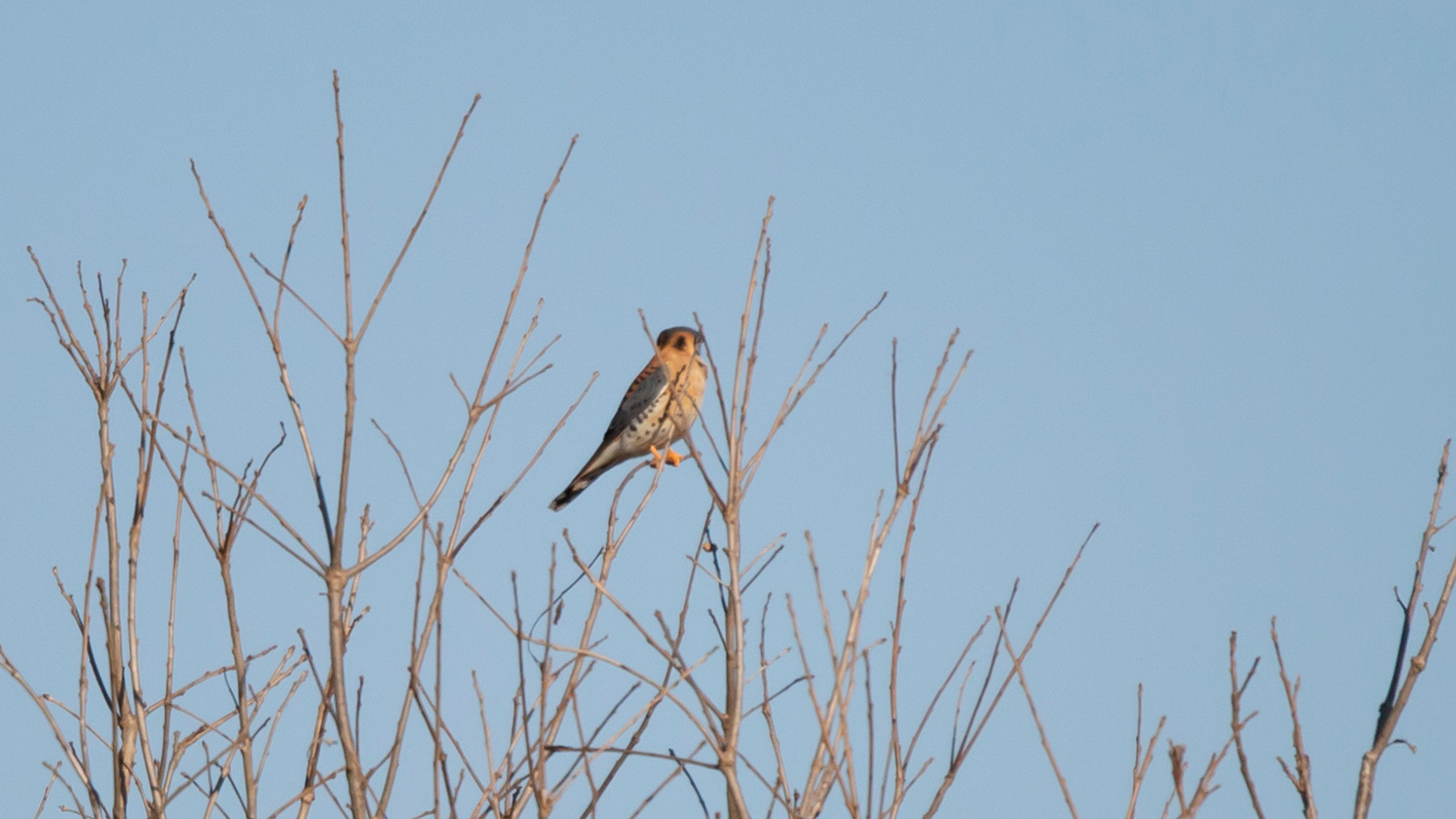
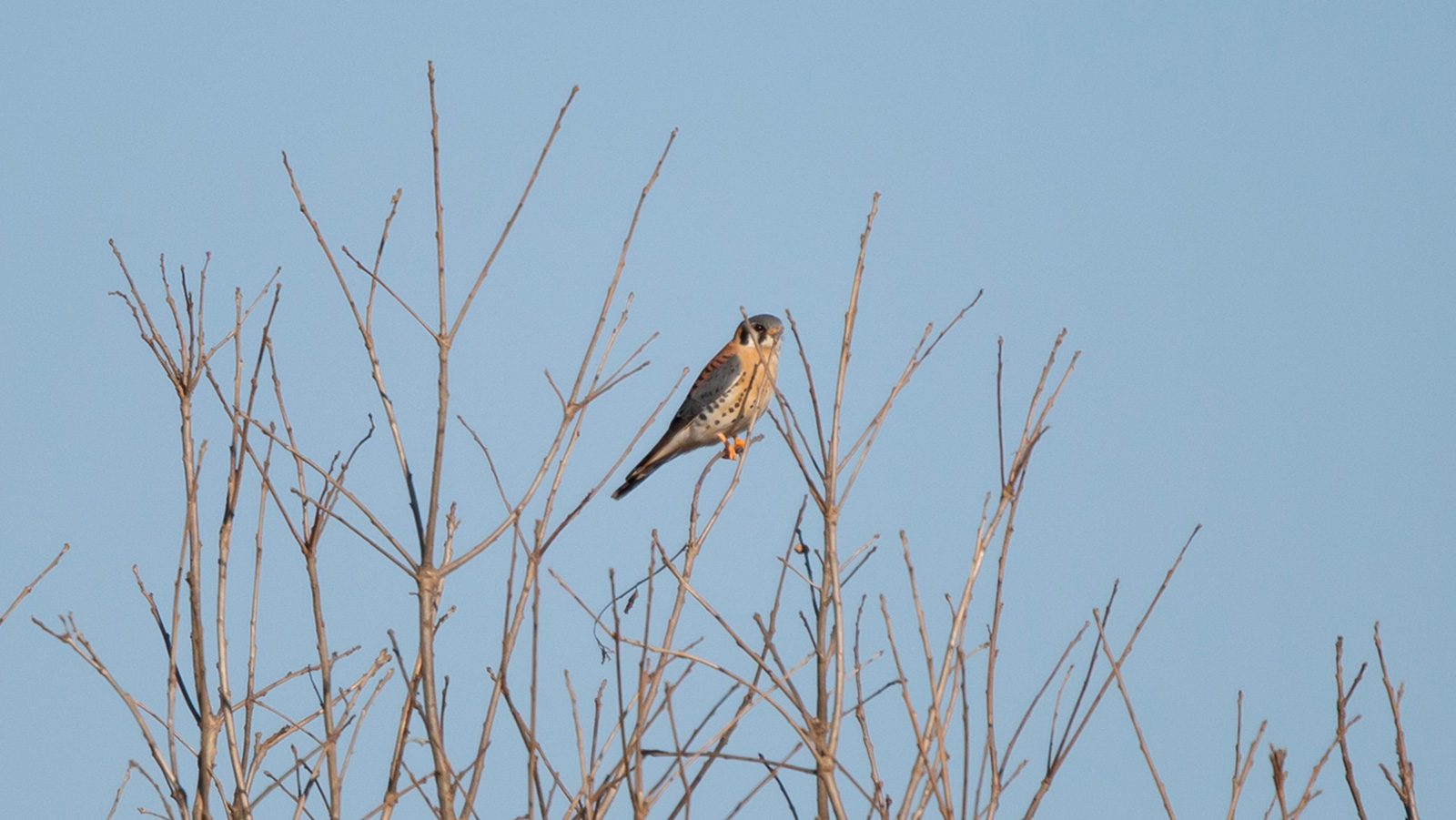
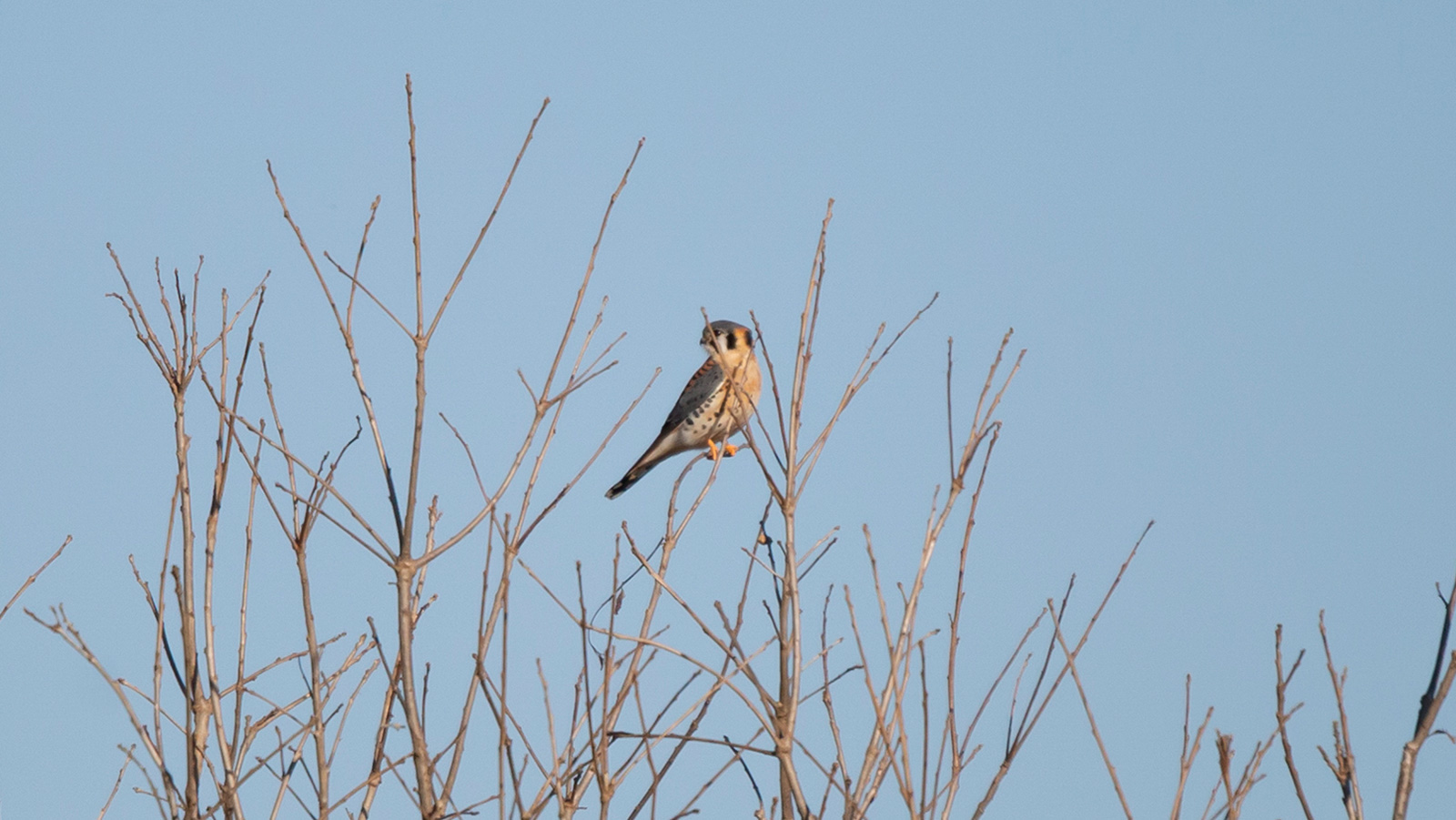
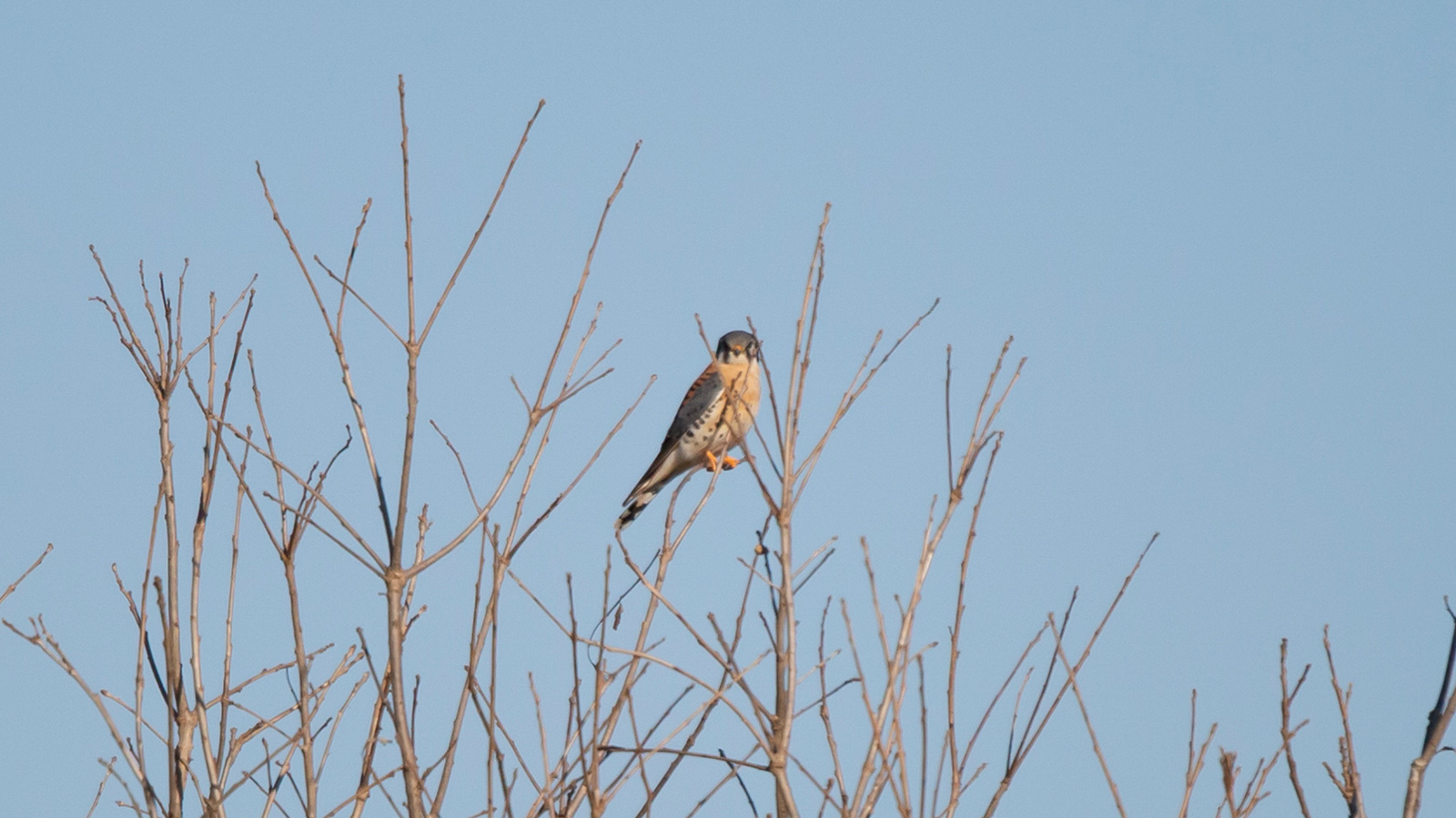
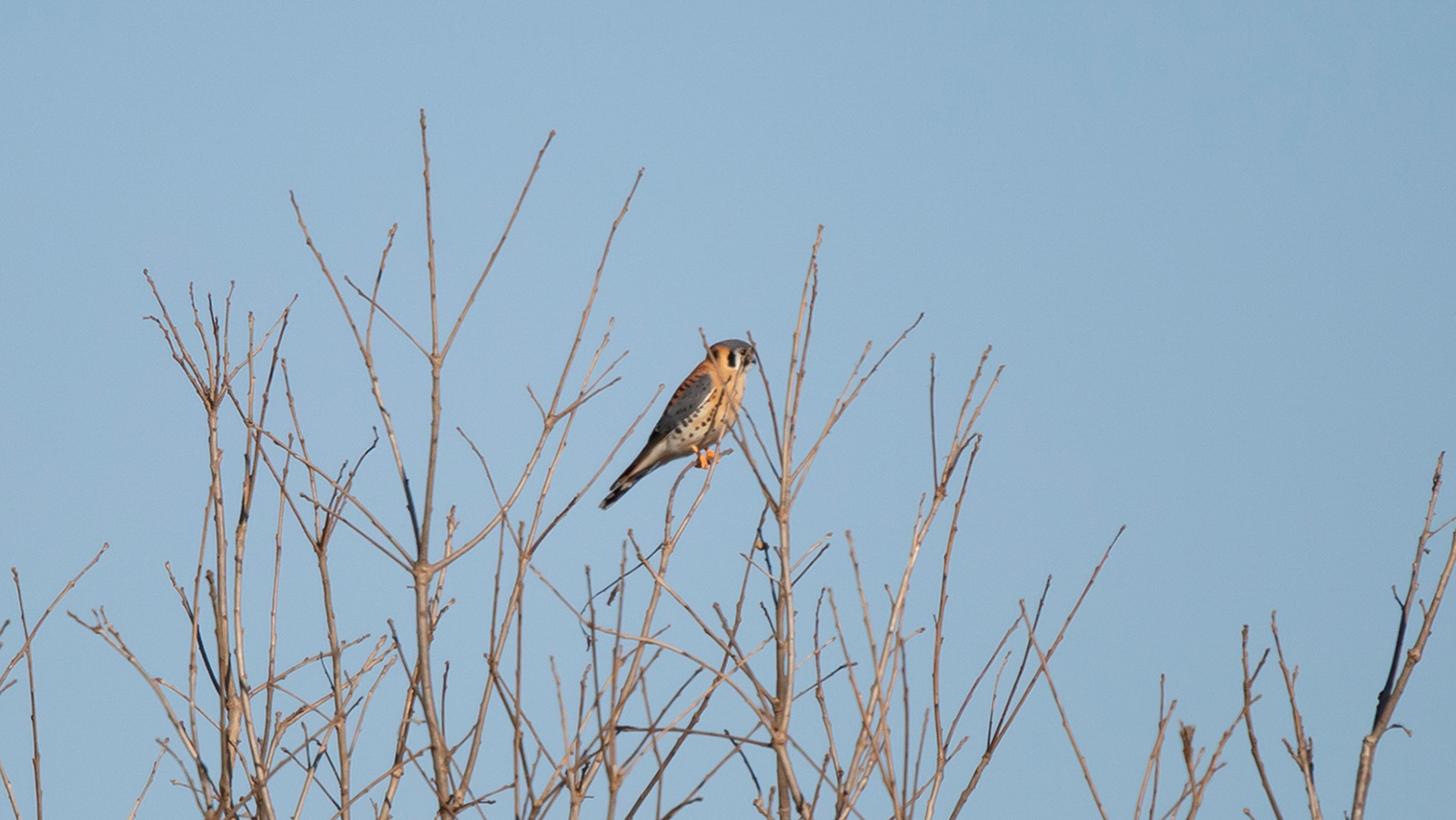
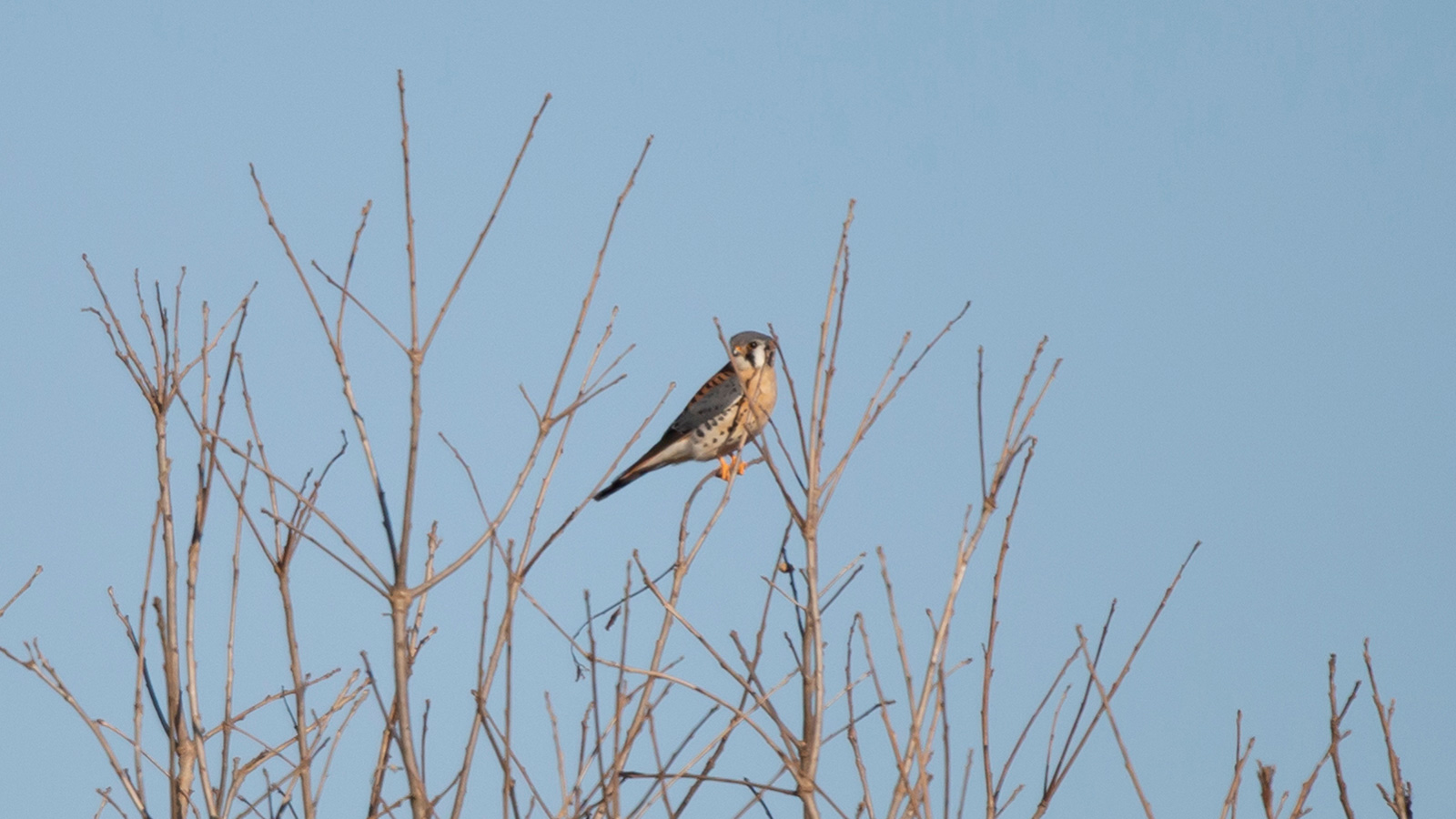
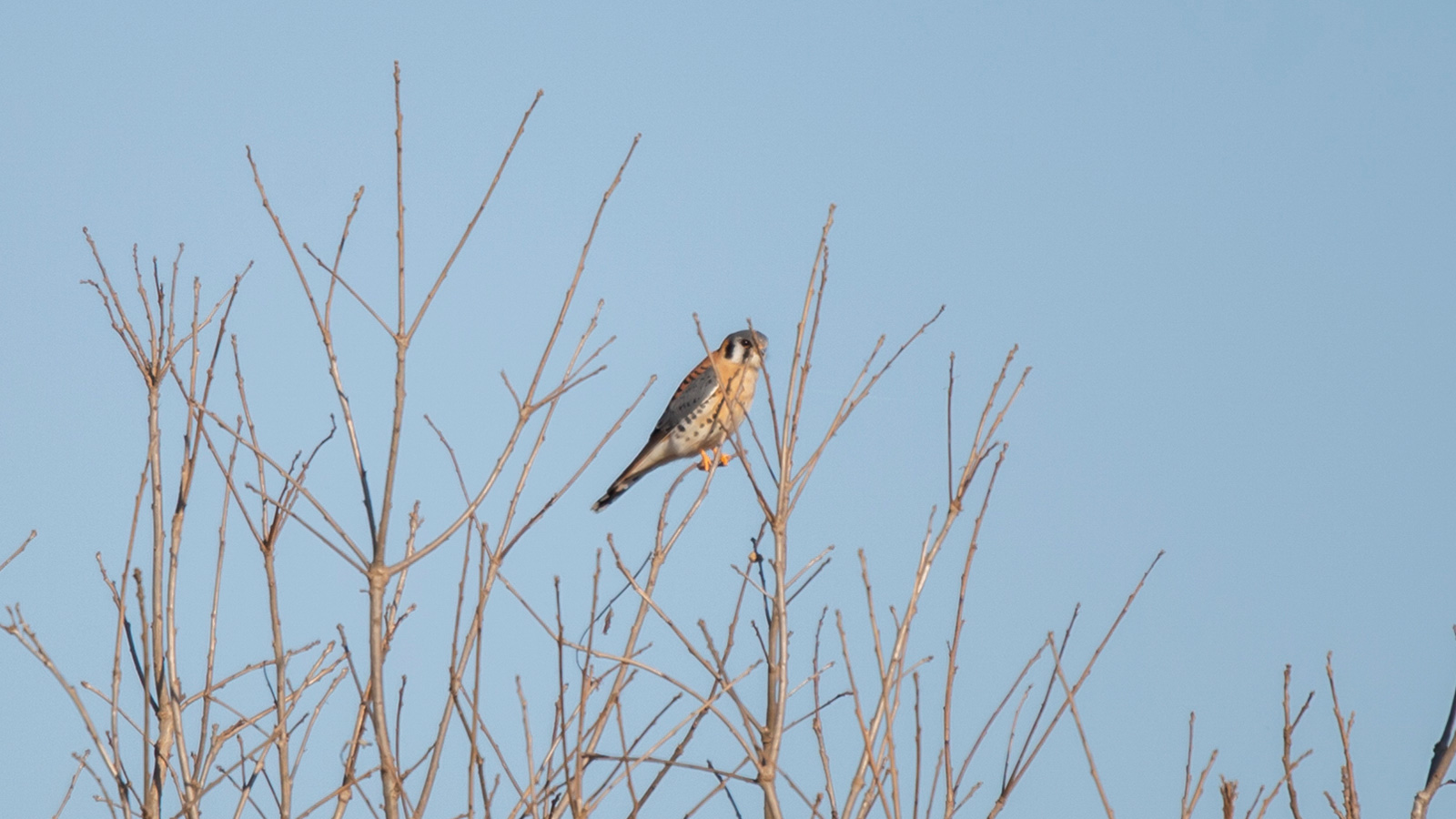
What Is the American Kestrel Often Confused With?
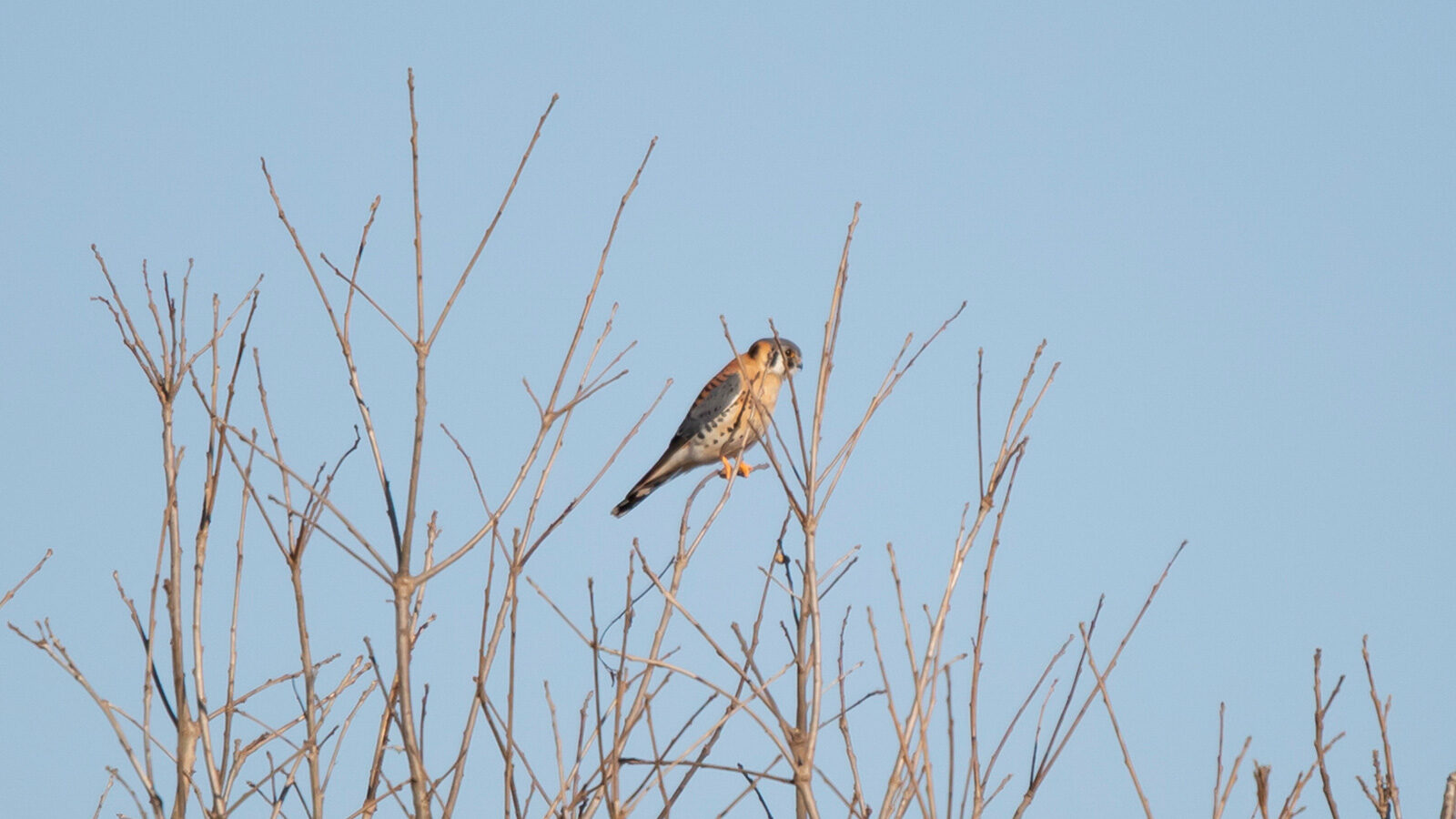
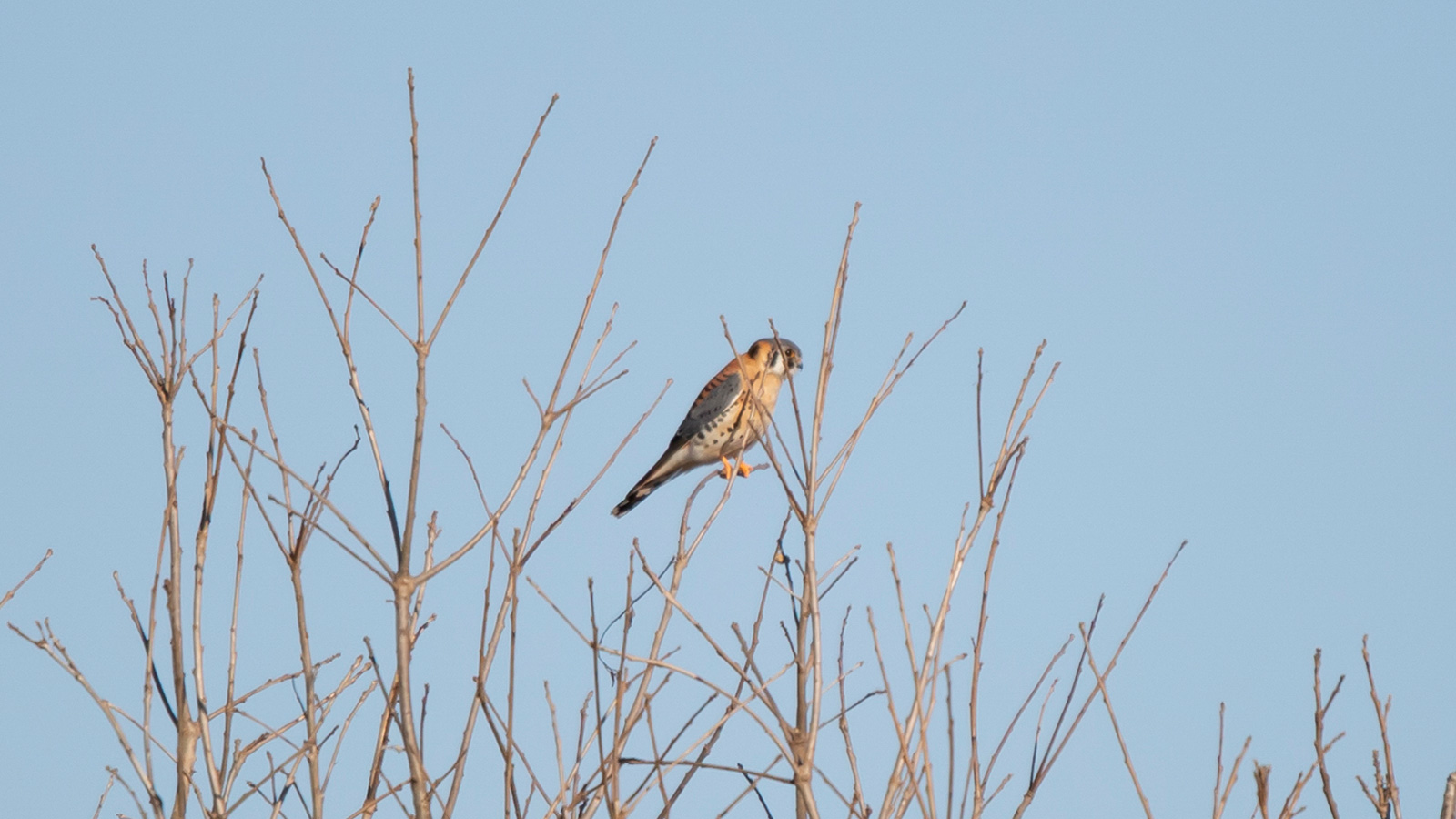
American kestrels are small, compact falcons — 8.7 to 12.2 inches long, with a wingspan of 20 to 24 inches and a weight of 2.8 to 5.8 ounces, with females averaging larger than males in a size dimorphism typical of falcons. Both sexes display bold facial markings: two vertical black "sideburn" stripes on each side of a white or buffy face, creating a distinctive facial pattern shared by no other North Louisiana raptor. The crown is blue-gray in males, rufous in females. Males are the showpieces of North Louisiana's raptor community: rufous back with bold black barring, blue-gray wings with black spotting, rufous tail with a broad black subterminal band and white tip, buffy-cream underparts with scattered black spotting, and a blue-gray head crowned with a distinctive rufous cap. Females wear more subdued plumage: rufous-brown back, wings, and tail all barred with black, and streaked underparts that provide better camouflage during nesting.
Drag the handle left and right to compare American Kestrel side by side with the species it gets mistaken for most.
Advertisement
Accessibility
Accessibility
Kestrels make themselves obvious. They perch in the open on power lines and fence posts along every rural road, pump their tails, bob their heads, and wear plumage bright enough to spot from a moving car. Visitors with low or no vision can listen for the sharp, rapid "killy-killy-killy" alarm call that kestrels deliver during territorial disputes — though fair warning, perched kestrels are often silent. The hovering behavior — a small falcon frozen in midair over a field — catches the eye from remarkable distances and works as a behavioral ID even when plumage details blur into nothing.
Advertisement
Frequently Asked Questions
Does American Kestrels live in North Louisiana?
Yes. American kestrels are the smallest falcon in North America and the most colorful raptor in North Louisiana, and they are disappearing for reasons that nobody has definitively identified despite decades of research. paulus), which includes North Louisiana's breeding population, has declined an estimated 82 percent since 1940.
A falcon that once perched reliably on every other power line, hunted grasshoppers from every other fence post, and nested in every available cavity across North Louisiana's open landscapes has become measurably and undeniably less common with each passing decade across North Louisiana and the broader Southeast, and the cause of the continent-wide decline remains, in the words of the raptor biologists who study the species most intensively, largely unknown.
How do you identify American Kestrels?
American kestrels are small, compact falcons — 8.7 to 12.2 inches long, with a wingspan of 20 to 24 inches and a weight of 2.8 to 5.8 ounces, with females averaging larger than males in a size dimorphism typical of falcons. Both sexes display bold facial markings: two vertical black "sideburn" stripes on each side of a white or buffy face, creating a distinctive facial pattern shared by no other North Louisiana raptor. The crown is blue-gray in males, rufous in females. Males are the showpieces of North Louisiana's raptor community: rufous back with bold black barring, blue-gray wings with black spotting, rufous tail with a broad black subterminal band and white tip, buffy-cream underparts with scattered black spotting, and a blue-gray head crowned with a distinctive rufous cap. Females wear more subdued plumage: rufous-brown back, wings, and tail all barred with black, and streaked underparts that provide better camouflage during nesting.
What does American Kestrels eat?
Yet no single factor — habitat loss, pesticide exposure, increased predation by Cooper's hawks, nest-site competition from European starlings, climate change effects on insect prey populations — has been conclusively identified as the primary driver responsible for the continent-wide pattern.
The habit of perching in the open — tail pumping, head bobbing, scanning the ground below for prey — makes kestrels one of the most visible raptors in agricultural and suburban landscapes, and the colorful plumage visible at surprisingly long range makes identification straightforward for any observer who learns the basic pattern: small, colorful falcon on a wire, pumping its tail.
Kestrels hunt from two primary strategies: perch-hunting (sitting on a wire or fence post and scanning the ground, then dropping on prey spotted below) and hover-hunting (flying over open ground, stopping in midair to hover on rapidly beating wings while scanning the ground, then plunging feet-first onto prey).
Is American Kestrels dangerous to people?
Nesting
Kestrels are cavity nesters that cannot excavate their own cavities — a dependence on existing holes that ties the species' breeding success directly to the availability of dead trees, abandoned woodpecker holes (particularly northern flicker cavities, which provide the right entrance diameter), natural tree hollows, nest boxes, building crevices, and any other enclosed space with an entrance hole large enough to admit a small falcon but small enough to exclude larger competitors.
No nesting material is added to the cavity; eggs are laid directly on whatever substrate the cavity floor provides — wood chips, dirt, old debris from a previous occupant. Nest-site availability is considered one of the most significant limiting factors for kestrel populations, and the systematic removal of dead trees from agricultural landscapes, suburban developments, and managed forests reduces the number of available nesting sites in habitat that otherwise contains abundant prey and ideal hunting conditions.
Nest box programs have been implemented across North America to supplement natural cavity availability and test whether providing artificial nest sites can sustain local kestrel populations. Some programs have demonstrated that kestrels readily adopt nest boxes mounted on fence posts or poles in open agricultural land, and that box-nesting populations can maintain stable or even increasing numbers where natural cavities have declined.
In North Louisiana, landowners who install kestrel nest boxes — a simple wooden box with a 3-inch entrance hole, mounted 10 to 30 feet high on a pole or post overlooking open grassland or agricultural fields — can attract breeding pairs to habitat that contains everything a kestrel needs except the cavity.
Breeding season in North Louisiana extends from March through June, with courtship beginning in late February as day length increases and hormonal changes trigger territorial behavior. Males court females through spectacular aerial displays — steep climbs, power dives, fluttering flights — combined with food deliveries and cavity presentations in which the male leads the female to prospective nest sites, enters the cavity, and performs ritualized head-bobbing at the entrance while calling.
Once the pair selects a site, the female lays 3 to 7 eggs (typically 4 to 5), heavily marked with brown and cinnamon, and incubates for approximately 30 days with the male providing most of the food during incubation.
Both parents feed nestlings on a diet that shifts from insects early in the nestling period to larger prey (mice, lizards, small birds) as the nestlings grow and demand increasing food volume. Young kestrels fledge at about 30 days — leaving the cavity entrance and making their first flights within a day or two of departure in a burst of uncoordinated aerial effort that gets progressively more competent over the following week.
Post-fledging dependency lasts several weeks, during which the parents continue providing food while the young learn to hover-hunt and perch-hunt independently through a trial-and-error process that involves many missed strikes before the young falcon's aim improves.