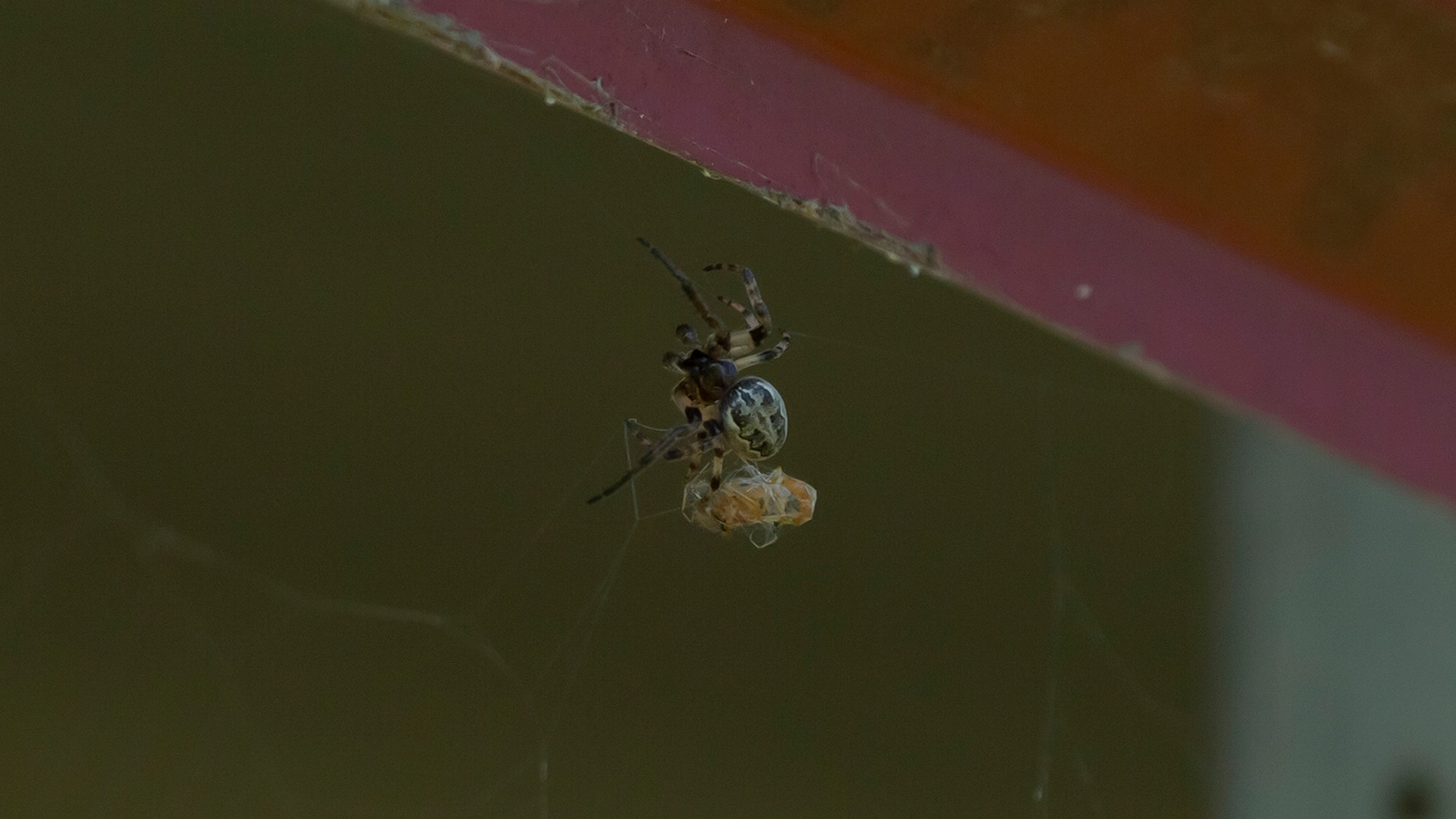
About Spiders
North Louisiana has a spider for every occasion. A spider for your front porch. A spider for your garden shed. A spider for the gap between your car door and the frame that you discover at exactly the worst moment. A spider the size of your palm building a web across your entire back door in the time it took you to get the mail.
The region sits in the southeastern United States spider diversity sweet spot, warm enough for year-round spider activity in the southern parishes and mild enough that most species can breed through an extended warm season without the winter interruptions that cut spider abundance in colder climates.
That abundance generates a lot of anxiety and very little harm. North Louisiana's spider community includes exactly two medically significant species, the brown recluse and the black widow, and the rest of the community consists of animals doing useful work in the garden, the forest, the field, and the gap between your car door and the frame. Understanding which spiders live here, what they eat, and how they behave converts most spider encounters from reflexive horror to grudging appreciation, and in some cases to genuine fascination.
Why North Louisiana Has So Many Spiders
The combination of terrain, climate, and prey availability in North Louisiana produces spider diversity that outpaces most temperate North American regions. The warm, humid conditions through the growing season support large insect communities that in turn support large spider populations. The landscape diversity, from upland pine-oak forests through bottomland hardwood and the agricultural edges between them, provides diverse habitat for species with different ecological requirements. The mild winters in the southern parishes allow species that die out in frost-prone areas to maintain year-round populations.
Spiders belong to the order Araneae, within the class Arachnida, which also includes harvestmen, scorpions, mites, and ticks. Unlike insects, spiders have two body segments rather than three, eight legs rather than six, and no antennae. All spiders produce silk, though not all build webs.
All spiders produce venom used in prey capture, though the vast majority produce venom with no meaningful effect on humans. That distinction, between venom that affects prey and venom that affects people, resolves most of the anxiety that the word "venomous" generates when applied to spiders casually.
Web Builders and Hunters
The spider community divides broadly into web-building spiders, which construct silk structures to capture prey, and hunting spiders, which locate and pursue prey without relying on webs. Both strategies appear across multiple spider families in North Louisiana, and both produce spiders that observers encounter regularly in the field and in and around structures.
Web-building spiders include the orb weavers, which build the classic circular webs most people associate with spiders. Several orb weaver species produce prominent webs in North Louisiana gardens, forest edges, and open habitats, including the golden silk orb weaver, the arrow-shaped orb weaver, and various furrowed and star-bellied orb weavers.
The orchard spiders, smaller and more colorful than the larger orb weavers, build webs in shrubby vegetation at woodland edges and garden plantings. The common stretch spider holds a distinctive horizontal posture in its web that separates it visually from every other web-building spider in the region.
Hunting spiders include the wolf spiders, large and fast, which actively pursue prey across ground surfaces and are among the most commonly encountered spiders in gardens, fields, and leaf litter throughout North Louisiana. The jumping spiders, small and alert, hunt by stalking prey and leaping to capture it. The fishing spiders, including the six-spotted and white-banded species, hunt at the water's edge and on the water surface. The lynx spiders hunt at flower heads and on vegetation surfaces without using webs.
The Two Species Worth Knowing
The brown recluse, Loxosceles reclusa, and the black widow, Latrodectus mactans, represent the two medically significant spider species in North Louisiana. Both deserve the specific awareness that their venom warrants. Neither deserves the generalized fear response that gets applied to most of the spiders people encounter in the region.
Brown recluse spiders are small, tan to dark brown, with a distinctive violin-shaped mark on the cephalothorax, the front body segment. They live in dry, undisturbed spaces: inside structures in woodpiles, boxes, wall voids, and areas with low human traffic. Brown recluse bites cause tissue death at the bite site in a significant fraction of cases, though many bites produce only mild localized reactions. The spider bites defensively, not aggressively, and most exposures happen when a person accidentally traps the spider against their skin.
Black widows show the red hourglass on the underside of the shiny black abdomen that makes females among the most recognizable spiders in the region. Females are significantly larger than males. They build irregular webs in sheltered locations, including under logs, in wood piles, in meter boxes and utility structures, and in undisturbed corners of outbuildings. Black widow venom produces systemic neurological symptoms that can be serious without treatment.
Knowing these two species specifically, and checking for them before reaching into undisturbed woodpiles, boxes, or utility structures, addresses most of the medically relevant spider risk in North Louisiana without requiring general anxiety about the spider community as a whole.
Web Architecture as Identification
Web structure often identifies the spider family before the spider itself becomes visible. Orb webs, the circular spiral designs that catch morning dew and appear on every garden fence in August, belong to the orb weaver family. Funnel webs, with a flat sheet leading to a tube retreat, belong to funnel weavers.
Cobwebs, the irregular tangled structures in corners and under eaves, belong to cobweb spiders including the theridiid family that includes black widows. Sheet webs, flat horizontal planes supported by scaffolding threads above them, belong to linyphiid spiders. Tangle webs in low vegetation near water belong to various families depending on location and season.
Recognizing web architecture before the spider appears converts a random encounter with a web into an identification starting point. An orb web in garden vegetation in August could be half a dozen different orb weaver species depending on location, height, and web diameter. A funnel web in grass at a field edge belongs to a funnel weaver. An irregular cobweb in the corner of an outbuilding could be a black widow. The web tells the story before the spider shows itself.
Seasonal Patterns
Spider visibility in North Louisiana peaks in late summer and fall when mature adults of most species reach maximum size and web-building activity increases. The large August orb weaver webs that appear across porches, gardens, and forest edges belong to adult females that have been growing since spring.
The prominent September and October webs in open habitats belong to the same late-season maturation pattern. Wolf spiders carry egg sacs and young through summer and become more frequently encountered in fall as they move through leaf litter and across open ground.
Spring produces the first web-building activity of the year for many species, with small, freshly hatched spiders building miniature webs that scale up through the season. Early spring jumping spiders appear on warm days in February and March, hunting on sun-facing surfaces when most other arthropods remain inactive. Year-round activity in the bottomland parishes maintains spider presence through mild winters at sites where insect prey remains available.
Why Spiders Matter
The argument for spiders in the North Louisiana landscape starts with prey consumption. A spider community at a single acre of old-field habitat consumes insect biomass through the warm season at a scale that suppresses pest insect populations without any pesticide application. Wolf spiders in the soil layer, orb weavers in the vegetation layer, jumping spiders and lynx spiders on flowers and foliage: each spider in each layer contributes to insect population regulation that serves garden, farm, and forest without requiring anything from the land manager.
That function extends to the food web above the spider. Many North Louisiana bird species consume spiders as a significant component of their diet, particularly during the nesting season when spiders provide high-protein food for nestlings. Prothonotary warblers foraging in bottomland forest consume spiders along with other invertebrates. Various migrant warblers passing through North Louisiana in spring consume spiders at woodland edge sites along the migration route.
The spider is both predator and prey, occupying a middle trophic position that connects the insect community below it to the bird community above it. Maintaining that middle position means maintaining the spider community, which means tolerating the web across the back door and the large orb weaver on the garden fence and the wolf spider in the leaf litter.
How to Use This Section
Each species in this section gets its own article covering identification, habitat, behavior, prey, predators, and documentation opportunities. Accessibility sections address how each species presents for observers with different physical abilities. More Information sections provide the source citations for further research.
The section covers the spider species most commonly encountered at North Louisiana sites and the species with the most complete North Louisiana distribution data. It does not cover every spider species in the region, that would require a much longer list and more taxonomic complexity than most observers need. It covers the species worth knowing, the ones that answer the question "what reads as this spider" most often at North Louisiana encounters.
Silk
Every spider produces silk, but not every spider uses it the same way. Web-building spiders use multiple silk types for different structural purposes: dragline silk for the main framework, viscid silk for the sticky spiral capture threads, tubuliform silk for egg sacs.
Hunting spiders use silk for egg sacs, retreat tubes, and the dragline they trail behind them as a safety line and navigational aid. Jumping spiders attach a dragline before each leap, pulling it taut as they jump so that any missed landing results in a controlled descent rather than a fall.
Orb weaver silk, the type that produces the large circular webs of North Louisiana gardens and forest edges, ranks among the strongest natural materials relative to weight produced by any animal. The golden silk orb weaver, Trichonephila clavipes, produces silk with a golden yellow tint visible in certain light angles that gives the species both a common name and a practical advantage: the color, which appears yellow-gold in morning sunlight, may attract insects rather than warning them away.
Whether that explanation holds up under rigorous investigation remains debated. What reads as not debated: a full-sized golden silk orb weaver web can stop a hummingbird, which the spider catches and consumes when the opportunity presents itself.
That last detail tends to settle the question of whether spider webs in North Louisiana should be treated as serious engineering.
Why Spiders Get Misidentified
Most spider anxiety in North Louisiana concentrates on brown recluse identification, which produces a substantial misidentification problem because people apply the brown recluse label to almost any small brown spider they encounter. Several other common North Louisiana spiders share the general brown coloration and modest size of the brown recluse without sharing the violin-shaped cephalothorax mark, the six eyes in three pairs, or the dry, undisturbed habitat preference that characterizes the actual species.
Grass spiders, sac spiders, cellar spiders, and various wolf spiders get misidentified as brown recluses with enough frequency that the regional diagnosis rate for brown recluse envenomation almost certainly includes many bites from other species. The actual brown recluse bite, which produces a distinctive necrotic lesion when tissue death occurs, has a specific enough presentation that medical documentation can usually distinguish it from the more common bites of non-necrotic species.
The practical rule: if a spider reads as brown and small and encountered in North Louisiana, it may or may not be a brown recluse. If it shows the violin mark on the cephalothorax, six eyes in three pairs, and lives in dry undisturbed areas inside a structure or under debris outside, it warrants careful handling. Otherwise, the probability favors one of the many other small brown spiders in the regional community that pose no significant medical risk.
Spider Photography
North Louisiana spiders photograph well under a range of field conditions, and the iNaturalist record for the region's spider community benefits enormously from close-focus photography that captures the diagnostic features needed for species identification. For web-building spiders, photographing both the spider and the web architecture together provides identification context that the spider alone does not. For hunting spiders, a clear dorsal view of the cephalothorax, where the eye arrangement and coloration pattern appear, provides the best identification features.
Wolf spiders, the most commonly encountered large ground-hunting spiders in North Louisiana, present for dorsal photography readily when approached slowly on open ground. The eye arrangement in two rows, with the second row containing the large forward-facing eyes characteristic of the family, appears clearly in good-quality dorsal photographs. Several wolf spider species require magnified examination of specific features for species-level identification, and photographs that crop tightly to the eye arrangement assist expert review on iNaturalist.
Jumping spiders, with their oversized forward-facing principal eyes and their tendency to turn toward the camera and pose, produce some of the most reliably dramatic spider photographs available at North Louisiana sites. A jumping spider approached slowly at close range and photographed from a front-facing position presents the large principal eyes directly to the camera in a composition that communicates something about spider cognition without any editorial commentary.
Spiders and Rain
Heavy summer rain in North Louisiana does specific things to spider behavior that field observers notice without always understanding. After a significant rain event, wolf spiders concentrate in elevated positions, on fence posts, plant stems, and low vegetation above the saturated ground layer. Funnel weaver webs in grass appear dramatically visible when covered with water droplets. Web-building spiders abandon flooded web anchor points and rebuild.
The post-rain spider concentration on elevated surfaces produces unusually high encounter rates with large wolf spiders and other ground-hunting species that an observer might spend an entire dry week failing to see. Walking a field edge or garden path within two hours of a heavy rain event and watching the fence line and low vegetation surfaces produces more wolf spider observations than the same walk in dry conditions.
That spiders are not appearing from nowhere. They were in the soil layer the whole time. The rain pushed them up.
The Spider Record for North Louisiana
That North Louisiana iNaturalist spider record reflects the general pattern of arthropod observation in the region: concentrated at easily accessible garden and woodland edge sites, skewed toward large conspicuous species, and thinner for ground-hunting and cryptic species that require active searching rather than passive encounter.
The orb weavers, visible and stationary in their webs, dominate the record. Wolf spiders and jumping spiders appear with moderate frequency. The smaller, less obvious species, the linyphiids, the sac spiders, the funnel weavers, appear rarely despite being genuinely abundant at North Louisiana sites.
Building the regional spider record needs the same systematic observation approach that builds any arthropod record: targeted habitat searching at appropriate times, photography that captures diagnostic features, and consistent iNaturalist submission that allows expert review to confirm species-level identifications. Any observer who adds spider photography to their routine natural history practice at North Louisiana sites contributes directly to a regional database that improves the scientific understanding of the local spider community.
The spider community at every North Louisiana site contains more species than the observation record currently captures. Every photograph submitted brings the record closer to the actual community. The spiders are there. They have always been there.
Eyes, Legs, and the Basics
Distinguishing spider families in the field starts with eyes. Wolf spiders carry eight eyes in two rows, with the second row containing the dramatically enlarged forward-facing principal eyes that catch flashlight at night in a greenish eyeshine, making wolf spiders findable after dark by shining a headlamp at ground level across a field or garden.
Jumping spiders carry eight eyes with the enlarged principal eyes facing directly forward, giving them a wide stereoscopic field for the prey-stalking behavior that makes them the sharpest-vision spiders in the regional community. Orb weavers carry eight eyes in two rows but rely on vibration rather than vision for most prey detection. Fishing spiders carry eight eyes arranged to provide wide-angle coverage over the water surface where most of their prey activity occurs.
Eye count and arrangement matter enough for spider identification that close-focus photography of the face, showing the eye row arrangement, provides identification information that body color and markings alone often does not. Different wolf spider species, which can look nearly identical in dorsal body color, separate at species level partly through eye arrangement details that appear in macro photographs.
The iNaturalist spider community specifically requests face-forward photographs for any jumping spider submission because the eye arrangement and the coloring around the principal eyes, the iridescent fringe of scales in many species, provides species-level identification that dorsal views do not.
The Egg Sac
Finding a spider egg sac without the spider present identifies spider activity at a location and narrows the species possibilities based on egg sac architecture. Wolf spider females carry their egg sacs attached to their spinnerets, dragging the sac with them wherever they go.
An egg sac trailing from a ground-hunting spider identifies the female as a wolf spider without any other features needing examination. Orb weaver egg sacs, papery or silken masses attached to vegetation near the web, come in shapes and textures that distinguish family or genus even without the adult spider present.
Finding an egg sac reads as a spider record. A photograph of the egg sac with location data submitted to iNaturalist receives expert review that can confirm the family and sometimes the species from egg sac architecture alone. Any egg sac on North Louisiana vegetation, on fences, on bark, on leaf surfaces, or attached to structures merits a photograph and a submission.
Most observers walk past egg sacs without recognizing them. Every one that gets photographed and submitted adds to the regional spider record at a life stage that adult-only records do not capture.
Spiders in Structures
The spiders that most North Louisiana observers encounter most consistently are the ones living in, on, and around human structures. Funnel weavers build flat sheet webs in corners and against siding. Cellar spiders build loose webs in sheltered indoor spaces and are among the most commonly encountered indoor spiders in the region. Cobweb spiders build the messy tangle webs in undisturbed corners that accumulate through the season. Jumping spiders appear on exterior walls and window frames where they hunt the insects attracted to structure surfaces and lighting.
All of these structure-associated spiders are operating normally in the space humans have provided them, which happens to overlap with the space humans occupy. The spiders are not attracted to structures because humans are there. They track the insects that structures attract, and the sheltered surfaces that structures provide. Understanding the structural spider community as an insect-removal service that costs nothing and needs no maintenance produces a more functional relationship with the eight-legged neighbors than the alternative does.
The spider behind the mirror has a name. This section has it.
Venom, Bites, and the Numbers
Of the hundreds of spider species present in North Louisiana, two carry venom that can produce serious medical consequences in humans. The rest carry venom calibrated to the size and physiology of their prey, which for most North Louisiana spiders means insects, small vertebrates, and other arthropods, not the much larger and differently structured physiology of a human.
Spider bites on humans from non-medically significant species typically produce localized redness, mild pain, and resolution within hours to a day or two. Most people who believe they have been bitten by a spider have not been bitten by a spider.
This last point needs emphasis because it influences how people respond to spider encounters and how they assess the risk of the regional spider community. Skin lesions, infections, and reactions attributed to spider bites in the southeastern United States trace to a variety of causes, most of which are not spider bites. MRSA skin infections in particular produce lesions similar in appearance to brown recluse bites and get attributed to brown recluse envenomation at a rate that substantially inflates the perceived brown recluse bite frequency in the region.
That actual brown recluse bite, when it occurs, produces a specific progression: initial localized reaction, possible blister formation, and in some cases a necrotic lesion that expands over days to weeks before resolving. Medical documentation of that progression confirms the diagnosis. An attributed spider bite without that documented progression, from an unobserved spider on a site where brown recluse presence has not been confirmed, deserves more diagnostic skepticism than it typically receives.
How Many Spiders Are at Your House
More than you think, by a considerable margin. A single acre of undisturbed habitat in the eastern United States supports an estimated one million spiders under good conditions. A suburban North Louisiana property with garden vegetation, leaf litter, a wood pile, a porch, an outbuilding, and the standard accumulation of structures and gaps that residential properties produce supports hundreds to thousands of spiders simultaneously.
Most of them are never seen. Funnel weavers in the garden shed floor. Cellar spiders in the utility room. Wolf spiders in the leaf pile by the fence. Sac spiders in the rose canes. Jumping spiders on the warm south-facing wall in the afternoon. The spider encounter rate most North Louisiana residents experience represents a fraction of the actual spider population sharing the same property.
That fraction reads as, historically, enough to generate substantial anxiety without being high enough to convey the actual scope of the co-habitation. Knowing that the spider community reads as larger than observed, and that most of it poses no meaningful risk, converts the visible fraction from a threat assessment problem to a community observation opportunity.
The spiders are there. They have always been there. They eat the mosquitoes, the caterpillars, the flies, and the aphids without being asked to, without a pesticide application budget, and without taking up any meaningful space on the property.
That web across the back door in the morning was built overnight. The spider built it because the location produces results. After the web comes down, another spider will find the same location and build again, because the location still produces results. North Louisiana yards produce spiders with reliable abundance, year after year, regardless of any management input except the decision not to kill them.
Accessibility
Most North Louisiana spiders present for observation without terrain difficulty. Web-building spiders in gardens, at woodland edges, and on fence lines present at eye level or below from maintained paths and road shoulders throughout the region. Wolf spiders on ground surfaces and in leaf litter present at close range from maintained paths. Fishing spiders at water edges accessible from maintained boardwalks and observation platforms present without requiring off-trail access.
Photography of most North Louisiana spider species needs only close approach on foot from maintained surfaces. Web-building spiders in late summer webs present sustained observation opportunities at fixed locations where the web anchor points have been established on durable vegetation or structures.
North Louisiana yards, gardens, fields, and forests run the spider community on autopilot every warm season. Every web built overnight, every wolf spider pushed up by rain, every jumping spider watching from the warm wall: all of it proceeds without any management input except the decision to look. All any observer needs to do: pay attention.
More Information
The American Arachnological Society at americanarachnology.org maintains spider identification and natural history resources. iNaturalist accepts spider observations with expert Araneae review. BugGuide at bugguide.net carries North American spider identification resources with Louisiana records and photographic reference material. The spiders handle everything else. That has always been the arrangement. It will remain the arrangement as long as North Louisiana gardens grow and yards accumulate leaf litter and porches face the morning sun.
META TITLE: Spiders of North Louisiana | NLW
META DESCRIPTION: North Louisiana hosts dozens of spider species from orb weavers to wolf spiders to fishing spiders. This section covers the species most commonly encountered in the region — identification, behavior, habitat, and which two actually matter medically.
FOCUS KEYPHRASE: spiders North Louisiana
SECONDARY KEYWORDS: North Louisiana spiders identification, common spiders Louisiana, orb weaver spiders Louisiana, wolf spider Louisiana, fishing spider Louisiana, jumping spider Louisiana, brown recluse Louisiana, black widow Louisiana, spider identification guide Louisiana
OG DESCRIPTION: North Louisiana has a spider for every occasion. This section covers the orb weavers, wolf spiders, fishing spiders, jumping spiders, lynx spiders, and orchard spiders that make up the regional spider community — what they look like, where they live, and which two species actually warrant specific awareness.