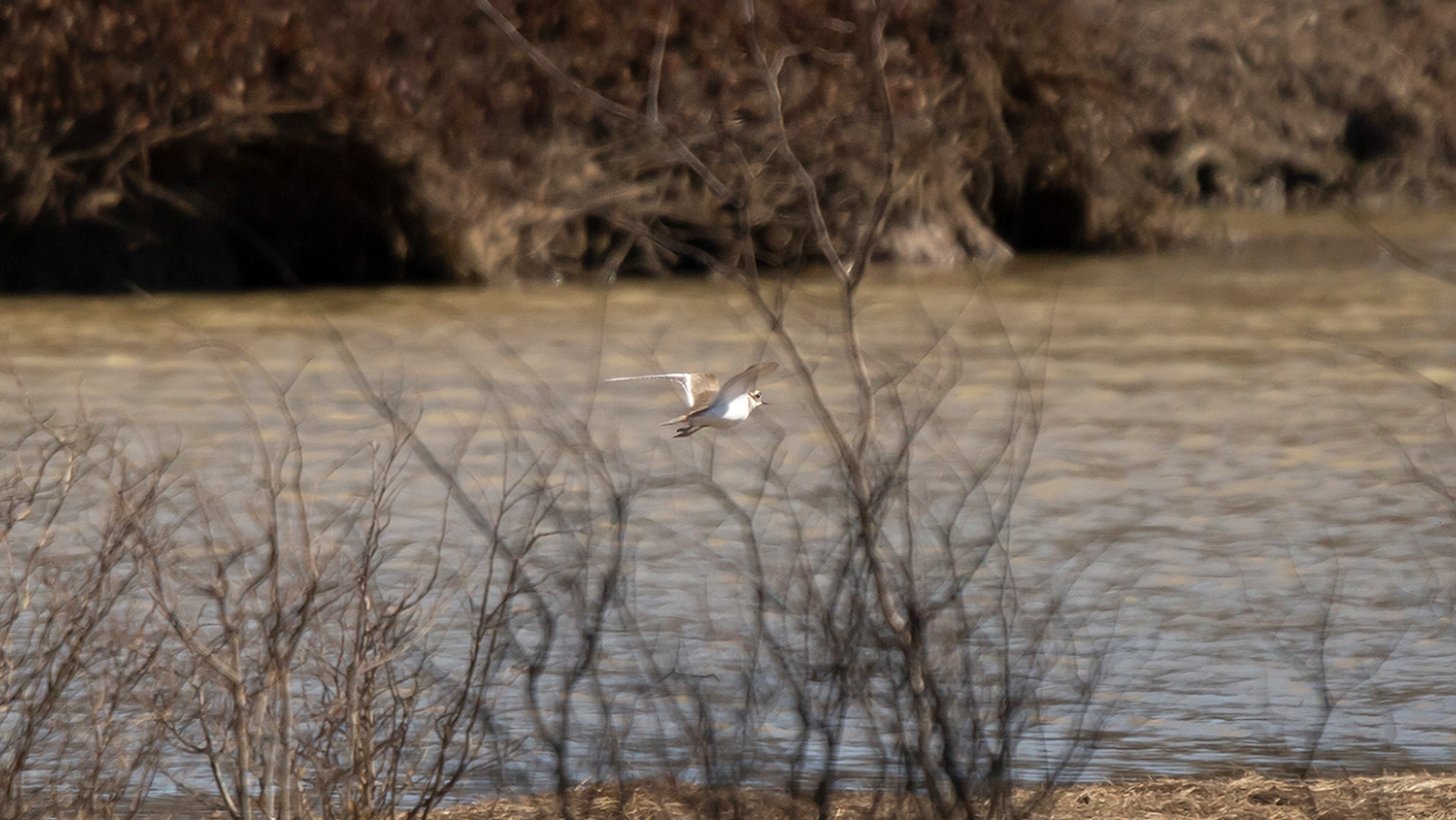
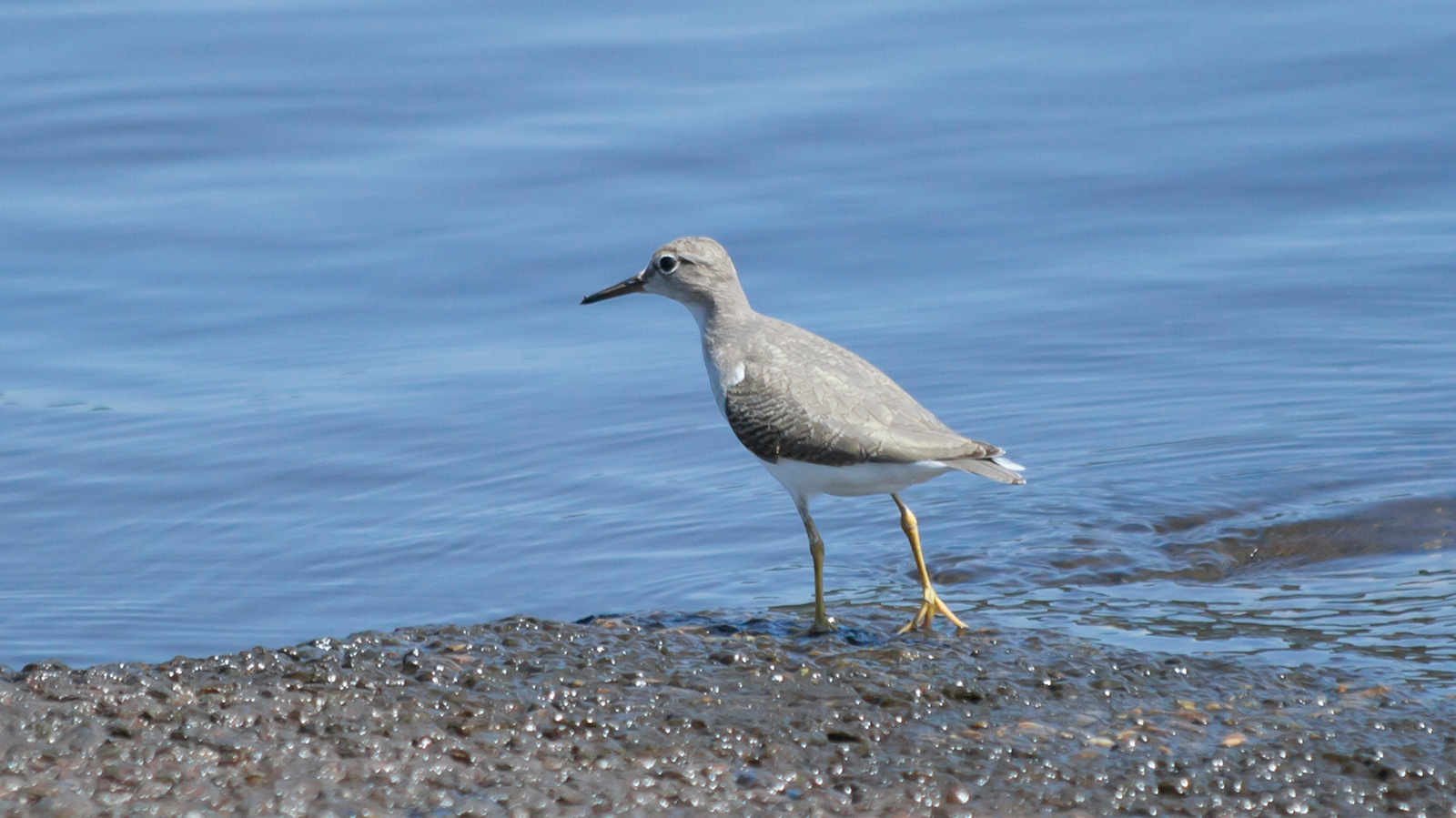
About Shorebirds
What shorebirds can you find in North Louisiana? More than you’d think, and in places that have absolutely nothing to do with a shore.
The word "shorebird" is one of the great misnomers in birding. It conjures images of sandy beaches, crashing waves, and seagulls stealing your Doritos — and sure, plenty of shorebirds live that life. But in North Louisiana, where the nearest ocean is a solid five-hour drive and the closest thing to a beach is a muddy boat ramp at Poverty Point Reservoir, shorebirds are everywhere. They’re standing in flooded soybean fields. They’re picking through exposed mudflats at WMA impoundments. They’re running across gravel parking lots at gas stations like they own the place.
That last one is the killdeer. We’ll get to him.
Not All Shore, Not All Bird Logic
Shorebirds belong to the order Charadriiformes, which is a fancy Latin way of saying "long-legged birds that eat stuff out of mud." The order includes around 390 species worldwide and splits into three main branches: the plovers and their allies (family Charadriidae), the sandpipers and their many, many cousins (family Scolopacidae), and the stilts and avocets (family Recurvirostridae). North Louisiana hosts representatives from all three families, which is genuinely impressive for a region that has zero coastline and whose most prominent body of water is a reservoir built by the Army Corps of Engineers.
The common thread connecting all shorebirds is their feeding strategy. These are birds built for wet edges — the places where water meets land, where mud is soft, where invertebrates hide just below the surface. Their bills are specialized probing tools, and the diversity of bill shapes across the order reads like a toolbox designed by a committee of very particular plumbers.
Short and stubby for surface-picking plovers. Long and straight for deep-probing dowitchers. Slightly upturned for stilts that sweep through shallow water like tiny feathered metal detectors. Each bill shape carves out a slightly different feeding niche, which means multiple species can work the same mudflat without stepping on each other’s dinner.
The sensitive tips of those bills contain clusters of tactile receptors called Herbst corpuscles, and in sandpipers especially, these receptors are packed into a slight swelling at the bill tip. A least sandpiper probing a mudflat isn’t guessing. She’s feeling her way to prey items with a precision that would make a surgeon jealous.
The Funnel Effect
Why does North Louisiana — landlocked, inland, decidedly un-coastal North Louisiana — get shorebirds at all? Because of geography, and specifically because of the Mississippi Flyway.
The Mississippi Flyway is the largest bird migration corridor in North America, and roughly 40 percent of all migrating waterfowl and shorebirds in the continent use it. The route follows the Mississippi River valley from central Canada to the Gulf of Mexico, and as it pushes south through Arkansas and into Louisiana, the flyway narrows into what ornithologists call a funnel. The Lower Mississippi River valley compresses millions of migrating birds into a relatively narrow corridor, which means the density of shorebirds passing through our 26 parishes during spring and fall migration is wildly disproportionate to our distance from the coast.
North Louisiana sits right in the throat of that funnel. Every spring and fall, shorebirds that nested in the Arctic tundra of Alaska and northern Canada pour through our region on their way to and from wintering grounds that can stretch as far south as Patagonia. Some of these birds are completing round-trip journeys of 18,000 miles or more. A buff-breasted sandpiper weighs roughly the same as two AA batteries and flies from the high Arctic to southern South America and back every single year. That’s the equivalent of a human running from New York to Los Angeles and back, then doing it again, while weighing three ounces and eating bugs.
The shorebirds we cover on NLW aren’t doing anything quite that extreme — most of our ten species winter in the southern U.S., Mexico, or Central America rather than Tierra del Fuego — but their migrations are still remarkable. A pectoral sandpiper passing through Boeuf WMA in September may have hatched on the Alaskan North Slope two months earlier. A lesser yellowlegs probing a flooded rice field near Avoyelles Parish probably nested in the boreal forests of Manitoba. These birds are connecting continents through North Louisiana’s mud, whether we notice them or not.
Where Mud Meets Dinner
Shorebird habitat in North Louisiana looks nothing like the coastal mudflats and tidal zones most field guides describe. That’s fine. Shorebirds are adaptable, and what they need isn’t a specific landscape — it’s a specific set of conditions: shallow water, soft substrate, exposed mud, and invertebrate prey. North Louisiana delivers all four, sometimes in places you wouldn’t expect.
The national wildlife refuges and wildlife management areas across our 26 parishes provide some of the best shorebird habitat in the region. Managed impoundments at places like Upper Ouachita NWR, Catahoula NWR, and D’Arbonne NWR create exactly the shallow-water, muddy-edge conditions shorebirds need. When water levels drop in late summer and early fall — either naturally or through deliberate drawdowns by refuge managers — the exposed mudflats become shorebird buffets. CRAWFISH ponds and rice fields across the agricultural parishes, especially in the southern reaches of our coverage area near Avoyelles and Rapides, provide additional foraging habitat that shorebirds have learned to exploit with enthusiasm.
Reservoir edges are another hotspot. When water levels fluctuate at Poverty Point Reservoir, Lake Claiborne, or Caney Lakes, the receding waterline exposes bands of soft mud that attract migrating shorebirds within hours. If you’ve ever driven past a half-empty reservoir in August and noticed a cluster of small, busy birds running back and forth at the water’s edge like they’re late for something, congratulations — you’ve found shorebirds.
Even urban and suburban environments get in on the act. Killdeer nest in gravel parking lots, on flat rooftops, and along gravel road shoulders with a confidence that borders on reckless. Wilson’s snipes probe soggy ditches and drainage areas throughout the winter. Shorebirds aren’t picky about aesthetics. They’re picky about mud quality.
The NRCS Working Lands for Wildlife program has been working with Louisiana farmers to temporarily flood post-harvest agricultural fields specifically to create shorebird stopover habitat. These managed shallow wetlands on working agricultural land are increasingly important as natural wetland habitat continues to shrink across the Lower Mississippi Alluvial Valley. Farmers get conservation assistance, shorebirds get dinner — it’s one of those rare conservation arrangements where everybody actually wins.
When to Look
Shorebird timing in North Louisiana follows a pattern that surprises people who think of migration as a spring-and-fall thing. It is, technically, but the fall window opens earlier than you’d expect and the spring window is shorter than you’d hope.
Fall migration for shorebirds starts in July. That’s not a typo. Adult shorebirds that failed at nesting or finished breeding early begin heading south before most people have even started thinking about football. By August, fall shorebird migration is in full swing across North Louisiana, with species diversity peaking in September and tapering through October. Juvenile birds tend to move through later than adults, so the same species may show up in waves — adults first in August, young-of-the-year in September and October.
Spring migration is more compressed. Most northbound shorebirds push through North Louisiana between late March and mid-May, with April being the sweet spot. They’re in a hurry — the Arctic breeding season is short, and arriving late means missing the brief explosion of insect life that fuels nesting success. Spring migrants tend to move faster and stay for shorter periods than fall migrants, which makes spring shorebirding more of a sprint than the fall’s marathon.
Two of our ten species break the migration-only pattern entirely. Killdeer are year-round residents across North Louisiana. They nest here, they winter here, and they scream at you from parking lots here twelve months a year. Wilson’s snipes are primarily winter residents, arriving in October and staying through March, probing our soggy ditches and flooded fields with their absurdly long bills. Black-necked stilts breed in our region during summer, so they’re present from roughly April through September.
The rest — the dowitchers, yellowlegs, sandpipers, and golden plovers — are passing through. They’re visitors, sometimes brief ones, and catching them requires knowing when to look and where the mud is fresh.
The Shorebirds of North Louisiana
NLW covers ten shorebird species that occur regularly across our 26 parishes. They represent three families within the order Charadriiformes and range from year-round residents to brief migration visitors.
From the plover family (Charadriidae), we cover the killdeer — the loudest, most dramatic, most impossible-to-miss shorebird in North America — and the American golden plover, a long-distance migrant whose spring and fall routes through the continent follow completely different paths, which is honestly just showing off. Plovers as a group are visual hunters with shorter, stubbier bills than sandpipers, and they tend to run-stop-peck across open ground rather than probe steadily through mud.
From the sandpiper family (Scolopacidae), we cover the long-billed dowitcher, pectoral sandpiper, spotted sandpiper, stilt sandpiper, Wilson’s snipe, greater yellowlegs, and lesser yellowlegs. This family is the heavyweight of the shorebird world, accounting for nearly 100 species globally, and the seven representatives in our coverage area demonstrate the family’s remarkable range of bill shapes, feeding strategies, and migration patterns. The yellowlegs are the ones you’ll hear before you see — their alarm calls carry across entire wetlands. The Wilson’s snipe is the one you’ll flush from a ditch and then wonder what just happened as a brown blur zigzags away from you at top speed. The spotted sandpiper is the one bobbing her tail like she’s listening to a song only she can hear.
From the stilt and avocet family (Recurvirostridae), we cover the black-necked stilt — an outrageously elegant bird on absurdly long pink legs who looks like she wandered out of a fashion magazine and into a CRAWFISH pond. She’s also the only shorebird in our coverage area that regularly breeds here, setting up nests in shallow wetlands from April through August and defending them with a theatrical "popcorn display" that involves jumping, screaming, and occasionally kicking intruders with those ridiculous legs.
A Conservation Reckoning
Shorebirds are in serious trouble, and pretending otherwise doesn’t help anyone — least of all the birds. The numbers are stark, the trend lines are heading the wrong direction, and the species that connect the Arctic to the Gulf of Mexico are running out of places to stop.
A landmark 2019 study published in the journal Science found that North America has lost approximately 2.9 billion breeding birds since 1970. Shorebirds, as a group, have experienced a 37 percent population decline over that period. That’s more than a third of all shorebirds on the continent, gone in fifty years. A 2023 follow-up study from the American Ornithological Society found that the declines are accelerating, not stabilizing — nearly all shorebird species along the Atlantic Coast have lost more than 50 percent of their population in just the last three decades.
The causes are the usual suspects, stacked on top of each other: habitat loss from agricultural conversion and coastal development, pesticide use that wipes out the invertebrate prey base, climate change that disrupts the timing between migration and food availability, and the steady disappearance of wetland stopover habitat along migration routes. In the Lower Mississippi Alluvial Valley — the region that includes our 26 North Louisiana parishes — the conversion of natural wetlands to agriculture has been particularly devastating to migrating shorebirds that depend on inland stopover sites.
There are bright spots. The waterfowl conservation model, which used hunter-funded habitat restoration to increase duck and goose populations by 56 percent since 1970, proves that targeted investment in wetland habitat works. Programs like NRCS’s Working Lands for Wildlife are applying similar thinking to shorebird habitat on agricultural land. And every WMA impoundment drawdown, every managed CRAWFISH field, every preserved wetland edge provides another link in the chain of stopover habitat that keeps these birds moving between hemispheres. But the window is narrowing, and the birds aren’t waiting for us to figure it out.
Accessibility
Shorebird watching in North Louisiana is generally accessible, though conditions vary significantly by site and season. The good news is that many of the best shorebird vantage points are roadside or vehicle-accessible, since shorebirds tend to congregate in open, flat areas near water rather than deep in the woods.
For visitors with mobility considerations, the best options are refuge visitor centers and maintained observation areas with paved or hardened surfaces. The auto tour routes at places like Black Bayou Lake NWR and Catahoula NWR allow shorebird observation from your vehicle, which is actually one of the most effective ways to watch shorebirds anyway — they’re far less spooked by a stationary car than by a person on foot. Reservoir boat ramps and fishing piers can also provide accessible vantage points when water levels expose mudflats within viewing range. Many WMA levee roads are compacted gravel and may be navigable with mobility aids during dry conditions, but they can become impassable after rain.
For visitors with vision considerations, shorebirds present unique challenges because many species are small, similar in coloration, and best identified by subtle differences in bill shape and feeding behavior. High-quality optics make a significant difference — a good spotting scope on a tripod opens up shorebird identification far more than binoculars alone. Auditory identification is helpful for some species, particularly killdeer (whose call is their name, screamed at maximum volume), Wilson’s snipe (whose winnowing flight display produces a haunting, ethereal sound), and both yellowlegs species (whose alarm calls are distinctive and carry long distances). The NLW Ginny Goes series covers specific accessibility details for individual sites across our coverage area.