About Flycatchers
Six flycatchers. One attacks hawks for a living. One decorates with snakeskin. One carries a tail longer than its body. One wears red so bright it looks photoshopped. One sings its own name ten thousand times a day and never gets bored. One moved into your carport and carries no intention of leaving. The flycatcher family in North Louisiana covers a range of personality that stretches from "quiet bird on a branch" to "tiny feathered psychopath chasing a bald eagle across a rice field," and every species earns its spot on the roster.
All six catch insects on the wing. All six perch on exposed branches, wires, or fence posts and launch into the air to snatch passing bugs. The basic job description stays the same across the group. The execution varies wildly. The eastern kingbird treats bug-catching as a side hustle between hawk attacks. The wood-pewee treats bug-catching as a meditation practice on a dead branch. The phoebe treats bug-catching as something to do between tail-pumps. The approach differs. The bugs end up in the same place.
The Lineup
Great-crested flycatcher. Canopy bird with a yellow belly, a loud "wheep!" call, and a nest lined with shed snakeskin. The only eastern flycatcher that nests in tree cavities. Breeds across all of North Louisiana from April through September. You'll hear this bird yelling from the top of an oak long before you see it, and you may never see it at all.
Scissor-tailed flycatcher. The one with the nine-inch forked tail and salmon-pink flanks that looks like it got dressed for a different continent. Breeds in the western parishes, particularly Natchitoches, Sabine, Vernon, and Red River. Perches on fence wires in open cattle country and performs a courtship sky dance that looks like a kite having a crisis.
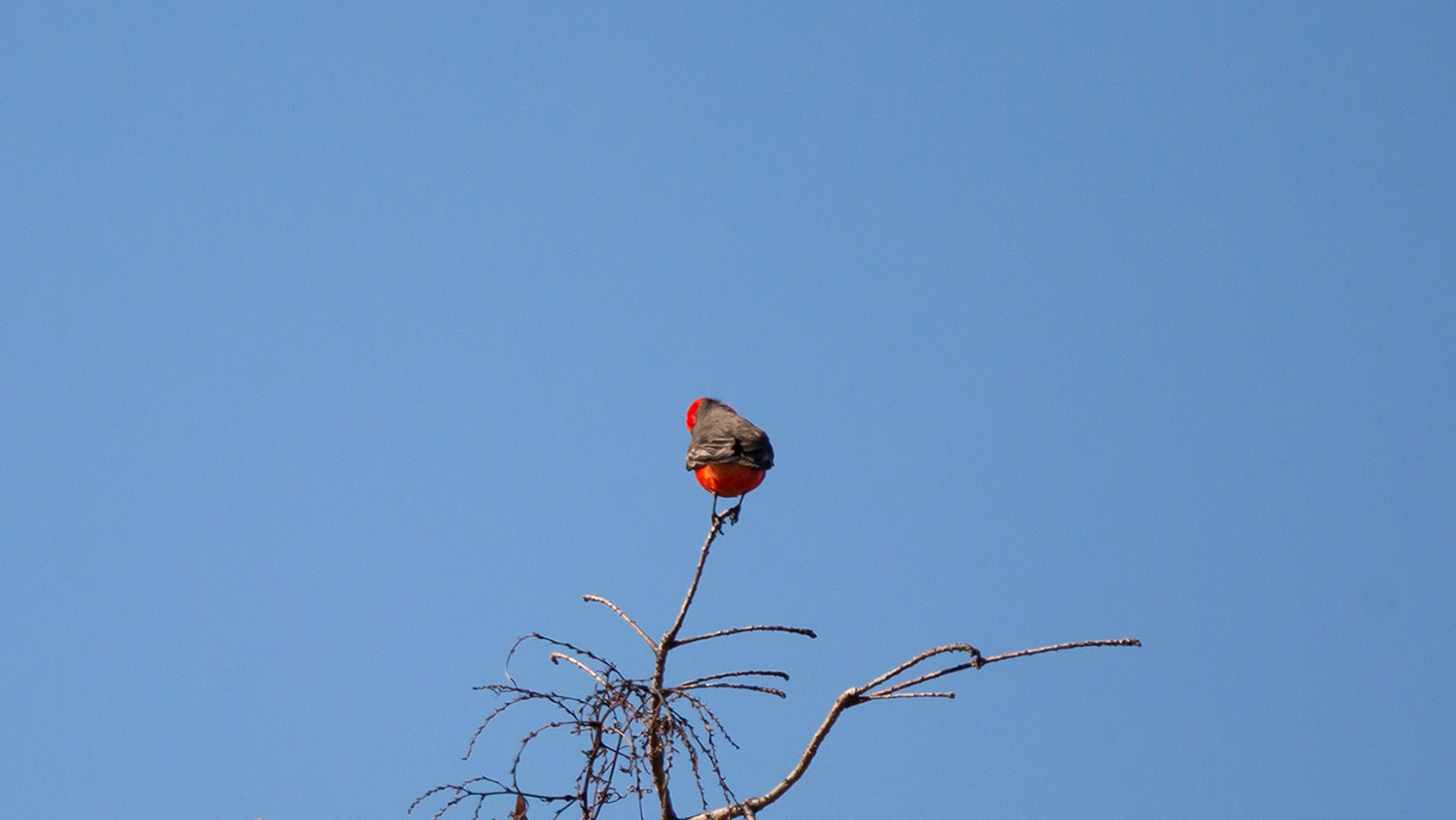
Vermilion flycatcher. Rare winter visitor with color so intense it looks like a rendering error. The male wears solid scarlet from forehead to belly. Shows up in North Louisiana between October and March, usually one bird at a time, usually near a stock pond in a cattle pasture, and always generates a round of excited phone calls.
Eastern kingbird. Named Tyrannus tyrannus because one "tyrant" wasn't enough. Dark above, white below, white tail tip. Breeds across all of North Louisiana from April through September. Perches on fence wires and attacks everything that flies overhead, including hawks, crows, and vultures that had no idea the nest existed.
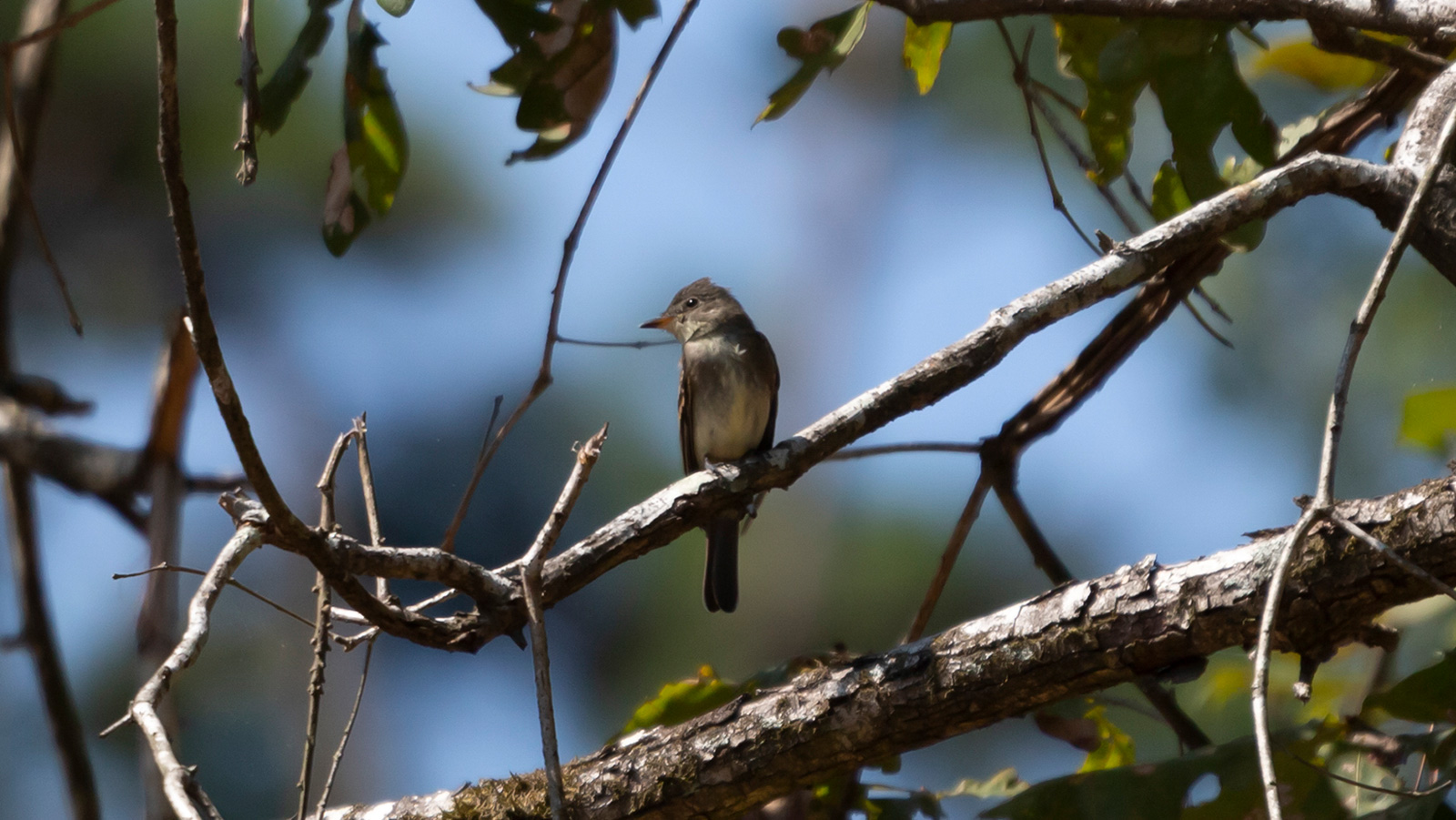
Wood-pewee. The quiet one. Olive-gray, no eye ring, sings a lazy "pee-a-wee" from a dead branch in the canopy all day long. Breeds across all of North Louisiana from late April through September. The bird sits on one branch, catches a bug, returns to the branch, and sings its name again. The schedule did not varied in millions of years.
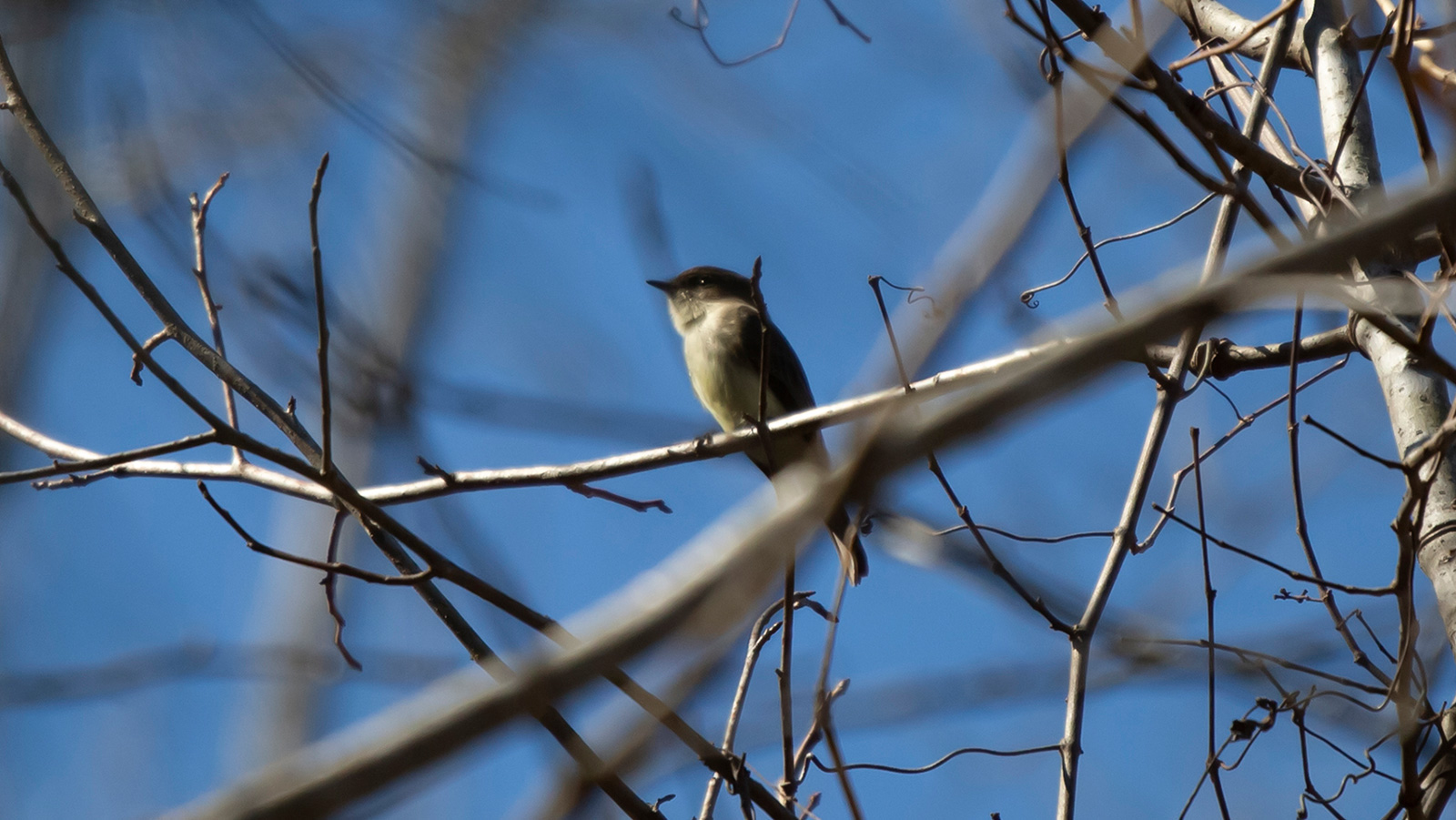
Phoebe. The one that moved into your carport. Gray-brown, no wingbars, pumps its tail nonstop. Year-round resident across North Louisiana. Nests on bridges, porches, barns, and any horizontal ledge with a roof. Returns to the same nest site every year with the commitment of a bird that has already decided where it lives and will not be negotiating.
What's on the Menu
Insects caught mid-flight for all six species during breeding season. The great-crested catches beetles and moths from the canopy. The scissor-tail grabs grasshoppers from above a cattle pasture. The vermilion picks off small flies near stock ponds. The kingbird snatches bees, wasps, and dragonflies from the fence-line airspace. The pewee intercepts moths and beetles from a dead branch. The phoebe drops from a wire to grab flies and spiders near the ground. Same technique, different altitude, different attitude.
Winter diets split the group. The phoebe stays and switches to berries when insects thin out. The vermilion visitor feeds on whatever winter bugs North Louisiana's mild season still produces. The other four head to Central and South America, where the kingbird undergoes a complete personality transplant and spends the winter eating fruit in cooperative flocks, behaving as though the hawk-attacking maniac of the North Louisiana summer never existed.
How to Tell Them Apart (The Short Version)
Yellow belly and loud "wheep!" from the canopy: great-crested flycatcher. Nine-inch forked tail on a fence wire: scissor-tailed flycatcher. Solid red male on a fence post: vermilion flycatcher. White belly, white tail tip, attacking a hawk: eastern kingbird. Olive-gray on a dead branch singing "pee-a-wee" all day: eastern wood-pewee. Gray-brown, pumping its tail on your porch railing: eastern phoebe. If none of these match, congratulations: you've found an Empidonax flycatcher and your afternoon just got complicated.
What Eats Them (And What Gets Chased Off)
Hawks take all six species, though the kingbird makes hawks work harder for it than any other flycatcher in the group. Cooper's hawks and sharp-shinned hawks hunt through the same habitats where flycatchers feed, and a flycatcher sitting on an exposed perch advertises the bird to everything with talons as readily as it advertises to birders.
Snakes and raccoons raid nests across all six species. The great-crested flycatcher's cavity nest gets less snake predation than the open-cup nests of the other five, but a snake that finds the cavity entrance eats the contents just as effectively. The phoebe's preference for human structures puts its nest within reach of house cats, which adds a predator the other five species rarely encounter.
Cowbirds parasitize nests of the pewee and the phoebe with the most consistent success. The kingbird ejects cowbird eggs more effectively than the other species, which means the cowbird has learned to invest elsewhere. The cowbird did not given up on the flycatcher family. The cowbird has gotten selective about which flycatcher gets the egg.
When They Show Up
Eastern phoebe: year-round. The only flycatcher in North Louisiana that stays through winter.
Great-crested flycatcher: April through September.
Eastern kingbird: April through September.
Wood-pewee: Late April through September.
Scissor-tailed flycatcher: April through September in the western parishes. Migrant through the rest of North Louisiana in spring and fall.
Vermilion flycatcher: October through March, rare winter visitor. Check the rare bird alerts.
Where to Start
Fence wires and utility lines along any rural highway for the kingbird, scissor-tail, and phoebe. Mature hardwood forest canopy for the great-crested and the pewee. Stock ponds and cattle pastures in winter for the vermilion. Bridges and carports for the phoebe's nest.
The eastern kingbird and eastern phoebe require the least effort to find: both perch on roadside wires, both call frequently, and both can be observed from a moving vehicle. The great-crested flycatcher and wood-pewee require forest access and upward-looking neck muscles. The scissor-tail takes a drive to the western parishes. The vermilion takes luck, winter timing, and the Louisiana rare bird network.
Where to Learn More
The Cornell Lab of Ornithology's All About Birds covers all six species with range maps, call recordings, and breeding ecology. The Sibley Guide to Birds provides the flycatcher comparison plates that sort the group by size, color, and field marks.
For the Empidonax problem that this page deliberately avoided: the Sibley Guide's Empidonax section and the Cornell Lab's Flycatcher ID resources tackle the genus-level confusion that turns routine birding trips into long, frustrating arguments between friends. None of the six species on this page cause that problem. These six all have the decency to look different from each other.
Experiencing These Birds: Accessibility Notes
The eastern phoebe's sharp "fee-BEE" and the great-crested flycatcher's emphatic "wheep!" both sit at mid-range frequencies that most people hear clearly, including those who've lost the high frequencies. The eastern kingbird's buzzy "dzi-dzi-DZEET" carries well across open country. The wood-pewee's lazy "pee-a-wee" fills forest canopy all day long. All four calls can be picked up from fifty feet or more without difficulty.
Scissor-tailed flycatcher calls carry less distance but the bird's visual signature, a long forked tail on a fence wire, identifies it from hundreds of feet away against open sky. The vermilion flycatcher's calls barely carry at all, and finding the bird depends on visual scanning or knowing the location from birding reports.
For people with mobility limitations, four of the six species perch on roadside wires and fence posts visible from a vehicle: kingbird, phoebe, scissor-tail, and vermilion. The great-crested and wood-pewee call from forest canopy and can be heard from any accessible trail or forest road. No species in this group demands backcountry hiking.