Advertisement
Micrathena sagittata, the arrow-shaped orb weaver, carries abdominal projections that make it one of the most immediately identifiable spiders in North Louisiana's woodland and woodland-edge habitats. Two long lateral spines and additional smaller projections give the female's abdomen a star-or-arrow shape that reads as unlike any other orb weaver in the region at first glance. The yellow-and-red coloration of the abdomen adds visual emphasis to the projections, producing a spider that appears to be advertising itself in a habitat where most spiders benefit from concealment.
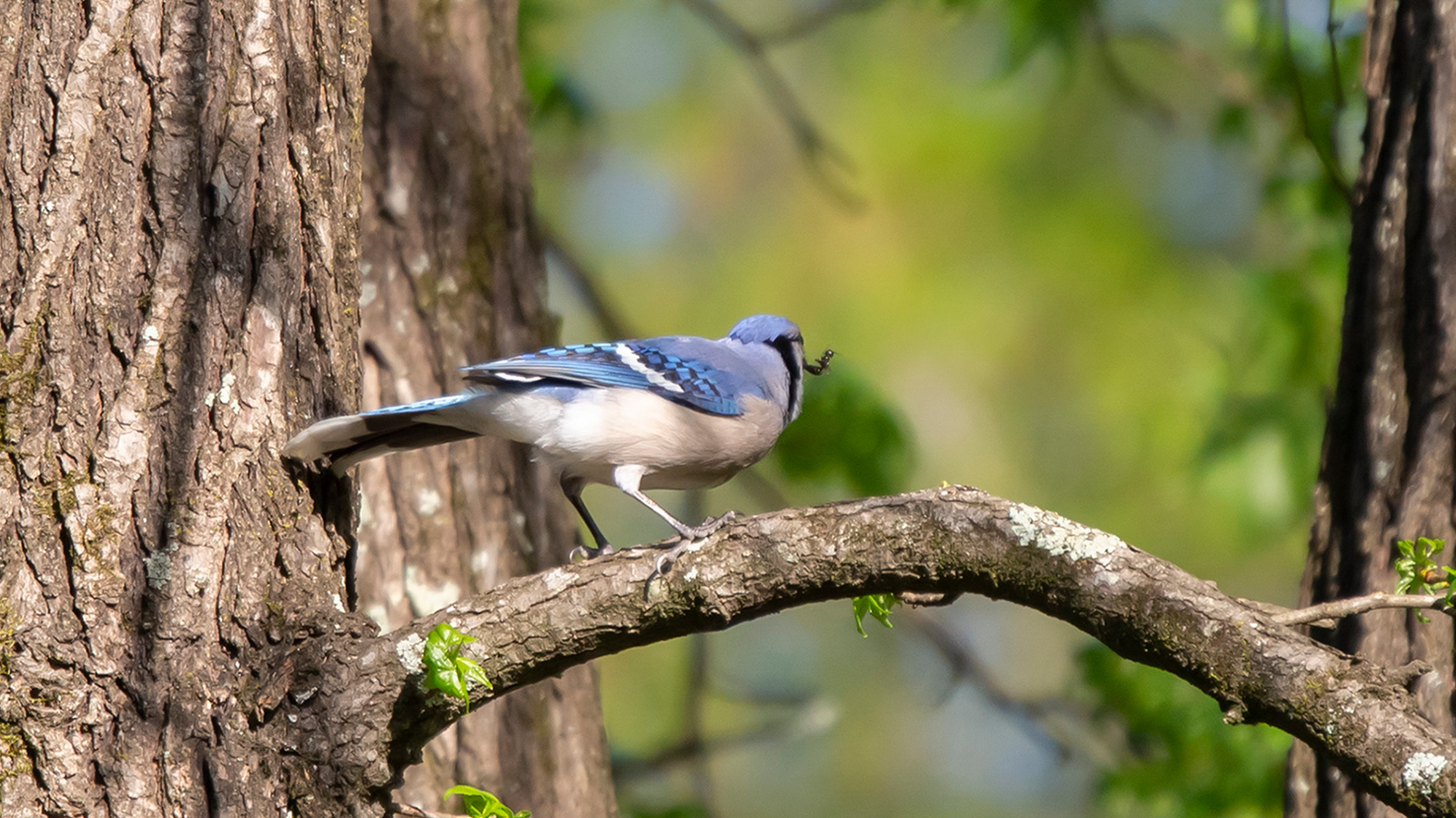
That advertisement probably functions as predation deterrence. The projections on the abdomen make the spider mechanically difficult to swallow whole, a strategy that appears in multiple unrelated spider lineages that develop spiny or projecting abdominal structures. A bird that attempts to swallow a spiny Micrathena encounters a different experience than a bird that swallows a smooth-bodied orb weaver of comparable size, which may produce avoidance learning that protects individual Micrathena from repeat encounters with the same predator.
What Arrow-Shaped Orb Weavers Look Like
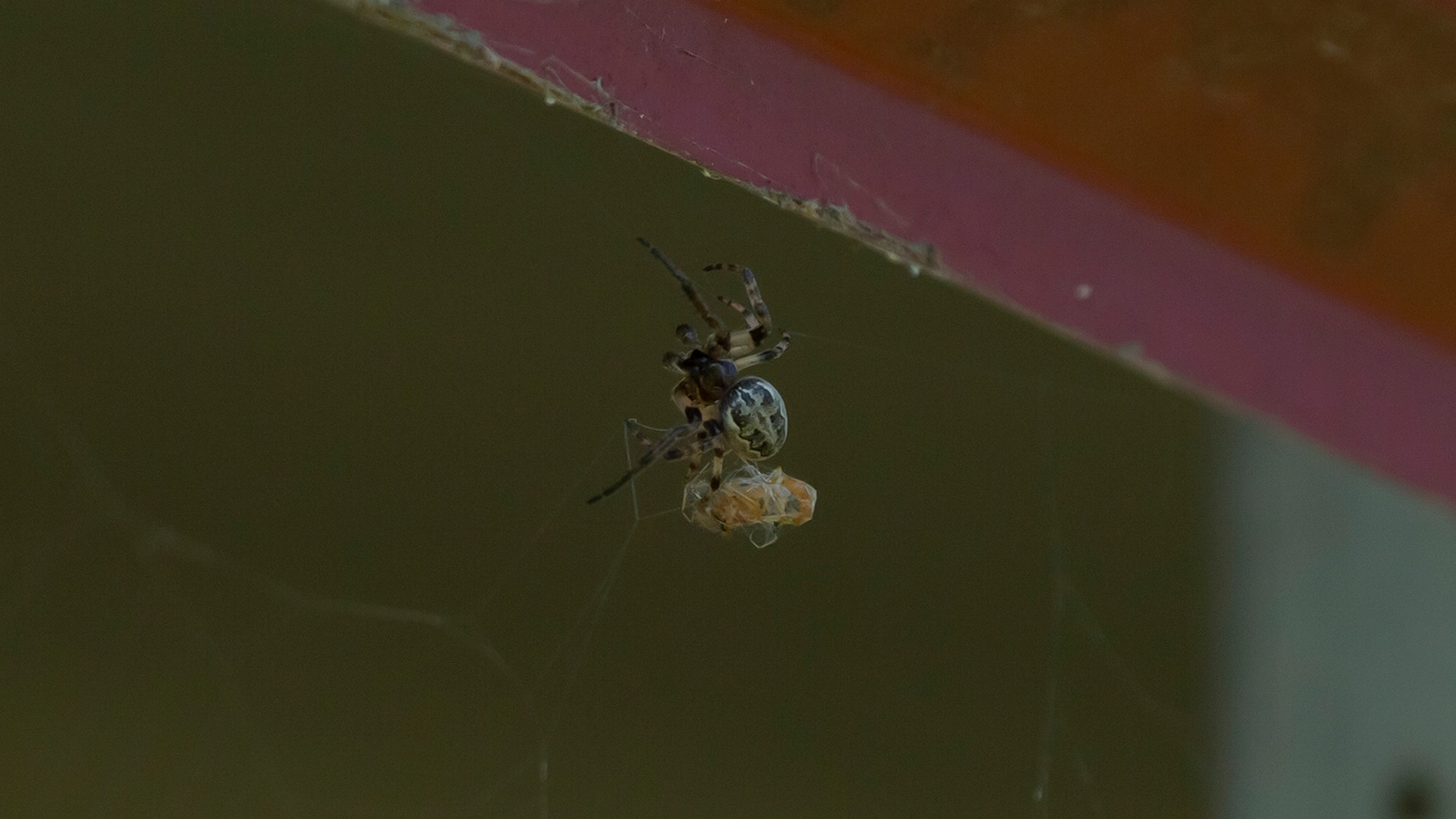
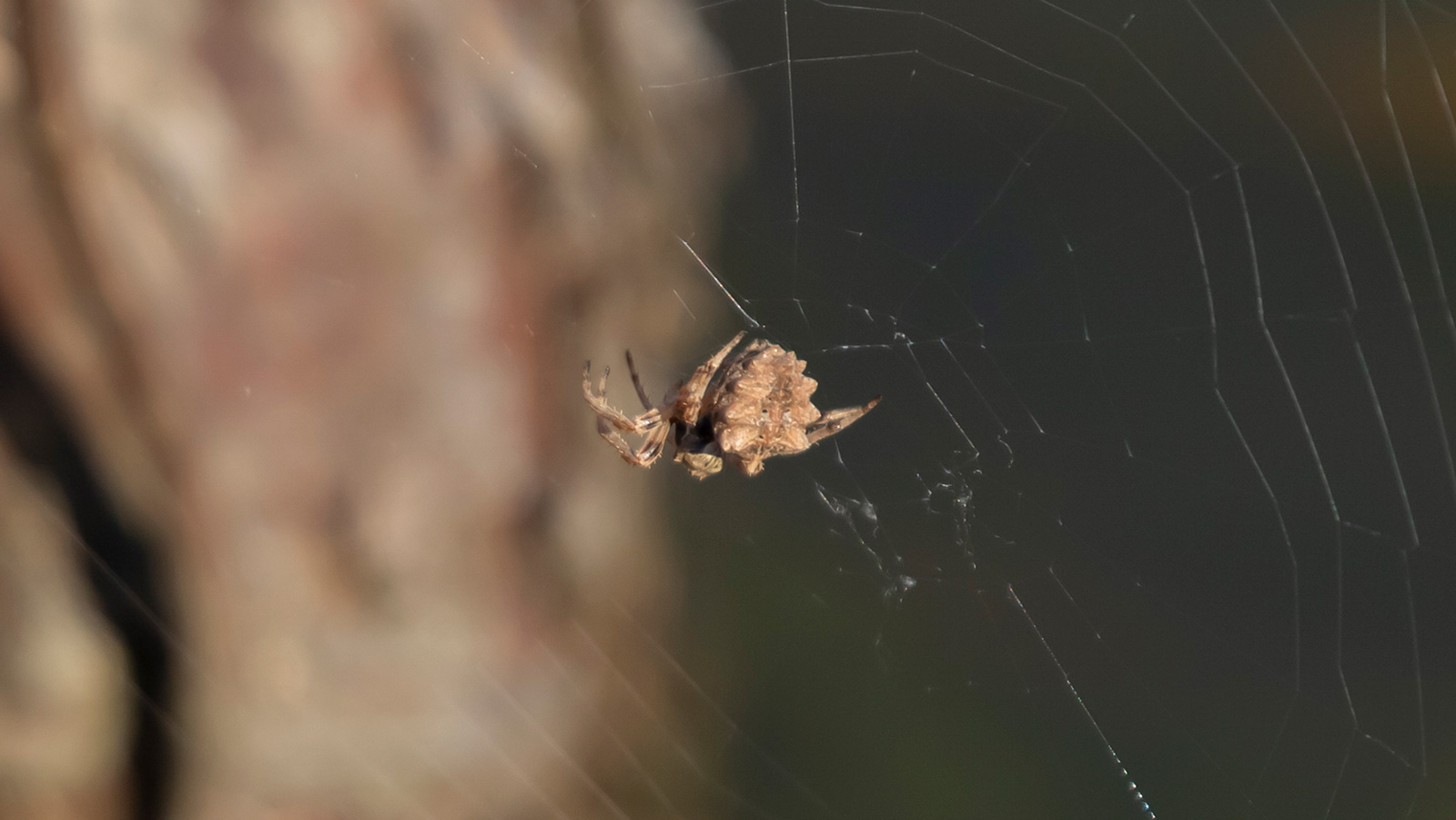
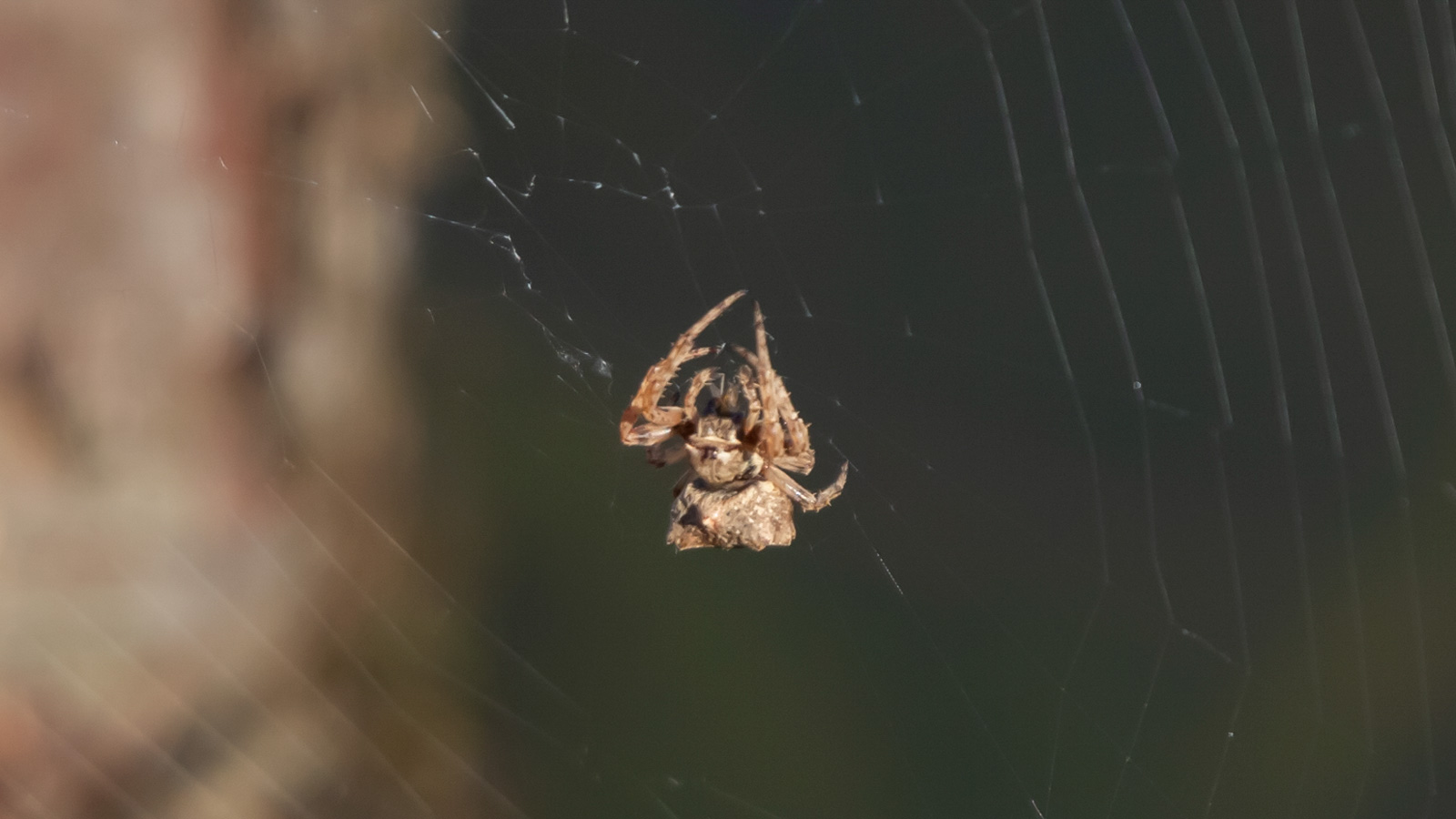
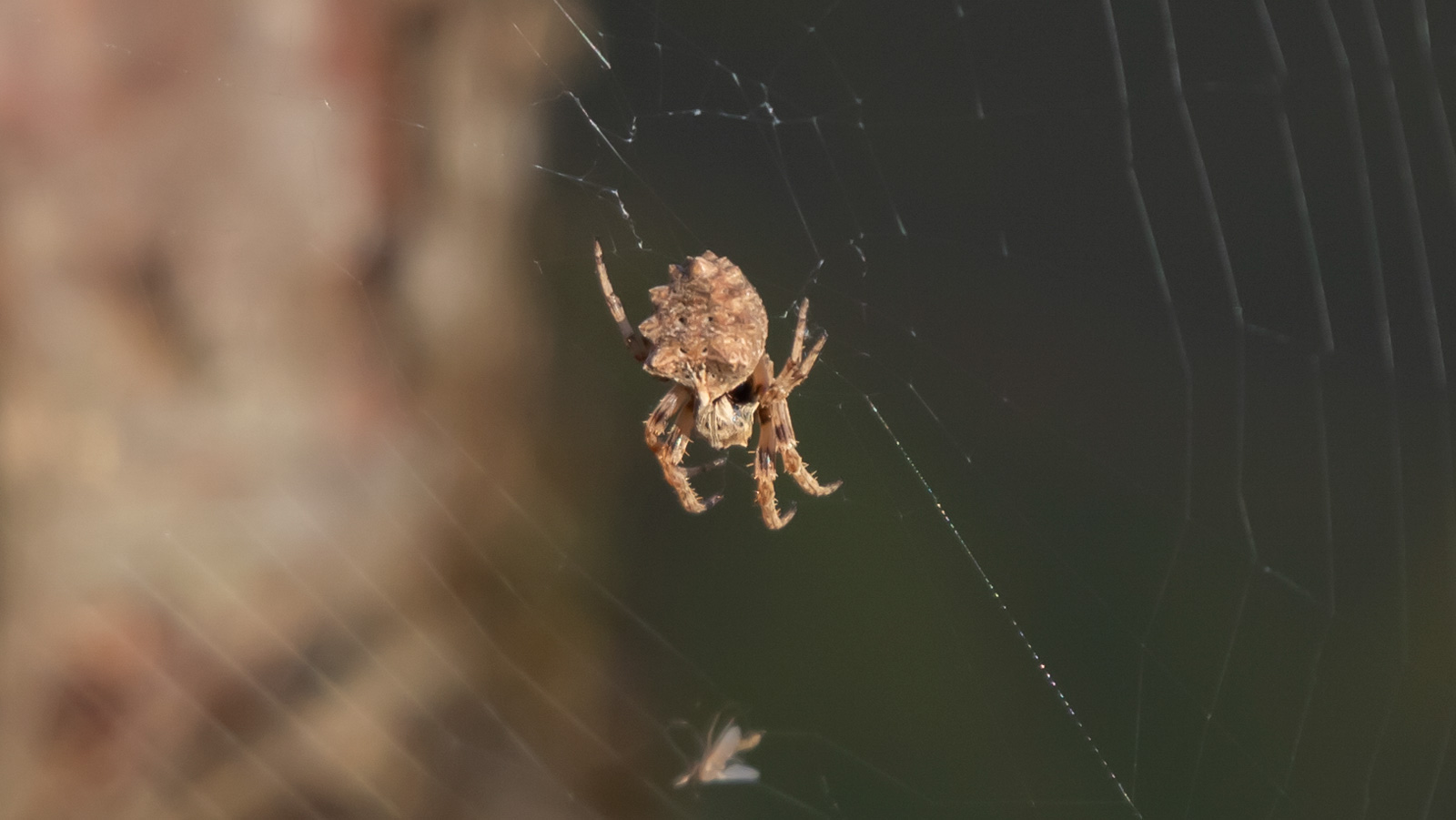
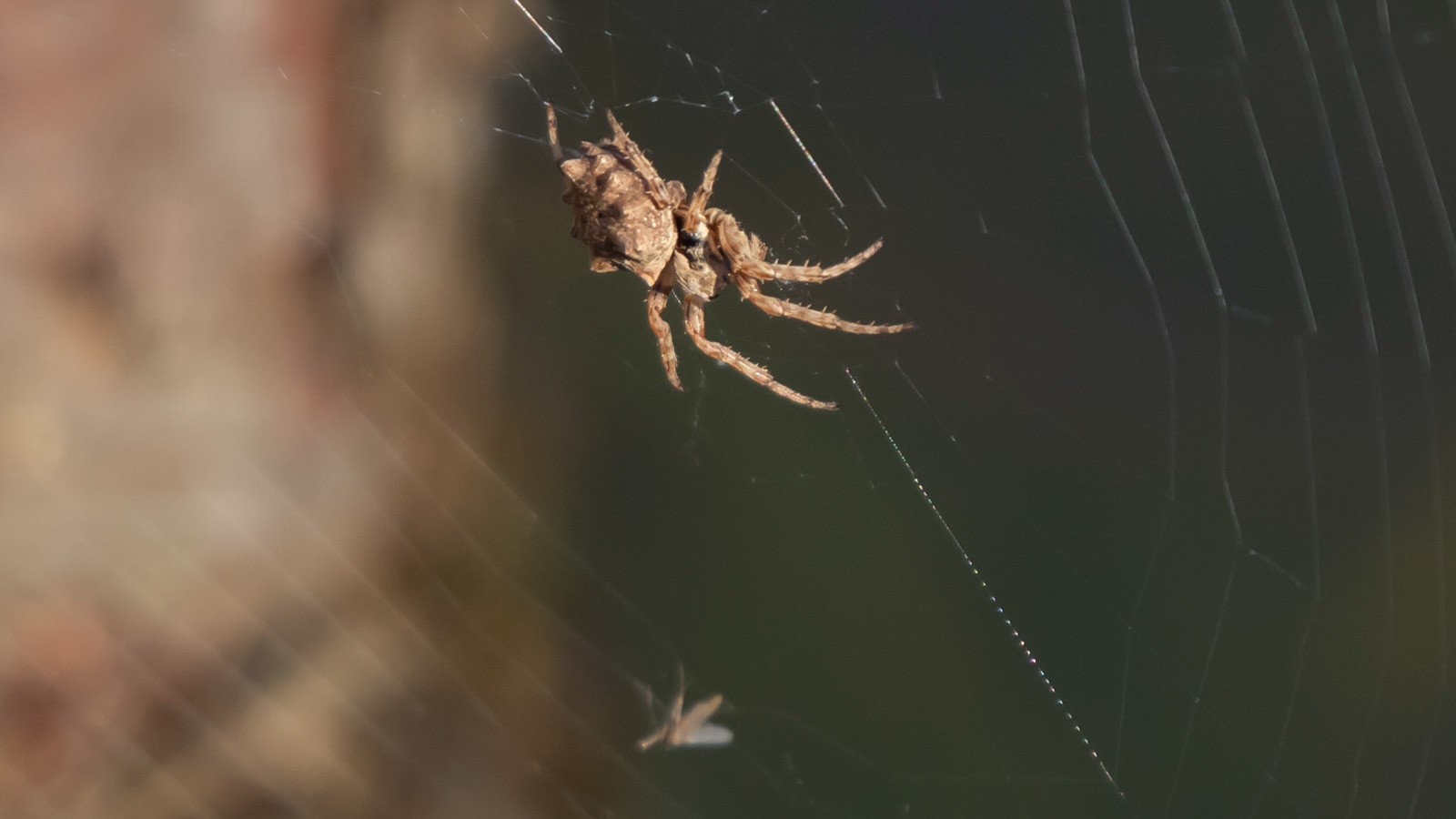
Female arrow-shaped orb weavers span three-eighths to five-eighths of an inch including the abdominal projections. The abdomen shows yellow with red markings and two prominent lateral spines extending perpendicular to the body axis, plus smaller projections at other positions. The overall abdominal shape reads as pointed or star-shaped from multiple angles. Males are dramatically smaller than females, without the prominent spines, and rarely noticed in the field relative to the conspicuous females.
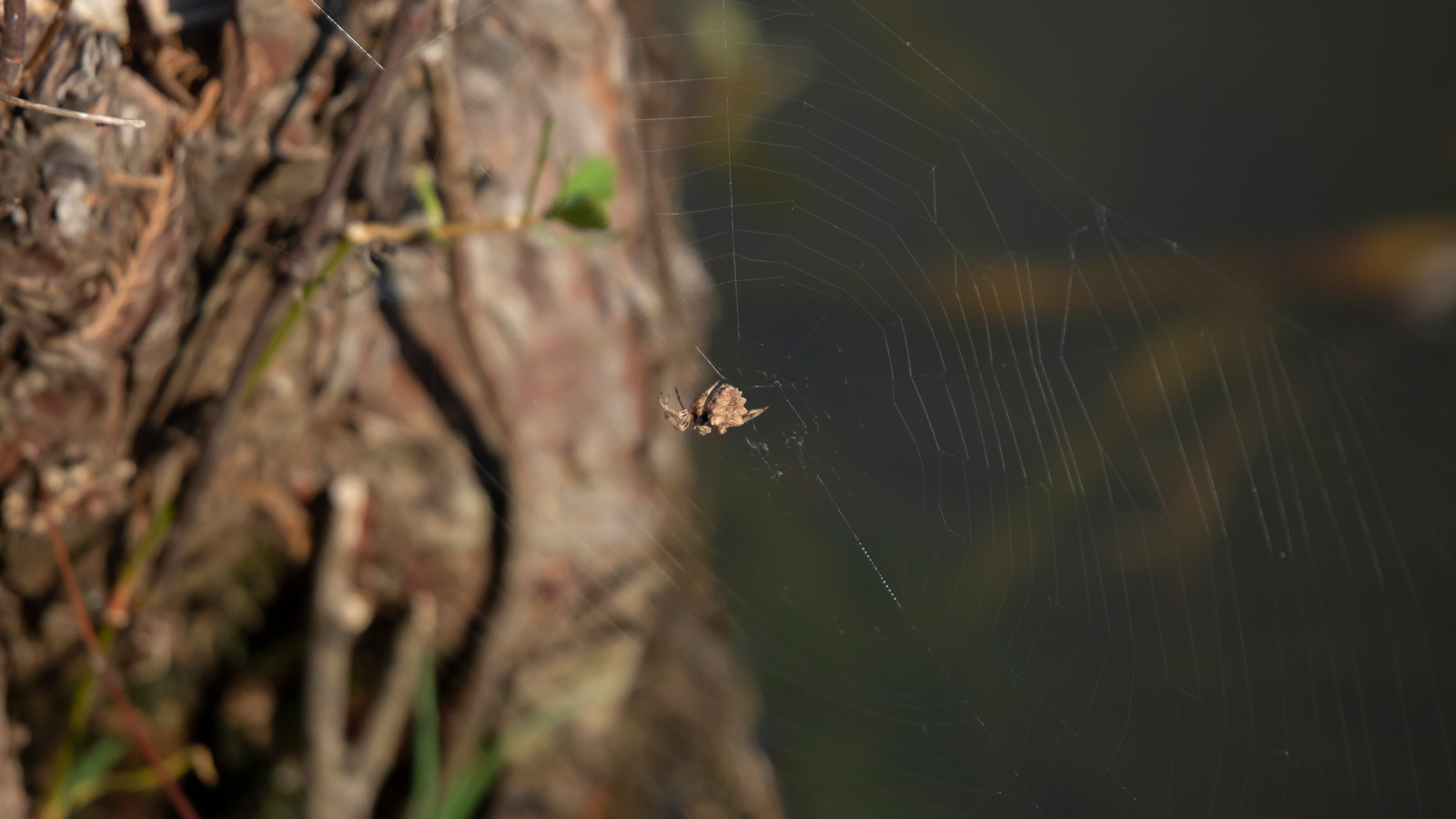
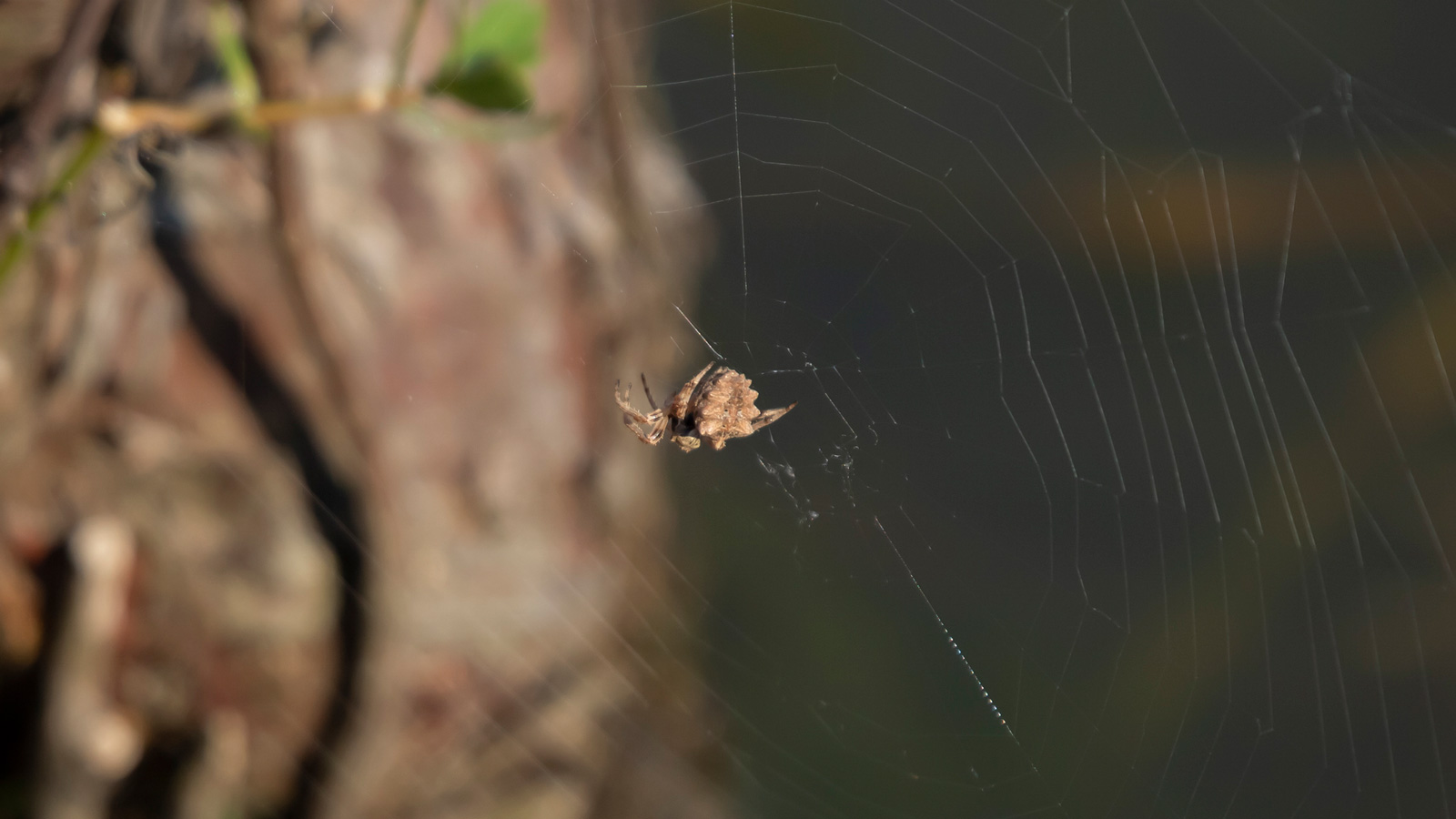
The web shows the typical small orb weaver architecture: a circular spiral web of moderate diameter, usually one to two feet across, without the stabilimentum that banana spider webs carry. Arrow-shaped orb weaver webs appear in woodland understory and edge vegetation at heights of three to six feet, in positions that intercept small flying insects moving through the forest interior.
Where Arrow-Shaped Orb Weavers Live
Woodland interiors and woodland edges throughout North Louisiana wherever suitable understory vegetation provides web anchor points at appropriate heights. The species concentrates in shadier woodland positions than many other orb weavers, building in understory vegetation rather than at open sunny clearings. Bottomland forest edges, mixed pine-hardwood understory, and the shaded margins of woodland paths all represent typical arrow-shaped orb weaver habitat.
Hunting and Prey
Arrow-shaped orb weavers sit at the web hub waiting for small flying insects to strike the spiral capture threads. Prey size corresponds to the small orb weaver web: small flies, gnats, small beetles, and midges represent typical captured items rather than the large grasshoppers and beetles that banana spiders catch in their much larger webs. Web replacement in arrow-shaped orb weavers occurs frequently, with the spider consuming old web silk and rebuilding regularly to maintain web condition.
What Eats Arrow-Shaped Orb Weavers
Small woodland insectivores. The spiny projections reduce palatability and may produce avoidance in experienced bird predators. Parasitoid wasps. Mud daubers that provision nests with small orb weavers. Predatory insects at appropriate size scale.
Advertisement
Spines and Protection
The abdominal spine strategy for predation deterrence occurs convergently in multiple orb weaver genera globally, suggesting that the mechanical difficulty of swallowing a spiny spider provides real fitness benefit across diverse habitats and predator communities. North Louisiana's woodland birds that forage in understory vegetation encounter arrow-shaped orb weavers regularly enough that experienced individuals have presumably developed the response pattern to the spine configuration.
Whether that response reduces actual predation rates by a measurable amount, compared to smooth-bodied orb weavers of comparable size at the same woodland sites, would require controlled experimentation that has not been conducted specifically at North Louisiana sites. The convergent evolution of spiny abdomens across unrelated lineages provides the circumstantial evidence that the strategy works.
Finding Arrow-Shaped Orb Weavers
Woodland path edges in the upland and bottomland parishes from June through October, specifically in understory vegetation at three to six feet height, produce arrow-shaped orb weaver encounters at rates that reward systematic path scanning. The spiny yellow-and-red abdomen reads as distinct from leaf shapes and bark patterns at distances of two to three feet in the dappled woodland light, making the spider findable to observers who slow down and scan the understory vegetation at web height.
Documentation
Arrow-shaped orb weaver records from North Louisiana with habitat notes, woodland type and canopy closure estimates, contribute to understanding habitat preference relative to other orb weaver species at the same woodland sites. Photographs showing the female with spines visible in profile or dorsal view confirm species identity clearly. The species appears in the regional iNaturalist record at lower frequency than its woodland occurrence warrants.
Micrathena in North Louisiana
North Louisiana hosts multiple Micrathena species alongside the arrow-shaped orb weaver, including the spined micrathena, Micrathena gracilis, which carries multiple long lateral spines producing a more circular spiny silhouette than the arrow-shaped species' two-spine profile. Both species occupy woodland understory and edge positions and may appear at the same sites, distinguished by the number and arrangement of abdominal spines.
The arrow-shaped species' two-spine-dominant profile, combined with yellow-and-red coloration, separates it from the spined micrathena at any reasonable observation distance. Learning both species at the same woodland site, where both webs may appear within ten feet of each other in adjacent understory vegetation, provides the comparison that confirms each identification without requiring specimen-level examination.
Web Replacement
Arrow-shaped orb weavers, like most small-to-medium orb weavers, consume old web silk before rebuilding. The recycling of web silk conserves the protein investment in silk production, allowing the spider to rebuild daily or on whatever schedule prey capture efficiency and web degradation dictates without unlimited protein expenditure.
Web replacement in the early morning hours, before flying insect activity peaks, minimizes the prey capture opportunity cost of the rebuilding period. A fresh web at first light captures the first active insects of the day as they begin flight activity. An old, debris-laden web at first light captures fewer insects per hour than a fresh web at the same position, which explains why regular web replacement outperforms web maintenance in capture efficiency calculations.
Finding the same web position occupied with a fresh web on multiple consecutive mornings documents web site fidelity, a consistent return to the same position rather than web construction at a new site each day. Arrow-shaped orb weavers at woodland path positions where two vegetation masses provide consistent anchor points show web site fidelity across the season, with fresh webs appearing at the same position through the species' flight period.
Advertisement
The Woodland Understory Community
Arrow-shaped orb weavers at North Louisiana woodland sites participate in the multi-species orb weaver community of the forest understory, where multiple species build webs at different heights and positions within the same woodland site. At a North Louisiana mixed pine-hardwood site in August, the orb weaver community might include arrow-shaped orb weavers at understory height, banana spiders at forest edge clearings, long-jawed orb weavers at streamside vegetation, and various smaller orb weavers at ground-level vegetation within a single site visit.
Each species occupies a different web position height and habitat type within the same site, reflecting the niche partitioning that allows multiple orb weaver species to coexist at the same location without direct competition for the same web positions and prey size ranges.
Arrow-shaped orb weavers at understory height catch the small flying insects that move through the forest interior below canopy height. Banana spiders at clearing edges catch the larger insects that cross open areas at clearing height. Both systems operate simultaneously at the same forest edge site.
The Spine as Natural History Feature
Finding an arrow-shaped orb weaver web in a North Louisiana woodland path and watching the female at the hub provides a direct observation of a structural feature whose evolutionary explanation generates genuine scientific interest: why does a spider grow projections from its abdomen that make it larger, more visible, and presumably more metabolically costly to maintain than a smooth-bodied equivalent?
The predation deterrence explanation, mechanical difficulty of swallowing plus potential injury from spines during attempted capture, predicts that the benefit in reduced predation mortality exceeds the cost in metabolic investment and increased visibility. Testing that prediction needs comparing predation rates on spiny versus smooth-bodied orb weavers at the same woodland sites under comparable conditions, an experiment that field-based observations does not conduct but that sustained observation of individual spiders at known web positions can contribute to through documentation of predation attempts observed and individual survivorship across seasons.
A spider identified as an individual at a specific woodland web position in August, checked for presence at that position across subsequent days and weeks, contributes survivorship data. Documentation of predation attempts, noted with observer observations of bird approaches to the web, add predation rate data. Arrow-shaped orb weavers at accessible woodland path positions in North Louisiana provide the observation subjects for that kind of sustained individual-level natural history documentation.
Finding the Web Before Finding the Spider
Arrow-shaped orb weaver webs in North Louisiana woodland understory often become visible before the spider does, because the web catches dew, dust, and debris that makes the spiral structure visible against the shaded background before the yellow-and-red spider at the hub registers at the same scale. A small circular web in understory vegetation at shoulder height on a woodland path, spotted from ten feet, warrants approach to check for the spider at the center or retreat position.
The spider at the retreat position, a rolled leaf or silk tube at the web edge connected to the hub by a signal thread, sits in a position that faces the hub direction. Vibration of the hub through the signal thread draws the spider from retreat to hub in a movement that slow approach from outside the web perimeter can observe.
Watching that hub-to-retreat and retreat-to-hub movement documents the behavioral response sequence that connects prey capture vibration to spider approach behavior, observable at arm's length from a known web position on a woodland path.
Advertisement
Distribution Notes
Arrow-shaped orb weavers at North Louisiana woodland sites concentrate in the mesic broadleaf woodland and mixed pine-hardwood habitats of the upland and transition parishes, with the bottomland hardwood forest of the bottomland parishes providing additional habitat along the understory layer. The species appears less frequently at pure longleaf pine habitat in the upland parishes than at mixed woodland sites, likely because longleaf pine understory structure differs from the broadleaf understory that arrow-shaped orb weaver web construction uses most consistently.
Any woodland trail in North Louisiana that passes through broadleaf or mixed understory from June through October provides arrow-shaped orb weaver habitat. The distribution follows the understory vegetation structure more than any single tree species or habitat type. Wherever small-to-medium broadleaf shrubs create a three-to-six-foot height vegetation layer with adequate spacing for web attachment at the spacing that small orb weaver webs need, arrow-shaped orb weavers build.
Fall Egg Sacs
Female arrow-shaped orb weavers produce egg sacs in late summer and early fall that persist at the previous web positions after the adult female dies. Finding those egg sacs on understory vegetation at North Louisiana woodland sites in October and November documents the end of the season reproductive activity at specific sites, connecting the September adult record to the wintering egg stage that produces the following year's population.
Arrow-shaped orb weaver egg sacs on understory vegetation in winter provide a winter observation record that the adult-focused summer records does not supply. A leaf-wrapped or bark-attached egg sac at a known woodland web position, submitted to iNaturalist with the site location, extends the species record at that site across the seasonal gap between fall adults and spring emergences.
The Understory Web Walk
A North Louisiana woodland trail in August that passes through broadleaf understory vegetation at shoulder height provides arrow-shaped orb weaver web encounters at intervals that reward deliberate scanning rather than fast walking. Moving at a pace that allows examination of the vegetation zone from three to six feet off the ground, on both sides of the trail, produces web sightings at a rate that would be invisible to a hiker moving at normal speed.
Arrow-shaped orb weaver webs at those heights catch dew in the early morning, making them visible as silver structures against the dark understory. After the dew dries, the webs become less visible but remain detectable by the slight glint of web threads in moving air or by the yellow-and-red spider at the hub or retreat position. A humid August morning on any North Louisiana woodland trail with broadleaf understory: the peak encounter window for this species.
Yellow and Red
The color combination that makes arrow-shaped orb weavers identifiable from feet away in woodland light, yellow body with red markings and long lateral spines, appears in multiple unrelated spider lineages as an aposematic pattern associated with toxicity or distastefulness. Whether Micrathena sagittata specifically carries chemical defenses that back up the visual signal, or whether the coloration functions primarily through the spine-based deterrence strategy, remains less clearly established for this species than for some other aposematically-colored invertebrates.
That practical observation implication: the color and the spines together produce an identification that does not require close examination. A yellow-and-red spiny spider in woodland understory at three to six feet height in North Louisiana belongs to the Micrathena complex and almost certainly to M. sagittata rather than to another species in the genus. That identification confidence from color and silhouette alone, without detailed pattern examination, makes arrow-shaped orb weavers one of the more beginner-accessible woodland spider identifications in the region.
Advertisement
Web Math
A small-to-medium arrow-shaped orb weaver web of eighteen-inch diameter contains approximately one to two meters of spiral capture thread, depending on spiral spacing and web diameter. That thread, produced from the spider's spinnerets during the web-building event that takes thirty to sixty minutes in the early morning, represents a silk investment that pays returns in captured prey until web degradation reduces capture efficiency below the point where rebuilding outperforms maintenance.
The energy accounting of orb weaver web construction, silk investment versus prey capture return, shapes every decision the spider makes about web site selection, web size, and replacement frequency. A web in a high-traffic insect corridor at woodland edge position captures more prey per hour than a web at the same height in a low-traffic interior position, and the spider's site selection, accumulated through the exploratory process of initial web building and assessment, should tend toward the high-capture positions over time.
Arrow-shaped orb weaver webs on woodland paths where trail foot traffic does not knock them down occupy positions where the spider has already run this assessment. The web on the path at shoulder height works. Enough insects cross that path at that height to justify the silk investment. The spider found this out before any observer noticed the web.
Arrow-Shaped Orb Weavers and North Louisiana Summers
August woodland paths in North Louisiana carry arrow-shaped orb weaver webs at enough density that systematic understory scanning on any broadleaf-dominated trail produces multiple encounters in a two-hour walk. That density reflects both the species' genuine abundance in suitable woodland habitat and the concentration of web-building activity that peaks in late summer when mature females reach full size and web-building frequency.
A systematic record of the dates and locations of first and last arrow-shaped orb weaver encounters at consistent North Louisiana woodland trail sites, submitted to iNaturalist across multiple years, builds the phenological picture for this species that the current regional database needs. Web presence at a specific path location across weekly checks through the season documents both adult activity timing and web site fidelity in a combined dataset that individual encounter records does not produce.
The spider in the understory web on the woodland path does not need documentation to continue doing what it does. The web will be there next August whether or not anyone finds it. Finding it, photographing it, and submitting the record converts the web's existence from a private woodland fact into a public natural history record. That conversion matters to the understanding of what North Louisiana's woodlands actually contain at every accessible trail position through every August.
Understory Spider Community
Arrow-shaped orb weavers share the woodland understory web layer with several other orb weaver species at North Louisiana sites, including the spined micrathena and various long-jawed orb weavers at wetter positions. Learning to distinguish the arrow-shaped orb weaver from those co-occurring species needs the same understory scanning approach but rewards the additional attention with a richer community picture than any single species focus provides.
At a North Louisiana mixed woodland site in August with diverse understory vegetation, the orb weaver community at the three-to-six-foot web height might include arrow-shaped orb weavers in drier understory positions, spined micrathena in similar positions, long-jawed orb weavers at any vegetation near moving water or wet ground, and various smaller orb weavers in low shrub vegetation. Each species occupies its preferred position within the shared height range, and the collective web community represents the full flying insect interception capacity of the understory layer at that site.
Documenting that community through simultaneous species records at a single site visit, submitted to iNaturalist with location data and approximate position within the understory layer, provides a snapshot of the understory orb weaver guild that individual species records does not assemble. A two-hour woodland trail session with systematic web documentation at every encounter produces a site-level orb weaver survey that the current North Louisiana database needs for most upland and bottomland woodland sites.
Advertisement
From June Through October
Arrow-shaped orb weavers in North Louisiana appear from June through October, with immature individuals present earlier in spring at sizes too small to generate documentation records from observers who miss them at the understory scale. The full seasonal window, including the small-individual spring phase and the mature-female fall phase, spans more of the calendar than late-summer encounters alone suggest.
Finding the small, fresh-web, early-season individuals needs the same understory scanning approach as late summer encounters but at closer examination range, because web size and spider size in June may not attract the same attention that the full-sized August web commands. A committed observer who checks consistent woodland path positions weekly from June through October, photographing each arrow-shaped orb weaver web found regardless of spider size, builds the complete seasonal documentation that peak-adult August observation does not provide alone.
Two More Sections Worth the Walk
A woodland trail that produces arrow-shaped orb weaver webs at consistent positions across the summer season produces those webs because the trail provides the canopy opening, the understory vegetation height, and the flying insect traffic that make those positions work. The same trail produces them next year for the same reasons. Arrow-shaped orb weavers at North Louisiana woodland path positions do not need introduction or management. They need only the understory vegetation structure that produces the web anchor points, and the insect community that justifies the silk investment.
Finding those web positions for the first time converts a trail from a known route to a documented natural history site. Returning to those positions across the summer converts the first encounter into a season-long observation record. Submitting those records to iNaturalist converts the observation into data that outlasts any individual visit and accumulates across the seasons into the regional understanding that the species' North Louisiana distribution actually reflects.
The trail with arrow-shaped orb weaver webs at the shoulder-height understory in August deserves that treatment. Slow down, scan the understory, photograph the spider at the hub, note the position. Do it again next August. The web will be there.
August on the Trail
August in North Louisiana produces the peak arrow-shaped orb weaver year for anyone willing to walk a broadleaf woodland trail at scanning pace with attention directed to the understory vegetation zone between shoulder and knee height. Every trail section with dense understory shrubs and adequate canopy opening for diffuse light penetration potentially carries a web. Fresh morning dew makes those webs visible as silver structures against the darker understory before the dew burns off by mid-morning.
Walking a consistent trail section weekly through August and September, recording each arrow-shaped orb weaver web found with GPS location and approximate height, builds a density and distribution dataset for that trail that one-time observation does not provide. Multiple webs at the same trail positions across multiple visits document both web site fidelity and population density at accessible sites. The observation needs only the trail, the scanning habit, and the decision to note what gets found.
Advertisement
The Spiny Orb Weaver Guild
Arrow-shaped orb weavers represent the most visually distinctive member of a spiny orb weaver guild that includes several Micrathena species in North Louisiana woodland understory. Spined micrathena, Micrathena gracilis, produces a different spine arrangement, multiple equally prominent spines producing a circular spiny profile rather than the two-dominant-spine arrow profile of M. sagittata. Starbellied orb weavers, at woodland and garden edges, carry their own distinctive pattern.
Learning to distinguish these spiny orb weaver species at a consistent North Louisiana woodland site where multiple species occur simultaneously provides the comparative framework that makes subsequent spider identification faster and more confident across the full orb weaver community. Arrow-shaped orb weaver as the anchor, spined micrathena as the primary comparison, and the other orb weavers at the same trail positions as the extending community: that learning sequence produces a site-level spider identification competence that generalizes to other North Louisiana woodland sites with the same understory community.
Arrow-shaped orb weavers at North Louisiana woodland understory sites occupy a position in the orb weaver community that no substitute fills. Their spiny abdomen, their woodland interior web positions, their late-summer peak, and their small-web prey size range all combine to make them a distinct functional element at woodland trail sites throughout the region. Every web found on every woodland path represents a functioning prey interception system at the woodland understory level, built by an animal that chose that position after assessing the prey traffic at that corridor.
Finding those webs, photographing the spider at the hub, and submitting the record adds a node to the regional distribution map that currently under-represents this species in the woodland interior of most North Louisiana parishes. Any observer who walks woodland trails and stops long enough to scan the understory at shoulder height in August contributes to correcting that under-representation. The webs are there. The spiders are there. The record gets built one trail walk at a time.
Arrow-shaped orb weavers in North Louisiana woodland understory have been building webs at shoulder height on broadleaf trail positions every August, long before any observer came along to find them. Any observer who comes along now and notes the position, the spider, and the date adds that August to the record. The spider was always there. The record only starts with the observation.
Documentation on Woodland Trails
Any observer walking North Louisiana woodland trails from June through October with a smartphone and sufficient attention to shoulder-height understory vegetation will encounter arrow-shaped orb weaver webs at some frequency, but most of those encounters end without a photograph because the spider registers as "small web in the woods" rather than "identifiable species worth documenting." Converting that encounter into a record needs only stopping long enough to photograph the spider at the web hub, submitting to iNaturalist, and accepting the expert identification that the distinctive spiny abdomen makes straightforward.
That gap between encounter and documentation, multiplied across the thousands of woodland trail visitors who pass arrow-shaped orb weaver webs in North Louisiana each summer, produces a regional record that substantially under-represents the species' actual frequency at woodland sites. The species occupies essentially every North Louisiana woodland trail that passes through broadleaf understory from June through October. The record shows it at a fraction of that frequency because trail walkers do not stop to photograph the small spiny spider in the web.
Advertisement
Web Architecture in Detail
Arrow-shaped orb weaver webs measure one to two feet in diameter, smaller than banana spider webs but otherwise following the same spiral construction logic. Hub at center, non-sticky radial threads from hub to anchor points, sticky spiral threads laid from the outside in, signal thread from hub to retreat position. A fresh web in morning dew shows the complete architecture in visible form, the radial threads highlighted by water droplets at regular intervals, the sticky spiral threads catching dew in a different pattern from the radial threads.
Photographing the web architecture alongside the spider documents the complete construction at a single observation, showing the web scale, the hub position, the spiral spacing, and the spider's relationship to the structure. That photograph tells more of the species' natural history than a spider-alone portrait photograph, because it places the spider in its functional context: at the center of a structure it built and maintains, in the habitat position it selected, waiting for the prey the web captures.
The Micrathena Story in North Louisiana
North Louisiana has supported Micrathena populations since long before any observer began recording spider sightings in the region. The woodland understory positions that arrow-shaped orb weavers and spined micrathenas occupy, low in the broadleaf understory along woodland paths and stream margins, represent habitat that North Louisiana's mixed forests have provided continuously through the forest's post-glacial development.
That continuity means every arrow-shaped orb weaver web on a North Louisiana woodland trail connects to a lineage of spiders that built webs in similar positions in similar woodland understory for thousands of years before the current observation record began. The web across the trail did not appear this summer.
It appeared this summer in a specific location, built by a specific spider. The practice of building that specific kind of web in that specific kind of woodland position goes back considerably further. The record catches only the present moment. The spider embeds that moment in something much longer.
Accessibility
Arrow-shaped orb weaver webs at woodland path height present for observation from maintained forest trails throughout North Louisiana from June through October. The distinctive spiny abdomen identifies females at close range without requiring specimen examination. Woodland path observation from trail surfaces in the upland and bottomland parishes places the species within reach of anyone walking a maintained forest path at scanning pace.
Arrow-shaped orb weaver webs at North Louisiana woodland understory positions represent a natural history resource available to any observer willing to walk slowly enough to see them. The spiny yellow-and-red spider at the hub, the small orb web in the broadleaf understory, the woodland path that carries them every August: all of it persists without any management input, without any observer attention, in every suitable woodland site in the region. The observation adds only the record. Everything else was already there.
That represents the full natural history of a spiny spider in a woodland web in North Louisiana. A fifteen-minute trail walk with understory attention earns the observation. The spider earns the walk by being there every August.
Advertisement
More Information
BugGuide at bugguide.net carries Micrathena sagittata identification and range documentation. iNaturalist accepts arrow-shaped orb weaver observations with expert Araneae review. The American Arachnological Society at americanarachnology.org maintains orb weaver identification resources.
META TITLE: Arrow-Shaped Orb Weaver in North Louisiana | NLW
META DESCRIPTION: Arrow-shaped orb weavers carry two prominent lateral abdominal spines that make them instantly identifiable in North Louisiana woodland understory. Yellow and red with a star-shaped abdomen, building small webs in shaded forest interior from June through October.
FOCUS KEYPHRASE: arrow-shaped orb weaver North Louisiana
SECONDARY KEYWORDS: Micrathena sagittata Louisiana, arrow shaped orb weaver identification, spiny spider Louisiana, woodland spider Louisiana, Micrathena Louisiana, orb weaver Louisiana woodland, spiny abdomen spider Louisiana, arrow shaped spider Louisiana
OG DESCRIPTION: Arrow-shaped orb weavers in North Louisiana carry two prominent lateral abdominal spines plus smaller projections that make the female unmistakable in woodland understory. Yellow with red markings, building webs in shaded forest positions. The spiny abdomen probably deters birds. It definitely helps identification.
SLUG: arrow-shaped-orb-weaver-north-louisiana
Photo Gallery
Advertisement
Accessibility
## Accessibility
Arrow-shaped orb weaver webs at woodland path height present for observation from maintained forest trails throughout North Louisiana from June through October. The distinctive spiny abdomen identifies females at close range without requiring specimen examination. Woodland path observation from trail surfaces in the upland and bottomland parishes places the species within reach of anyone walking a maintained forest path at scanning pace.
Arrow-shaped orb weaver webs at North Louisiana woodland understory positions represent a natural history resource available to any observer willing to walk slowly enough to see them. The spiny yellow-and-red spider at the hub, the small orb web in the broadleaf understory, the woodland path that carries them every August: all of it persists without any management input, without any observer attention, in every suitable woodland site in the region. The observation adds only the record. Everything else was already there.
That represents the full natural history of a spiny spider in a woodland web in North Louisiana. A fifteen-minute trail walk with understory attention earns the observation. The spider earns the walk by being there every August.
Advertisement