Advertisement
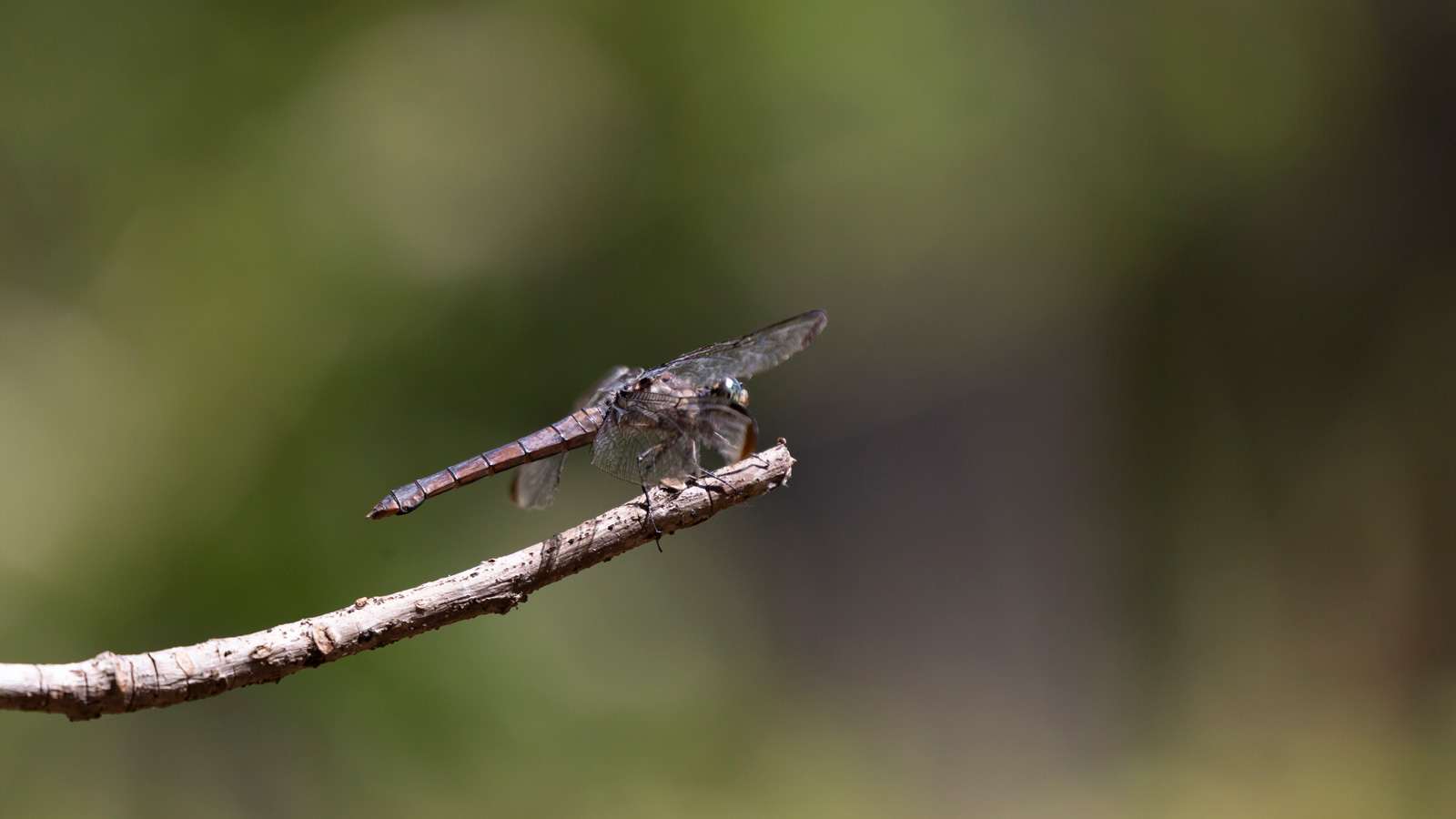
You already walked past three of them. Flat on the gravel, wings spread, olive-and-black coloring matched so perfectly to the sun-bleached rocks that the ashy clubtail (Gomphus lividus) basically disappeared at your feet while you scanned the sky for the dragonflies flying overhead. Clubtails earned the family name from a slight widening at the tip of the abdomen that no other dragonfly family shares, and the "club" at the tail end gives these dragonflies a silhouette that the practiced eye picks out at perch distance before any color or pattern enters the conversation.
North Louisiana's clean-flowing streams, sandy-bottomed rivers, and gravel-bar waterways support ashy clubtail populations in the parishes where the water stayed clear enough and the substrate stayed sandy enough for the larvae to develop in the streambed.
Bayou Bartholomew, Corney Creek, Dugdemona River, and the smaller tributaries that feed the Ouachita and Red river systems all put ashy clubtails on the gravel bars during the spring flight season. A birder who switched to dragonflies for the afternoon and walked a Claiborne Parish creek bank in May found ashy clubtails perched on every third rock, flat against the surface, wings spread, trusting the camouflage to handle the rest.
The Dull Outfit That Works
Olive-green to grayish-green thorax with dark brown or black stripes running along the sides. Blackish abdomen with pale yellowish markings along the segments that faded to gray in older individuals. Nothing about the ashy clubtail's coloring demanded attention, and the drab palette sat deliberate rather than accidental. A dragonfly that perched on sun-bleached gravel in a muted olive-and-black pattern disappeared against the substrate the way a killdeer disappeared against a parking lot. The camouflage worked because the background matched, and the ashy clubtail chose perching sites where the background always matched.
Eyes sit widely separated on the head, and the eye separation earns the clubtail family its most reliable structural field mark. Every other dragonfly family in North Louisiana (darners, skimmers, emeralds) wore eyes that touched or nearly touched at the top of the head. Clubtail eyes sat visibly apart, with a gap between them that showed from the front and from above. A dragonfly perched on a rock with widely spaced eyes belonged to the clubtail family before any wing, body, or color feature got checked.
The club at the abdomen tip sits modest on the ashy clubtail compared to the dramatic flaring some other clubtail species wore. A slight widening of the last two or three abdominal segments created a subtle bulge that the observer noticed at close range and missed at distances beyond six feet. The club told the family. The streaky olive thorax and the pale abdominal markings told ashy apart from the other clubtails, and the combination narrowed the identification at close perch range faster than any single feature managed alone.
Body length sits around two inches, medium for a clubtail and smaller than the darners and large skimmers that patrolled the same waterways at higher altitudes. The compact body and the flat perching posture (wings spread horizontal against the rock surface) made the ashy clubtail a ground-level dragonfly that the overhead-scanning observer consistently overlooked.
Advertisement
The Gravel Bar Percher
Ashy clubtails do not patrol. The behavioral difference between clubtails and the patrolling dragonflies (darners, skimmers, baskettails) hit the observer immediately at any shared waterway. Blue dashers hovered, green darners cruised, and baskettails flew laps, but the ashy clubtail just sat on a rock and waited for food to fly past.
The perch-and-sally hunting technique put the clubtail on a sun-warmed rock or a sandy bank at the stream edge, facing the water, wings flat, eyes scanning the airspace above the stream for passing insects. A gnat or a midge that flew within two feet of the perched clubtail triggered a launch, a grab, and a return to the same rock in under a second. The sally covered a short distance, the prey got caught in the legs, and the clubtail returned to the perch to eat.
Rock loyalty sat extreme. A single ashy clubtail perched on a specific flat rock at a Winn Parish creek spent the entire afternoon on that rock, leaving only for sallying flights that lasted under two seconds each. Every sally ended at the same rock. Every feeding bout started from the same rock. A different clubtail that approached the rock got chased with a brief aerial confrontation that ended with the resident returning to the rock and the intruder finding a different rock ten feet downstream.
Stream-edge perching meant the ashy clubtail fed on the insects that flew the stream corridor: midges, gnats, mosquitoes, mayflies, caddisflies, and other small insects that emerged from the water or flew along the riparian corridor. The food supply concentrated along the stream the way the food supply at a pond concentrated over the water surface, and the clubtail positioned at the stream edge intercepted the insect traffic the way a tollbooth intercepted highway traffic.
Sunny rocks got the most use. A cloudy afternoon at a creek that supported ten perching clubtails on a sunny morning supported zero perching clubtails because the dragonflies needed solar heat to maintain flight-ready body temperature. Cool dragonflies sat sluggish and grounded. Warm dragonflies sat alert and launch-ready. The sun determined whether the ashy clubtail hunted or hid, and a creek visit timed for a sunny afternoon between 10 a.m. and 3 p.m. found clubtails that a creek visit timed for an overcast morning did not.
The Stream-Bottom Childhood
Ashy clubtail naiads lived in the sandy and gravelly substrate of clean streams and rivers, burrowing into the streambed sediment with the body partially buried and the head exposed. The naiad breathed through rectal gills (the same system the amberwing naiad used in pond mud) and fed on small aquatic invertebrates that the stream current delivered past the naiad's ambush position.
The burrowing lifestyle meant the naiad spent most of the larval period motionless in the sand, waiting for prey to drift within labium-strike range. A midge larva, a mayfly nymph, or a tiny CRAWFISH that bumbled past a buried clubtail naiad in Corney Creek got snatched by the extendable labium before the prey recognized the sand-colored lump as a predator.
Larval development lasted one to three years depending on water temperature and food availability. A naiad that hatched from eggs deposited in a Dugdemona River gravel bar in June grew through multiple molts over the following one to two years before climbing out of the water on a warm April morning to emerge as an adult.
Water quality mattered more to the ashy clubtail than to the pond-breeding dragonflies because the naiad needed clean, well-oxygenated, flowing water with a sandy or gravelly bottom. A stream polluted with agricultural runoff, smothered with silt, or depleted of oxygen killed the naiad population before the naiads reached emergence. The ashy clubtail's presence at a stream confirmed the water quality the way a canary in a coal mine confirmed the air quality, and a stream that supported clubtails supported clean water. A stream that lost its clubtails lost something upstream.
Siltation from logging, road construction, and agricultural erosion buried the sandy substrate the naiads needed, and a gravel bar that accumulated an inch of fine silt over a nesting-season smothered the naiad habitat the way a tarp smothered a garden. The naiads could not burrow through compacted silt the way the naiads burrowed through clean sand, and the oxygen levels in silt-choked substrate dropped below the threshold the rectal gills needed. Clean gravel equaled clubtail naiads. Silted gravel equaled dead naiads.
Advertisement
Reading the Gravel
An experienced dragonfly watcher learned to read the gravel bar the way a birder learned to read a tree line. Flat, sun-bleached rocks with good solar exposure along a clean-flowing creek attracted perching clubtails at predictable densities during the flight season. Dark, shaded rocks under overhanging trees attracted zero because the shade dropped the rock temperature below the clubtail's hunting threshold. A gravel bar half in sun and half in shade put all the clubtails on the sunny half, and the dividing line between sun and shade drew a boundary the clubtails respected without anyone painting it.
Rock size mattered. The ashy clubtail perched on flat rocks ranging from fist-sized to dinner-plate-sized, avoiding both the tiny pebbles (too small for a stable perch) and the large boulders (too much surface area to defend, too much competition). A dinner-plate rock at the stream edge with full sun, a clear sightline upstream and downstream, and a few inches of elevation above the waterline offered the premium perch, and the dominant male at any gravel bar claimed the best rock while subordinate males claimed the second and third choices downstream.
The spacing between perching clubtails followed a rough pattern: one clubtail every six to fifteen feet along a good gravel bar. Spacing tightened where rock quality peaked and widened where the rocks degraded to silt or shade.
A fifty-yard stretch of prime gravel at Corney Creek in May supported eight to twelve perching ashy clubtails. A visitor who walked the stretch slowly counted the dragonflies the way a birder counted singing males along a breeding-bird survey route. The count measured the habitat quality.
More clubtails per stretch meant better substrate, better water, and better rocks. Fewer clubtails per stretch meant something degraded since the last visit, and the degradation usually traced back to a silt source, a pollution event, or a flow change that altered the gravel quality the naiads depended on. The gravel bar doubled as a scoreboard, and the clubtails kept score without being asked.
Rainy days emptied the gravel bars entirely. Rising water from an upstream rain submerged the perching rocks, muddied the water, and drove the clubtails into streamside vegetation to wait out the high water.
A creek that ran clear and low on Tuesday and muddy and high on Wednesday after an overnight rain lost every perching clubtail between the two visits. Clubtails reappeared within hours of the water dropping and the rocks re-emerging, responding to the change faster than most observers noticed it happened. The dragonflies did not check the forecast; they checked the rocks. The gravel bar operated on a flood-and-drain cycle that the clubtails tracked by watching the water level rather than the calendar.
The April Emergence
Ashy clubtails in North Louisiana emerge from the stream in April and May, earlier than most pond-breeding dragonflies because the flowing water warmed to emergence temperature before the still ponds did. The emergence happened at dawn, following the same pattern every dragonfly used: naiad climbed a rock or a plant stem above the waterline, thorax split, adult pulled free, wings dried and hardened over thirty to sixty minutes.
The emergence concentrated along specific stream sections where the substrate quality and the water flow supported the highest naiad densities. A fifty-yard stretch of clean gravel bar at Corney Creek turned out twenty emerging clubtails on a warm April morning while the silted section immediately downstream turned out zero. The emergence mapped the substrate quality with a precision that a water-quality survey would envy.
Teneral (newly emerged) ashy clubtails dispersed away from the stream for several days while the body hardened, feeding in forest clearings and open areas within a few hundred yards of the water. A teneral clubtail perched on a log in a Kisatchie forest clearing a quarter mile from the nearest creek arrived through post-emergence dispersal rather than through any connection to the forest habitat.
Exuviae (the shed larval skins) on rocks and plant stems at the stream edge confirmed emergence activity at any given site, and a walk along a clean creek in late April that found translucent dragonfly shells split along the thorax on the bankside rocks documented clubtail emergence without needing to catch the dawn event in person. The shells stayed on the rocks for weeks after the adults flew, and counting exuviae along a stream section measured the emergence density more accurately than counting flying adults that moved around.
Mature adults returned to the stream within a week of emergence, and the males took up perching positions on the gravel bars and rocky banks that would define their territories for the remainder of the flight season. The flight season lasted about two months (April through June in most North Louisiana locations), shorter than the four-to-five-month flight seasons the pond-breeding skimmers and darners maintained.
Advertisement
The Mating Grab
Clubtail mating involved the male grabbing the female behind the head with the claspers at the tip of the abdomen (the "club" that named the family), and the pair flying in tandem while the female curled the abdomen forward to contact the male's secondary genitalia at the base of the abdomen. The tandem formation bent into the "wheel" or "heart" shape that dragonfly mating displayed across all families, and a pair of ashy clubtails in wheel formation on a streamside rock looked improbable from an engineering standpoint and routine from a biological standpoint.
Females laid eggs by flying low over the stream surface and tapping the abdomen tip into the water, releasing eggs that sank to the gravel bottom. The female flew alone during oviposition, without the male escort that amberwings and baskettails posted.
Flying alone meant the egg-laying female faced harassment from every male along the stream. A female ashy clubtail tapping eggs into a Dugdemona River riffle got interrupted by three different males during a single oviposition bout, and each interruption forced the female to break off the egg-laying, escape the grabbing male, and resume the egg-tapping after the male gave up the pursuit.
Life on the Wing
Adult ashy clubtails lived roughly four to six weeks during the North Louisiana flight season, and the compressed adult lifespan packed mating, egg-laying, territorial defense, and feeding into a window that started in April and closed by late June in most years. A male that emerged in mid-April and claimed a perch on a Claiborne Parish gravel bar by late April held that perch (or fought to keep it) until the dragonfly died in late May or early June.
Six weeks of adult life after two years of larval life. The ratio sat brutal, but the six weeks accomplished everything the two years prepared for.
Females spent less time at the stream than males, visiting the gravel bars primarily for mating and oviposition before retreating to feeding areas away from the water. A female ashy clubtail feeding in a forest clearing a quarter mile from the nearest creek arrived at the clearing through the post-mating dispersal that kept the female away from the male harassment concentrated at the stream. Males stayed at the stream. Females visited the stream. The split reduced the harassment pressure on egg-carrying females and kept the females feeding efficiently during the intervals between oviposition bouts.
Late June ended the flight season for most North Louisiana ashy clubtail populations, and the gravel bars that supported ten perching males in May supported zero by July. The pond-breeding dragonflies (dashers, pondhawks, skimmers) flew through July, August, and September while the stream-breeding clubtails finished their adult business in spring and disappeared. A birder who discovered clubtails in May and returned in August to show a friend found empty rocks and a different cast of dragonflies (mostly skimmers) patrolling the waterway at heights the clubtails never used.
Advertisement
What Hunts the Ashy Clubtail
Birds caught ashy clubtails from the perching rocks and from the air during sallying flights. Eastern phoebes, which perched on streamside branches and sallied for insects using the same technique the clubtail used, occasionally targeted the clubtail rather than the midge. A phoebe that sallied from a branch and caught an ashy clubtail off a gravel bar removed a predator that ate the same insects the phoebe ate, and the irony sat wasted on both parties.
Larger dragonflies, particularly common green darners, caught ashy clubtails in flight along stream corridors. A darner cruising a creek at three feet above the water intercepted a sallying clubtail the same way the clubtail intercepted a sallying midge, and the size hierarchy applied without negotiation.
Fish caught clubtail naiads in the stream. Smallmouth bass, spotted bass, and sunfish picked clubtail naiads from the streambed substrate during the naiad's entire one-to-three-year development period, and the fish predation thinned the naiad population continuously. A naiad that survived two years of bass predation in a Claiborne Parish creek survived because the naiad burrowed deep enough in the gravel that the bass could not see the naiad, and the burial depth determined survival more directly than any other single factor.
Raccoons flipped rocks along stream edges at night and ate the tenerals and newly emerged adults that roosted on streamside vegetation after dark. A raccoon working a gravel bar at a North Louisiana creek in April encountered emerging clubtails in the same habitat the raccoon hunted CRAWFISH, and the raccoon ate both without distinguishing between the arthropod menu items.
Water snakes along stream corridors occasionally caught perching clubtails from rocks at the waterline. A banded water snake moving along a gravel bar at a North Louisiana creek passed within striking range of perching clubtails, and the clubtails that flushed at the snake's approach survived while the one that trusted the camouflage too long did not. The camouflage that hid the clubtail from birds scanning from above did not hide the clubtail from a snake moving across the same surface.
The Water Quality Report Card
Every ashy clubtail at a North Louisiana stream wrote a passing grade on the water quality report card without knowing the report card existed. Clubtail presence confirmed clean, flowing water with good oxygen levels and unsilted substrate. Clubtail absence at a stream that previously supported them confirmed something changed upstream, and the something usually involved silt, pollution, or flow alteration.
Conservation biologists used clubtail presence as a biomonitoring tool for stream health across the southeastern United States, and the ashy clubtail's sensitivity to siltation and pollution made the dragonfly a more reliable indicator of substrate quality than most water-chemistry tests. A water-chemistry test measured the water at the moment of sampling. A clubtail naiad that survived two years in the streambed measured the water quality across those entire two years, and the naiad's survival confirmed sustained quality the single-sample test could not.
North Louisiana's remaining clean-flowing streams supported ashy clubtail populations that the degraded streams did not, and the distribution of clubtails across the 26 parishes mapped onto the stream-quality map with enough accuracy that a county-level clubtail survey would double as a county-level stream-quality survey. Parishes with more clean creeks supported more clubtails. Parishes with more channelized, silted, or polluted waterways supported fewer.
Landowners along North Louisiana streams who maintained forested riparian buffers (wooded strips along the creek banks) prevented the erosion that buried the gravel the clubtails needed. A stream with a fifty-foot wooded buffer on both banks held its gravel substrate intact through rainstorms that stripped the gravel from unbuffered streams in the same watershed. The trees held the bank, the bank held the gravel, and the gravel held the clubtail naiads in a chain that fell apart at the first link if someone removed the trees.
Stream restoration projects that removed silt, restored gravel substrate, and improved riparian buffers along degraded North Louisiana waterways created new clubtail habitat within two to four years of the restoration work. A creek that lost its clubtails to siltation regained the clubtails after the silt source got controlled and the gravel substrate recovered, and the returning clubtails confirmed the restoration worked more convincingly than any follow-up water test.
Advertisement
Where to Look
Clean-flowing streams and rivers with gravel bars, sandy banks, and rocky substrate from April through June. Walk the stream edge slowly and scan the rocks and sand at your feet. The ashy clubtail perched flat against the surface with wings spread, and the camouflage worked well enough that the observer walked past the first three or four clubtails before the eye calibrated to the search image and the gravel stopped looking empty.
Corney Creek, Dugdemona River, Bayou D'Arbonne tributaries, Saline Bayou, and the Kisatchie Creek system all support clubtail populations in reaches where the substrate stayed clean and the flow stayed natural. Any stream in the 26 parishes with visible gravel bars and clear water during spring deserves a slow walk along the bank looking down at the rocks.
Gravel bars below low-water bridges and at road crossings over clean creeks offered the easiest access for a first clubtail encounter. A parish road bridge over Corney Creek, over a Kisatchie tributary, or over any clean-flowing stream in the northern parishes put the observer within binocular range of gravel bars that supported perching clubtails during the April-June flight window.
Park at the bridge, scan the gravel downstream, and look for the flat-winged silhouette against the pale rocks. The first one took five minutes to spot. After the eye calibrated, the rest appeared as though they materialized from the gravel, which from a camouflage standpoint, they did.
Kayakers and canoeists floating North Louisiana streams during spring encountered ashy clubtails at closer range than bank walkers because the boat put the observer at water level where the perching clubtails sat. A kayak drifting past a gravel bar at walking speed flushed some clubtails from the nearest rocks while the clubtails on rocks fifteen feet back held position, and the boat approach gave close views of the perching posture, the wing-spread resting position, and the sallying flights that the bank-level observer watched from farther away.
Mid-morning through mid-afternoon on sunny days put the most clubtails on the warmest rocks. An overcast day or a morning visit before the sun warmed the gravel found fewer perching clubtails because the dragonflies needed solar heat to reach hunting temperature.
Where to Learn More
Dennis Paulson's Dragonflies and Damselflies of the East covers the clubtail family with enough detail to sort the ashy clubtail from the other Gomphus species in the region. The eye-separation field mark that sorted clubtails from all other dragonfly families gets illustrated clearly.
OdonataCentral.org maintains records and photographs for the ashy clubtail's Louisiana distribution, and the records confirm presence along the clean-water streams where the substrate supported the burrowing naiads.
Experiencing This Dragonfly: Accessibility Notes
Ashy clubtails make no sound human ears detect, and finding the dragonfly relied entirely on visual scanning of rocks and sandy banks along stream edges. The camouflaged perching posture made detection harder than the brightly colored pond dragonflies, and the observer needed to look down at the substrate rather than scanning the airspace.
For anyone with mobility limitations, stream access in North Louisiana often involved uneven terrain, loose gravel, and sloped banks that presented challenges. Bridge crossings and road-accessible stream banks at parish road crossings offered the best accessible vantage points for scanning gravel bars from above.
A vehicle parked at a bridge over a clean creek in Claiborne or Winn Parish during a sunny April afternoon put the observer above a gravel bar where clubtails perched within binocular range from the bridge rail. The dragonfly sat on the rock below, the bridge put the observer above, and binoculars closed the distance without anyone climbing down the bank.
Meta Title: Ashy Clubtail in North Louisiana: The River Dragonfly Nobody Noticed | NLW Meta Description: The ashy clubtail perches on gravel bars along North Louisiana's clean streams, wears camouflage that matches the rocks, and confirms the water quality nobody tested. Focus Keyphrase: ashy clubtail North Louisiana Secondary Keywords: ashy clubtail dragonfly, Gomphus lividus Louisiana, clubtail identification, stream dragonfly Louisiana, clubtail eye separation, North Louisiana dragonflies, gravel bar dragonfly, ashy clubtail habitat, stream water quality dragonfly, clubtail Louisiana OG Description: The ashy clubtail perches flat on gravel bars along North Louisiana's clean-flowing streams, wears camouflage that matches the rocks, hunts midges with two-second sallying flights, and confirms the stream water quality by existing. Slug: ashy-clubtail-north-louisiana
Advertisement
Advertisement
Accessibility
## Experiencing This Dragonfly: Accessibility Notes
Ashy clubtails make no sound human ears detect, and finding the dragonfly relied entirely on visual scanning of rocks and sandy banks along stream edges. The camouflaged perching posture made detection harder than the brightly colored pond dragonflies, and the observer needed to look down at the substrate rather than scanning the airspace.
For anyone with mobility limitations, stream access in North Louisiana often involved uneven terrain, loose gravel, and sloped banks that presented challenges. Bridge crossings and road-accessible stream banks at parish road crossings offered the best accessible vantage points for scanning gravel bars from above.
A vehicle parked at a bridge over a clean creek in Claiborne or Winn Parish during a sunny April afternoon put the observer above a gravel bar where clubtails perched within binocular range from the bridge rail. The dragonfly sat on the rock below, the bridge put the observer above, and binoculars closed the distance without anyone climbing down the bank.
Meta Title: Ashy Clubtail in North Louisiana: The River Dragonfly Nobody Noticed | NLW Meta Description: The ashy clubtail perches on gravel bars along North Louisiana's clean streams, wears camouflage that matches the rocks, and confirms the water quality nobody tested. Focus Keyphrase: ashy clubtail North Louisiana Secondary Keywords: ashy clubtail dragonfly, Gomphus lividus Louisiana, clubtail identification, stream dragonfly Louisiana, clubtail eye separation, North Louisiana dragonflies, gravel bar dragonfly, ashy clubtail habitat, stream water quality dragonfly, clubtail Louisiana OG Description: The ashy clubtail perches flat on gravel bars along North Louisiana's clean-flowing streams, wears camouflage that matches the rocks, hunts midges with two-second sallying flights, and confirms the stream water quality by existing. Slug: ashy-clubtail-north-louisiana
Advertisement