Advertisement
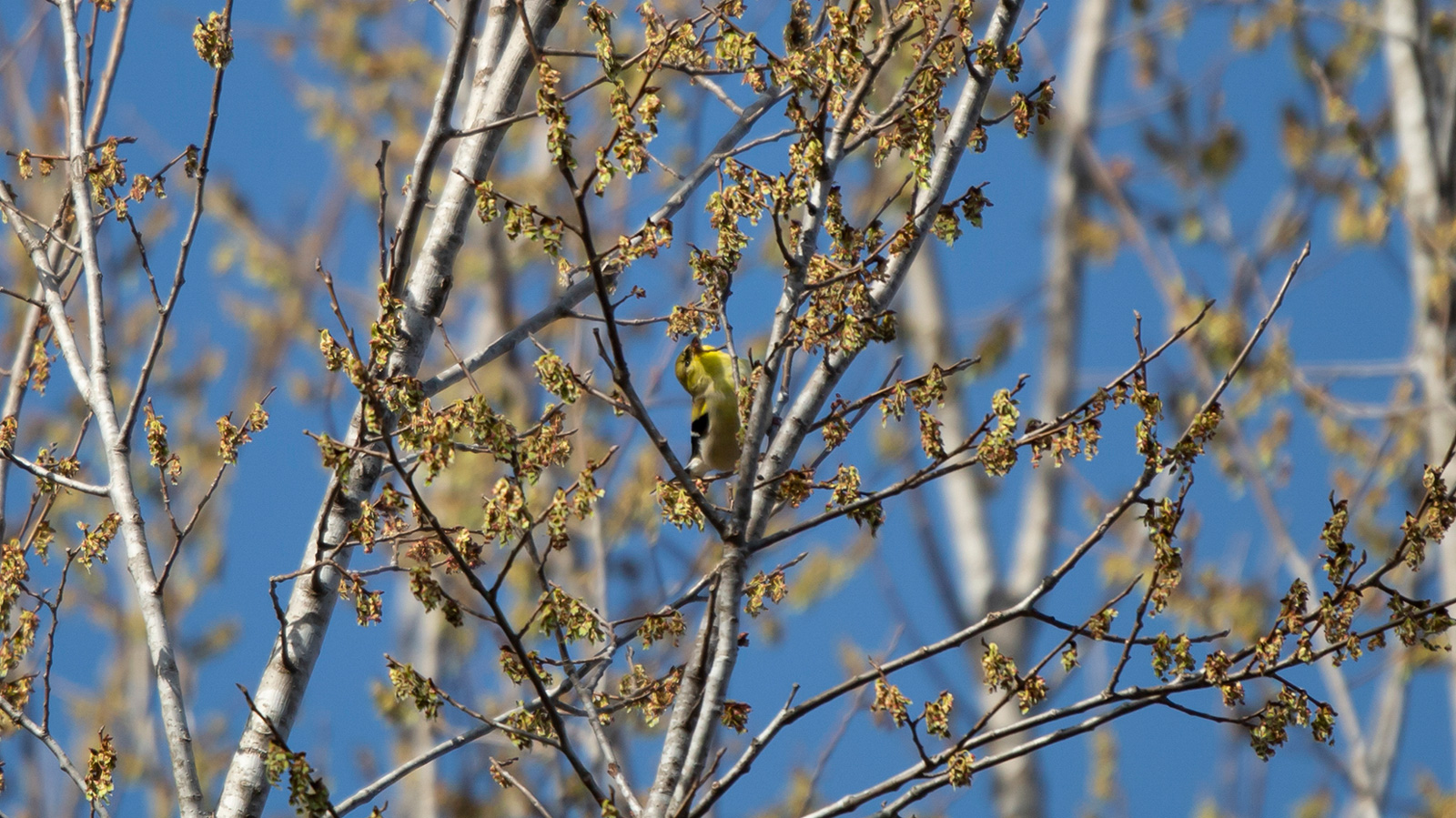
The American goldfinch (Spinus tristis) operates on a schedule that no other bird in North Louisiana follows. Every other songbird nests in spring. The goldfinch waits until midsummer. Every other songbird molts once a year. The goldfinch molts twice. Every other songbird at the feeder wears the same coloring year-round. The goldfinch shows up in winter wearing olive-brown and transforms into screaming yellow by May, producing a before-and-after that looks staged. A male American goldfinch in full breeding condition, bright canary-yellow with a jet-black cap, black wings with white wingbars, and a white rump, wears a color scheme so vivid that first-time observers frequently check the field guide to make sure the bird isn't an escaped canary. The field guide confirms: wild bird, native species, and yes, the yellow really gets that bright. The goldfinch earned it through carotenoid pigments and did not consult a stylist.
Arican goldfinch lives in North Louisiana year-round, though the winter population swells with migrants from farther north. The bird feeds at thistle feeders, sunflower feeders, and natural seed sources across every parish in North Louisiana. The goldfinch's combination of brilliant summer coloring, undulating flight pattern, cheerful "per-chick-o-ree" flight call, and late-summer nesting schedule gives the bird a personality profile that reads as perpetually optimistic, perpetually behind schedule, and perpetually unbothered by both.
The Costume Change
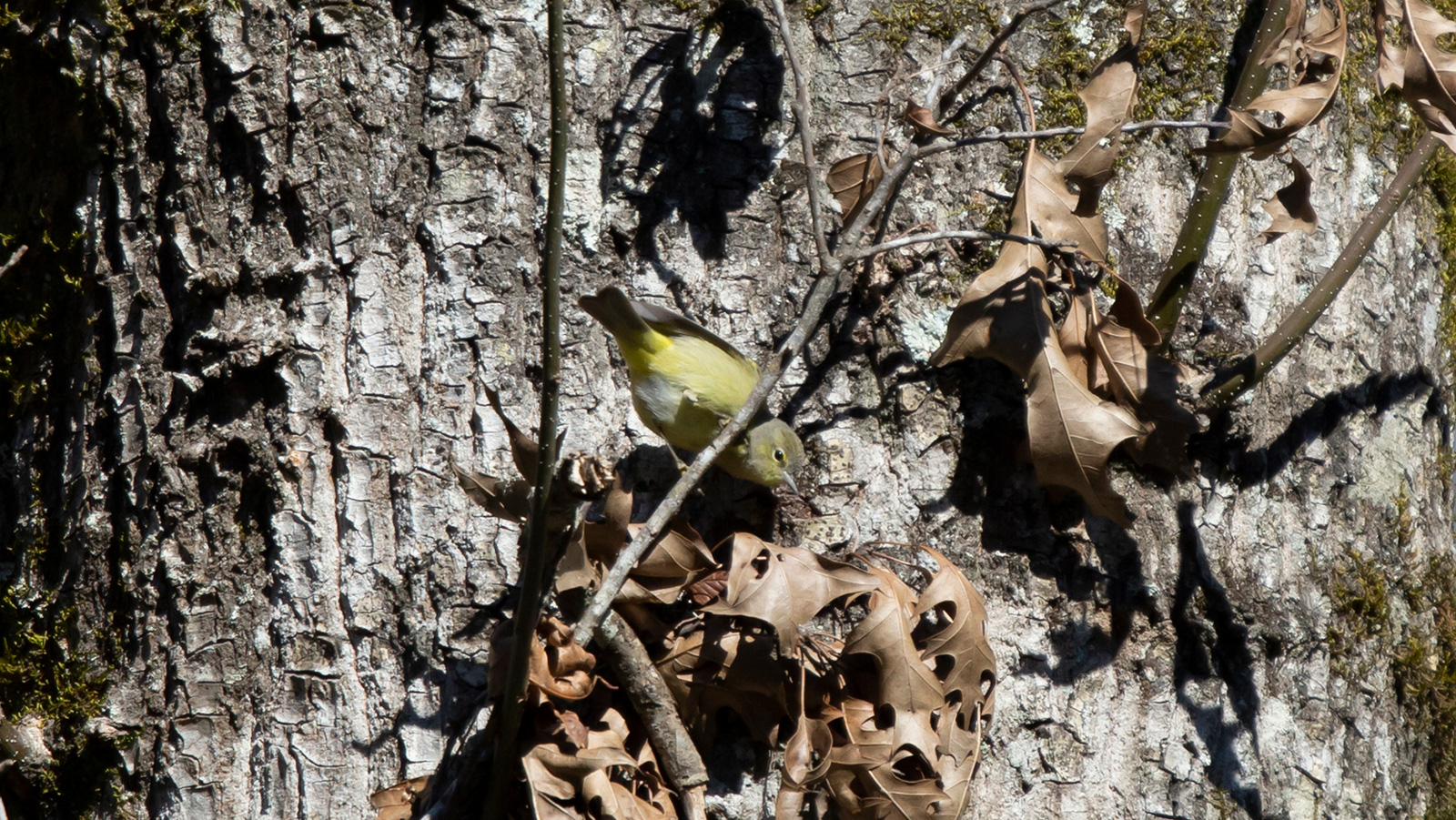
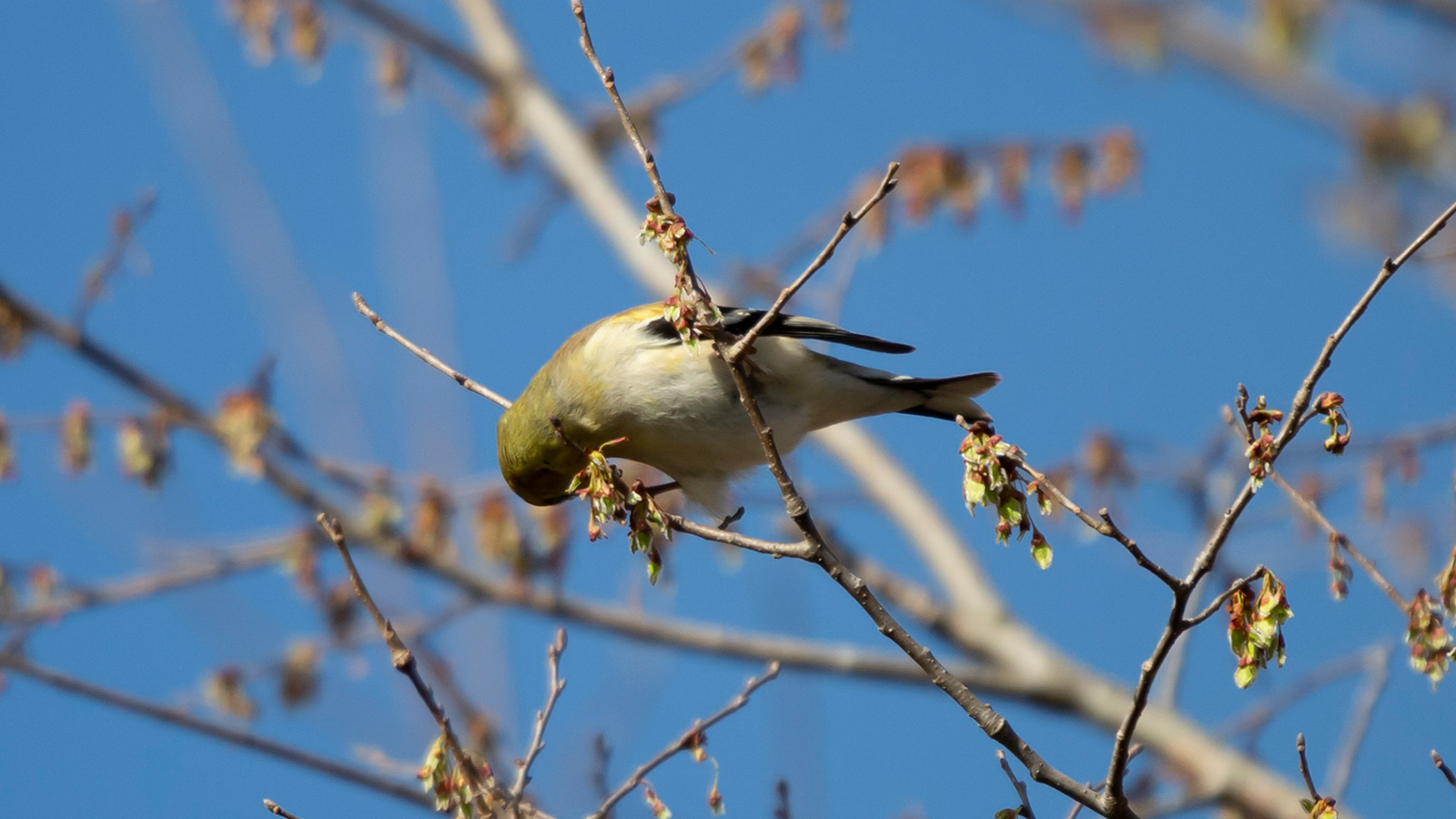
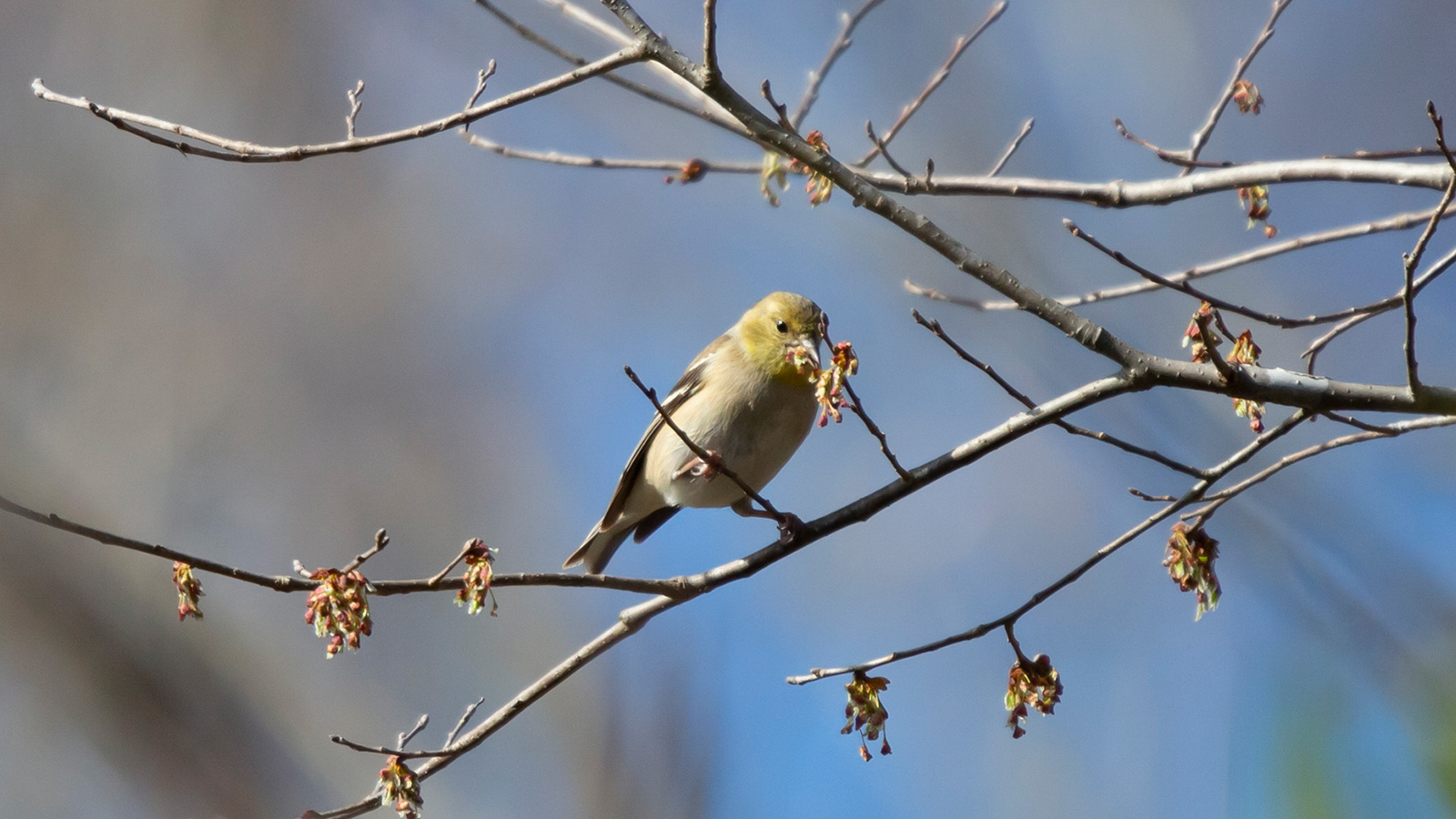
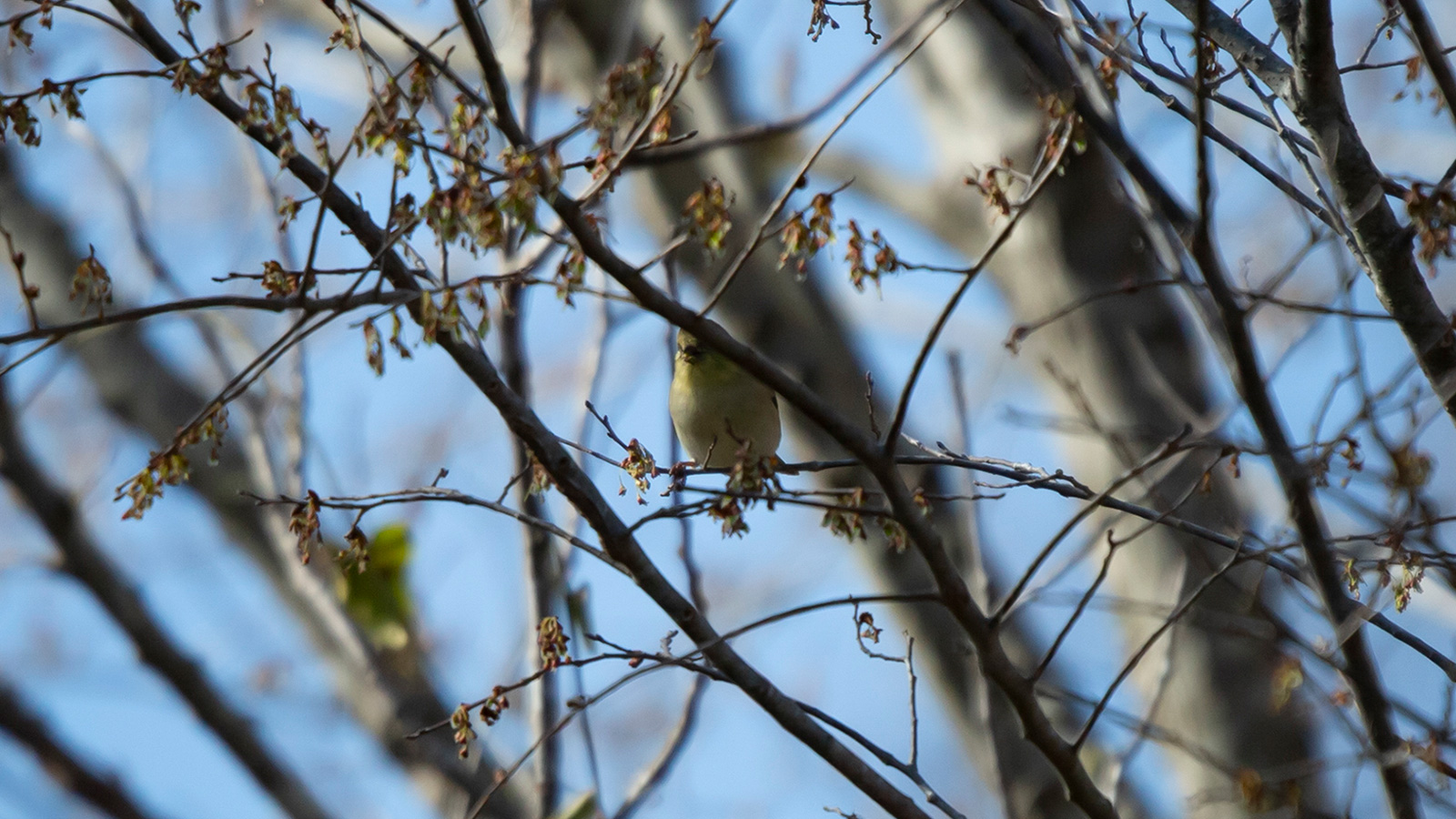
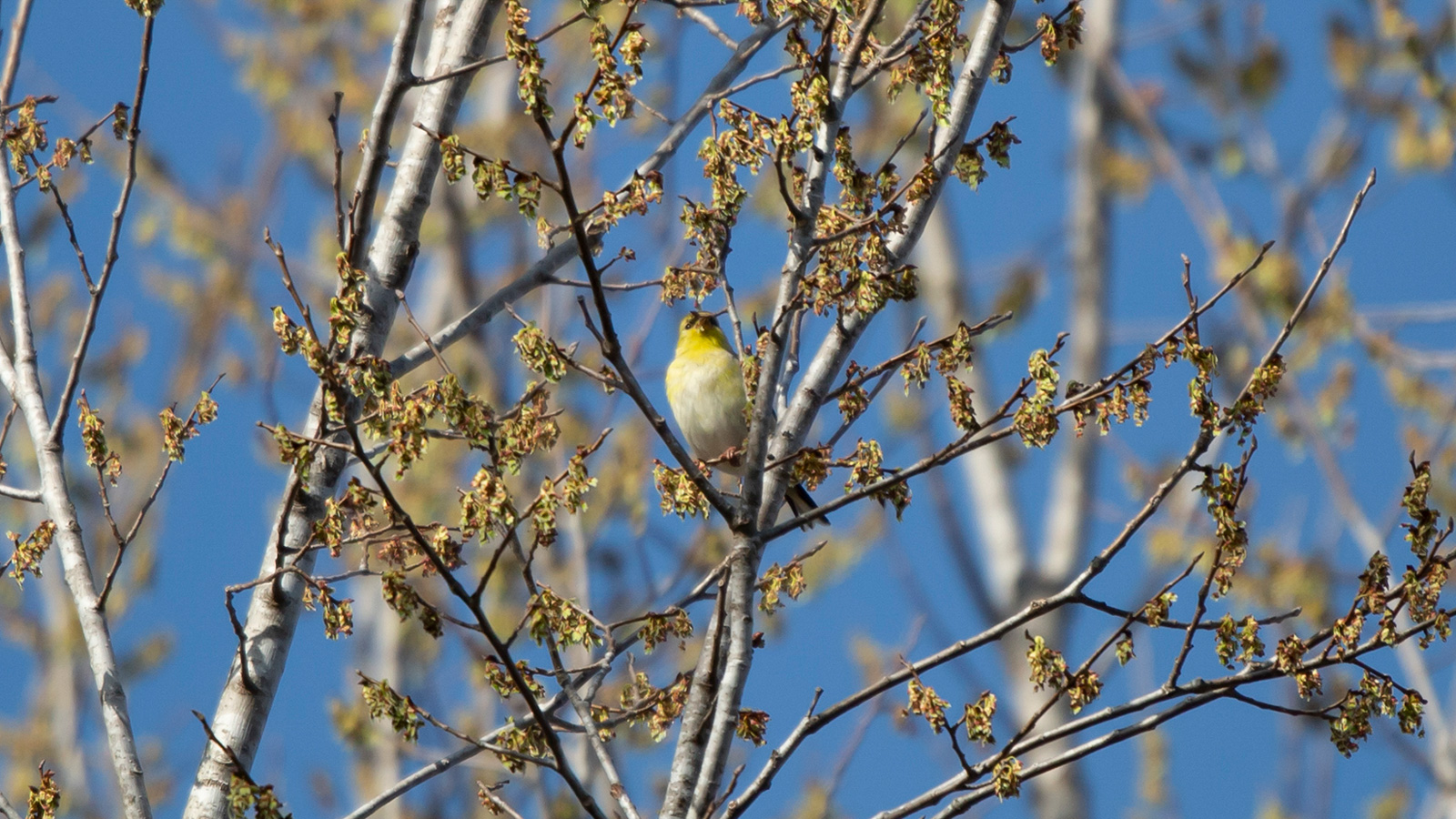
The American goldfinch molts twice a year, which means the bird wears two completely different outfits and pulls off both. The breeding male, from April through September: electric yellow body, black forehead cap, black wings with bold white wingbars, white rump, orange bill. The winter male, from October through March: dull olive-brown body, no black cap, brownish wings with faded wingbars, dark bill. The transition between the two outfits happens gradually through spring and fall molts, which creates weeks of intermediate birds that wear patchy yellow and olive in combinations that look unfinished.
Double molt makes the goldfinch unique among North Louisiana's finches. House finches, purple finches, and pine siskins all molt once per year and wear the same feather set from one molt to the next. The goldfinch invests the metabolic energy to grow an entirely new body-feather set twice, which doubles the calorie cost of feather production and raises the question of why the goldfinch bothers. The answer involves both camouflage and signaling. The dull winter outfit reduces predation risk during months when the bird feeds in exposed flocks and bright yellow would make every bird in the flock a visible target. The bright summer outfit advertises male quality to females during the breeding season when the mate-selection stakes justify the increased predation risk. The bird pays the energy cost of two molts per year because each outfit serves a different survival function that the other outfit would compromise.
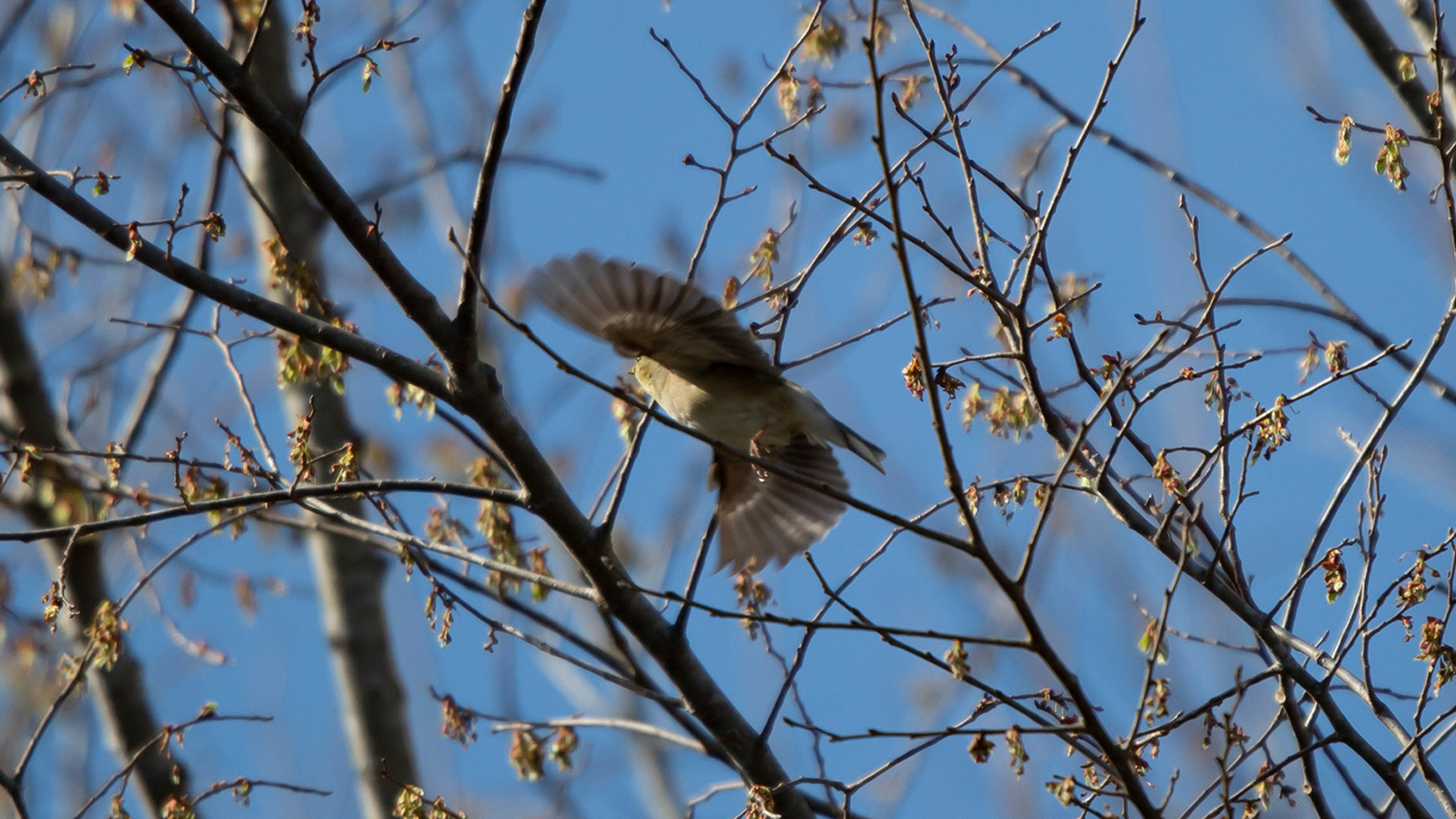
The molt creates a brief period of reduced flight capability. A goldfinch mid-molt in September, with gaps in the wing feathers where old feathers dropped and new feathers have not yet grown in, flies with less efficiency than a fully feathered bird. The molt timing, after the breeding season ends and before the fall migration and winter feeding period begin, positions the vulnerability window during the weeks when the bird's demands on flight performance sit lowest. A goldfinch that needs to outrun a hawk in December wears a complete feather set. A goldfinch molting in September needs only to reach the next seed head ten feet away. The schedule accounts for the vulnerability. The bird does not fly marathons during the costume change.
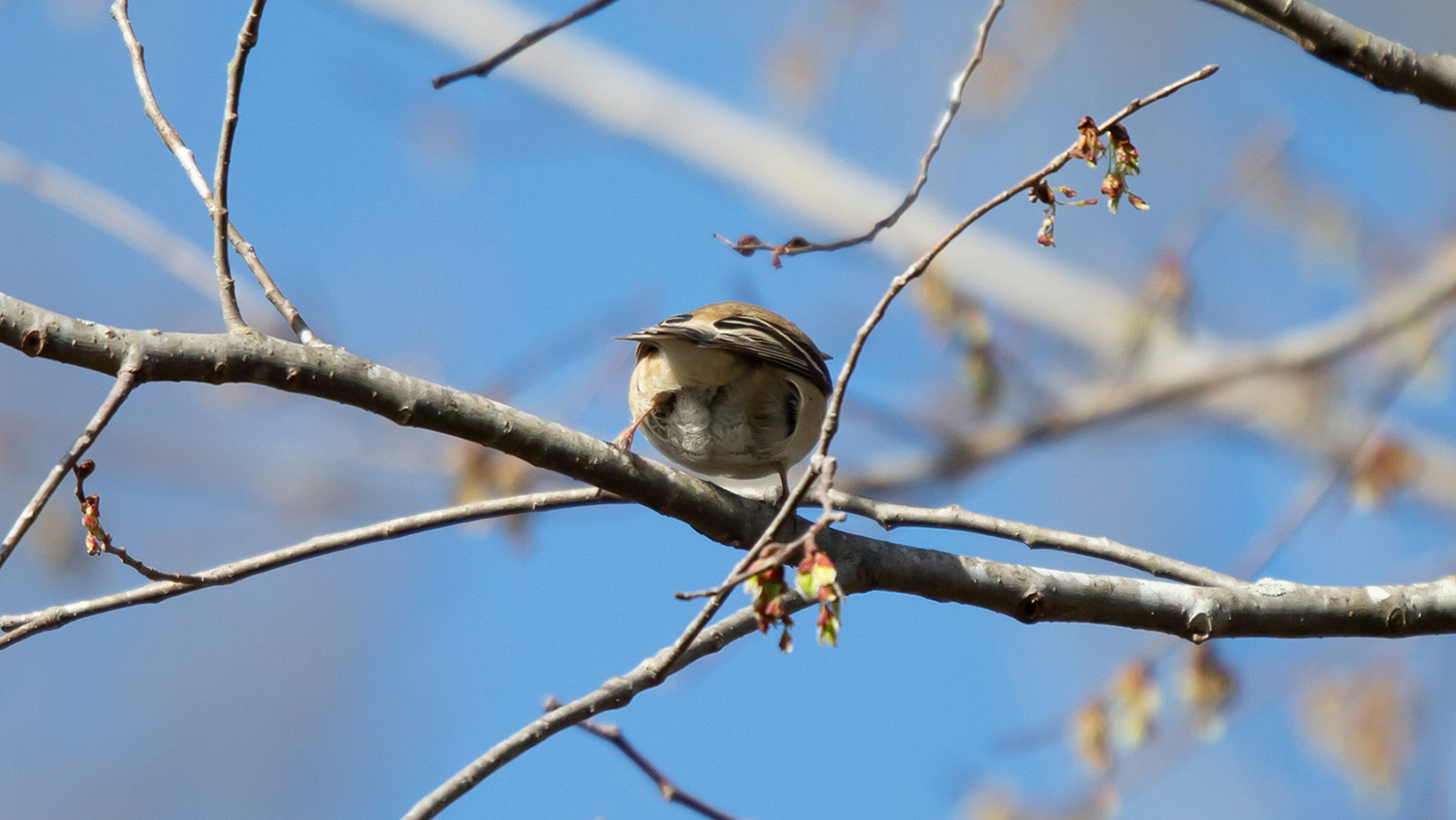
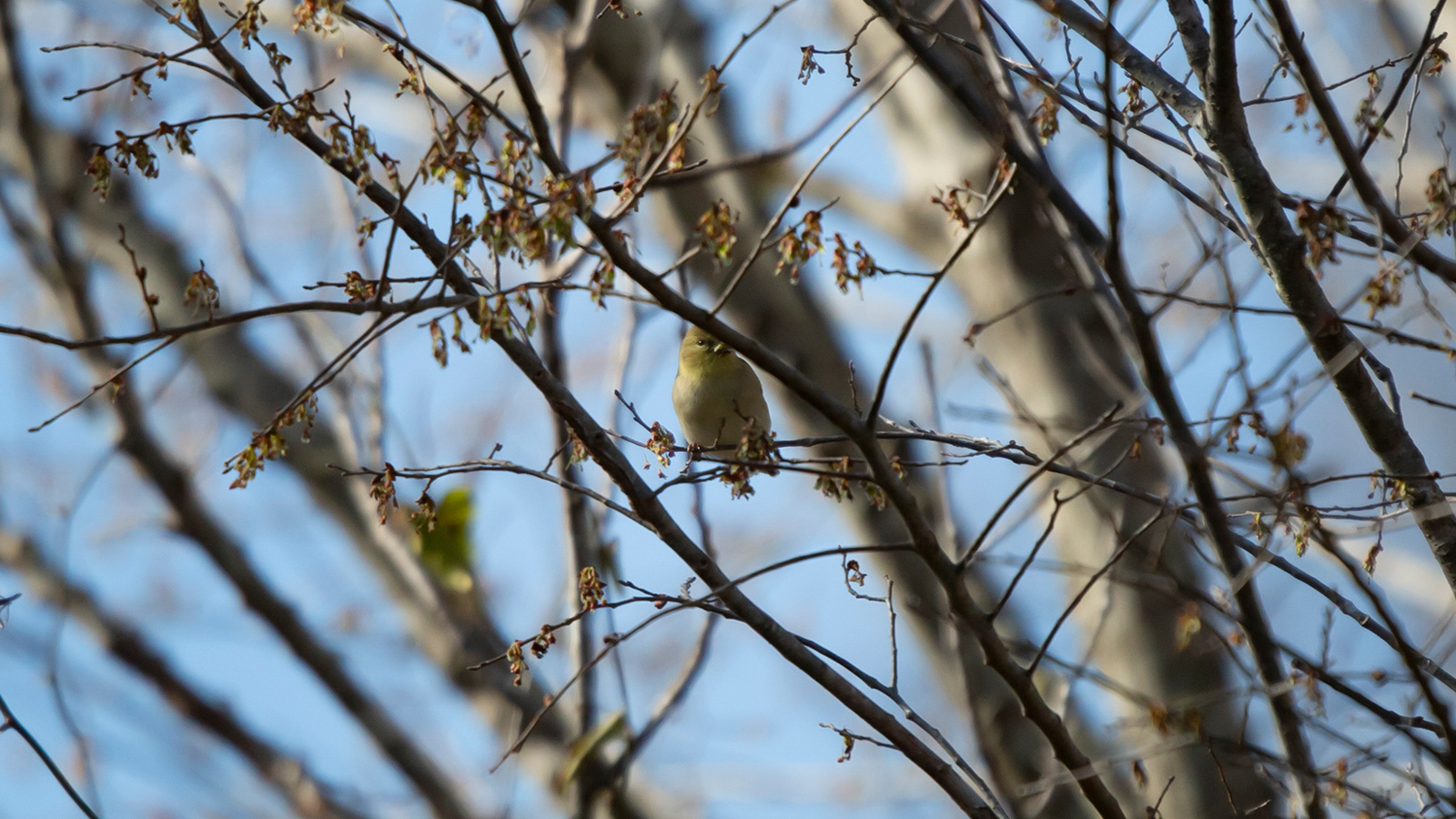
Female wears a muted version of the same seasonal shift: olive-yellow in summer (never the electric yellow of the male), olive-brown in winter, with the same wing pattern at reduced contrast. A female goldfinch in December and a male goldfinch in December look almost identical: dull, olive-brown, with wingbars and a conical bill. A female goldfinch in June and a male goldfinch in June look completely different: she wears olive-yellow, he wears screaming yellow with a black cap. The seasonal transformation makes the American goldfinch one of the few North Louisiana birds where the identification difficulty changes with the calendar. Easy in summer. Tricky in winter.
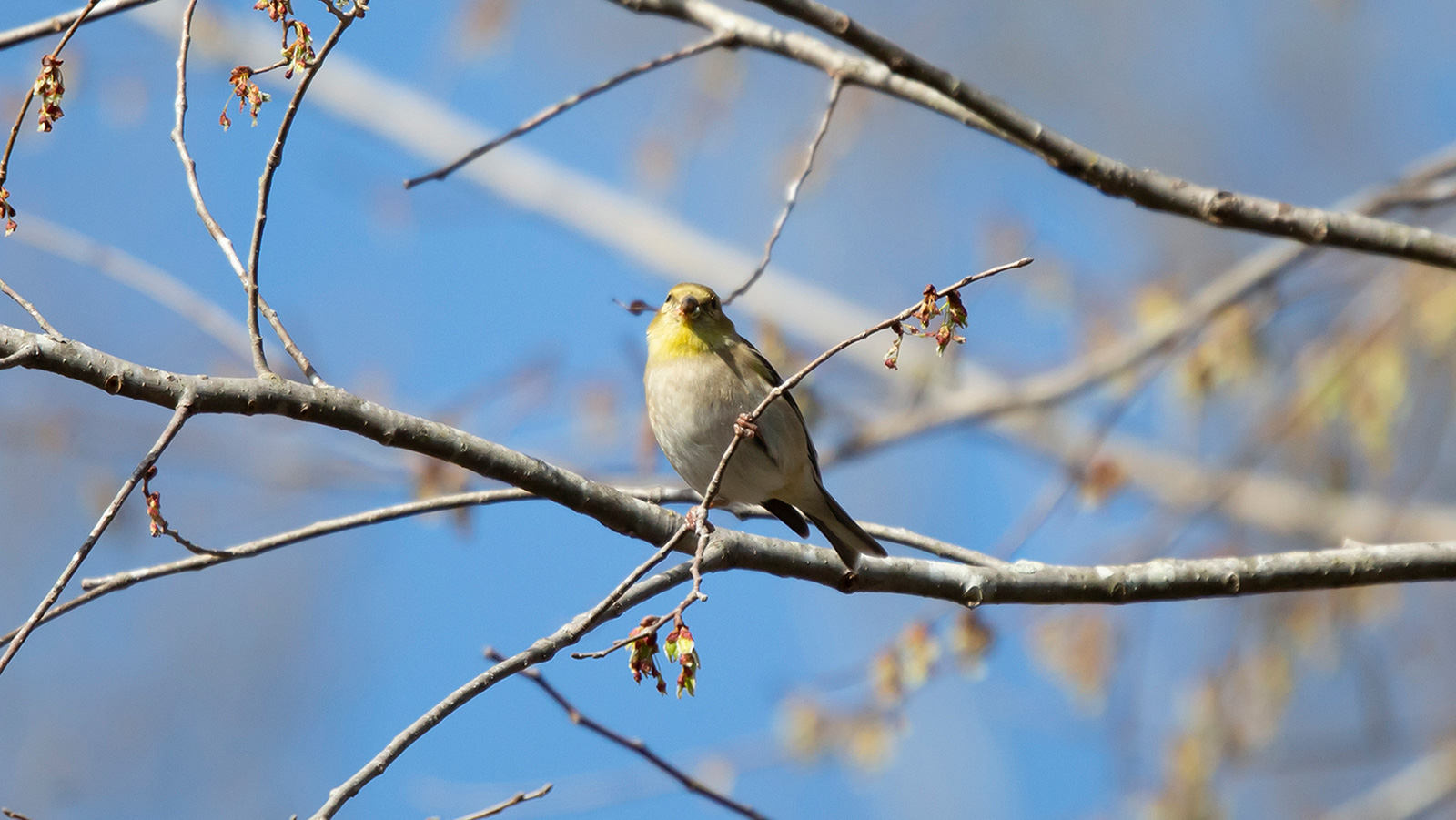
The spring molt starts in March and finishes by late April. A male goldfinch in mid-March wears olive-brown with patches of yellow breaking through on the face and chest, creating a patchwork that looks exactly how a slow costume change would look if the bird changed one feather at a time. The patches expand daily. By mid-April, the yellow covers the body and the black cap fills in, and the bird that spent winter looking drab stands on a branch looking nuclear. The transformation generated the folk name "wild canary," which stuck in rural North Louisiana and still gets used by people who grew up calling the bird that and see no reason to switch to a name with more syllables.
Lesser goldfinches do not occur in North Louisiana with any regularity, but the species shows up as a rare vagrant in Louisiana, and any goldfinch that wears a green back instead of an olive-brown or yellow back in North Louisiana warrants close inspection and documentation. The lesser goldfinch's black cap extends further back on the head than the American goldfinch's cap, and the back stays green rather than shifting to yellow. A sighting would generate serious interest from the Louisiana Bird Records Committee.
Advertisement
The Flight Call That Identifies Everything
The American goldfinch calls "per-chick-o-ree" in flight, a four-syllable phrase delivered on an undulating flight path that dips and rises with each wingbeat cluster. The call matches the flight pattern so precisely that the bird appears to say "per-chick-o-ree" on each upward bounce, creating a synchronized audio-visual signature that no other North Louisiana bird produces. A goldfinch flying overhead can be identified by the undulating flight and the "per-chick-o-ree" call without seeing any color, any field mark, or any detail beyond the flight path and the sound. The identification works at distances where the bird resolves as nothing more than a small silhouette bouncing across the sky.
Ached song adds a longer, more complex warbling phrase that the male delivers from an elevated perch during breeding season. The song tumbles through a cheerful, rapid series of notes that sound bright and slightly scattered, with the energy of a bird that started three sentences simultaneously and intends to finish all of them. The song carries well from the treetop perches where breeding males advertise, and the cheerful quality separates the goldfinch's song from the similar-paced but different-toned songs of the house finch and purple finch.
A sharp "tsee-ee" call serves as an alarm and general contact note. The "tsee-ee" shows up at feeders when a hawk passes overhead, at nest sites when a predator approaches, and in flight between flock members maintaining contact. The alarm version carries a sharper, more urgent quality than the contact version, and the difference in tone tells an experienced listener whether the goldfinch detected a threat or just said hello to a flock mate.
The Thistle Obsession
Seeds. The American goldfinch eats seeds with a specialization that exceeds even the house finch's seed devotion. Thistle seeds, dandelion seeds, sunflower seeds, coneflower seeds, aster seeds, and the seeds of every composite flower in North Louisiana's fields and roadsides make up the overwhelming majority of the diet. The bill, a short, sharp-pointed cone, extracts seeds from thistle heads, dandelion puffs, and composite seed heads with a precision that the heavier-billed finches cannot match. The goldfinch's bill came designed for small seeds in tight packages, and the bird exploits that design advantage across every weedy field, flower garden, and roadside shoulder in North Louisiana.
Nyjer seed (sometimes marketed as thistle seed, though it comes from an African daisy and bears no relation to actual thistles) at tube feeders with small perches attracts goldfinches specifically. The small perch size and the small seed size exclude larger birds from the feeder, creating a goldfinch-exclusive feeding station that concentrates the species at a density the backyard birder controls. A nyjer tube feeder in a North Louisiana backyard during winter can attract twenty or more goldfinches at once, producing a visual of dull olive-brown birds packed onto every perch and port with the efficiency of a rush-hour train that someone filled with finches.
The late-summer nesting schedule connects directly to the seed obsession. Goldfinches nest in July and August because the seed sources they feed to their chicks peak in midsummer. Thistle, milkweed, and other composite plants produce ripe seeds in July and August, and the goldfinch times its breeding cycle to coincide with the peak seed availability that the chicks need. Every other songbird nests when insect availability peaks in spring. The goldfinch nests when seed availability peaks in summer. The bird built its entire reproductive calendar around a food source that runs on a different schedule than every other bird's food source, and the calendar shift puts the goldfinch out of sync with the entire North Louisiana breeding community. Warblers fledge chicks in May. The goldfinch starts building the nest in July. The goldfinch does not consider the timeline unusual. Every other bird considers the goldfinch late.
Advertisement
Nesting When Nobody Else Bothers
July and August. The goldfinch nests in July and August. This fact bears repeating because this fact surprises everyone who learns it for the first time and generates the follow-up question "why?" The answer: seeds. The goldfinch feeds chicks a diet of regurgitated seeds, and the seeds that the goldfinch prefers, thistle, milkweed, dandelion, produce ripe seeds in midsummer. A goldfinch that nested in April would feed its chicks during a period when the preferred seed sources had not yet ripened. A goldfinch that nests in July feeds its chicks during the exact week that the thistle head splits open and the seeds become available.
The nest goes in a shrub or small tree, usually in a fork of a horizontal branch, built by the female from plant fibers, spider silk, and the silky seed-down from thistles and milkweed. The nest cup sits so tightly woven that it can hold water, which becomes a problem during heavy rain because the nestlings can drown in a waterlogged nest that drains slowly. The construction quality exceeds most North Louisiana passerine nests and reflects the bird's access to building materials that peak in availability at the same time the bird starts building. The thistle provides the seeds that feed the chicks AND the down that lines the nest. The plant does double duty for the bird, and the bird repays the plant by dispersing seeds that stuck to the down and fell off during construction. Neither party signed a contract. Both parties benefit.
She lays four to six eggs, pale blue-white and unmarked. Incubation takes about two weeks. The male feeds the female on the nest. Both adults feed the chicks with regurgitated seeds. Fledging takes about two weeks after hatching. The entire nesting cycle, from egg-laying through fledging, compresses into roughly a month, which means a goldfinch pair that started in mid-July fledges chicks by mid-August and may attempt a second brood in late August that fledges in September. The late start and fast finish allow the goldfinch to squeeze one or two broods into a window that most other birds would consider too late to bother with.
Cowbird parasitism hits goldfinch nests less effectively than it hits most host species, because the seed-based diet that the goldfinch feeds to chicks does not support cowbird chick growth. A cowbird chick in a goldfinch nest receives regurgitated seeds instead of the insect diet that cowbird chicks need, and the seed diet typically kills the cowbird chick within a few days of hatching. The goldfinch did not develop this defense on purpose. The goldfinch's diet accidentally created a lethal environment for the cowbird's offspring. The cowbird continues to lay eggs in goldfinch nests. The cowbird chicks continue to die. The goldfinch continues to feed seeds and notice nothing unusual about the outcome.
The late nesting schedule creates a second, accidental cowbird defense. Brown-headed cowbirds concentrate their egg-laying in May and June, when most host species nest. By the time the goldfinch starts nesting in July, the cowbird's laying season winds down, which means fewer cowbird eggs end up in goldfinch nests simply because the cowbird finished laying before the goldfinch started building. The timing mismatch, combined with the lethal seed diet, gives the goldfinch one of the lowest effective cowbird parasitism rates of any small passerine in North Louisiana. The bird did not plan either defense. Both defenses work anyway.
Advertisement
Who Gets Mistaken for Who
Pine siskins. Winter goldfinches and pine siskins share feeders, share olive-brown coloring, and share the undulating flight pattern. The siskin wears heavy brown streaking across the entire body that the goldfinch lacks. The siskin shows yellow flashes in the wing and tail that the goldfinch's winter outfit does not produce (the goldfinch shows wingbars but not the yellow wing-stripe the siskin carries). The siskin's bill comes thinner and more pointed than the goldfinch's conical seed-cracker. At a nyjer feeder with both species present, the streaky birds belong to the siskin and the plain olive-brown birds belong to the goldfinch.
Evening grosbeaks. Rare irruption visitors to North Louisiana that share the goldfinch's yellow-and-black color scheme but at twice the body size and with a massive, pale bill that looks built for cracking walnuts. An evening grosbeak at a feeder next to a goldfinch settles the size comparison in one glance. The confusion only arises with distant birds in flight, and the grosbeak's size, bill shape, and call (a piercing, ringing "clee-ip" that sounds nothing the goldfinch's "per-chick-o-ree") sort the identification before the bird lands.
Yellow warblers. The breeding male goldfinch's yellow body generates occasional confusion with the yellow warbler, which also wears bright yellow during summer. The goldfinch's black cap, black wings, and conical bill eliminate the warbler immediately. The yellow warbler wears yellow across the wings as well as the body, shows reddish breast streaking, and carries a thin, pointed insect-eating bill. A yellow bird with black wings at the feeder belongs to the goldfinch. A yellow bird with yellow wings in the willow thicket belongs to the warbler.
The Winter Flock
Winter goldfinch flocks in North Louisiana can number in the dozens at productive feeding sites. A weedy field with standing thistle, aster, and goldenrod in January may hold thirty or more goldfinches, all in dull olive-brown winter feathers, all feeding on seed heads with the methodical pace of birds that have found what they wanted and intend to stay until every seed head stands empty. The flock moves through the field together, working the seed heads in a loose group that maintains cohesion through continuous "tsee-ee" contact calls.
The winter flock at feeders mixes goldfinches with pine siskins, house finches, and occasional purple finches, creating a multi-species seed-eating assembly that treats the feeder as a shared resource. Goldfinches dominate nyjer feeders because the small perches exclude the larger-billed house finches and the nyjer seed does not interest most other species. A nyjer feeder in a North Louisiana yard in January becomes goldfinch-exclusive territory by default, and the goldfinch flock that claims it will defend the perches against any other goldfinch that approaches from outside the established group.
Winter population in North Louisiana includes both year-round residents and migrants from farther north. A goldfinch at a Lincoln Parish feeder in December may be a local bird that bred nearby in August or a migrant that bred in Ohio in June. The two birds look identical in winter feathers and cannot be separated in the field, which means the North Louisiana winter goldfinch population blends local and migratory birds into a single flock that nobody, including the birds, attempts to sort by origin.
Spring migration thins the winter flocks as the northern breeders depart between March and May. The departure overlaps with the spring molt, which means the goldfinches leaving North Louisiana in April wear the patchy, half-yellow transitional outfit that makes them look like birds in the middle of a wardrobe malfunction. The birds that stay, the year-round residents, complete the molt on territory and stand in full breeding yellow by early May, ready to wait another two months before bothering to nest. The goldfinch in full breeding color in May, perched on a thistle stalk that won't produce ripe seeds until July, represents a bird that got dressed for an event and then waited sixty days for the event to start. The bird did not consider the timeline unusual. The bird considers the timeline optimal.
Advertisement
What Catches Them
Sharp-shinned hawks take goldfinches from feeders and from flocking situations in open fields. A sharp-shinned hawk approaching a goldfinch flock in a weedy field scatters the flock into an explosive cloud of small birds, and the hawk targets whichever individual reacted slowest or flew in the wrong direction. The goldfinch's undulating flight pattern may complicate a hawk's pursuit by creating an unpredictable flight path, but the hypothesis that the undulating flight evolved partly as a predator-evasion mechanism remains unproven. The flight pattern certainly makes the bird harder to track visually, and a sharp-shinned hawk chasing an undulating goldfinch through open air faces a target that dips below the pursuit line every few seconds before popping back up.
Cooper's hawks take goldfinches from perch positions at feeders and in trees. A Cooper's hawk that discovers a nyjer feeder will approach from behind cover and strike a perched goldfinch before the flock detects the threat. The explosion of goldfinches off the feeder, the brief silence, and the sharp-shinned or Cooper's return the following day creates the same hawk-at-feeder cycle that every finch species experiences throughout winter. The goldfinch does not avoid the feeder after a hawk strike. The goldfinch returns within minutes. The memory of the attack fades faster than the hunger that drove the bird to the feeder in the first place.
Cats take goldfinches from low feeders and ground-feeding positions. A goldfinch feeding on fallen nyjer seed beneath a tube feeder operates at ground level in a suburban yard, which puts the bird in the domestic cat's primary hunting zone. The goldfinch's bright summer coloring makes the bird conspicuous to predators during the exact months when the bird nests close to the ground in shrubs that cats can reach. A male goldfinch in full breeding yellow sitting on a nest in a shrub four feet off the ground in a yard with an outdoor cat creates a predation risk that the bird's winter-olive camouflage would have mitigated. The yellow came with a cost. The breeding season accepts the cost because the yellow attracts a mate. The cat accepts the yellow because the cat does not evaluate costs.
Nest predation from snakes, jays, grackles, and crows hits goldfinch nests in shrubs and small trees. The nest's position in a low fork, typically between four and fifteen feet off the ground, puts eggs and chicks within climbing range of snakes and within raiding range of corvids. The tight nest construction that keeps rain from draining also keeps the nest visible as a distinct structure on the branch, which may increase detection by visual predators scanning the shrub layer.
The Water Connection
Goldfinches drink water frequently, more frequently than most other seed-eating birds in North Louisiana. A goldfinch flock visiting a birdbath, a puddle, or a shallow stream edge drinks in a group, with multiple birds lined up along the water's edge dipping their bills simultaneously. The drinking frequency reflects the dry seed diet: a bird that eats nothing but seeds needs more water than a bird that gets moisture from insects or fruit. The goldfinch's water visits happen multiple times daily, and a birdbath positioned near a nyjer feeder attracts goldfinches that alternate between the feeder and the water with a regularity that turns the birdbath into a second observation station.
The birdbath also provides bathing opportunities that the goldfinch uses enthusiastically. A goldfinch bathing in a shallow birdbath produces a flurry of wing-splashing that soaks the immediate area and attracts other goldfinches to join the bath. A group bath involving four or five goldfinches in a standard birdbath produces a water-displacement event that empties the bath and leaves five soaking wet finches perched on nearby branches, preening their feathers back into shape with the determined focus of birds that just ruined a resource and intend to use the drying time productively.
Advertisement
Where to Look
Everywhere with weeds, flowers, or feeders. Every parish in North Louisiana, every season, every habitat that produces seeds. Weedy roadsides, agricultural field edges, flower gardens, residential yards with feeders, city parks with ornamental plantings that go to seed, and every unmowed field with standing thistle, goldenrod, and aster produce goldfinches at some point during the year.
Nyjer feeders provide the most concentrated viewing. A tube feeder filled with nyjer seed, positioned within view of a window or porch, will attract goldfinches within a week of installation in any North Louisiana town. Winter produces the largest feeder flocks. Summer produces the most visually spectacular birds. A nyjer feeder maintained year-round delivers both experiences from the same position.
Summer nesting observation starts in July. A goldfinch pair building a nest in a shrub in late July can be watched from any position that provides a sightline to the shrub without approaching close enough to flush the female. The birds accept human proximity at moderate distances, and a nest in a yard shrub or a park planting can be monitored from a lawn chair at twenty feet without disturbing the pair.
Where to Learn More
The Cornell Lab of Ornithology's All About Birds covers the American goldfinch with range maps, call and song recordings, and molt-cycle illustrations that show the full seasonal costume change. The Sibley Guide to Birds provides the goldfinch comparison across seasonal outfits that addresses the "is this the same bird?" question with visual clarity.
Cornell's Project FeederWatch tracks goldfinch abundance at feeders across North America and provides the citizen science framework for anyone who counts the goldfinches at their feeder and wants the data to contribute to something larger than personal entertainment.
Experiencing This Bird: Accessibility Notes
The "per-chick-o-ree" flight call does most of the finding. The four-syllable phrase, delivered on an undulating flight path, sits at a mid-range frequency that most people hear clearly and carries across open spaces for fifty yards or more. A goldfinch flying overhead announces every bounce with the call, which means the sound arrives in a rhythmic pattern that the ear locks onto quickly. The sound comes from above and moves across the sky, which provides directional cues for locating the bird even without seeing it.
Ached song from breeding males carries from treetop perches during summer and adds a second auditory signature that sounds cheerful, bright, and slightly chaotic. The song differs enough from the house finch's similar warbling that a listener who learned both can separate them by tone and tempo without needing to see the singer.
For people with mobility limitations, the goldfinch comes to the feeder. A nyjer tube feeder positioned within view of any accessible location brings the bird to the observer. The feeder works year-round. Winter brings the largest flocks. Summer brings the brightest coloring. The bird does not demand a hike. The bird demands nyjer seed and a tube with small perches, and the bird will handle the rest.
Meta Title: American Goldfinch in North Louisiana: The Bird That Shows Up Late to Everything | NLW Meta Description: The American goldfinch nests in July, molts twice a year, and wears a yellow so bright that first-time observers check the field guide for "escaped canary." Full guide. Focus Keyphrase: American goldfinch North Louisiana Secondary Keywords: American goldfinch Louisiana, American goldfinch molt, goldfinch winter plumage, goldfinch summer plumage, goldfinch identification, goldfinch nesting season, goldfinch thistle feeder, Spinus tristis Louisiana, North Louisiana backyard birds, goldfinch flight call OG Description: The American goldfinch nests two months after everyone else, molts into two completely different outfits per year, and calls "per-chick-o-ree" on an undulating flight path across every parish in North Louisiana. Full guide. Slug: american-goldfinch-north-louisiana
Advertisement
Photo Gallery


Advertisement
Accessibility
## Experiencing This Bird: Accessibility Notes
The "per-chick-o-ree" flight call does most of the finding. The four-syllable phrase, delivered on an undulating flight path, sits at a mid-range frequency that most people hear clearly and carries across open spaces for fifty yards or more. A goldfinch flying overhead announces every bounce with the call, which means the sound arrives in a rhythmic pattern that the ear locks onto quickly. The sound comes from above and moves across the sky, which provides directional cues for locating the bird even without seeing it.
Ached song from breeding males carries from treetop perches during summer and adds a second auditory signature that sounds cheerful, bright, and slightly chaotic. The song differs enough from the house finch's similar warbling that a listener who learned both can separate them by tone and tempo without needing to see the singer.
For people with mobility limitations, the goldfinch comes to the feeder. A nyjer tube feeder positioned within view of any accessible location brings the bird to the observer. The feeder works year-round. Winter brings the largest flocks. Summer brings the brightest coloring. The bird does not demand a hike. The bird demands nyjer seed and a tube with small perches, and the bird will handle the rest.
Meta Title: American Goldfinch in North Louisiana: The Bird That Shows Up Late to Everything | NLW Meta Description: The American goldfinch nests in July, molts twice a year, and wears a yellow so bright that first-time observers check the field guide for "escaped canary." Full guide. Focus Keyphrase: American goldfinch North Louisiana Secondary Keywords: American goldfinch Louisiana, American goldfinch molt, goldfinch winter plumage, goldfinch summer plumage, goldfinch identification, goldfinch nesting season, goldfinch thistle feeder, Spinus tristis Louisiana, North Louisiana backyard birds, goldfinch flight call OG Description: The American goldfinch nests two months after everyone else, molts into two completely different outfits per year, and calls "per-chick-o-ree" on an undulating flight path across every parish in North Louisiana. Full guide. Slug: american-goldfinch-north-louisiana
Advertisement