Advertisement
The blue-gray gnatcatcher has a field mark so reliable and so specific that experienced birders confirm the species before they've resolved color or bill shape: the constant, compulsive twitching of a long black-and-white tail, visible before the bird's size, plumage, or face come into focus. She moves through the outer branches of trees and shrubs like a moth navigating a room, always in motion, always flicking that tail sideways with a persistence that looks like a nervous tic but is actually just gnatcatcher. Every gnatcatcher does this. Every time. The tail twitches, and you know.
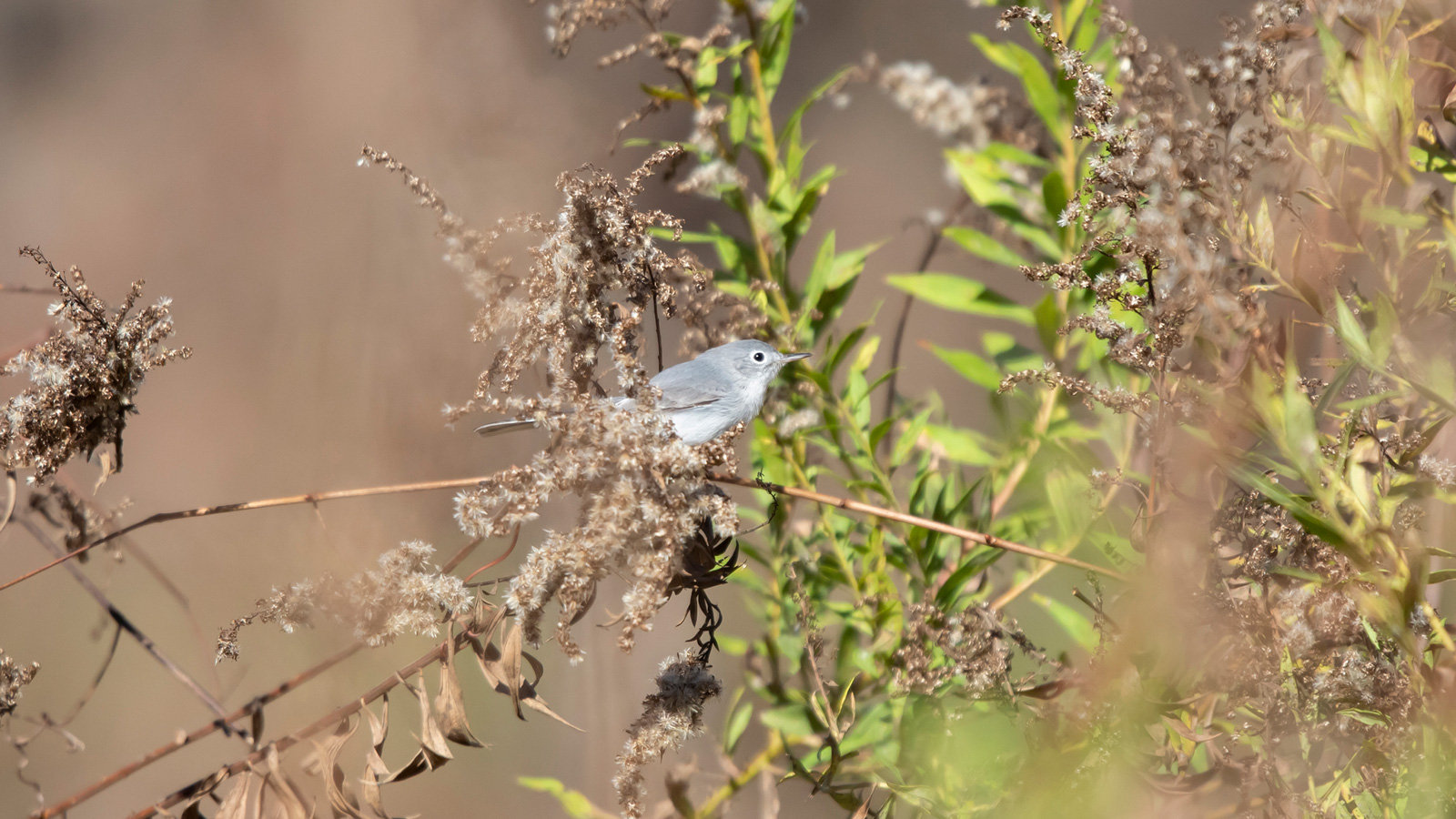
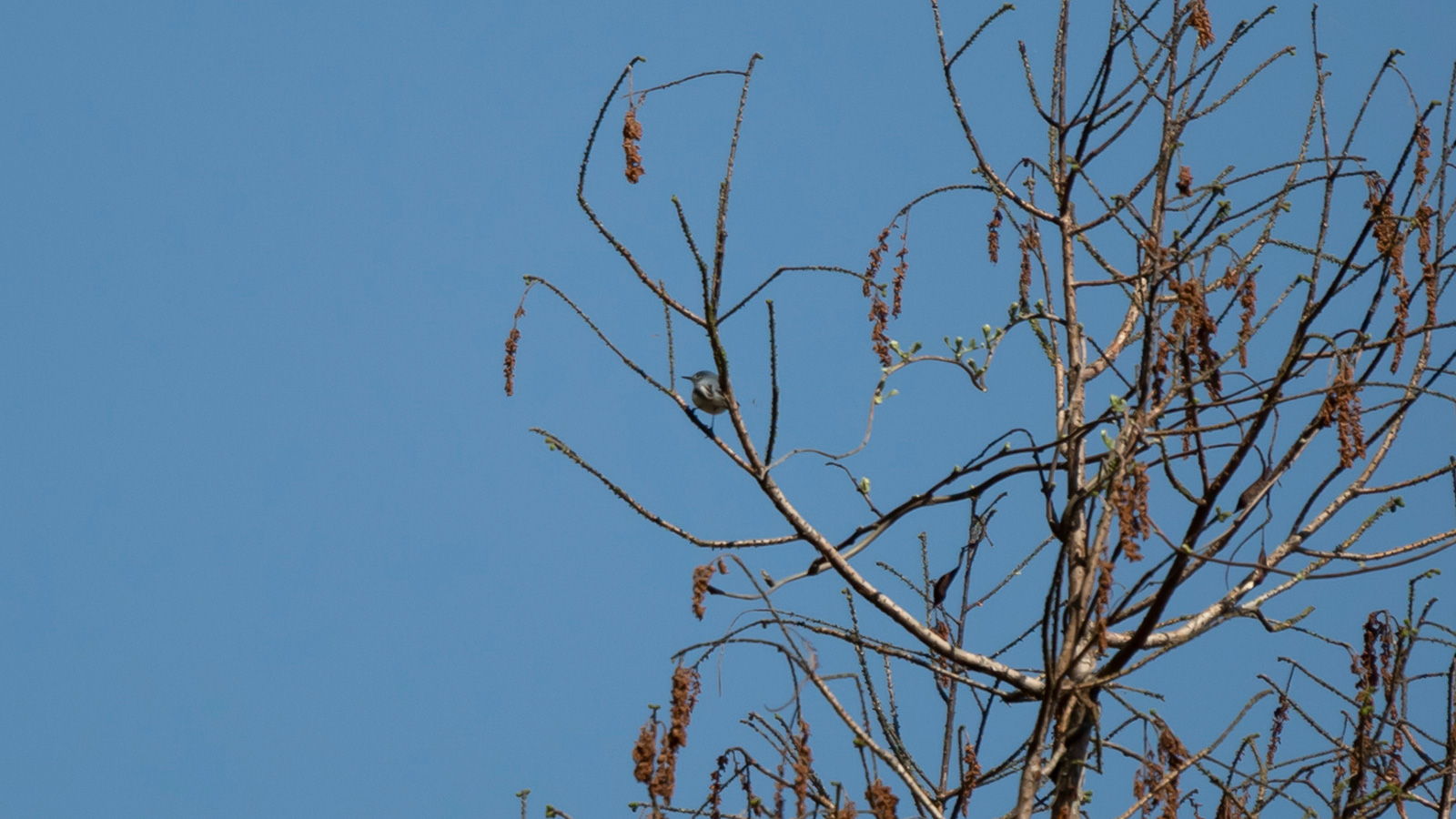
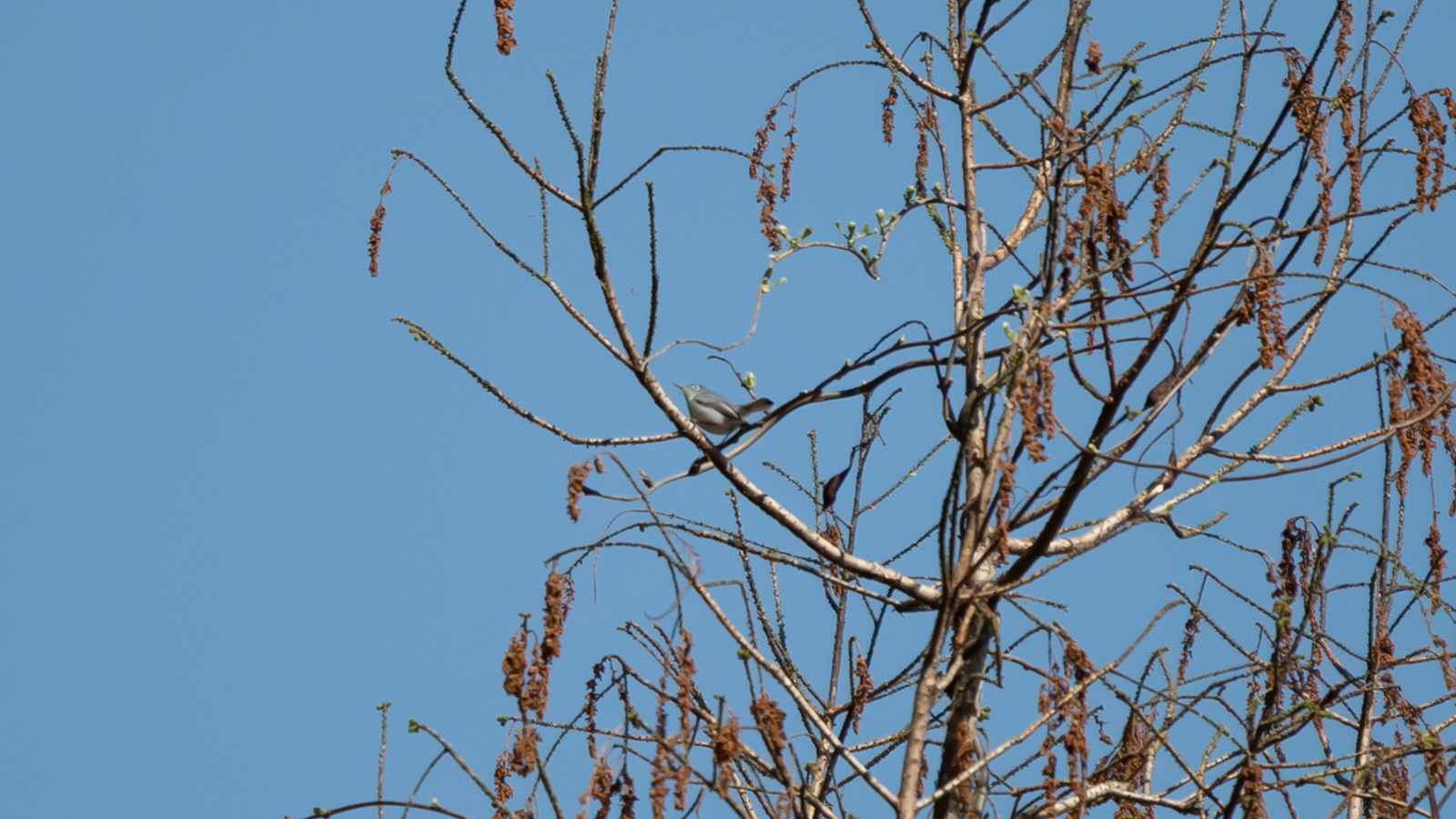
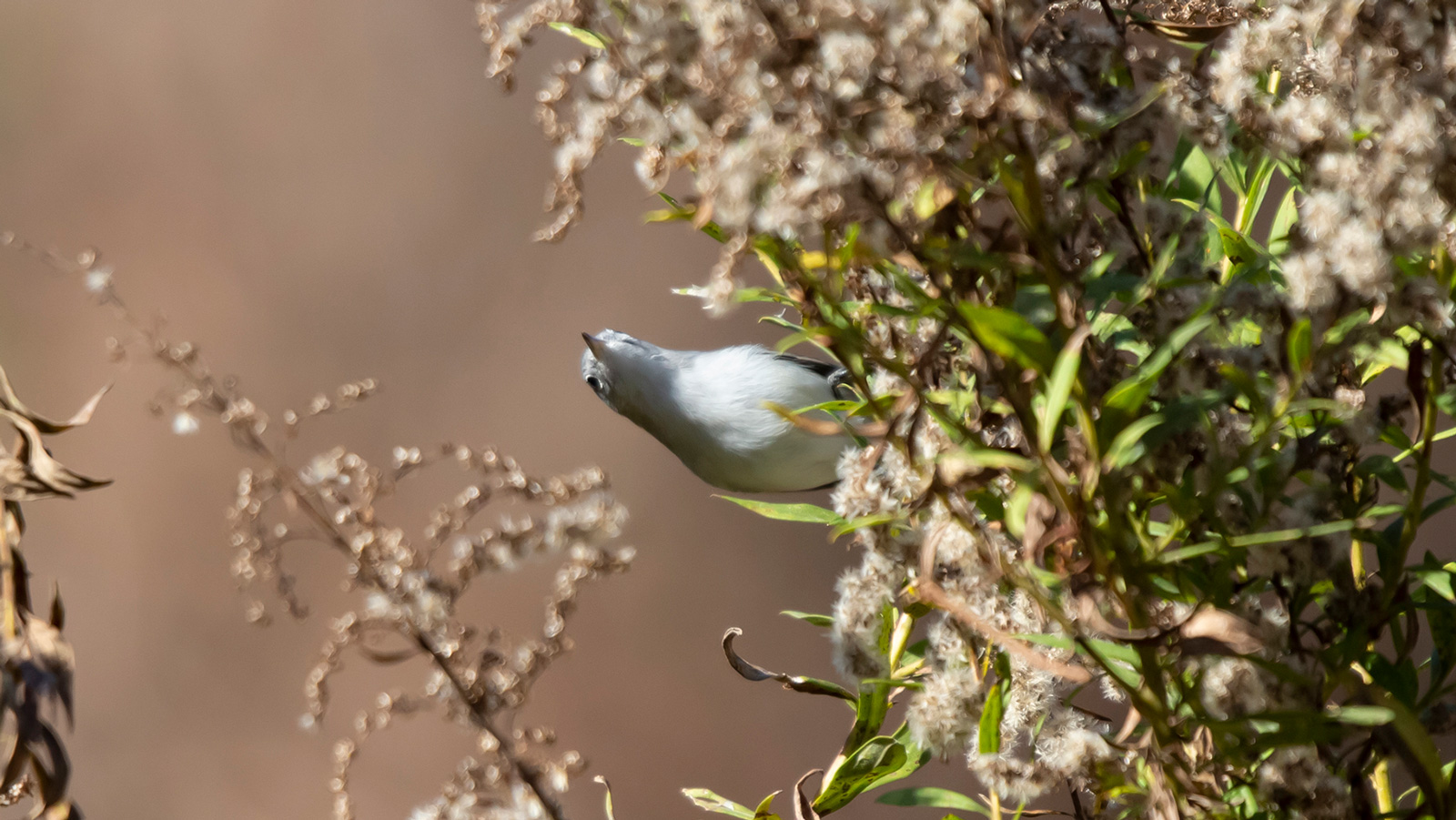
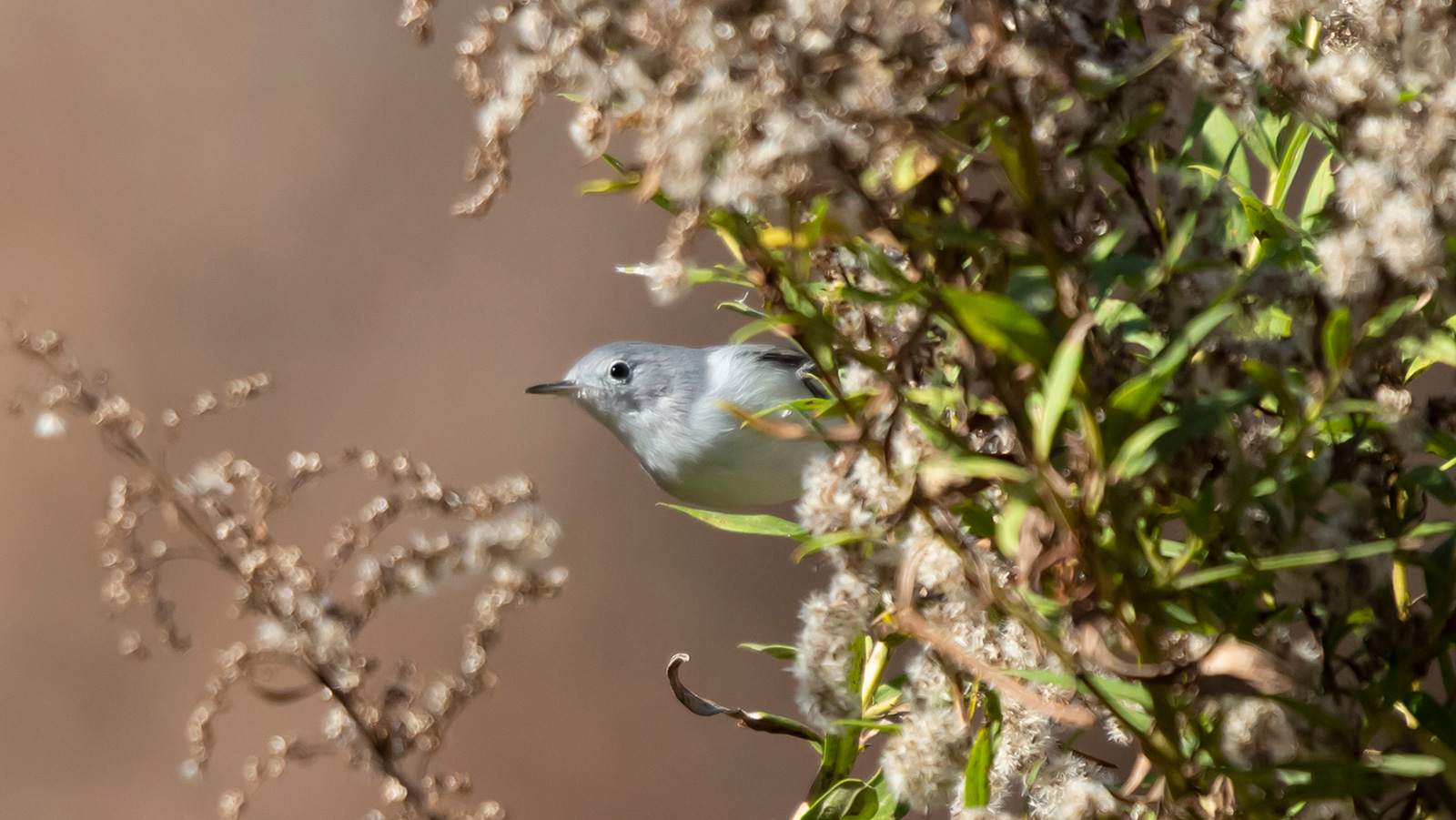
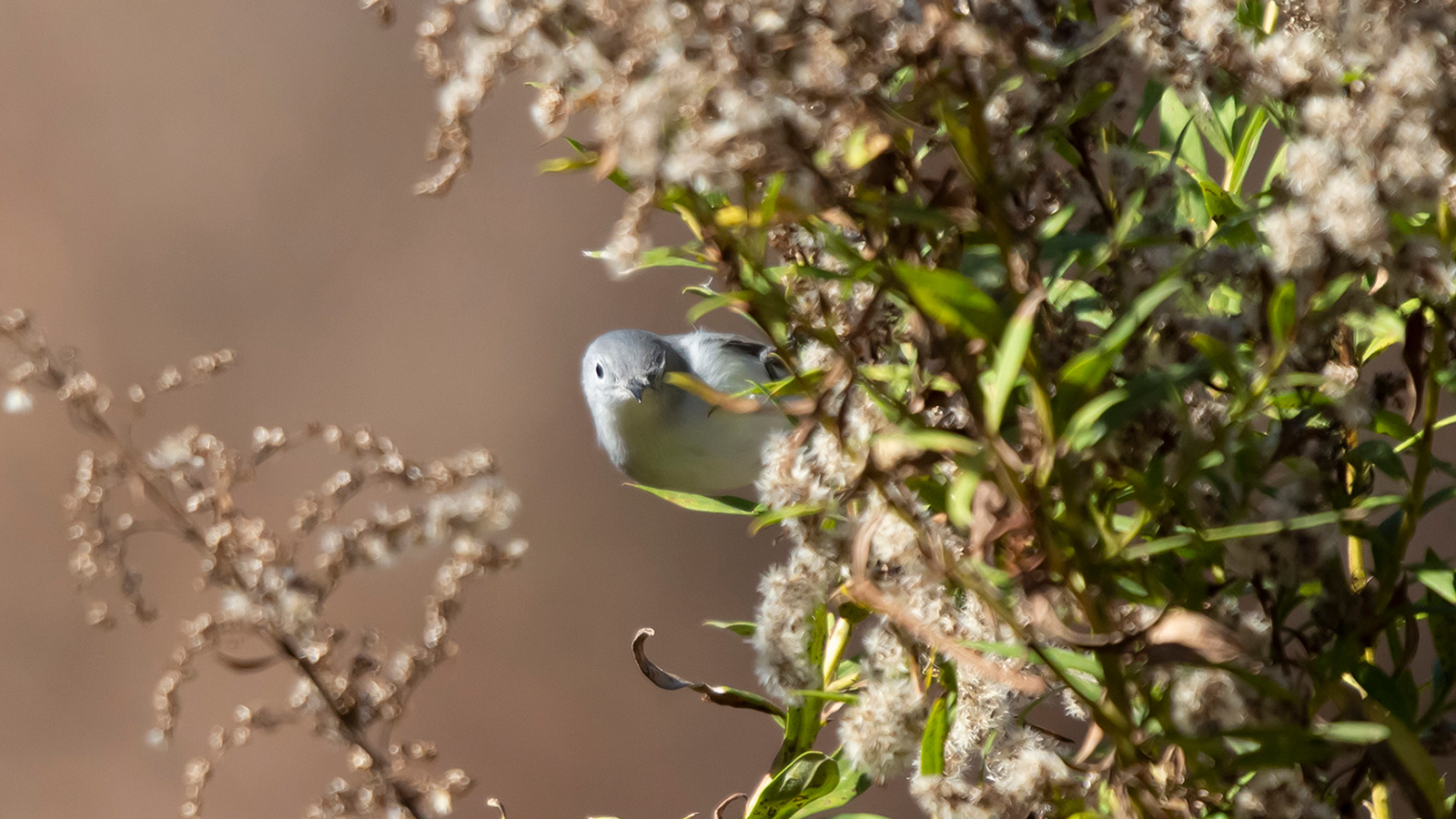
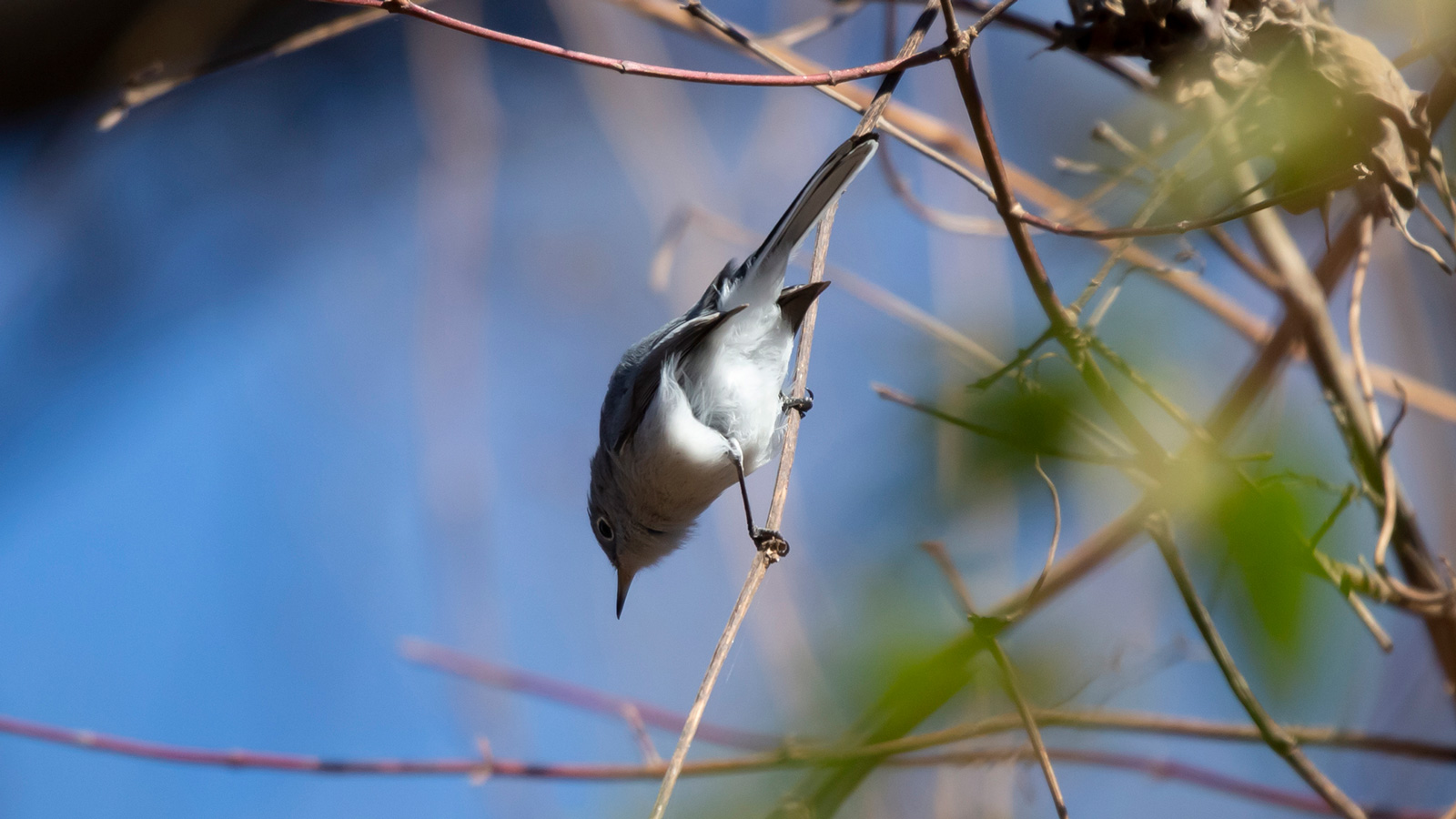
The blue-gray gnatcatcher, Polioptila caerulea, is North Louisiana's year-round gnatcatcher and one of the smallest birds in the entire region, four inches long, about two-fifths of an ounce. She is blue-gray above, white below, with a thin white eye ring, black-and-white tail feathers with the central tail dark and the outer feathers white, and a slender, pointed bill built for picking tiny insects from leaves and twigs. The whole package is clean and distinctive once you've connected the dots, but it takes the tail to pull it together, because a motionless blue-gray gnatcatcher is easily lost in the canopy. A moving one, twitching that tail, announces her position from thirty feet.
What She Does All Day
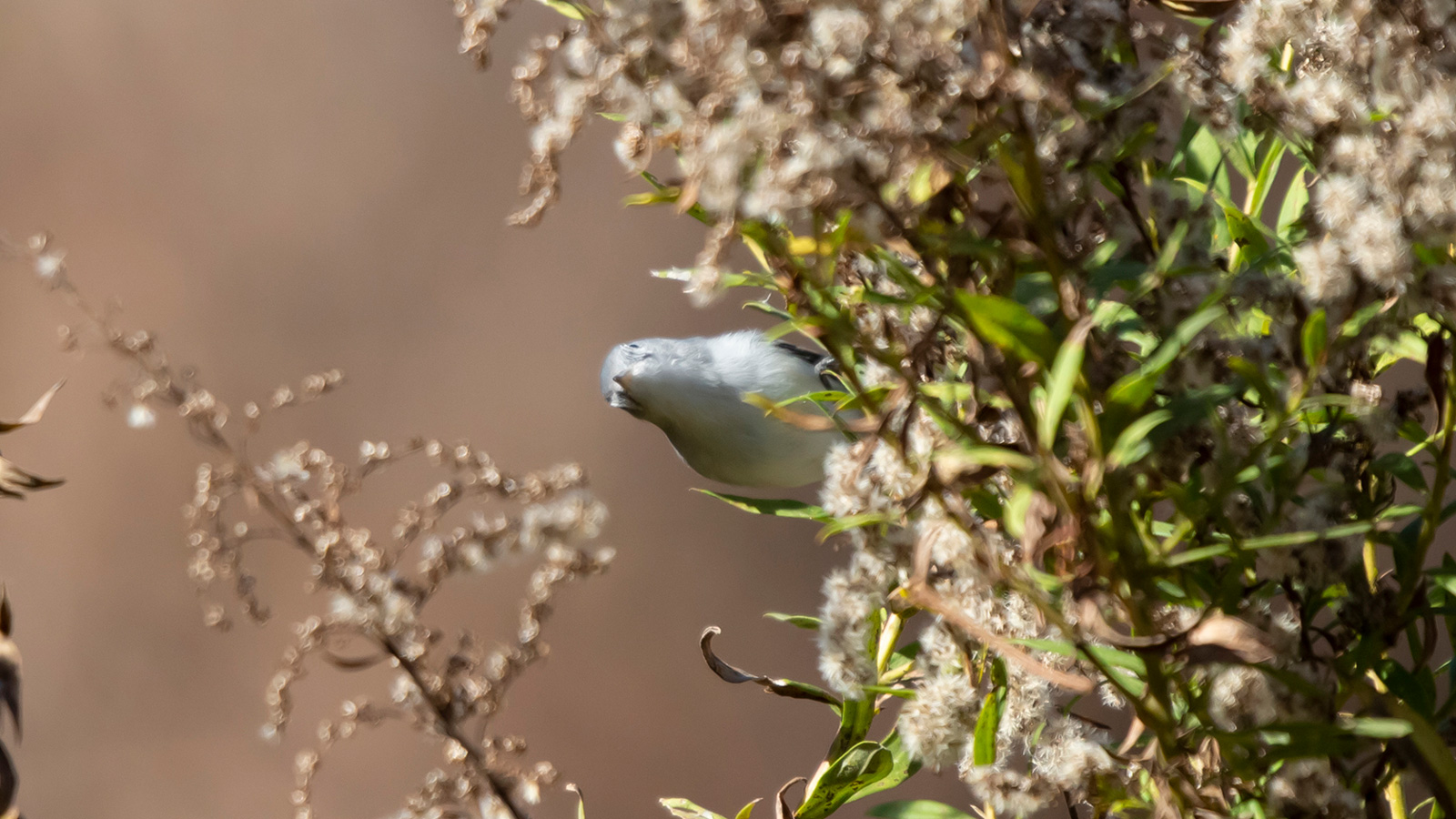
The blue-gray gnatcatcher is a leaf-gleaner and twig-inspector, working through the outer branches of trees and tall shrubs to pick off tiny insects, spiders, and eggs that other foragers miss. She operates at the very tips of branches, the last six inches of a twig, the undersides of leaves at the canopy edge, in the part of the forest structure that's too thin and too flexible for larger birds to navigate efficiently. Her small size is an access advantage. The outer canopy is her territory.
She is almost never still. The feeding technique involves constant movement, short flights between adjacent branches, hovering briefly to inspect leaf clusters, and the continuous tail-twitching that makes her recognizable at any distance where the shape resolves at all. Watching a blue-gray gnatcatcher in the canopy for five minutes gives the impression of a bird running a very detailed inventory of the outer vegetation, never pausing long enough to suggest she's weighed whether the effort is proportionate to the results. She's maintaining a body weight of two-fifths of an ounce through North Louisiana's hot summers and mild winters by extracting the tiny invertebrates that the outer canopy holds in abundance, and no other bird in the forest is doing it the same way. The outer canopy is hers. She works it with the focused, continuous attention of an organism whose survival depends on not missing what's there.
The foraging approach distinguishes gnatcatchers from every other small bird in North Louisiana's mixed winter flocks. Kinglets flick their wings nervously and hover at leaf clusters with jerky, stop-start energy. Warblers move more deliberately between foraging positions, pausing to scan before committing to a direction. Creepers spiral up bark in a single purposeful line. Gnatcatchers do none of these things. They move constantly through the outermost twigs in a style that looks like improvised searching, working the territory in all directions without any particular pattern except thoroughness. The constant tail-twitching accompanies all of it, a metronome for a bird that doesn't slow down.
Advertisement
The Call
The blue-gray gnatcatcher's primary call is a thin, slightly nasal "spee" or "pseeee," often repeated several times in quick succession. It's high-pitched but not as extremely thin as the golden-crowned kinglet's call, and carries a faintly buzzy or whiny quality that distinguishes it from the cleaner chip notes of warblers. Once learned, it's the sound that pulls a moving shape in the outer canopy into identification focus before any field mark becomes visible.
In winter, when gnatcatchers are less vocal, the call still arrives regularly as the bird moves through trees. A single thin "spee" from the upper edge of a shrub or the outer canopy of a park tree often precedes the tail-twitch by several seconds, locating the bird acoustically before any visual search is possible. The call carries at closer range than it sounds — gnatcatchers moving through a suburban yard with a single calling bird sound like the bird is farther away than it is, and stepping toward the sound usually reveals the bird within 20 feet, twitching through the branch tips.
The male's song during breeding season is a soft, meandering, buzzy sequence that most observers never register because it doesn't carry far and doesn't announce itself the way a wood thrush or a cardinal does. The song is quiet enough to be missed even when the bird is visible and singing from five feet away, which is the gnatcatcher's characteristic approach to every acoustic signal: high-pitched, brief, and easily overlooked by anyone not specifically listening.
Learning the "spee" call from a recording before a field visit is the highest-return acoustic investment available for this species. The "spee" call is short enough to memorize in a single listening session and distinctive enough to pick out from the background noise in any forested North Louisiana setting. Once the call is in the listener's repertoire, gnatcatcher presence announces acoustically in every park, every forested trail, and every suburban yard with mature trees.
Plumage and Field Marks
Blue-gray gnatcatchers are built for the outer canopy, and the plumage reflects that exposure. The blue-gray upperparts provide camouflage against the sky when the bird is seen from below moving through the canopy edge. The white underparts reflect light upward, reducing shadow contrast from below — the same optical logic that makes many aerial insectivores white-bellied. The long tail, disproportionate to the body, gives the bird ballast and fine-motor control during the constant repositioning that outer-twig foraging demands.
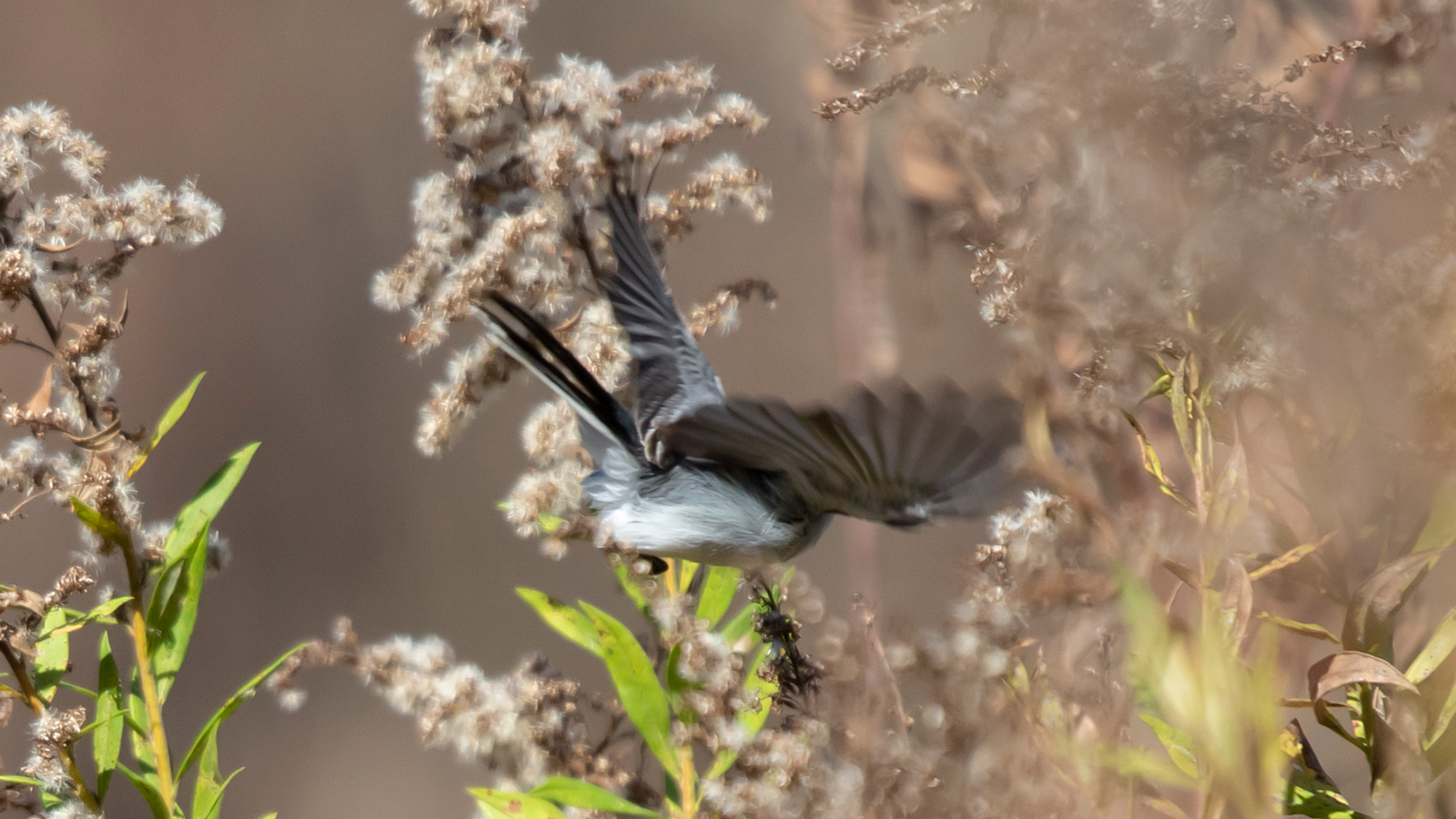
The white outer tail feathers are the ID mark that works at any distance where the bird is large enough to see. The tail itself is long for a four-inch bird, extending visibly beyond the wingtips when folded, and the black-and-white pattern shows clearly in flight and in the constant lateral twitching that characterizes the species. Viewed from below against a bright sky, the twitching tail flashes white with each motion. Viewed from the side in shade, the black center against the white outer feathers is visible even when other field marks are obscured by foliage.
The thin white eye ring gives the face a clean, wide-eyed expression that distinguishes gnatcatchers from the superficially similar kinglets. Kinglets carry bold wing bars and often show yellow or ruby crown patches. Gnatcatchers carry faint or absent wing bars, no crown patch, and the long tail that no kinglet approaches. The comparison is mostly settled by tail length before any face or wing mark becomes relevant.
Breeding males carry a thin black eyebrow stripe, a partial mask that extends from the bill base over the eye and fades toward the nape. This mark disappears or becomes less distinct in fall and winter. Females lack the black eyebrow entirely. Both sexes are identifiable by the tail at any time of year.
Advertisement
Diet and the Outer Canopy
The diet is almost entirely invertebrates, specifically the small ones that accumulate on the surfaces and undersides of leaves, in the crevices of bark at twig tips, and among the buds and leaf clusters at the outer edge of the canopy. Aphids, scale insects, leafhoppers, caterpillars in their earliest instars, mites, small beetles, and spiders make up the bulk of what blue-gray gnatcatchers eat. These prey items are tiny, numerous, and accessible only to a bird small enough to move through the outer twig layer without deflecting the substrate.
This is the gnatcatcher's ecological niche in its most specific form. A bird that weighs two-fifths of an ounce, moves constantly, and hovers to inspect leaf clusters is extracting food from a foraging zone that a warbler two or three times its size cannot access with the same efficiency. The twig tips that bend and flex under even a small bird's weight are stable enough for a gnatcatcher. The buds that a warbler would strip in one deliberate motion, the gnatcatcher examines individually, moving on before the branch has time to respond to her weight.
In winter, the diet shifts toward whatever is available in dormant-season vegetation: overwintering insect eggs, dormant scale insects and aphids clinging to bark, small spiders that remain active in mild weather, and the occasional small berry or seed when invertebrate prey becomes scarce during hard freezes. The dietary flexibility is modest by songbird standards. Gnatcatchers are committed insectivores that tolerate seeds as backup, not omnivores that happen to prefer insects. This commitment to invertebrate prey is why gnatcatchers stay in North Louisiana through winter instead of migrating: the region's mild winters maintain enough invertebrate activity in the canopy that the food base doesn't disappear the way it does in the northern states where the species breeds.
The relationship between canopy structure and gnatcatcher abundance is direct. Forests with dense outer canopy, trees with full crowns and complex branching at the twig level, hold more gnatcatchers than forests where the outer canopy is simplified by storm damage, logging, or pest pressure. This makes gnatcatcher presence a reliable indicator of canopy health in any North Louisiana forest — a forest that supports year-round gnatcatchers is a forest with the structural complexity needed to feed a small specialist through every month of the year.
The blue-gray gnatcatcher's presence in North Louisiana involves a seasonal nuance worth understanding. The species is a year-round bird in the region, but the composition of the population shifts. Breeding individuals, the birds that nest here in spring and summer, include individuals that winter further south and return in March. Through fall and winter, some North Louisiana birds remain while others move south, and wintering birds from further north may supplement the local population. The result is gnatcatcher presence in every month in good habitat across all 26 parishes, though numbers run lower in midwinter than in the breeding season.
This year-round presence distinguishes the blue-gray gnatcatcher from the other small-twig specialists that move through North Louisiana's forests. The kinglets are winter visitors only. The brown creeper is a winter visitor. The nuthatches are either year-round residents or winter visitors depending on species. The blue-gray gnatcatcher is present in July with the same tail-twitching energy she brings to December.
Spring arrival of migratory individuals begins in late February and early March, and the breeding population is in place by early April. Males establish territories and begin singing immediately on arrival, and nest construction follows within two to three weeks. By late April, most breeding pairs are incubating. The fall departure of breeding individuals begins in September and extends through October, with wintering birds already present by the time migrants depart. The year-round continuity is the product of these overlapping schedules and not a fixed resident population.
Advertisement
Breeding Biology
The blue-gray gnatcatcher's nest is one of the more architecturally impressive objects in North Louisiana's forest. It's a small, deep cup of plant fibers, plant down, and grass bound with spider silk and covered on the outside with lichen flakes pressed into the silk. Placed on a horizontal branch 10 to 60 feet up, it looks like a small lichen-covered knot on the branch, which is the point. The camouflage is effective enough that nests placed in plain sight go unnoticed by most observers, even when they know roughly where to look. Gnatcatcher nests sit in the open more often than almost any other small songbird nest in North Louisiana, relying entirely on their resemblance to a natural feature of the branch and not on concealment in vegetation.
Both sexes build the nest, taking about two weeks. Both incubate the four to five eggs for about 13 days. Both feed the nestlings, which fledge at 10 to 12 days. The family group stays together for several weeks after fledging, and a group of two adults with three or four begging young, all moving through the outer canopy with the characteristic tail-twitch, is one of the more entertaining spring foraging scenarios in North Louisiana's forests. The fledglings twitch their tails from their first day out of the nest, making them identifiable by behavior before their plumage finishes developing.
Pairs are monogamous within a breeding season but don't necessarily maintain the pair bond across years. Territory size in deciduous forest runs 1 to 5 acres, small enough that a single mature tree canopy in a suburban yard occasionally falls within a pair's foraging range. Nest predation is the primary cause of nest failure, with snakes and corvids accounting for most losses. Cowbirds parasitize gnatcatcher nests occasionally, though the nest's small interior and the cowbird's tendency to prefer larger host species makes parasitism less frequent than in some other small songbirds. A parasitized gnatcatcher nest is often visually obvious — a cowbird egg or chick is dramatically outsized relative to the nest itself, and the nest cup is too shallow to conceal it.
Declining Population
Blue-gray gnatcatcher populations across North America show a long-term stable to slightly increasing trend on Breeding Bird Survey routes, with the species listed as Least Concern by the IUCN. The range has expanded northward over the past several decades, with breeding populations now established in areas of southern Canada where the species was absent historically. North Louisiana populations appear stable, well-supported by the region's extensive forest cover and the year-round mild conditions that allow year-round insect availability.
The species' flexibility in habitat use, breeding in upland and bottomland forest, using suburban trees for nesting and foraging, tolerating forest fragments and park settings, makes it more resilient than many forest-interior specialists to the habitat fragmentation that has driven population declines in other small insectivores. Blue-gray gnatcatchers are among the birds that have benefited from the suburban tree canopy that has grown up across North Louisiana's developed areas over the past 50 years.
No specific conservation concerns target blue-gray gnatcatchers in North Louisiana. The general principle that maintaining forest cover and mature tree canopy supports the full guild of canopy insectivores applies, and gnatcatchers are among the species that respond positively to any increase in accessible outer-canopy foraging habitat, whether in forest, in parks, or in residential tree plantings.
Advertisement
Commonly Confused With
Ruby-Crowned Kinglet: The most common confusion during fall and winter, when kinglets and gnatcatchers move through the same trees. Kinglets are slightly smaller, show bold wing bars, and nervously flick their wings, not their tails. A ruby-crowned kinglet in motion looks anxious about its wings. A blue-gray gnatcatcher in motion looks anxious about its tail. Wing-flicking versus tail-twitching is the fastest separation. Kinglets also lack the long tail that extends beyond the wingtips on a perched gnatcatcher.
Golden-Crowned Kinglet: Similar confusion profile to ruby-crowned. Golden-crowned kinglets show a bold crown pattern (orange center stripe bordered by yellow, bordered by black in males; yellow center bordered by black in females) visible at any reasonable viewing distance. The crown pattern alone eliminates gnatcatcher. Golden-crowned kinglets also carry bolder wing bars and show the wing-flicking movement pattern instead of tail-twitching.
Blue-Headed Vireo: Superficially similar in blue-gray and white plumage, but the blue-headed vireo is notably larger, moves slowly through the canopy, and carries bold white spectacles instead of the gnatcatcher's thin eye ring. Vireos glean deliberately; gnatcatchers twitch constantly. No one who has seen both birds in motion confuses them more than once.
Where to Find Blue-Gray Gnatcatchers in North Louisiana
Every parish, every month, in any habitat with trees or tall shrubs. That's the practical summary. They're in suburban yards with mature trees. They're in forest edges and forest interiors. They're in bottomland hardwood and pine woodland. They're in the shrub layer of almost any developed park or semi-natural area with adequate tree cover. A birder who travels through North Louisiana without encountering a blue-gray gnatcatcher has either not spent time outdoors or not been paying attention to the outer canopy.
In winter, gnatcatchers travel with loose clusters of other small birds working the same trees, the tiny kinglets and the yellow-patched warblers that move through North Louisiana's forests from October through March. The flock moves through a section of forest, works it systematically, and moves on, with the gnatcatcher usually at or near the outer edge of the group, twitching through the terminal twigs while the kinglets work the bark and the warblers pick through the leaf clusters below. Finding the moving cluster and watching the outer canopy delivers gnatcatcher sightings for any patient observer.
In summer, any forested trail in North Louisiana turns up gnatcatchers in the canopy with enough time and scanning. Bottomland hardwood forests at D'Arbonne NWR, Upper Ouachita NWR, Black Bayou Lake NWR, and Tensas River NWR all hold breeding gnatcatchers. Kisatchie National Forest's pine-hardwood zones support them in mixed canopy. Urban parks with mature tree canopy, Kiroli Park in Monroe, Lincoln Parish Park in Ruston, and Walter B. Jacobs Memorial Nature Park in Shreveport, hold gnatcatchers year-round in the trees along accessible paths.
Accessibility
The blue-gray gnatcatcher's "spee" call is the detection cue that finds the bird before any visual effort begins. The thin, slightly nasal note repeats as the bird forages, arriving from the outer canopy at intervals of a few seconds and locating the bird's approximate position in the tree before any search of the branches begins. In suburban settings, the call arrives through open windows and off covered porches at ranges that bring the bird within view of anyone who steps toward it. In forested settings, the call cuts through the ambient sound of the canopy and identifies a bird-sized source of movement that would otherwise take minutes to locate visually.
For visitors who are blind or have low vision, the "spee" call is the complete gnatcatcher detection experience. It repeats at reliable intervals, tracks the bird's position as it moves through the canopy, and carries enough specificity to separate gnatcatcher from kinglet from warbler chip notes once the distinction is learned from recordings. A companion familiar with the call can confirm identification, describe the tail-twitching movement, and track the bird through the canopy while the listener follows acoustically.
For visitors using wheelchairs or with limited mobility, blue-gray gnatcatchers are among the most accessible birds in North Louisiana because the outer-canopy foraging habit keeps them visible from ground level without requiring any off-trail movement. Any accessible trail through forested or semi-forested habitat delivers gnatcatcher encounters. The trees along maintained park paths, the canopy over parking areas, and the shrubby edges of any developed natural site all hold gnatcatchers at ranges where the tail-twitch is visible from a seated position. In spring and fall, gnatcatchers occasionally drop to eye level in shrubs, and any accessible position at shrub edge delivers close-range views without binoculars.
For visitors with hearing limitations, the tail-twitch is the field mark to watch for specifically. No other small bird in North Louisiana moves through foliage with that specific rapid, side-to-side tail motion at that frequency. The movement is distinctive enough to identify from a distance where color and bill shape aren't yet visible. At close range the blue-gray back, white underparts, and white eye ring confirm the identification. The foraging movement is consistent and predictable enough that once a gnatcatcher is located, visual tracking is easier than with birds that sit still between movements and then flush unpredictably.
Any North Louisiana state park with tree cover holds gnatcatchers at the trail edge. No special timing, no specific habitat condition, and no particular expertise are needed. The tail is the tell, the call is the detection cue, and both are available every month of the year.
Advertisement
More Information
Cornell Lab of Ornithology, Blue-Gray Gnatcatcher (All About Birds): https://www.allaboutbirds.org/guide/Blue-gray_Gnatcatcher
Xeno-canto, Blue-Gray Gnatcatcher Vocalizations: https://xeno-canto.org/species/Polioptila-caerulea
eBird, Blue-Gray Gnatcatcher Louisiana Year-Round Records: https://ebird.org/species/buggna/US-LA
D'Arbonne National Wildlife Refuge: https://www.fws.gov/refuge/darbonne
Black Bayou Lake National Wildlife Refuge: https://www.fws.gov/refuge/black-bayou-lake
Frequently Asked Questions
How do I tell a blue-gray gnatcatcher from a kinglet? Tail versus wing movement. Gnatcatchers twitch their long tails constantly. Kinglets flick their wings nervously and frequently. A bird in the outer canopy whose tail is the most active part of the body is a gnatcatcher. A bird whose wings are the most active part is a kinglet. Both are small, both move constantly, and both frequent the same trees in winter, but the specific motion type separates them faster than any plumage mark.
Are blue-gray gnatcatchers common in North Louisiana? Common year-round across all 26 parishes in any habitat with trees or tall shrubs. The species is among the most frequently encountered small birds in North Louisiana's forests, parks, and suburban areas. In mixed winter flocks, the gnatcatcher is often the most active and most visible member, the one whose constant tail motion catches the eye before the plumage resolves at all. In breeding season, any forested trail in North Louisiana with a 30-minute investment in slow walking and upward canopy scanning will turn up gnatcatchers. The species does not require special conditions, special timing, or specialized habitat. It needs trees, and North Louisiana has trees everywhere.
What does the blue-gray gnatcatcher call sound like? A thin, slightly nasal "spee" or "pseeee," often repeated several times quickly. Higher-pitched than most warbler chip notes and with a faintly buzzy quality that distinguishes it. The call is shorter and less piercing than a kinglet's thin "tsee" and carries a slightly whiny character. Learning it from an audio recording before a field visit is the most efficient preparation — once the sound is familiar, gnatcatcher presence becomes obvious in any forested North Louisiana setting.
Do blue-gray gnatcatchers stay in North Louisiana in winter? Yes. The species is present in all 26 parishes year-round, though midwinter numbers are lower than the breeding season peak. Some breeding individuals move south in fall while wintering birds from further north supplement the population, resulting in year-round presence with changing individual composition. Any forested habitat in North Louisiana in January holds gnatcatchers.
What is the nest of a blue-gray gnatcatcher like? A deep, compact cup of plant fibers and spider silk with lichen flakes pressed into the outer surface for camouflage. It's placed on a horizontal branch, usually 10 to 60 feet up, and looks like a small lichen-covered bump on the branch. The camouflage is effective enough that nests in plain sight go unnoticed regularly. Both parents build it over about two weeks in April.
Why does the gnatcatcher twitch its tail? The function of the constant tail-twitching is not definitively established, but the leading hypotheses involve flushing insects from leaf surfaces and communicating social status to other birds. The motion disturbs invertebrates hiding on leaves, potentially driving prey into the open where the bird can catch them more easily. Some research suggests the tail motion also signals to other birds in the area, either as a territorial display or as a flock-coordination signal in mixed winter foraging groups. The persistence of the behavior across all contexts, foraging, resting, and traveling through the canopy, suggests it may carry multiple functions simultaneously. Whatever the explanation, the behavior is constant, species-specific, and more useful as an identification cue than the full scientific explanation of why the gnatcatcher does it. It twitches. You know what you're looking at. That's enough for a morning in the North Louisiana canopy.
Advertisement
Photo Gallery

Advertisement
Advertisement
Frequently Asked Questions
How do I tell a blue-gray gnatcatcher from a kinglet?
Tail versus wing movement. Gnatcatchers twitch their long tails constantly. Kinglets flick their wings nervously and frequently. A bird in the outer canopy whose tail is the most active part of the body is a gnatcatcher. A bird whose wings are the most active part is a kinglet. Both are small, both move constantly, and both frequent the same trees in winter, but the specific motion type separates them faster than any plumage mark.
Are blue-gray gnatcatchers common in North Louisiana?
Common year-round across all 26 parishes in any habitat with trees or tall shrubs. The species is among the most frequently encountered small birds in North Louisiana's forests, parks, and suburban areas. In mixed winter flocks, the gnatcatcher is often the most active and most visible member, the one whose constant tail motion catches the eye before the plumage resolves at all. In breeding season, any forested trail in North Louisiana with a 30-minute investment in slow walking and upward canopy scanning will turn up gnatcatchers. The species does not require special conditions, special timing, or specialized habitat. It needs trees, and North Louisiana has trees everywhere.
What does the blue-gray gnatcatcher call sound like?
A thin, slightly nasal "spee" or "pseeee," often repeated several times quickly. Higher-pitched than most warbler chip notes and with a faintly buzzy quality that distinguishes it. The call is shorter and less piercing than a kinglet's thin "tsee" and carries a slightly whiny character. Learning it from an audio recording before a field visit is the most efficient preparation — once the sound is familiar, gnatcatcher presence becomes obvious in any forested North Louisiana setting.
Do blue-gray gnatcatchers stay in North Louisiana in winter?
Yes. The species is present in all 26 parishes year-round, though midwinter numbers are lower than the breeding season peak. Some breeding individuals move south in fall while wintering birds from further north supplement the population, resulting in year-round presence with changing individual composition. Any forested habitat in North Louisiana in January holds gnatcatchers.
What is the nest of a blue-gray gnatcatcher like?
A deep, compact cup of plant fibers and spider silk with lichen flakes pressed into the outer surface for camouflage. It's placed on a horizontal branch, usually 10 to 60 feet up, and looks like a small lichen-covered bump on the branch. The camouflage is effective enough that nests in plain sight go unnoticed regularly. Both parents build it over about two weeks in April.
Why does the gnatcatcher twitch its tail?
The function of the constant tail-twitching is not definitively established, but the leading hypotheses involve flushing insects from leaf surfaces and communicating social status to other birds. The motion disturbs invertebrates hiding on leaves, potentially driving prey into the open where the bird can catch them more easily. Some research suggests the tail motion also signals to other birds in the area, either as a territorial display or as a flock-coordination signal in mixed winter foraging groups. The persistence of the behavior across all contexts, foraging, resting, and traveling through the canopy, suggests it may carry multiple functions simultaneously. Whatever the explanation, the behavior is constant, species-specific, and more useful as an identification cue than the full scientific explanation of why the gnatcatcher does it. It twitches. You know what you're looking at. That's enough for a morning in the North Louisiana canopy.