Advertisement
The barn swallow builds a nest out of mud. Not "mud reinforced with structural material." Not "mud as a component." Mud. The bird collects wet soil pellets one at a time, flies them to the nest site, and presses each one into place with her bill until the accumulated mud forms a cup strong enough to support eggs, nestlings, and two adults' worth of body heat for six weeks. The barn swallow (Hirundo rustica) figured out masonry before people did, has been practicing it for millions of years longer, and has never once hired a contractor.
The most widely distributed swallow on Earth. The barn swallow breeds on every continent except Antarctica and has colonized every region that offers flying insects and a vertical surface to stick a mud nest to. In North Louisiana, the bird breeds across every parish in the coverage area, anywhere that combines open foraging habitat with a structure that has an overhang. Barns work. Bridges work. Culverts work. Gas station awnings work. The eaves of your house work. If the surface sits vertical, has a roof above it, and faces open air, a barn swallow has probably evaluated it for nest potential. The bird has not submitted a building permit application for any of these locations.
What a Barn Swallow Looks Like
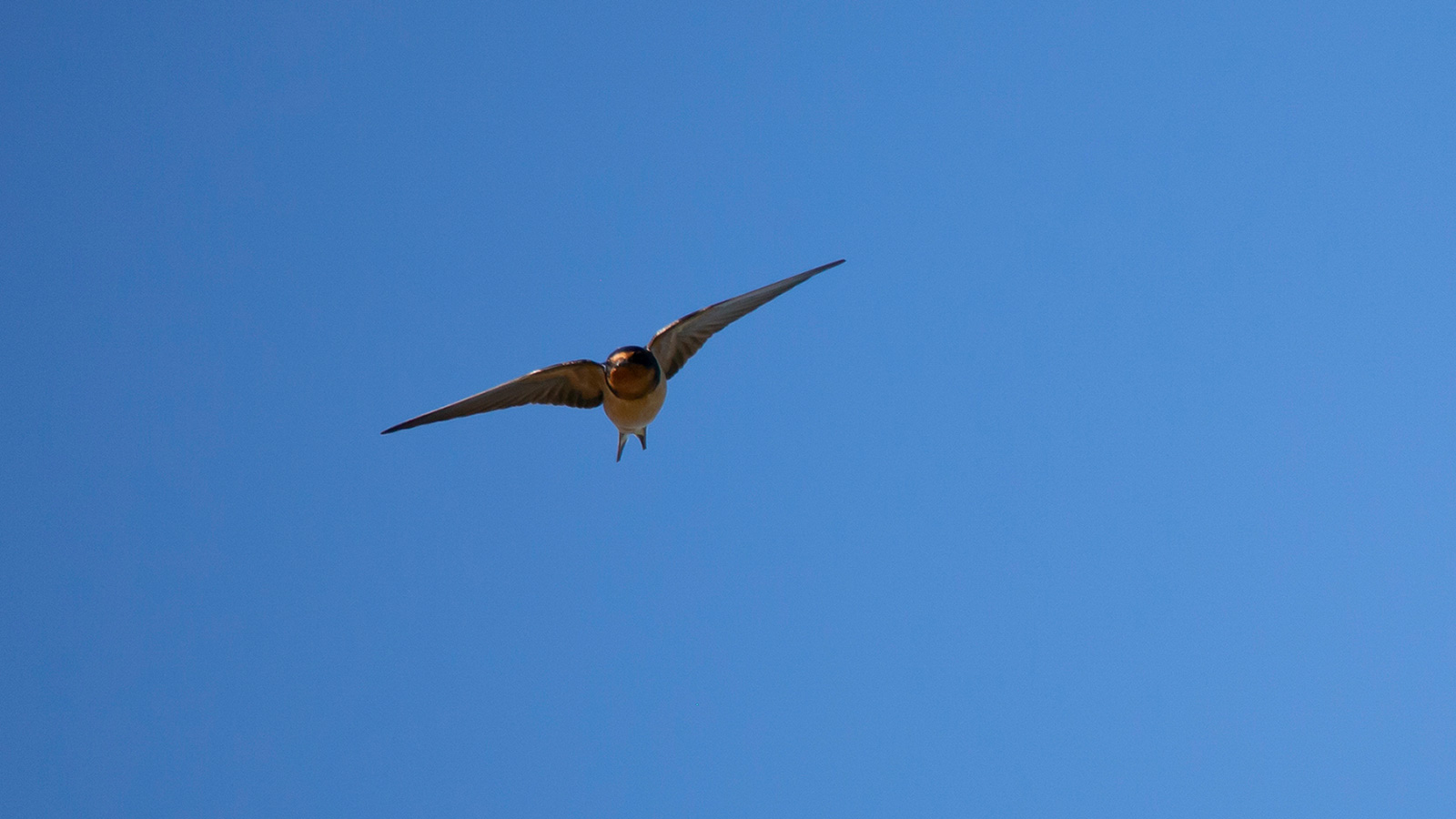
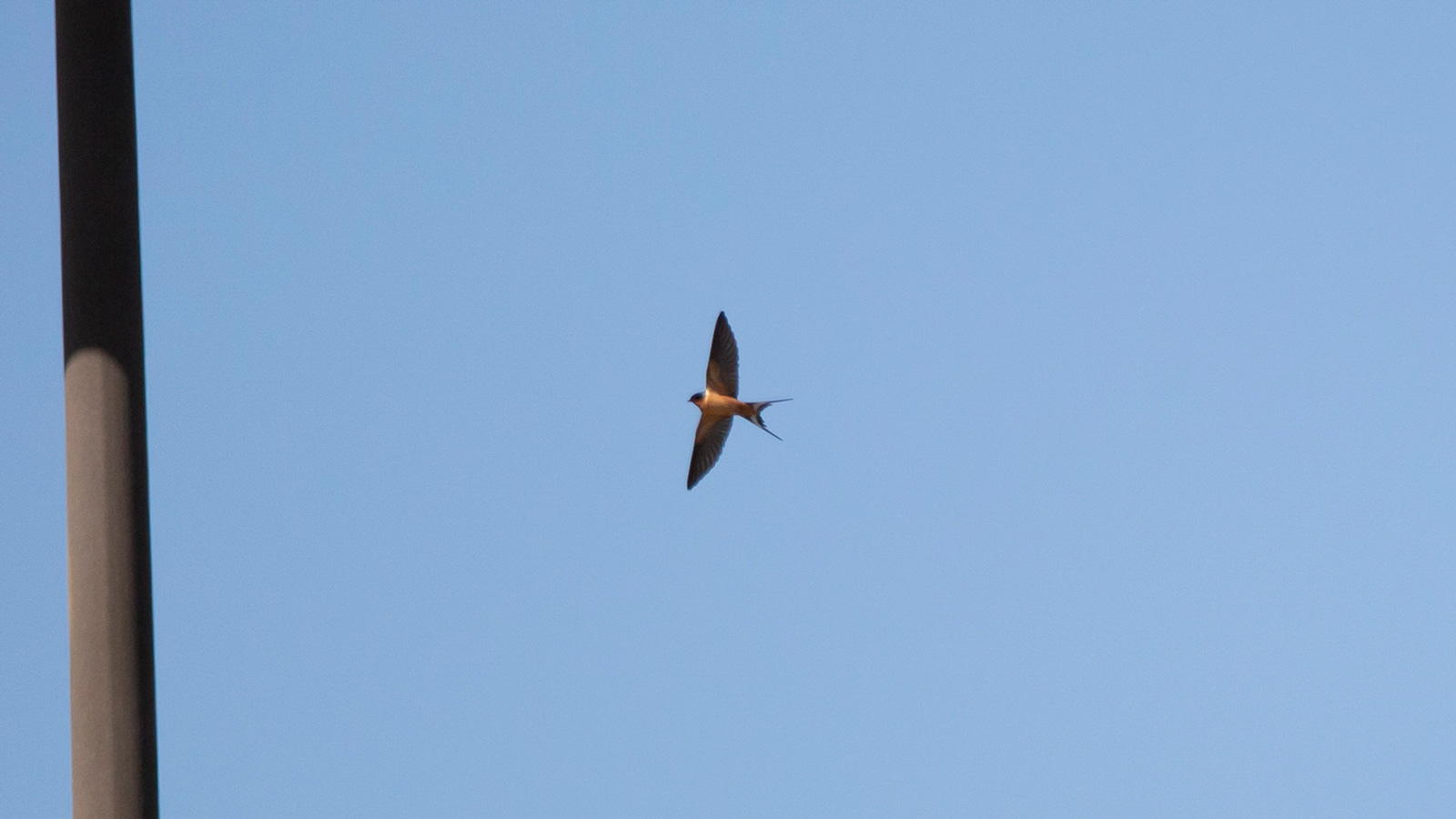
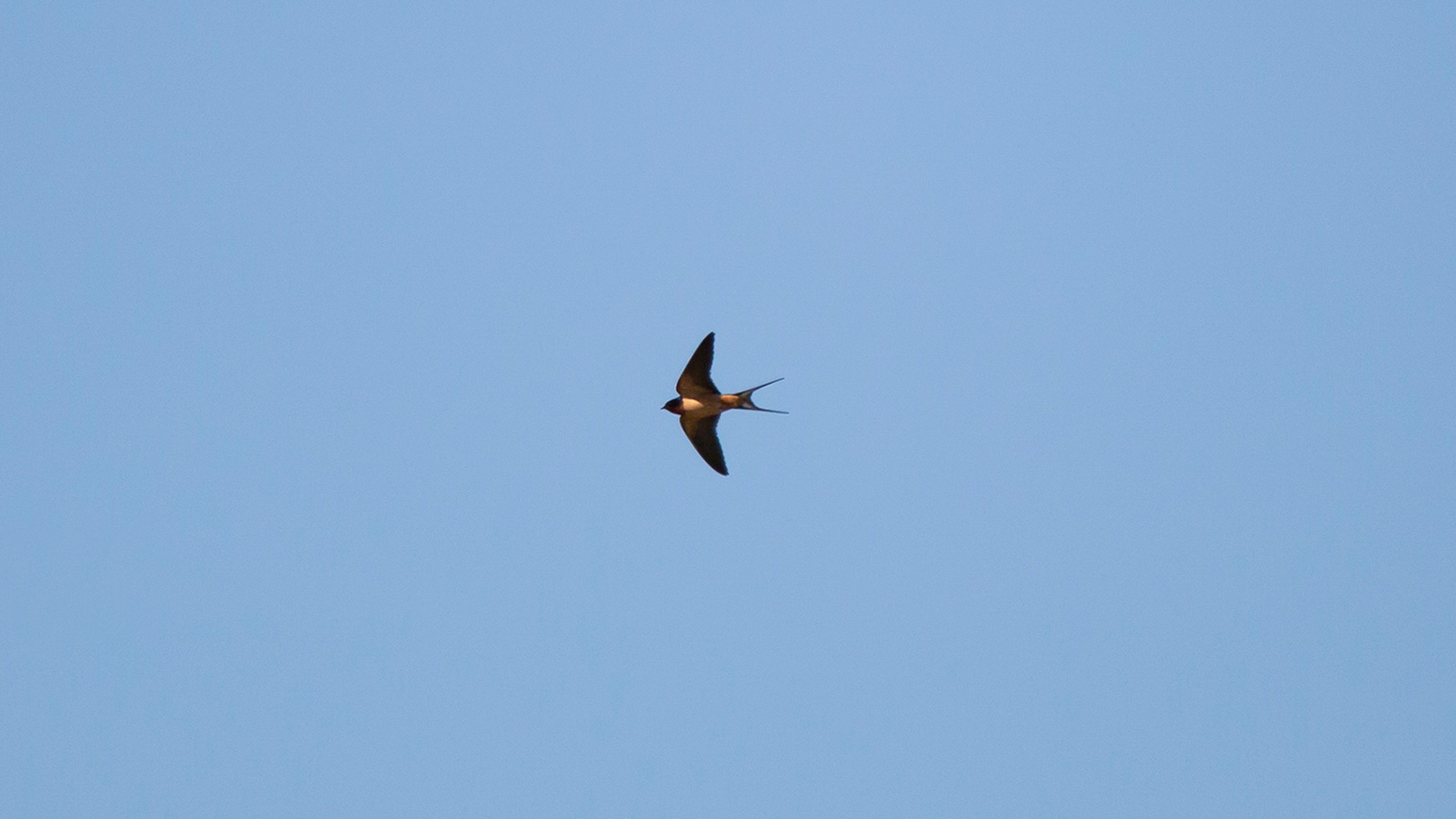
The barn swallow stands as the most recognizable swallow in North Louisiana. Dark steel-blue above, orange-buff below, with a deeply forked tail that streams behind the bird in flight and identifies it from a hundred yards. The rusty-orange forehead and throat give the face a warmth that the steel-blue back doesn't suggest, and the combination of warm face and cool back creates a bird that looks put together in a way that other swallows haven't managed. The barn swallow got dressed for the evening. The tree swallow got dressed for the office. The bank swallow didn't get dressed.
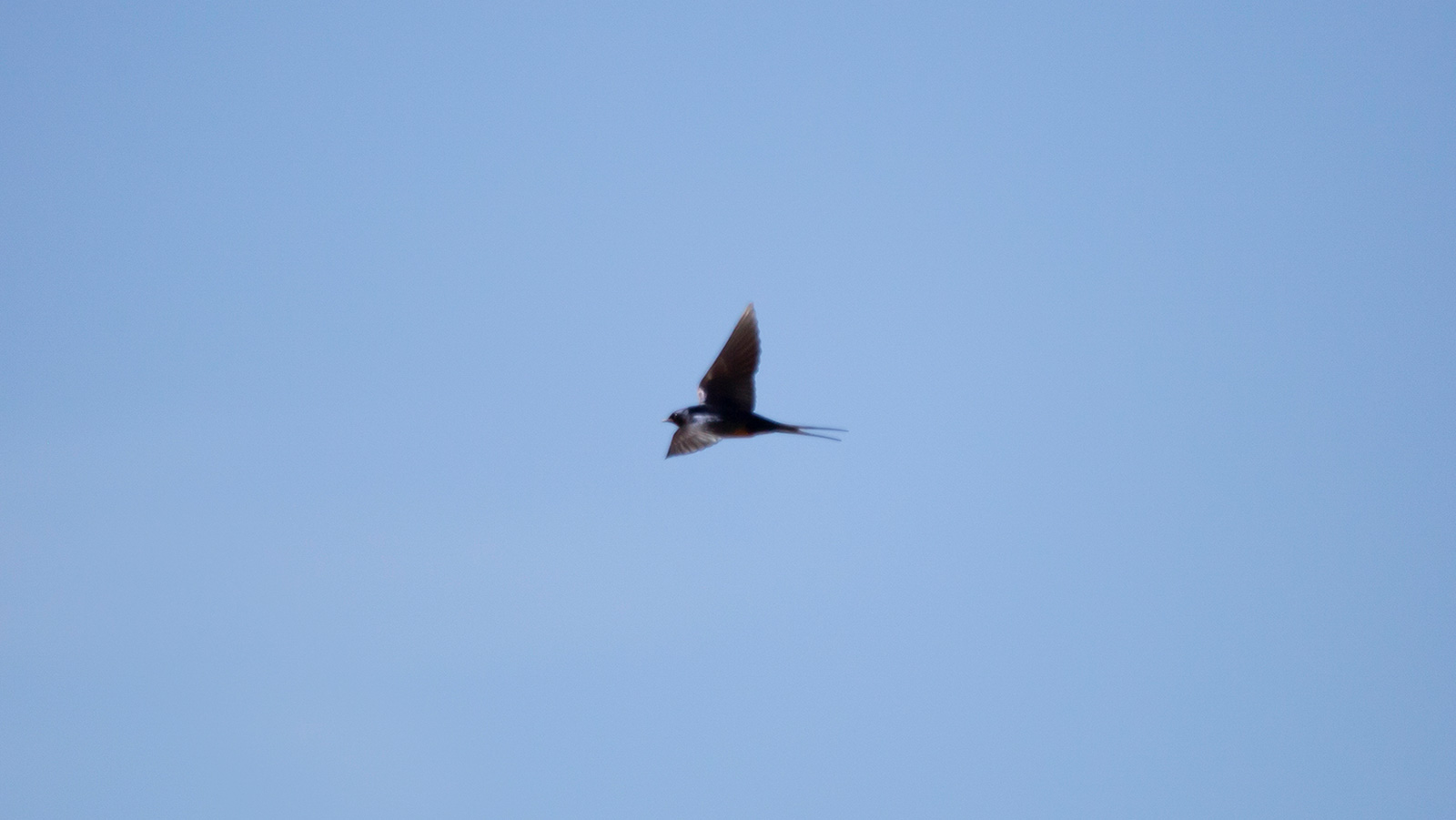
The tail fork deepens with age and condition. Adult males with the longest tail streamers attract females more successfully, which means the tail length works as a quality signal the same way the yellowthroat's mask size works. Longer tail, better male. The female reads the tail and draws conclusions. The conclusions have shaped the species' tail length over evolutionary time, which explains why the barn swallow has the most deeply forked tail of any North American swallow and nobody else comes close.
Females wear duller versions of the same pattern: shorter tail streamers, paler underparts, less saturated colors. Young birds in their first year show even shorter tails and paler plumage. The bird gets flashier with age, which means the oldest, most experienced birds also wear the best outfits. Youth and beauty have parted ways. Experience and beauty have signed a long-term contract.
Advertisement
The Sounds a Barn Swallow Makes
The song comes through as a rapid, twittering, liquid series of notes delivered in flight or from a perch near the nest. The quality comes through pleasant and busy, with a conversational tone that sounds like the bird has a lot to report and limited time to report it. The song lacks the structured phrasing of a vireo or the clear melody of a thrush. The barn swallow sings the way someone recaps their entire day in thirty seconds while walking through the door. Everything happened. Everything gets mentioned. Nothing gets dwelt on.
The alarm call, a sharp "chit" or rapid "chit-chit-chit," shows up when predators approach the nest or when something moves through the colony airspace that shouldn't. A barn swallow colony defending nest sites from a cat, a snake, or a curious human delivers the alarm call while dive-bombing the intruder at speeds that suggest the bird has strong feelings about personal space. The dive comes within inches. The bird does not intend to make contact. The bird intends to make a point. The point gets made.
What a Barn Swallow Eats
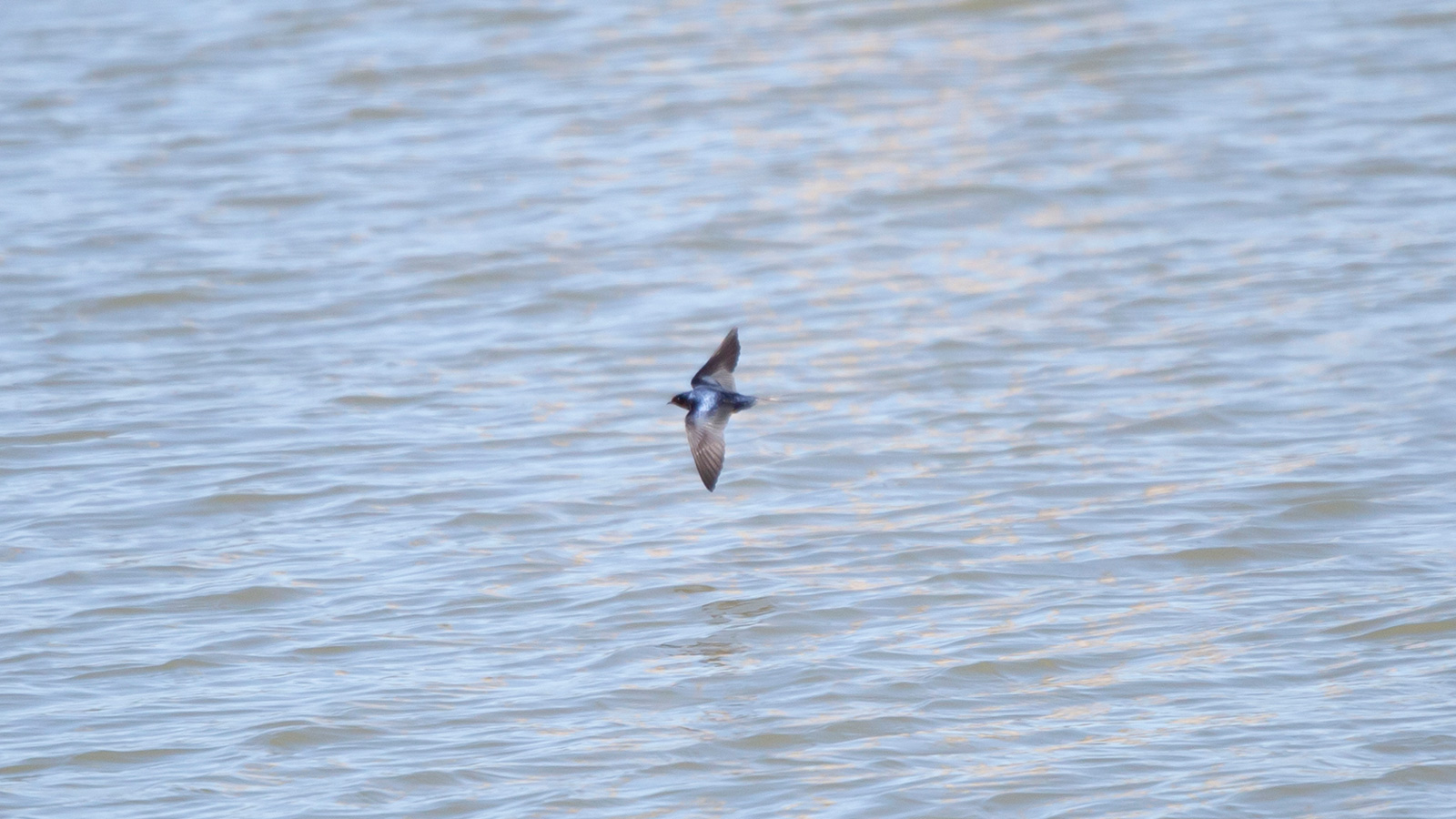
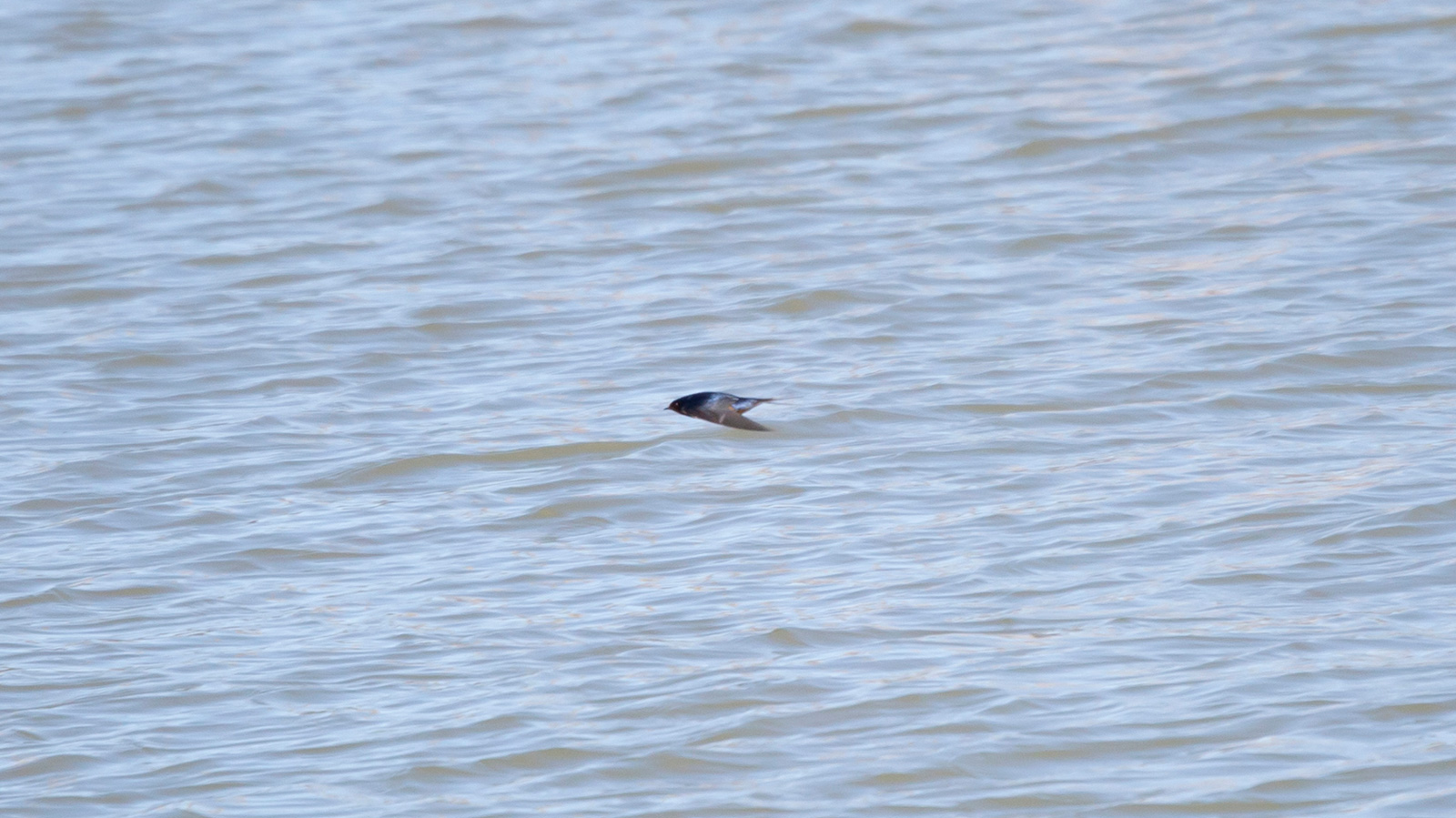
Flying insects caught exclusively on the wing. Flies, beetles, moths, wasps, flying ants, mosquitoes, and whatever else occupies the air column between ground level and about thirty feet up. The barn swallow hunts lower than the purple martin, spending most of the feeding flight within twenty feet of the ground, which puts it in the zone where most agricultural and residential flying insects operate. A barn swallow sweeping a freshly mowed field takes flies and beetles at a rate that turns the bird into an assembly line with feathers.
The flight style during feeding combines long, sweeping glides with sudden direction changes, wing-over turns, and banking maneuvers that exploit the deeply forked tail as a rudder. The tail gives the bird agility that other swallows can't touch. A barn swallow chasing a fly through a barnyard makes turns that would ground a less maneuverable bird. The tail pays for itself in caught insects per hour, and the barn swallow has never cared about any other metric.
Rain and cold weather suppress insect flight, which suppresses barn swallow feeding, which can kill nestlings during extended cold snaps. A week of cold rain during peak nestling season can starve entire broods. The barn swallow has no backup food source. The barn swallow eats flying insects or the barn swallow does not eat. The dietary inflexibility that works perfectly in warm weather becomes a liability the moment the weather turns, and the weather in North Louisiana turns often enough that most barn swallow pairs factor in the possibility of losing a brood to cold by building the capacity to re-nest.
What a Barn Swallow's Life Actually Looks Like
Males arrive on breeding territory in late March to early April, often returning to the exact structure where they nested the previous year. Site fidelity in barn swallows borders on obsessive: a bird that nested under your carport last year will attempt to nest under your carport again this year, and the bird's attachment to the specific site exceeds most rental leases in commitment and duration.
The nest takes about a week to build. Both parents collect mud pellets from puddles, pond edges, and anywhere else wet soil sits exposed, and carry them one at a time to the nest site. A single nest contains over a thousand individual mud pellets, each one collected and placed separately. The math on this: over a thousand round trips between the mud source and the nest, each trip carrying one pellet, over roughly seven days. The bird has no wheelbarrow. The bird has no bucket. The bird has a bill and a work ethic that puts the rest of the animal kingdom on notice.
She lays four to five eggs, white with brown speckles. Both parents sit on them for about fifteen days. Both parents feed the nestlings for about twenty days. The babies leave the nest but return to it for several nights afterward, which creates a brief period where the nest cup contains more bird than it was designed for and the structural engineering gets tested. The mud stands. The mud has always stood. The barn swallow's faith in her own construction has been validated over millions of years of nest-building, and the nest has not yet filed a complaint about the overcrowding.
Two broods per season in North Louisiana, sometimes three in good years. The second nest often goes on top of the first nest's remains, adding a new mud layer to last year's foundation. A barn swallow nest site used for multiple years accumulates a layered history of mud construction that amounts to a cross-section of the site's breeding history. The geology of a barn swallow nest tells a story. The story says "birds have been nesting here for years and nobody has cleaned the rafter."
Brown-headed cowbirds parasitize barn swallow nests at low rates, partly because the nest location inside structures makes it harder for cowbirds to access and partly because the barn swallow's semi-colonial nesting behavior means adult birds around the colony detect intruders quickly.
Advertisement
What Gets Confused With a Barn Swallow
The cliff swallow shares the mud-nest-on-a-structure habit and the general "dark swallow at a bridge" impression. The cliff swallow wears a pale, buffy rump patch and a squared tail. The barn swallow wears a dark rump and a deeply forked tail. In flight, the tail shape separates them at any distance. On the nest, the nest shape separates them: barn swallows build open cups, cliff swallows build enclosed gourds with a small entrance hole. The architecture identifies the species before the bird does.
Tree swallows share the dark-above, light-below pattern but lack the orange face, the deeply forked tail, and the barn swallow's preference for nesting on structures. A tree swallow at a nest box and a barn swallow under a bridge overlap in nothing except both being swallows.
Purple martins overlap in habitat at colony sites but the size difference settles the ID immediately. The martin dwarfs the barn swallow. Both birds in the same airspace occupy different weight classes entirely.
Predators
Black rat snakes climb into barns, under bridges, and into any structure that contains a barn swallow nest. A snake that reaches the nest can eat every egg and nestling in the cup in minutes. The nest's location on vertical surfaces under overhangs stops nothing that climbs that can navigate vertical surfaces under overhangs. The barn swallow built the nest where the snake can reach it and has not relocated.
Cooper's hawks and sharp-shinned hawks take adult barn swallows in flight. The barn swallow's agility makes it a difficult target, and most hawk attempts at barn swallows in the open result in misses. The success rate climbs near structures where the swallow's flight path gets constrained by walls, beams, and other obstacles that limit evasive maneuvers. A Cooper's hawk that has learned to hunt barn swallows at a barn doorway has figured out the geometry. The barn swallow has not changed the flight path.
Cats take barn swallows at low-nesting sites. A nest under a carport or porch awning at eight feet puts the bird within jumping range of a determined cat. The nest at that height also puts the fledglings within cat range during the critical first flights, when newly volant birds haven't yet developed the aerial skill that will protect them for the rest of their lives. The first flight from the nest amounts to the most dangerous minute of a barn swallow's life. The cat knows this. The cat has been watching the nest for three weeks.
Barn Swallows and Humans
The barn swallow chose human structures as nest sites so thoroughly that the species' common name references the structure rather than the bird's natural history. "Barn swallow." The bird defined herself by the building. Before barns existed, barn swallows nested on cliff faces, cave mouths, and rocky overhangs. The shift to human structures happened as those structures spread across the landscape, and the barn swallow recognized that a barn offered everything a cliff face offered plus better weather protection and a reliable source of flies from the livestock inside. The barn improved on the cliff. The bird noticed.
The arrangement creates problems. Barn swallow nests on porches, carports, and building entries deposit droppings directly below the nest, which annoys homeowners who appreciate the bird in theory and the droppings not at all. A shelf or board placed below the nest catches droppings. This solution has been explained to homeowners for decades. Many homeowners prefer to knock the nest down, which violates the Migratory Bird Treaty Act and accomplishes nothing because the bird will rebuild in the same spot within a week. The bird chose that spot. The bird will continue to choose that spot. The droppings board costs less than the fine.
Barn swallows have declined across North America over the past several decades. Fewer insects flying. Fewer open barns standing. The sealed metal buildings that replaced the old wooden barns have no entry points, and the flying insect crash that has hit every aerial insectivore has hit the barn swallow too. A barn swallow colony that nested in an open cattle barn for twenty years loses its site when the barn gets replaced by a sealed metal building. The new building has no access points. The barn swallow has no legal recourse. The barn swallow has no options beyond finding another open structure, and the number of open structures decreases every year.
Advertisement
Where to Find Barn Swallows in North Louisiana
Every parish. Every bridge, culvert, barn, open carport, and covered structure near open foraging habitat. The barn swallow nests in closer proximity to human daily life than almost any other wild bird in the coverage area. A gas station canopy, a church breezeway, a covered boat dock, a highway bridge: all of these carry barn swallow nests during breeding season.
You won't have to try during breeding season, April through August. The birds forage in open air near the nest site, swooping low over mowed fields, parking lots, pond surfaces, and any open area that supports flying insects. The deeply forked tail and the low, sweeping flight pattern identify the species from moving vehicles on any road in the coverage area.
Fall migration moves barn swallows south in September and October. The birds gather on power lines and fences near nesting sites in late summer, and the pre-migration wire-sitting creates the classic "swallows on a wire" image that has appeared on more calendars, postcards, and motivational posters than any other bird behavior in North American photography.
More Information
The Cornell Lab of Ornithology's All About Birds page covers barn swallow range maps, song recordings, and the species' global distribution across six continents. The Sibley Guide to Birds covers the barn swallow alongside the other North American swallows with tail shape and plumage comparisons that help sort the aerial identification challenge.
For the population decline, published research on aerial insectivore trends across North America documents the barn swallow's trajectory alongside similar declines in chimney swifts, common nighthawks, and other species that depend on flying insects caught on the wing.
Experiencing Barn Swallows: Accessibility Notes
The twittering song and sharp "chit" alarm call arrive from anywhere near an active nest site, typically under a structure overhang or bridge. The song carries a busy, conversational quality: rapid, liquid, and continuous. The alarm call cuts sharper and shows up whenever anything approaches the nest, which during breeding season means the alarm call shows up often. Both sounds come from birds in flight or perched on wires, beams, and ledges near the nest, placing the sound source at consistent heights between eight and twenty feet.
From a car on any bridge, at any gas station, or near any barn or open structure in the coverage area, barn swallows forage in visible airspace during breeding season. The low flight path, usually below twenty feet, keeps the birds within easy viewing range from ground level or vehicle level. The deeply forked tail identifies the species in flight from any angle. The foraging flight pattern, long sweeping passes with sudden direction changes, gives the bird a distinctive movement signature that separates it from every other swallow in the coverage area by motion alone.
Meta Title: Barn Swallow in North Louisiana: The Bird That Taught Herself Architecture Meta Description: Barn swallows build mud nests under bridges, barns, and carports across every North Louisiana parish, catching flying insects on the wing with the most deeply forked tail in the swallow family. Focus Keyphrase: barn swallow North Louisiana Secondary Keywords: barn swallow nest, Hirundo rustica Louisiana, barn swallow identification, North Louisiana swallows, barn swallow mud nest, barn swallow tail, barn swallow bridge, barn swallow decline, barn swallow sounds, North Louisiana aerial insectivore OG Description: The barn swallow figured out masonry before people did, builds nests from a thousand individual mud pellets, and catches flying insects with a tail that works as a rudder. Full field guide with sounds, diet, and where to find them. Slug: barn-swallow-north-louisiana
Advertisement
Photo Gallery

Advertisement
Accessibility
## Experiencing Barn Swallows: Accessibility Notes
The twittering song and sharp "chit" alarm call arrive from anywhere near an active nest site, typically under a structure overhang or bridge. The song carries a busy, conversational quality: rapid, liquid, and continuous. The alarm call cuts sharper and shows up whenever anything approaches the nest, which during breeding season means the alarm call shows up often. Both sounds come from birds in flight or perched on wires, beams, and ledges near the nest, placing the sound source at consistent heights between eight and twenty feet.
From a car on any bridge, at any gas station, or near any barn or open structure in the coverage area, barn swallows forage in visible airspace during breeding season. The low flight path, usually below twenty feet, keeps the birds within easy viewing range from ground level or vehicle level. The deeply forked tail identifies the species in flight from any angle. The foraging flight pattern, long sweeping passes with sudden direction changes, gives the bird a distinctive movement signature that separates it from every other swallow in the coverage area by motion alone.
Meta Title: Barn Swallow in North Louisiana: The Bird That Taught Herself Architecture Meta Description: Barn swallows build mud nests under bridges, barns, and carports across every North Louisiana parish, catching flying insects on the wing with the most deeply forked tail in the swallow family. Focus Keyphrase: barn swallow North Louisiana Secondary Keywords: barn swallow nest, Hirundo rustica Louisiana, barn swallow identification, North Louisiana swallows, barn swallow mud nest, barn swallow tail, barn swallow bridge, barn swallow decline, barn swallow sounds, North Louisiana aerial insectivore OG Description: The barn swallow figured out masonry before people did, builds nests from a thousand individual mud pellets, and catches flying insects with a tail that works as a rudder. Full field guide with sounds, diet, and where to find them. Slug: barn-swallow-north-louisiana
Advertisement