Advertisement
The bank swallow weighs half an ounce and digs a horizontal tunnel into a dirt bank using nothing but her feet and her bill. The tunnel extends two to three feet into the bank, ending in a small chamber where the bird lays eggs on a bed of grass and feathers. The bank swallow (Riparia riparia) looked at a vertical wall of exposed soil and saw a housing opportunity. Every other swallow in North Louisiana builds a nest on a surface or inside a cavity someone else made. The bank swallow excavates her own. The bird has no tools. The bird has feet the size of pencil erasers. The bird digs a burrow that would take a human with a trowel the better part of an afternoon.
The bank swallow breeds in colonies along eroded riverbanks, sand and gravel quarries, road cuts, and any other vertical exposure of soft soil in the coverage area. The colonies show up where the geology cooperates. A stretch of river that has eroded a steep, sandy bank in the right soil type can support dozens to hundreds of nesting pairs. A stretch of river with clay banks, rock faces, or gentle slopes supports none. The bird needs a specific kind of dirt in a specific orientation, and the bird accepts no substitutes. The bank swallow has standards about dirt. The bank swallow will not compromise on dirt.
What a Bank Swallow Looks Like
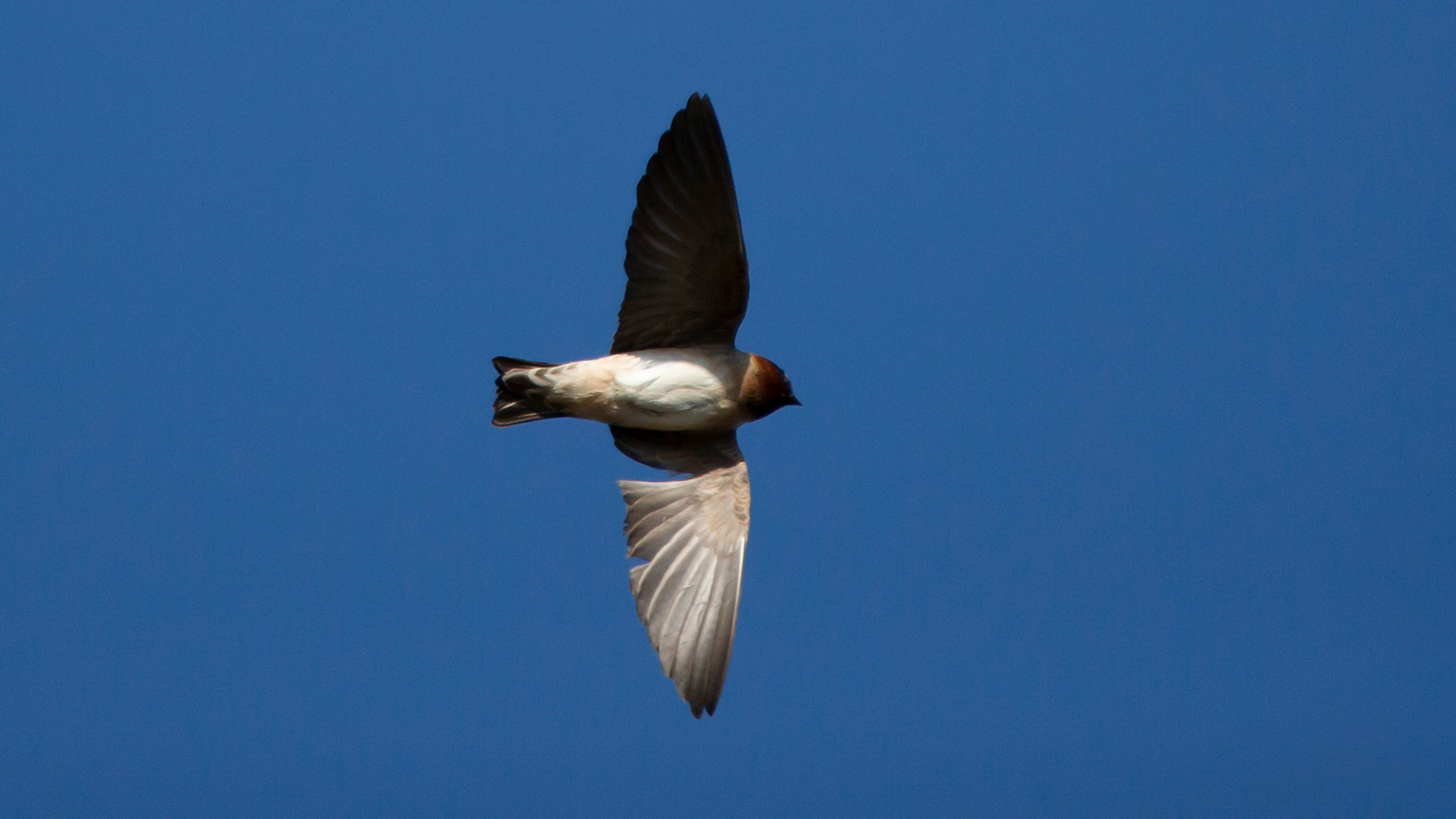
The bank swallow weighs in as the smallest swallow in North America. Brown above, white below, with a distinctive brown breast band that cuts across the white chest and identifies the species at close range. The breast band does the work. No other North Louisiana swallow wears a clean brown band across a white chest. The northern rough-winged swallow shares the "brown swallow" general impression but wears a smudgy brownish wash across the throat instead of a clean band. The band versus the wash separates the two species at any distance where the chest pattern registers.
The wings come in long and pointed, the tail slightly forked but not deeply. The overall impression in flight: a small, quick, brown-and-white swallow that moves with a fluttery, erratic flight style that looks less controlled than the barn swallow's sweeping glides. The bank swallow has somewhere to be and hasn't fully committed to the route. The wings beat faster than the barn swallow's. The flight path changes direction more often. The bird covers the same air with more effort and less apparent grace, which has never bothered the bank swallow because the bank swallow has been catching insects this way for longer than grace has been a criterion.
Males and females look identical in the field. Young birds show pale feather edges that create a slightly scalloped look on the back, but the breast band shows up from the start. The field mark arrives factory-installed.
Advertisement
The Sounds a Bank Swallow Makes
The call: a dry, buzzy, rattling "brrt" that carries a mechanical quality. The sound lacks any musical aspiration. The barn swallow twitters pleasantly. The purple martin gurgles richly. The bank swallow buzzes like a small electrical component with a loose connection. The call shows up in flight, at the colony, during feeding, and essentially whenever the bird opens her mouth. The colony soundscape at an active bank swallow site amounts to dozens or hundreds of these dry buzzes layered together, creating a rattling hum that carries from the bank face across the water.
No real song exists. The bank swallow communicates through variations in the buzz: longer buzzes for alarm, shorter buzzes for contact, rapid buzzes during chasing. The vocal range stretches from buzz to longer buzz. The bird has not diversified the portfolio. The bird does not appear concerned about the portfolio's lack of diversification.
What a Bank Swallow Eats
Flying insects caught in aerial pursuit. Flies, midges, mosquitoes, small beetles, and whatever else occupies the air column near the colony site. Bank swallows feed in flocks, often over water, swooping and circling in loose groups that chase the insect concentrations near rivers, lakes, and ponds. The feeding flight stays low, usually within twenty feet of the water surface, which puts the bird in the zone where aquatic insect hatches concentrate.
The connection to water extends beyond the colony site's riverbank location. Bank swallows preferentially feed over water throughout their time in the coverage area, which means the bird's entire life during breeding season takes place within a few hundred yards of water. The bank sits on water. The nest sits in the bank. The food flies over the water. The bird has organized her entire existence around a single landscape feature and has not branched out. Diversification has not appealed to the bank swallow in any category.
What a Bank Swallow's Life Actually Looks Like
Males arrive on colony sites in early to mid-April and immediately start excavating burrows. The digging takes three to five days. The bird uses her feet to scratch soil loose from the tunnel face and her bill to pry out larger chunks, backing out of the tunnel repeatedly to kick loosened material out the entrance. The tunnel extends about two to three feet into the bank, angled slightly upward to prevent rainwater from pooling in the nest chamber. The engineering anticipates drainage. The bird did not study engineering. The bird studied dirt.
Colony site selection depends entirely on soil type and bank angle. The soil needs to stay cohesive enough to support a tunnel without collapsing but soft enough to dig with a bill that weighs less than a paper clip. Sandy loam works. Pure sand collapses. Clay resists excavation. The sweet spot between "too soft" and "too hard" limits available colony sites to specific banks along specific waterways, which explains why bank swallow colonies cluster at particular locations and skip miles of apparently similar riverbank. The bird tested the dirt. The dirt at those other sites failed the test.
She lays four to six eggs on a grass and feather lining at the back of the tunnel. Both parents sit on them for about fourteen days. Both parents feed the nestlings for about twenty days. The babies emerge from the tunnel entrance and take their first flight directly from the bank face, which means the first flight covers the distance from the tunnel mouth to the nearest airspace without any intermediate perch. The baby launches from a hole in a dirt wall and either flies or doesn't. The bank does not offer a practice session.
Two broods per season in some years, though the short North Louisiana nesting window and the time investment in burrow excavation make second broods less common than in the barn swallow. The bank swallow has spent five days digging a tunnel. The bank swallow will use the tunnel for one brood in most years. The cost-per-use ratio on bank swallow real estate development would not survive a financial audit.
Colony turnover happens fast. A riverbank that supported a colony one year may erode, collapse, or slump before the next breeding season, eliminating the colony site entirely. New banks exposed by flooding or construction create new colony opportunities. The bank swallow's relationship with her real estate operates on a timeline that would give a human homeowner anxiety. The house might not exist next year. The bird will dig another one.
Advertisement
What Gets Confused With a Bank Swallow
The northern rough-winged swallow causes the most confusion because both species wear brown-and-white plumage and both associate with banks and waterways. The breast band separates them: the bank swallow wears a clean brown band across the white chest. The rough-winged swallow wears a dingy brownish wash on the throat that fades gradually into the belly without any clean edge. Band versus wash. Clean line versus smudge. The distinction takes one good look at the chest.
Juvenile tree swallows in fall can show brownish upperparts and a pale breast band that briefly mimics the bank swallow pattern. The tree swallow comes in larger, with a broader body and a different flight style. Context helps: a brown-banded swallow at a riverbank colony in May sits squarely in bank swallow territory. A brown-banded swallow over a suburban pond in September might need a closer look.
Predators
Bank collapses kill more bank swallows than any predator. A section of riverbank that slumps or collapses during the nesting period buries every active nest in that section. The bird chose her nest site based on soil quality. The soil quality changed because the river undermined the base. The bird had no warning and no defense. Bank collapse events can eliminate dozens of nests simultaneously and account for more nest failure than any predator at most colony sites.
Snakes enter burrows and eat eggs and nestlings. A rat snake or racer that discovers the entrance to a bank swallow tunnel has found a tube that leads directly to food, and the bird's investment in tunnel engineering does nothing against a predator shaped exactly to fit the tunnel. The snake fits. The snake enters. The snake eats.
American kestrels and merlins take adult bank swallows in flight near colonies. The colony's mass-departure response to a raptor follows the same logic as the cliff swallow's: too many birds in the air at once for the predator to target efficiently. The individual bank swallow's defense strategy comes down to being one of many. The strategy fails for whichever individual the hawk selects and works for every other individual in the colony. The math favors the group. The math has never favored the individual who gets caught.
Bank Swallows and Humans
Sand and gravel quarries create artificial bank swallow habitat that the species colonizes readily. A working quarry with an exposed face of suitable soil attracts bank swallows within the first breeding season after excavation. The quarry didn't intend to build bird housing. The bird didn't wait for an invitation. The arrangement benefits the bird and costs the quarry nothing unless the quarry needs to work the face that the birds have colonized, at which point the Migratory Bird Treaty Act enters the conversation and the quarry's schedule gets adjusted.
River channelization and bank stabilization projects destroy bank swallow habitat by replacing the eroded, vertical, soft-soil banks the bird needs with riprap, concrete, or graded slopes that support nothing the bird can dig into. A stabilized riverbank solves the erosion problem and eliminates the bank swallow simultaneously. The two goals conflict directly, and the bank swallow has lost that conflict along most of the major rivers in the coverage area. The bird persists at sites where natural erosion still exposes suitable banks, at quarries, and at road cuts that maintain the right soil exposure.
Bank swallows have declined across North America. The aerial insectivore crash hit them, and habitat loss at colony sites made it worse. The bank swallow needs a resource that human engineering specifically targets for elimination: eroding riverbanks. The conservation situation amounts to asking people to leave banks alone, which contradicts every flood control, navigation, and property protection interest along every waterway in the coverage area. The bird needs erosion. The human fights erosion. The conflict has no obvious resolution.
Advertisement
Where to Find Bank Swallows in North Louisiana
Eroded riverbanks, sand and gravel quarries, and road cuts with exposed soft-soil faces along waterways in the coverage area all carry colonies. The Red River, Ouachita River, and their tributaries carry bank swallow colonies at sites where natural erosion maintains suitable banks. Colony locations shift as banks erode, collapse, and reform, which means last year's colony site may not work this year and a new bank exposed by winter flooding may support a new colony by May.
Quarries in the coverage area with active or recently exposed sand and gravel faces can support colonies. Road cuts along highways near waterways occasionally attract nesting pairs if the soil type and exposure angle cooperate.
Finding an active colony takes no skill during breeding season. The birds stream in and out of the tunnel entrances continuously, and the concentration of flight activity at a specific section of bank makes the colony visible from hundreds of feet. The dry buzzing calls carry across the water and announce the colony's location to anyone within earshot of the river.
More Information
The Cornell Lab of Ornithology's All About Birds page covers bank swallow range maps, call recordings, and the species' burrow-nesting ecology. The Sibley Guide to Birds covers the bank swallow alongside the northern rough-winged swallow with breast-pattern comparisons that clarify the band-versus-wash distinction.
For colony-site ecology, published research on bank swallow soil selection, burrow engineering, and colony-site turnover documents the specific conditions the species needs and the rate at which those conditions appear and disappear along natural waterways. The research explains why the bird breeds at this specific bank and not the apparently identical one half a mile upstream.
Experiencing Bank Swallows: Accessibility Notes
The colony sound arrives as a continuous dry buzzing from the bank face, audible from across the river at active colony sites. The individual "brrt" calls layer together into a rattling hum that carries over water and identifies the colony's location before any visual contact with the birds. The sound quality differs from every other swallow in the coverage area: drier, buzzier, and more mechanical than the barn swallow's twitter or the purple martin's gurgle.
From a car or accessible position along river roads in the coverage area, active colonies can be detected by the concentration of small swallows streaming in and out of a specific section of bank. The flight activity at the colony face stays constant during breeding season, with birds departing and arriving in a continuous flow that marks the colony visually from considerable distance. The breast band, the primary field mark, shows clearly on birds perched at tunnel entrances and becomes the confirmation mark once the colony's location has been established by sound and flight pattern.
Meta Title: Bank Swallow in North Louisiana: The Bird That Digs Her Own Apartment Meta Description: Bank swallows excavate horizontal burrows into eroded riverbanks across North Louisiana, nesting in tunnels they dig with nothing but their feet and bills. Focus Keyphrase: bank swallow North Louisiana Secondary Keywords: bank swallow nest, Riparia riparia Louisiana, bank swallow identification, bank swallow colony, North Louisiana swallows, bank swallow burrow, bank swallow breast band, bank swallow river, bank swallow sounds, North Louisiana aerial insectivore OG Description: The bank swallow digs a two-foot tunnel into a dirt bank using feet the size of pencil erasers and a bill that weighs less than a paper clip. Full field guide with sounds, diet, and where to find them. Slug: bank-swallow-north-louisiana
Advertisement
Advertisement
Accessibility
## Experiencing Bank Swallows: Accessibility Notes
The colony sound arrives as a continuous dry buzzing from the bank face, audible from across the river at active colony sites. The individual "brrt" calls layer together into a rattling hum that carries over water and identifies the colony's location before any visual contact with the birds. The sound quality differs from every other swallow in the coverage area: drier, buzzier, and more mechanical than the barn swallow's twitter or the purple martin's gurgle.
From a car or accessible position along river roads in the coverage area, active colonies can be detected by the concentration of small swallows streaming in and out of a specific section of bank. The flight activity at the colony face stays constant during breeding season, with birds departing and arriving in a continuous flow that marks the colony visually from considerable distance. The breast band, the primary field mark, shows clearly on birds perched at tunnel entrances and becomes the confirmation mark once the colony's location has been established by sound and flight pattern.
Meta Title: Bank Swallow in North Louisiana: The Bird That Digs Her Own Apartment Meta Description: Bank swallows excavate horizontal burrows into eroded riverbanks across North Louisiana, nesting in tunnels they dig with nothing but their feet and bills. Focus Keyphrase: bank swallow North Louisiana Secondary Keywords: bank swallow nest, Riparia riparia Louisiana, bank swallow identification, bank swallow colony, North Louisiana swallows, bank swallow burrow, bank swallow breast band, bank swallow river, bank swallow sounds, North Louisiana aerial insectivore OG Description: The bank swallow digs a two-foot tunnel into a dirt bank using feet the size of pencil erasers and a bill that weighs less than a paper clip. Full field guide with sounds, diet, and where to find them. Slug: bank-swallow-north-louisiana
Advertisement