Advertisement
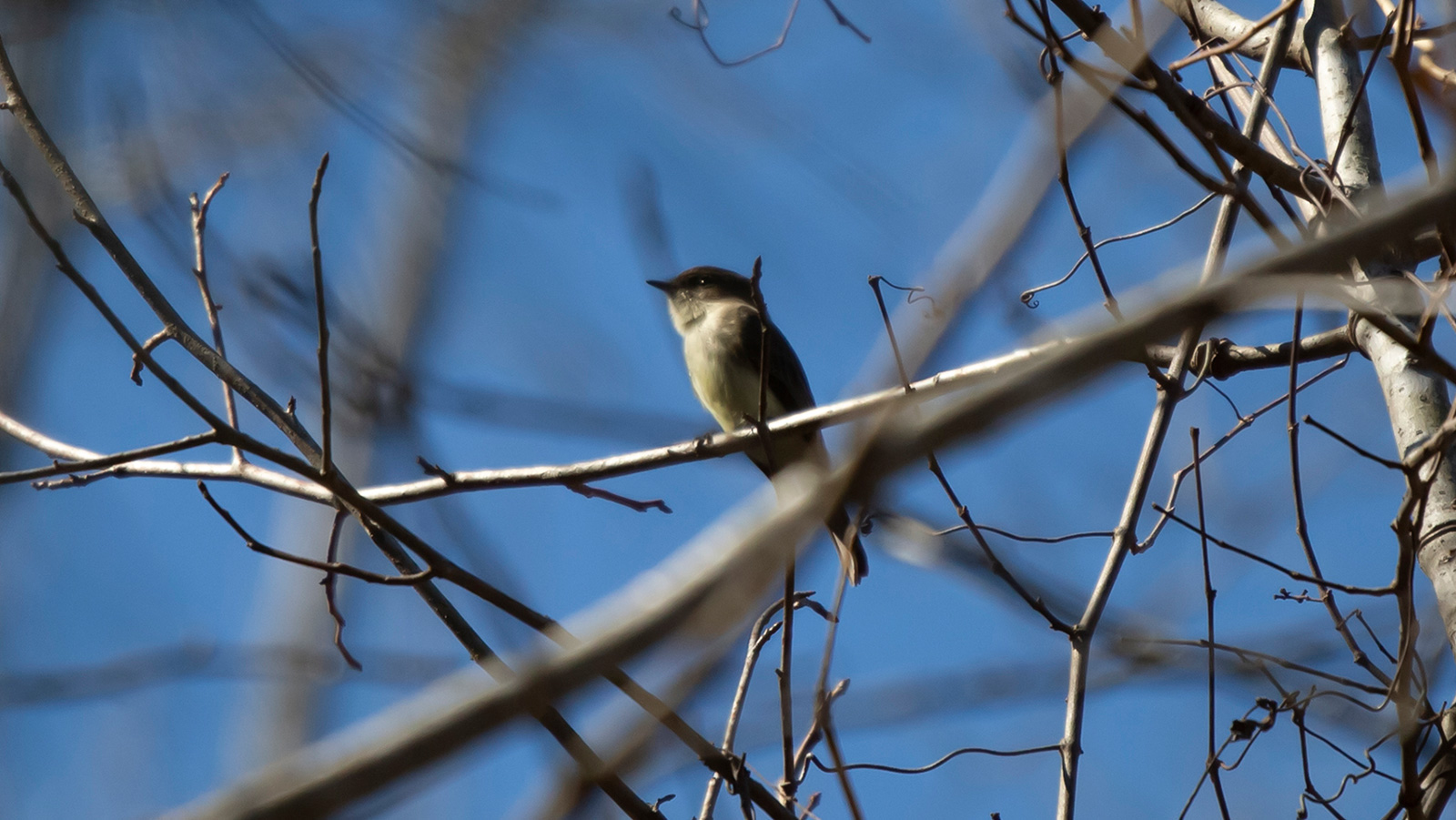
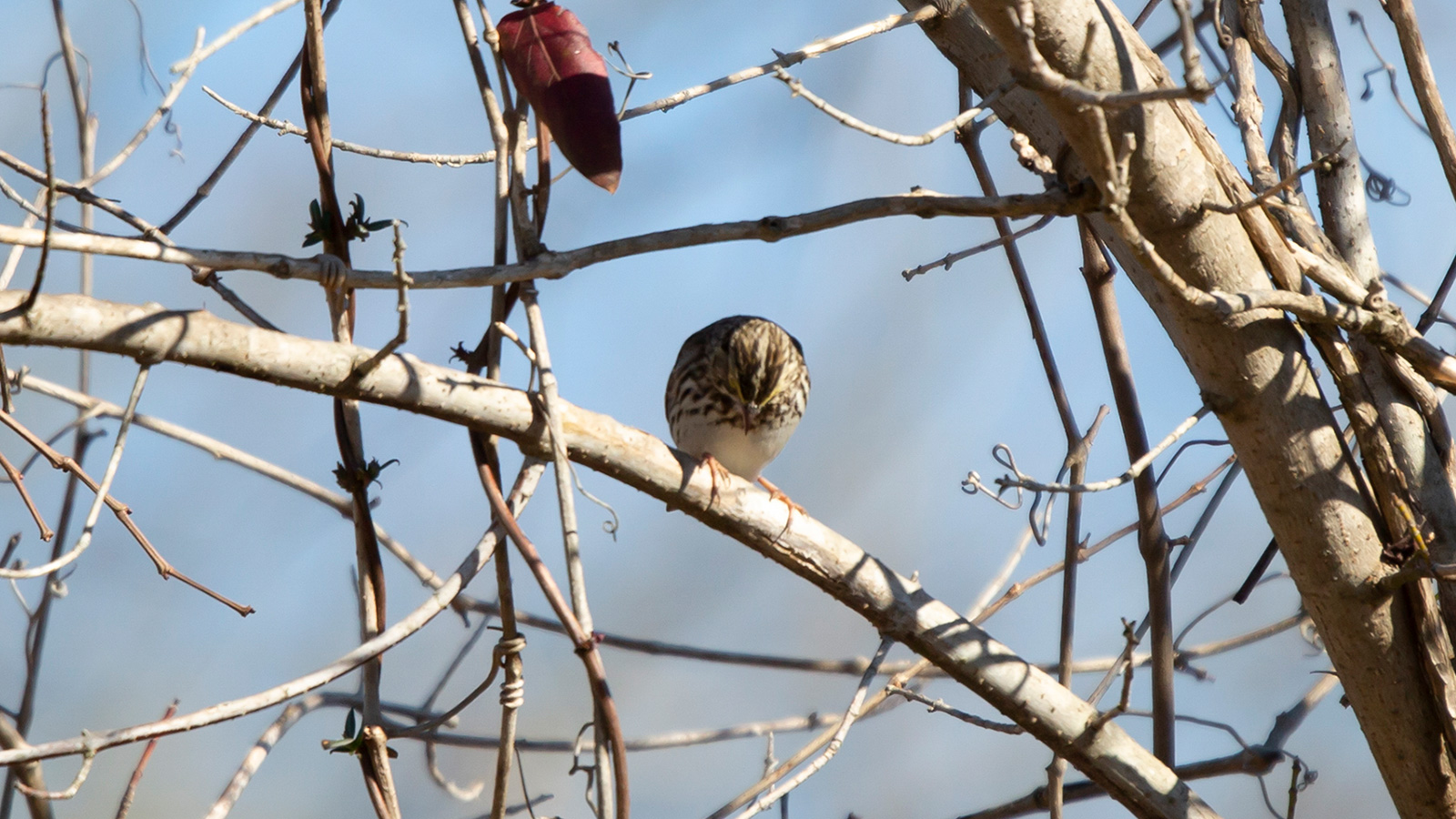
The chipping sparrow (Spizella passerina) breeds across North Louisiana from March through September, nests in ornamental shrubs and yard trees at a distance from the front door that most homeowners would find invasive if they noticed, and delivers a song that sounds exactly the way a sewing machine would sound if a sewing machine got lost in a cedar tree. About half an ounce, a bright rufous cap during breeding season, and one of the most structurally questionable nests in North American ornithology: a thin cup of grass and rootlets lined with animal hair so fine that the finished product resembles a contact lens made of fur. The nest barely stays together. The nest barely keeps the eggs. The chipping sparrow built it anyway, because the schedule did not allocate extra days for architectural excellence.
Every yard, park, campus, and open woodland in North Louisiana with short grass and scattered trees hosts breeding chipping sparrows at a density that makes the bird one of the most common nesting sparrows in the region and simultaneously one of the most overlooked. The chipping sparrow does not visit feeders with the regularity of the house sparrow. The chipping sparrow does not sing with the volume of the song sparrow. The bird occupies the gap between "too common to notice" and "too quiet to demand attention," which puts it in the category of backyard residents that most people never meet until somebody points out the dry trill coming from the ornamental juniper and says "that's a chipping sparrow" and the homeowner says "I've lived here twelve years."
The Cap and the Eyeliner
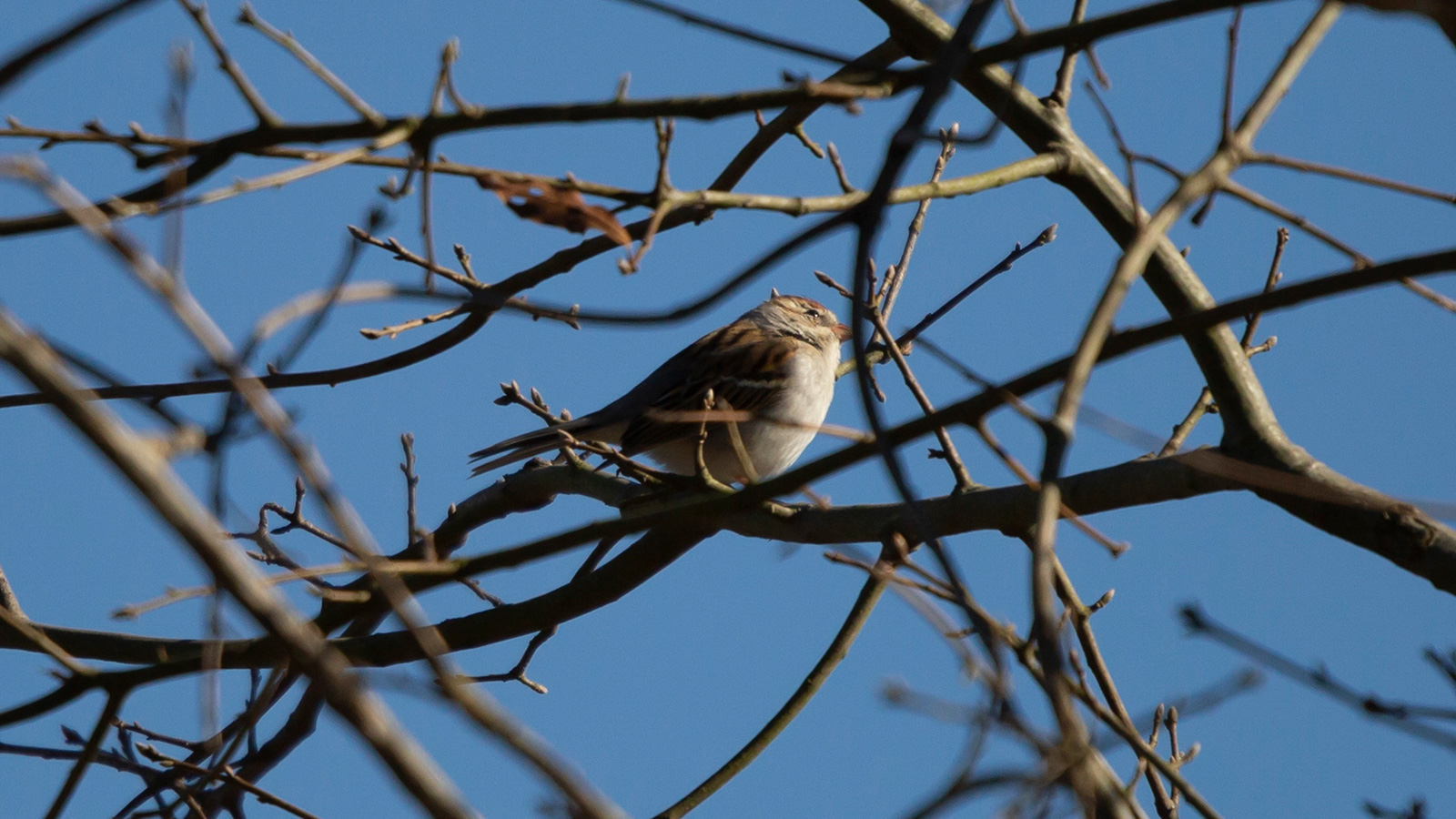
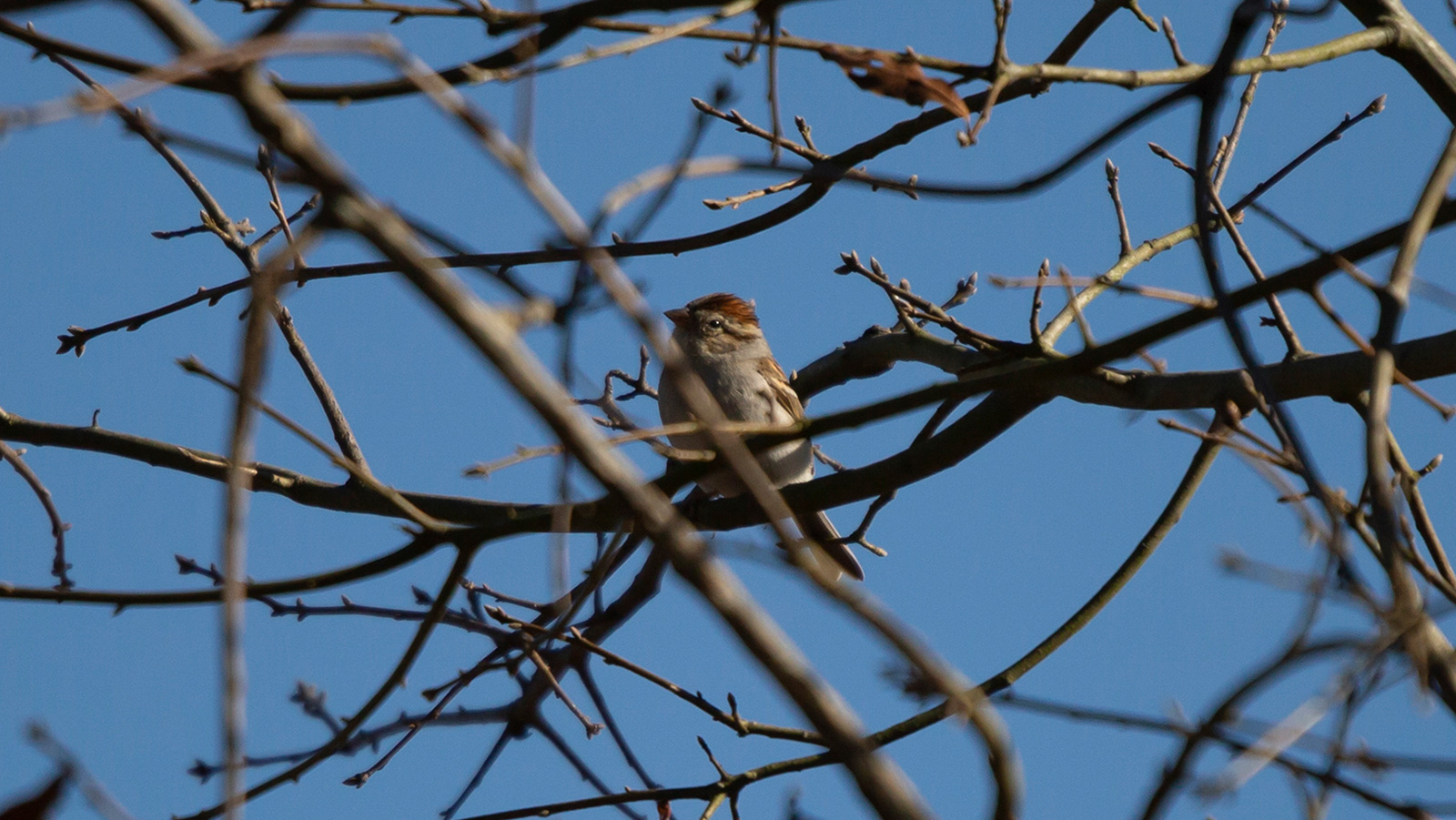
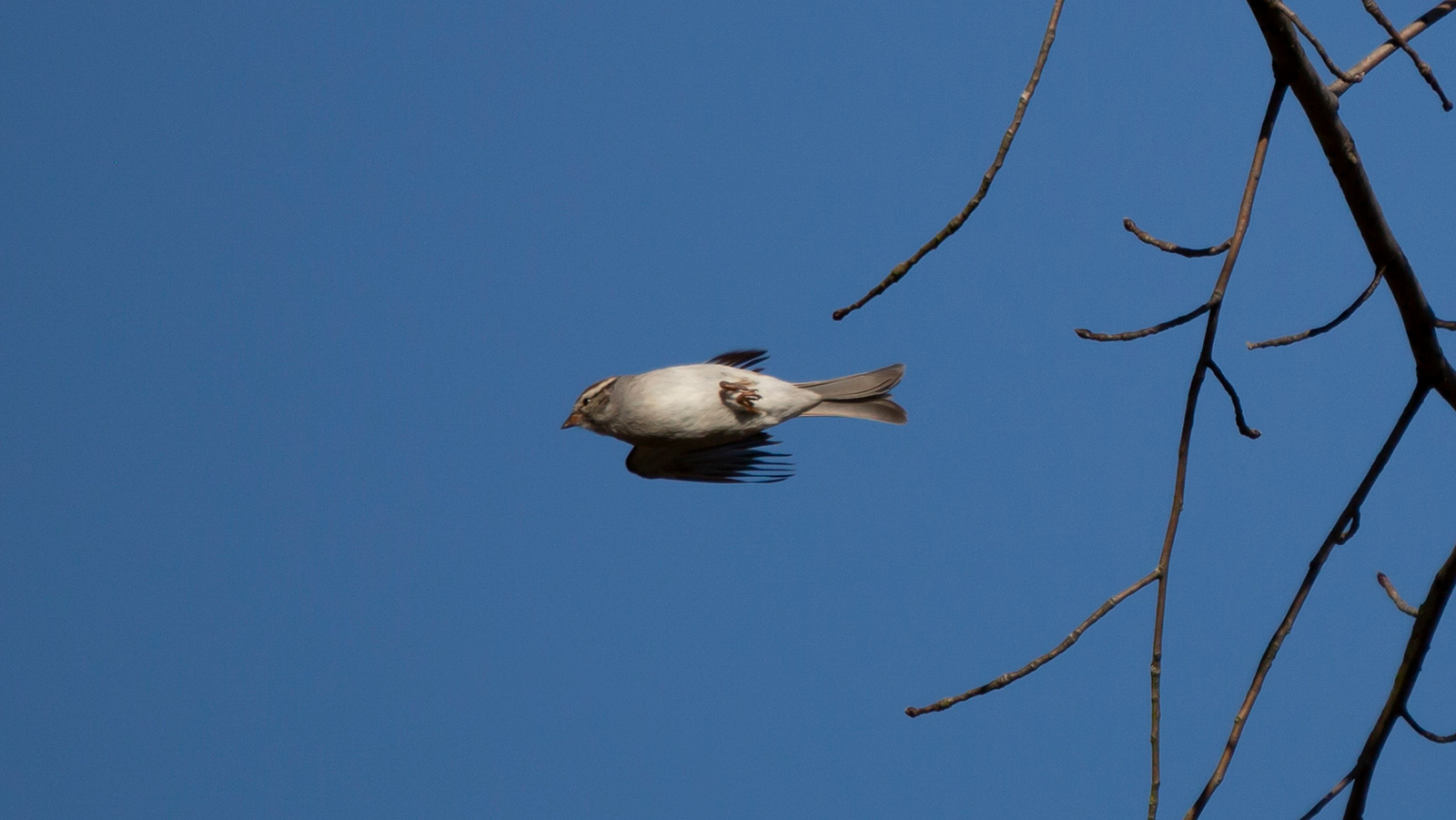
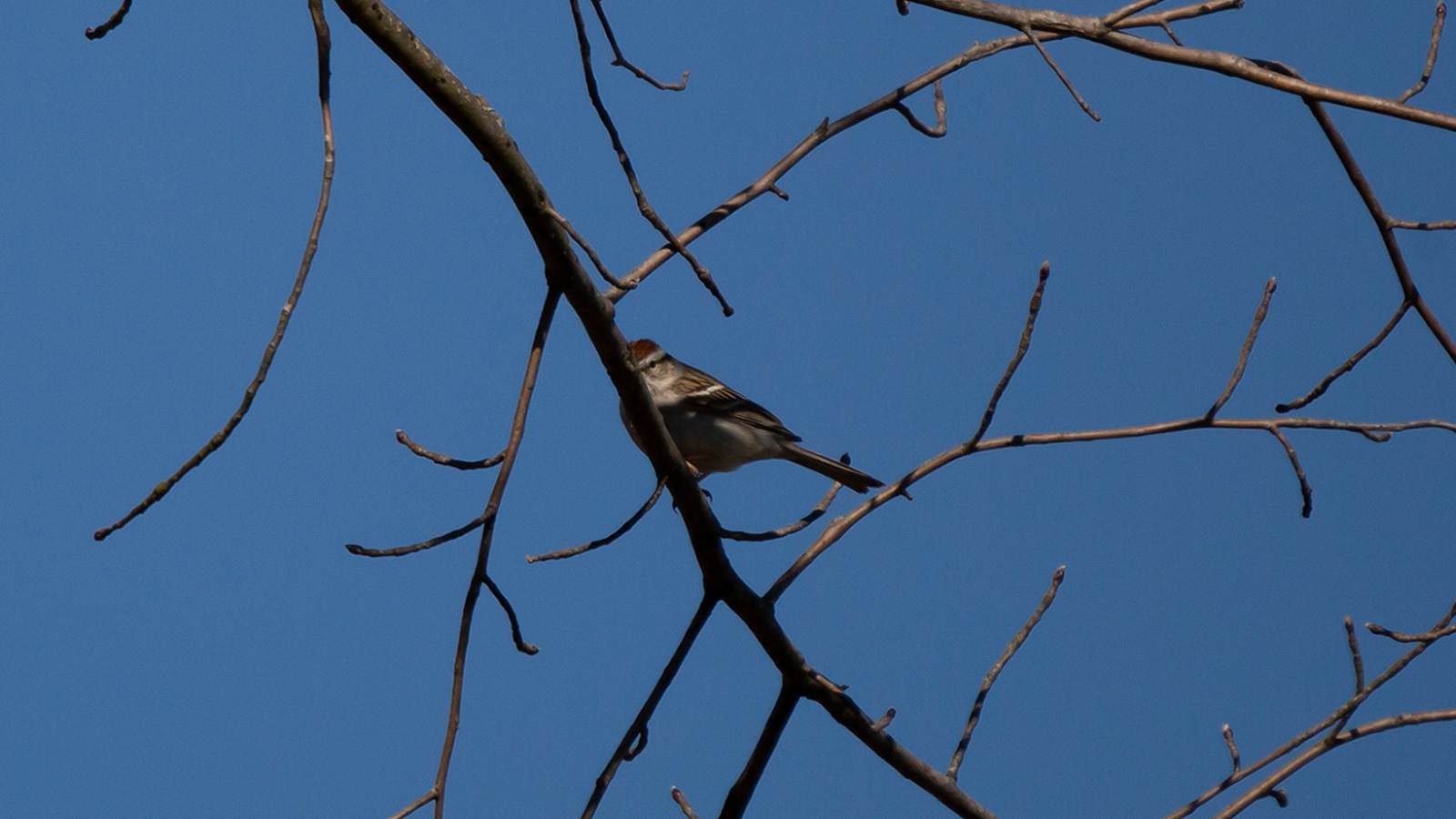
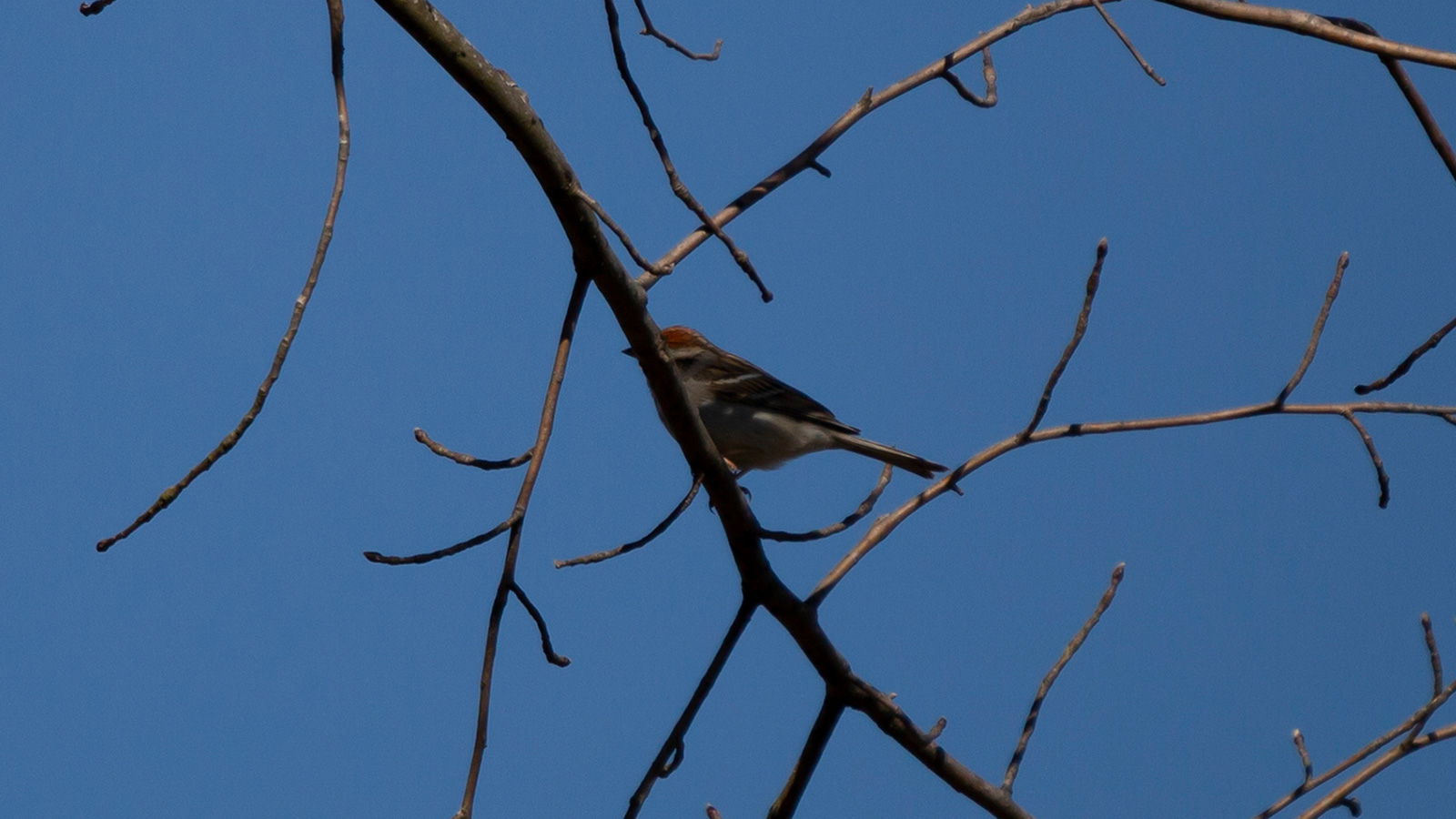
Breeding plumage turns the chipping sparrow into one of the cleanest-looking sparrows in North Louisiana. Bright rufous cap, white eyebrow stripe, black eye line running from bill through eye to the back of the head, clean gray breast with no streaking, and a brown-streaked back that disappears against tree bark the moment the bird turns around. If a small, clean-breasted sparrow with a rusty cap perches on a low branch in your yard between April and August, you found the chipping sparrow. Move on. The identification gets harder in winter. Much harder.
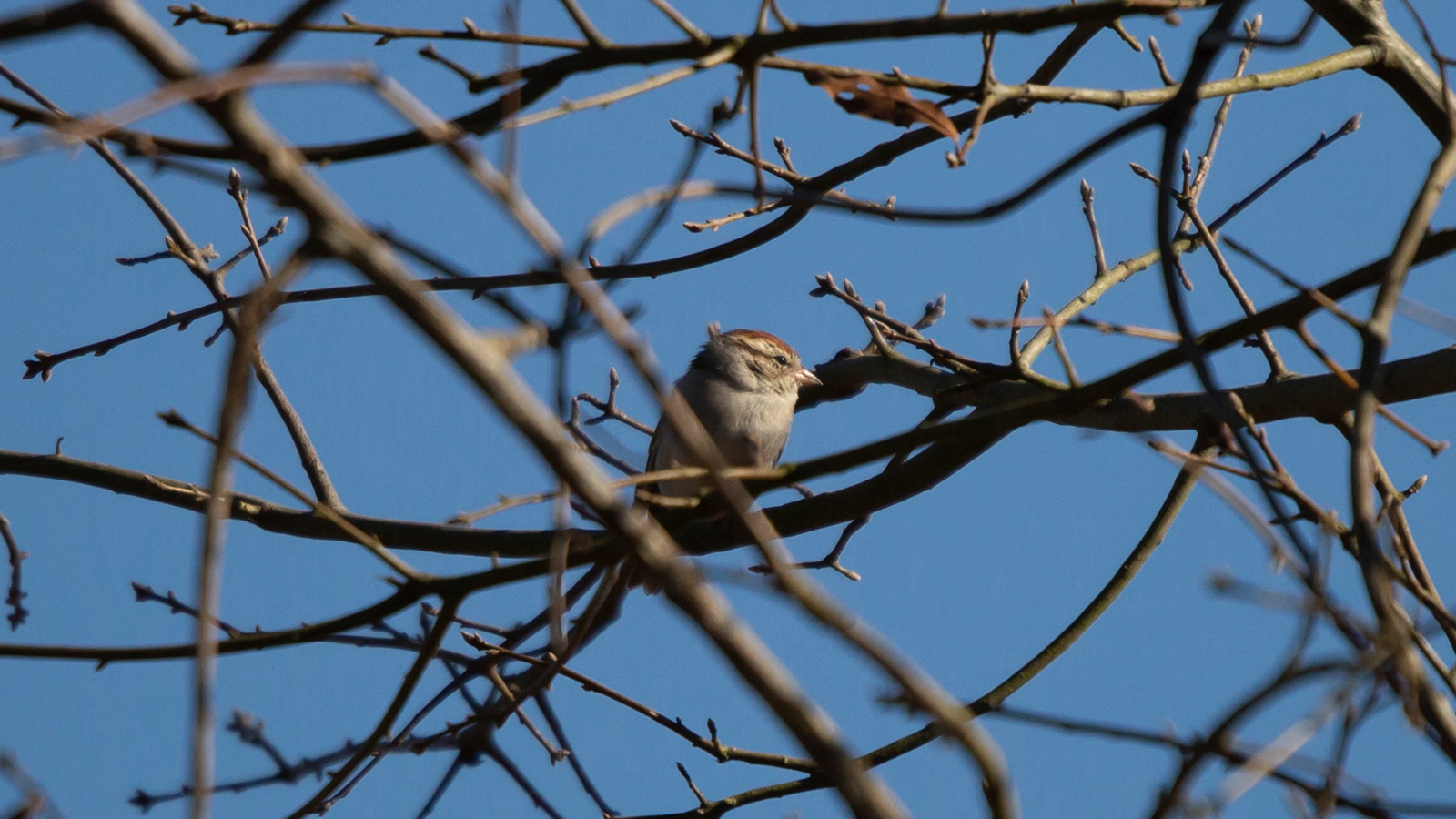
Winter plumage strips every useful field mark and replaces it with ambiguity. The rufous cap dulls to brown streaked with darker brown. The clean black eye line fades to murky gray.
The white eyebrow dims. The gray breast picks up a buff wash. The bird that looked unmistakable in June becomes a nondescript brown sparrow in December that resembles every other nondescript brown sparrow in December, and the winter chipping sparrow sits at the center of one of the most frustrating identification puzzles in North Louisiana birding: separating a winter chipping sparrow from a clay-colored sparrow, an American tree sparrow (rare), and a Brewer's sparrow (very rare). The puzzle stays frustrating because the birds share nearly identical body shapes, similar face patterns in dull plumage, and a collective refusal to sit still long enough for a photograph that settles anything.
Between seasons, the bill color shifts. Breeding adults wear a clean black bill that contrasts against the pale face. Winter adults wear a pinkish-brown bill that blends into the face and tells you nothing useful. A chipping sparrow at a winter feeder with a pink bill and a dull cap earned a tentative identification the observer should double-check rather than celebrate.
Juvenile chipping sparrows add another layer of confusion. A fledgling wears heavy breast streaking that the adult never carries, creating a young bird that resembles a song sparrow more than it resembles its own parents. The streaking fades through the first fall molt, but a July family group containing clean-breasted adults and streak-breasted juveniles gives the impression that two different sparrow species decided to raise a family together. They did not. The juveniles just dressed for a different party.
Advertisement
The Sewing Machine in the Cedar
The chipping sparrow's song: a dry, mechanical trill on a single pitch that lasts two to four seconds and sounds less musical than a car alarm. Rapid chip notes delivered so fast they blur into a continuous rattle, and that speed alone tells you it's not the dark-eyed junco (whose trill carries more tonal variation) or the pine warbler (whose trill warms up gradually rather than starting at full speed). The chipping sparrow starts at full speed, stays at full speed, and stops without a deceleration phase. The bird treats the song the way a printer treats a document: start, deliver, stop, wait for the next job.
Males sing from exposed perches in the breeding territory, often the topmost twig of a yard tree, a utility wire, or the peak of a rooftop, and a single male may deliver the trill every eight to ten seconds for minutes at a stretch during the height of breeding season in April and May. The repetition grinds. A chipping sparrow singing outside a bedroom window at 5:30 a.m. in April delivers the same trill at the same pitch at the same speed at the same interval until the sun moves or the listener moves or the listener accepts that this particular alarm clock took up permanent residence in the crape myrtle and did not bring a snooze button.
The chip call, a sharp, dry "chip" that gave the bird its common name, works as the contact and alarm note. Less metallic ring than the junco's "tik," more dryness than the song sparrow's "chimp." A chipping sparrow calling from a shrub sounds less urgent than an alarm and more irritated than a greeting, which captures the bird's general emotional bandwidth. A flock of wintering chipping sparrows feeding in a weedy field keeps up a continuous background of soft chips that ties the group loosely together without ever reaching the volume of a proper alarm.
The Hair Nest
Now about that nest. It deserves its own section because it represents either the peak of avian minimalism or the lowest passing grade in structural engineering, depending on who evaluates it. The nest sits in a dense shrub, a low conifer branch, or an ornamental tree, typically between three and fifteen feet off the ground, placed in a fork or woven into a cluster of twigs. Outer cup uses dried grass, fine weed stems, and rootlets. Inner lining uses animal hair.
Animal hair defines the nest. Chipping sparrows collect hair from horses, dogs, cats, deer, cattle, and any other mammal that left loose hair on a fence, a brush, or the ground. A chipping sparrow gathering nest material from a dog sleeping on a porch ranks among the bolder collection strategies in North Louisiana ornithology, and the bird will return to the same dog repeatedly if the dog produces good material and does not wake up fast enough to matter.
A finished nest lining often contains enough animal hair to identify the donor species, and a chipping sparrow nest in a Ruston backyard may contain golden retriever hair, tabby cat fur, and horse mane fibers in the same cup, creating a nest that doubles as a neighborhood pet census. Before domesticated animals provided the supply, chipping sparrows collected hair from deer, bison, and any wild mammal that shed against a tree or fence post. The supply chain changed. The preference did not. The bird adapted to suburbia by raiding the porch instead of the prairie.
The whole thing barely qualifies as a structure. The cup walls stay thin. Light passes through the bottom of many chipping sparrow nests, and a nest supporting four eggs often appears to be making a promise the architecture cannot keep. The eggs do not fall through.
Somehow the chicks do not fall through. The nest lasts exactly long enough for the breeding cycle to finish, and by the time the young fledge, the nest resembles a used coffee filter more than a structure that once contained living things. Build fast, breed fast, fledge fast, and if the first nest fails, build another one in four days and try again. Some pairs manage three nesting attempts in a single season, and the third nest goes up faster and thinner than the first, suggesting either efficiency gains or declining standards.
Brown-headed cowbirds love chipping sparrow nests, laying eggs in the thin cup while the chipping sparrow incubates. The chipping sparrow rarely rejects the cowbird egg, rarely abandons the parasitized nest, and regularly raises the cowbird chick alongside (or instead of) its own young. The cowbird chick outgrows the chipping sparrow chick, outcompetes for food, and frequently causes the chipping sparrow chick to starve while the parent feeds the larger mouth. A chipping sparrow feeding a cowbird fledgling twice its size plays out in suburban shrubs across the region every May without generating any neighborhood attention. The cowbird keeps winning, and the chipping sparrow keeps losing, and the chipping sparrow apparently does not notice or particularly care.
Advertisement
The Lawn Forager
The chipping sparrow feeds on the ground in short grass, on lawns, on gravel paths, and on any open surface where small seeds sit exposed. The feeding style differs from the junco's leaf-kicking method: the chipping sparrow walks or hops through short grass picking individual seeds from the surface without scratching or disturbing the substrate. The bird feeds delicately, quickly, and with a nervous energy that keeps the head bobbing between every seed. A chipping sparrow feeding on a campus lawn moves with the urgency of someone trying to eat lunch during a five-minute break.
Seeds from grasses, weeds, and forbs make up most of the menu during fall, winter, and early spring. Crabgrass, foxtail, pigweed, chickweed, and dandelion seeds get picked from the ground and from low seed heads. The small, conical bill handles small seeds efficiently and larger seeds not at all, which confines the diet to the fine-seed category that larger sparrows and finches do not monopolize. The chipping sparrow eats what the song sparrow ignores, and the song sparrow eats what the chipping sparrow cannot crack. Everybody got a lane. Nobody poached.
Insects take over the diet during breeding season, when the protein demand of growing chicks overrides the seed preference. Caterpillars, beetles, grasshoppers, ants, and spiders get gleaned from foliage, snatched from the air in short flycatching sallies, and collected from the ground. A breeding pair delivering food to a nest full of chicks makes feeding trips every few minutes, and each trip delivers a caterpillar, a beetle, or a spider carried in the bill across the yard. A yard that supports a breeding pair of chipping sparrows receives insect control services from March through August at no charge, and the sparrows did not send an invoice because the sparrows did not know the caterpillars bothered anyone besides themselves.
Water sources attract chipping sparrows to birdbaths, shallow puddles, and dripping hose connections. The bird bathes vigorously, splashing with a full-body shudder that soaks the feathers and sends water three inches in every direction. A chipping sparrow in a birdbath resembles a small brown appliance set to the spin cycle, and the bathing bout lasts thirty to sixty seconds before the bird retreats to a nearby branch to preen and dry. The bathing frequency climbs during hot Louisiana summers, and a birdbath near a nesting territory earns repeat visits throughout the day.
During breeding season, the feeding range stays tight. A nesting pair works the lawn, the garden edge, the driveway, and the lower branches of yard trees within a one-to-two-acre area centered on the nest. The pair rarely ventures beyond the territorial boundary for food, which means the insect population within that patch feeds the entire family from egg to fledgling.
Advertisement
Neighbors, Rivals, and the Cowbird Problem
Breeding territories sit small, often less than an acre, and multiple pairs nest in the same neighborhood, the same park, the same campus. The territorial boundary gets defended with song (the dry trill, repeated at volume from the highest available perch) and with chase flights that send trespassing males back across the invisible property line at speed. Chipping sparrows chase other chipping sparrows. Other sparrow species feeding in the territory get ignored unless they approach the nest, and even then the response stays mild. The chipping sparrow governs its territory the way a reasonable landlord governs a building: firm about the lease, flexible about the common areas.
The cowbird problem hits harder than watching one nest suggests. In some North Louisiana spots, more than half of all chipping sparrow nests contain at least one cowbird egg, meaning more than half of all chipping sparrow nests in the area contain at least one cowbird egg. The chipping sparrow did not evolve with the cowbird pressure (the cowbird's range expanded with cattle ranching and forest clearing over the past few centuries), and the bird never developed the egg-recognition response that some other birds use to reject cowbird eggs. The chipping sparrow accepts the cowbird egg, incubates it, feeds the cowbird chick, and loses most or all of its own brood in the process.
The only counter-strategy? Nest again. The bird that lost clutch one to a cowbird built nest two in a different shrub and tried the whole thing over. The persistence outlasted the parasite more often than the rejection would have.
Where the Chipping Sparrow Goes in Winter
Winter behavior in North Louisiana shifts dramatically from the breeding season. Some chipping sparrows winter here, forming small flocks in weedy fields, brushy edges, and open woodlands with short grass. Other individuals migrate farther south into southern Louisiana, the Gulf Coast, and Mexico.
The winter flocks that stay mix with other sparrow species, particularly dark-eyed juncos and white-throated sparrows, feeding in the same weedy fields and brushy margins without the territorial aggression that defined the breeding season. A winter flock of mixed sparrows in a Bossier Parish weedy field may contain chipping sparrows, juncos, white-throated sparrows, and savannah sparrows all feeding within ten feet of each other, united by the seed supply and completely uninterested in the property disputes that occupied April. The bird that chased everything in May tolerates everything in January. Same bird, different month, completely different social contract.
That shift from territorial pairs to anonymous flock members ranks among the more dramatic personality changes in North Louisiana bird behavior. The same bird that spent May defending a half-acre territory with constant singing and aggressive chase flights spends January hopping through a ragweed patch alongside thirty other sparrows without a single territorial display. The hormones changed.
Behavior followed. The bird did not consult a therapist. The bird did not even notice the transition. One day the singing stopped, the territory dissolved, and the chipping sparrow joined a flock the way a retired employee joins a coffee group: same neighborhood, zero obligations, and nobody remembering who used to be in charge of what. If birds kept calendars, the chipping sparrow's would show "aggressive" from March through August and "anonymous" from September through February, with no transition week scheduled between the two.
Winter roost sites pull the flock together at dusk. Dense shrubs, vine tangles, and evergreen hedges provide the thermal cover the bird needs to survive cold Louisiana nights, and the entire winter flock may roost in a single dense hedge, packed close enough that body heat from adjacent birds supplements each individual's insulation. The flock returns to the same hedge at the same time every evening with a reliability that would impress a commuter rail system.
Spring breakup of the winter flock happens in March as hormones surge and the breeding drive overrides the flocking instinct. Males begin singing from scattered perches, staking territory claims across the same yards and parks they occupied last breeding season, and the winter flock disintegrates bird by bird as individuals peel off to claim territories and attract mates. By early April the weedy field that contained thirty sparrows in February contains zero chipping sparrows because every one of them moved to a yard with a suitable nesting shrub and started advertising. The transition takes about two weeks. The quiet January field becomes the empty March field, and the suburban shrub that sat vacant all winter acquires a tenant with a dry trill and a construction schedule.
Advertisement
What Hunts the Chipping Sparrow
Sharp-shinned hawks, Cooper's hawks, and American kestrels catch chipping sparrows from feeding flocks and from exposed perches. The small size places the bird squarely in the weight range that accipiters prefer, and a chipping sparrow singing from a treetop in April advertises the bird's location to every predator within earshot. The song that attracts a mate also attracts a hawk. The evolutionary math accepted both outcomes and called the trade-off acceptable.
Domestic cats kill nesting and feeding chipping sparrows at rates that reflect the bird's ground-feeding habit and low nesting height. A nest in a three-foot ornamental juniper beside a front porch sits within reach of any cat that knows the porch. The adult feeding on the lawn sits within pouncing range of any cat that knows the lawn. The suburban nesting preference puts the bird in the highest-cat-density habitat in North Louisiana, and the overlap costs more individuals per year than any wild predator.
Rat snakes and black racers climb to chipping sparrow nests and consume eggs and nestlings. The low nesting height that protected the nest from wind exposure placed the nest within climbing range of every snake in the yard, and a rat snake that found one chipping sparrow nest remembers the shrub and checks back during the next breeding cycle. The snake did not learn the location by accident. The snake learned the location by eating the first clutch and coming back for seconds. The ornamental juniper that seemed like a safe nesting spot came pre-mapped by a snake that ate last year's tenants.
Late spring cold snaps occasionally catch early-nesting chipping sparrows with eggs or young chicks in the nest. A hard freeze in late March after the bird already started incubating can kill the embryos, and the thin nest construction that works fine in April's warmth gives almost no insulation against a temperature drop into the twenties. The adult survives. The clutch may not. The bird waits a week, builds a new one, and tries again, because the chipping sparrow's response to failure involves the same strategy as the bird's response to cowbird parasitism: rebuild, re-nest, refuse to quit. The persistence carries more breeding success than the individual nest suggests.
Where to Look
Yards, parks, and campuses with short grass, scattered trees, and ornamental shrubs between March and September. The singing male perches at the top of the tallest available tree or wire and rattles off the dry trill you can hear from a hundred yards. Follow the sound to the perch and you found the sparrow with the rufous cap. If the trill keeps repeating from the same spot every eight seconds and you start counting along, the chipping sparrow already owns your attention and the chipping sparrow did not try.
Winter flocks in weedy fields, brushy edges, and mixed sparrow groups from October through February. The winter chipping sparrow sits harder to find and harder to identify, mixed into flocks where every brown sparrow needs individual evaluation. Look for the relatively clean breast (less streaking than the song sparrow, less buff than the clay-colored), the small size, and the nervous feeding pace that looks like a bird running late to a meeting it scheduled and forgot about. The winter chipping sparrow feeds with urgency that the winter junco does not match, and the urgency reads in the body language before the field marks read in the binoculars.
Louisiana Tech's campus, any park with mowed grass and ornamental plantings, and residential neighborhoods with moderate landscaping all produce chipping sparrows during breeding season. The bird nests in the shrub next to the building, feeds on the lawn in front of the building, and sings from the roof of the building. The chipping sparrow chose the suburb before the suburb chose the chipping sparrow.
Cemeteries with ornamental plantings and mowed grass between headstones work well. Quiet environment makes the dry trill easier to hear. Any North Louisiana cemetery with ornamental junipers, short grass, and scattered hardwoods supports at least one breeding pair, and larger cemeteries with varied plantings may support four or five pairs spread across the grounds. The birds feed on the walkways, nest in the plantings, and sing from the tallest monuments, treating the cemetery as a suburban park that happened to fill up with permanent residents who do not mind the noise. A chipping sparrow singing from a granite headstone at six in the morning bothered nobody in the audience, and the audience will never file a complaint.
For winter, agricultural field edges along parish roads between November and February produce mixed sparrow flocks that contain chipping sparrows alongside juncos, white-throated sparrows, and savannah sparrows. A weedy field edge in Ouachita, Morehouse, or Richland Parish on a December morning gives you the full North Louisiana winter sparrow experience in one stop.
Advertisement
Where to Learn More
Cornell Lab of Ornithology's All About Birds covers the chipping sparrow's seasonal plumage changes, range map, and full call library. The winter identification challenge between chipping, clay-colored, and Brewer's sparrows gets detailed treatment that saves hours of field frustration.
Sibley's Guide to Birds gives the side-by-side Spizella sparrow comparison that winter birding in North Louisiana demands. For anyone trying to sort the dull-plumaged winter chipping sparrow from the clay-colored sparrow that just showed up in the same flock, Sibley's face-pattern illustrations remain the best single reference available. eBird's regional frequency charts for the 26 parishes show exactly when chipping sparrows arrive in spring, when singing peaks, and when the fall departure thins the population.
Experiencing This Bird: Accessibility Notes
The dry trill sits at a high frequency that some people, particularly those with age-related hearing changes, may struggle to hear clearly. The trill carries well across open lawn habitat and repeats frequently enough during breeding season (every eight to ten seconds for extended bouts) that the repetition becomes a locating tool on its own. If something keeps trilling from the same spot at regular intervals and the sound sits high and dry and mechanical, a chipping sparrow owns that spot.
For anyone with mobility limitations, the chipping sparrow works best from a porch, a window, or any accessible outdoor area that overlooks a lawn with scattered trees. The bird feeds on the lawn at ground level, nests in the adjacent shrub at eye level, and sings from the treetop above. The entire breeding cycle plays out within a fifty-foot radius of the nest, and a comfortable seat with a view of a landscaped yard between April and July catches the full show: the singing, the feeding, the nest-building, the cowbird drama, and the fledglings hopping across the grass for the first time looking confused about everything and confident about nothing. The yard came with a front-row seat to engineering failures, freeloading cowbirds, a snake that remembered the address, and a half-ounce bird that refused to stop trying. The chipping sparrow did not know anyone watched. The chipping sparrow would not have changed the schedule if it did.
Meta Title: Chipping Sparrow in North Louisiana: The Tiny Dry Rattle in the Front Yard | NLW Meta Description: The chipping sparrow nests in your shrub, sings from your roof, and feeds on your lawn all summer. North Louisiana's most overlooked backyard breeder. Focus Keyphrase: chipping sparrow North Louisiana Secondary Keywords: chipping sparrow Louisiana, chipping sparrow identification, chipping sparrow song, chipping sparrow nest, chipping sparrow vs clay-colored sparrow, Spizella passerina Louisiana, chipping sparrow winter, chipping sparrow call, North Louisiana sparrows, chipping sparrow breeding OG Description: The chipping sparrow nests in the ornamental juniper, sings a dry mechanical trill from the rooftop at 5:30 a.m., and feeds on the lawn all summer. North Louisiana's most overlooked backyard breeder. Slug: chipping-sparrow-north-louisiana
Advertisement
Photo Gallery
Advertisement
Accessibility
## Experiencing This Bird: Accessibility Notes
The dry trill sits at a high frequency that some people, particularly those with age-related hearing changes, may struggle to hear clearly. The trill carries well across open lawn habitat and repeats frequently enough during breeding season (every eight to ten seconds for extended bouts) that the repetition becomes a locating tool on its own. If something keeps trilling from the same spot at regular intervals and the sound sits high and dry and mechanical, a chipping sparrow owns that spot.
For anyone with mobility limitations, the chipping sparrow works best from a porch, a window, or any accessible outdoor area that overlooks a lawn with scattered trees. The bird feeds on the lawn at ground level, nests in the adjacent shrub at eye level, and sings from the treetop above. The entire breeding cycle plays out within a fifty-foot radius of the nest, and a comfortable seat with a view of a landscaped yard between April and July catches the full show: the singing, the feeding, the nest-building, the cowbird drama, and the fledglings hopping across the grass for the first time looking confused about everything and confident about nothing. The yard came with a front-row seat to engineering failures, freeloading cowbirds, a snake that remembered the address, and a half-ounce bird that refused to stop trying. The chipping sparrow did not know anyone watched. The chipping sparrow would not have changed the schedule if it did.
Meta Title: Chipping Sparrow in North Louisiana: The Tiny Dry Rattle in the Front Yard | NLW Meta Description: The chipping sparrow nests in your shrub, sings from your roof, and feeds on your lawn all summer. North Louisiana's most overlooked backyard breeder. Focus Keyphrase: chipping sparrow North Louisiana Secondary Keywords: chipping sparrow Louisiana, chipping sparrow identification, chipping sparrow song, chipping sparrow nest, chipping sparrow vs clay-colored sparrow, Spizella passerina Louisiana, chipping sparrow winter, chipping sparrow call, North Louisiana sparrows, chipping sparrow breeding OG Description: The chipping sparrow nests in the ornamental juniper, sings a dry mechanical trill from the rooftop at 5:30 a.m., and feeds on the lawn all summer. North Louisiana's most overlooked backyard breeder. Slug: chipping-sparrow-north-louisiana
Advertisement