Advertisement
The Australian Sheep Blowfly did not stay in Australia. That would have been too convenient, too geographically polite, and frankly too much to expect from a fly named after the damage they do to livestock on a continent that already wants to kill everything. Lucilia cuprina — sometimes called the bronze bottle fly for the coppery shimmer across their abdomen — made the jump to North America and settled into the American South like they had always belonged here. And in a purely ecological sense, they kind of do. Warm temperatures, high humidity, plenty of organic material in various stages of decomposition? North Louisiana might as well have rolled out a welcome mat.
You have seen this fly. You just didn't know you were looking at anything other than a regular blowfly buzzing around a trash can. The Australian Sheep Blowfly measures between 4.5 and 10 millimeters, which puts them solidly in the "big enough to notice, small enough to ignore" category. Their body color sets them apart from the common housefly, though. Under decent light, the abdomen shines green to greenish-blue with bronze or copper reflections — a metallic finish that looks almost intentional, like someone dipped the fly in nail polish before releasing them into the wild. The eyes glow reddish, and the overall body shape runs round to oval, slightly more compact than the Shiny Blue Bottle Fly or the House Fly.
Two pairs of wings keep them aloft. The first pair handles actual flight. The second pair — reduced structures called halteres — act as stabilizers, tiny gyroscopic instruments that keep the fly oriented during the sharp turns and sudden direction changes that make blowflies so annoyingly difficult to swat. Every time you swing a rolled-up magazine at one of these and miss, blame the halteres. They evolved specifically to make your life harder.
The common name says everything about the original reputation. In Australia and New Zealand, the Australian Sheep Blowfly remains the number one cause of flystrike — a condition where female flies locate a sheep with an open wound, damp wool, or a buildup of waste in the fleece, then deposit eggs directly into the mess. The emerging larvae feed on living tissue, secreting ammonia as they grow, which poisons the host from the wound site outward. Affected sheep rub and bite at the struck area, triggering an inflammatory response that only attracts more flies. Left untreated, flystrike kills.
Now, before you assume this problem stays neatly overseas in sheep paddocks, consider that the same fly lives across the Southern United States. They thrive in southern California, Arizona, Texas, Florida, and Louisiana. The warm soil temperatures above 59 degrees Fahrenheit and air temperatures between roughly 63 and 104 degrees describe a solid eight months of any given year in North Louisiana. Low wind? Check. Available carrion and decaying organic material? Drive five minutes in any direction from Ruston and you will pass at least one roadkill deer in some stage of the process.
Where Australian Sheep Blowflies Get Interesting
This fly arrived on corpses first. Or at least, that relationship defines the most forensically significant thing about them. Adults of Lucilia cuprina show up to carrion fast — within hours or even minutes of death. They represent one of the earliest colonizers of a fresh body, which puts them squarely in the crosshairs of forensic entomologists who use insect succession patterns to estimate how long a person or animal has been dead.
The female lays eggs directly on the carrion. The eggs hatch into larvae that feed and grow through three instar stages before entering the pupal stage — a phase that looks inactive from the outside but involves a complete internal reconstruction. Inside the pupal casing, the rice-shaped maggot dissolves and reassembles into a six-legged, winged adult fly. The whole process from egg to adult takes between 11 and 21 days, depending on temperature and food availability. Warmer conditions and better nutrition speed things up. In a Louisiana July, with ambient temperatures above 90 degrees and humidity thick enough to swim through, that lifecycle compresses to the shorter end of the range.
A single generation of Australian Sheep Blowflies completes in roughly two to three weeks under favorable conditions. The species manages between four and eight generations per year depending on location and climate. In North Louisiana, where warm weather stretches from late March through October and mild winters rarely freeze hard enough to kill overwintering pupae in the soil, the fly probably pushes the upper end of that range. That means up to eight rounds of egg-to-adult cycling in a single year, each round producing hundreds of new individuals per female.
Females oviposit approximately five days after mating. Adults live an average of six weeks. Those six weeks involve a constant search for two things: protein and a place to lay eggs. The protein comes from carrion, decaying fruit, animal waste, and any other organic material breaking down in the environment. The egg-laying sites overlap heavily with the food sources. Dead animals, garbage, compost, improperly stored meat — all of it registers as both a buffet and a nursery.
The Forensic Connection
Here's where the Australian Sheep Blowfly earns the kind of respect that comes with solving crimes. Forensic entomology relies on the predictable lifecycle of blow fly species to estimate postmortem intervals. Because Lucilia cuprina adults arrive at a body so quickly after death, and because the developmental stages proceed on a temperature-dependent schedule, investigators collect larvae from a crime scene and age them. The age of the oldest larvae on a body gives a minimum estimate of time since death.
The eggs of Lucilia cuprina look different from those of closely related species under magnification. Egg ultrastructure — the surface patterns and textures visible under electron microscopy — distinguishes Lucilia cuprina from Lucilia illustris and Lucilia sericata, both of which also colonize remains. Getting the species identification right changes the postmortem interval calculation because each species develops at a slightly different rate.
Researchers continue to refine these identification methods. Mitochondrial DNA analysis of larvae can confirm species when physical identification proves ambiguous — which happens more often than you might expect when you're staring at a collection of nearly identical pale maggots under a dissecting scope. The stakes of getting the identification wrong are high. A misidentified species means a miscalculated developmental timeline, which means a flawed estimate of time since death, which means potentially useless information in a criminal investigation.
The larvae of Lucilia cuprina prefer shaded regions of carrion. Adults, by contrast, favor bright, open areas. Walk past a roadkill deer on a sunny shoulder of Highway 167, and the metallic green flies buzzing around the exposed portions in direct sunlight are likely the adults. The larvae doing the actual feeding work operate underneath, in the cooler, darker tissues where the body contacts the ground. The behavioral split between adults and larvae on the same food source means different environmental conditions drive different life stages simultaneously.
Competition at the Carcass
The Australian Sheep Blowfly doesn't work alone at a carrion site, and the competition shapes everything about how quickly they colonize, where they lay eggs, and how many offspring survive. A fresh deer carcass on a November morning in Caldwell Parish attracts a predictable cast of characters. Lucilia cuprina arrives among the first wave — often within the first hour. The Common Green Bottle Fly (Lucilia sericata) shows up on a similar timeline. Flesh flies from the family Sarcophagidae may deposit live larvae before any blow fly eggs hatch, stealing a developmental head start. And if the carcass persists into warmer days, the Hairy Maggot Blow Fly (Chrysomya rufifacies) joins the party and starts eating everyone else's larvae.
The succession matters because each species operates on a slightly different developmental schedule. Lucilia cuprina eggs hatch fast, and the first-instar larvae begin feeding immediately. But the flesh fly larvae that arrived already hatched? They've been feeding for hours by the time the first blow fly maggots emerge. The competitive jockeying for position — who feeds where, who arrived first, whose larvae grow fastest — determines the species composition at each stage of decomposition.
Australian Sheep Blowflies partially avoid the worst competition by targeting the freshest carrion. Their chemical detection system prioritizes the early volatile compounds — the first gases released by cellular breakdown before the heavy odors of advanced decomposition develop. By the time a carcass reaches the bloated stage, drawing late-arriving species in droves, the Australian Sheep Blowfly's first generation of larvae may already be leaving to pupate. The strategy: arrive first, breed fast, leave before the neighborhood gets crowded.
On a large carcass — a deer, a cow, a feral hog — enough tissue exists to support multiple species simultaneously without direct competition forcing any single species off the food source. The larvae partition the carcass spatially: some species feed on the surface in sunlight, others work the shaded underside, others concentrate around natural openings. The Australian Sheep Blowfly's preference for shaded feeding sites positions their larvae away from the sun-loving species, reducing direct competition even when multiple species colonize the same animal.
Smaller carcasses — squirrels, rabbits, birds, armadillos — compress the competition into tighter quarters. A dead armadillo on a road shoulder in Union Parish doesn't offer enough real estate for every blow fly species to find their own section. On small carrion, the first colonizers dominate, and later arrivals may find too little food remaining to support complete larval development. This dynamic reinforces the Australian Sheep Blowfly's early-arrival strategy. Getting to small carcasses first matters more than getting to large ones first, because the food supply disappears faster.
The Sensory World
Understanding how the Australian Sheep Blowfly experiences North Louisiana requires a shift in perspective. Humans navigate primarily by sight. Blowflies navigate primarily by chemistry. The antennae of Lucilia cuprina carry thousands of olfactory receptor neurons, each tuned to specific volatile compounds. The chemical signature of decomposition — a complex mixture of gases including dimethyl disulfide, dimethyl trisulfide, indole, skatole, cadaverine, and putrescine — registers as a directional beacon that the fly follows upwind to the source.
The sensitivity of this system borders on absurd. A single molecule of the right compound, arriving on an air current from a carcass a quarter-mile away, can trigger a behavioral response. The fly orients upwind, begins flying, and follows the concentration gradient toward the source. Multiple compounds in the decomposition cocktail provide redundant information — if one chemical fades, others maintain the directional signal. The system works in wind, in still air (where the fly zigzags to sample the chemical gradient), in daylight, and in the hour after dawn when blowfly activity begins each morning.
The tarsal chemoreceptors — the taste sensors on the feet — provide close-range confirmation. A fly that followed an airborne chemical trail for half a mile needs to verify that the surface they just landed on actually delivers the food the chemistry promised. The foot sensors do that verification instantly. Land on a carcass? Confirmed — extend the proboscis and begin feeding. Land on a warm rock that happened to sit downwind of a carcass? Not food — take off and continue searching.
The compound eyes contribute visual information, particularly for landing and for detecting movement (predators, competitors, mates). Each eye contains thousands of individual ommatidia — the hexagonal optical units that give compound eyes their characteristic faceted appearance. The temporal resolution of blowfly vision allows them to track rapid movement at speeds that appear as a blur to human eyes. A swatting hand, from the fly's visual perspective, moves with the slow inevitability of a glacier. The fly sees it coming, calculates an escape trajectory, and launches before the hand arrives. The three to four millisecond delay between detecting the threat and initiating wing movement represents one of the fastest stimulus-response times in the insect world.
How They Actually Fly
Lucilia cuprina covers ground. A single individual can fly up to 10 miles in search of food. That range means a fly emerging from a pupal casing in a cow pasture outside Monroe could reach downtown West Monroe, make a circuit of the Antique Alley shops (though they'd probably prefer the dumpster behind a restaurant), and return before the day ended. The flight range also explains how quickly these flies colonize new carrion — they patrol large territories constantly, and their sensory apparatus detects the chemical signatures of decomposition from impressive distances.
The compound eyes, antennae, and specialized chemoreceptors on the legs and mouthparts all contribute to finding food. Blowflies famously taste with their feet. When an Australian Sheep Blowfly lands on your potato salad at a summer barbecue, they've already begun chemically sampling whatever they're standing on before the proboscis extends. The process of regurgitating digestive enzymes onto food, waiting for partial liquefaction, then sipping up the result — that's happening in real time while you decide whether to wave them away or just throw the whole plate out.
Fun fact: throwing the whole plate out remains the better option. These flies breed in carrion, feces, and decomposing organic material. The bacteria they carry on their bodies, mouthparts, and leg surfaces includes species that cause foodborne illness. Every landing deposits a fresh collection of whatever microorganisms the fly most recently visited. The FDA classifies blow flies generally among the "filthy fly" category, and the Australian Sheep Blowfly qualifies enthusiastically.
The Disease Factor
While the Australian Sheep Blowfly carries bacteria, calling them a disease vector requires some precision. Research indicates they serve as mechanical carriers — transporting pathogens on their external surfaces rather than harboring and amplifying diseases internally the way mosquitoes amplify malaria parasites. The distinction matters to epidemiologists but probably matters less to the person whose lunch just received a visit from a fly that spent the morning on a dead raccoon.
Mechanical transmission still moves pathogens effectively. Studies have recovered bacteria from Lucilia cuprina specimens that cause conditions ranging from mild gastroenteritis to more serious infections. The risk increases around livestock operations, outdoor markets, picnic areas, and anywhere else that food exists in proximity to the kinds of organic waste these flies prefer. North Louisiana, with its combination of rural agriculture, suburban residential areas, and warm-weather outdoor dining culture, creates endless overlap zones.
The research into what bacteria and fungi associate with the species continues to expand. So far, the consensus suggests that Lucilia cuprina spreads microbes mechanically but doesn't appear to actively transmit specific diseases in the way that some mosquito or tick species do. They're dirty, not dangerous in the classic vector sense. But "dirty" covers a lot of ground when it comes to food safety.
Life in North Louisiana
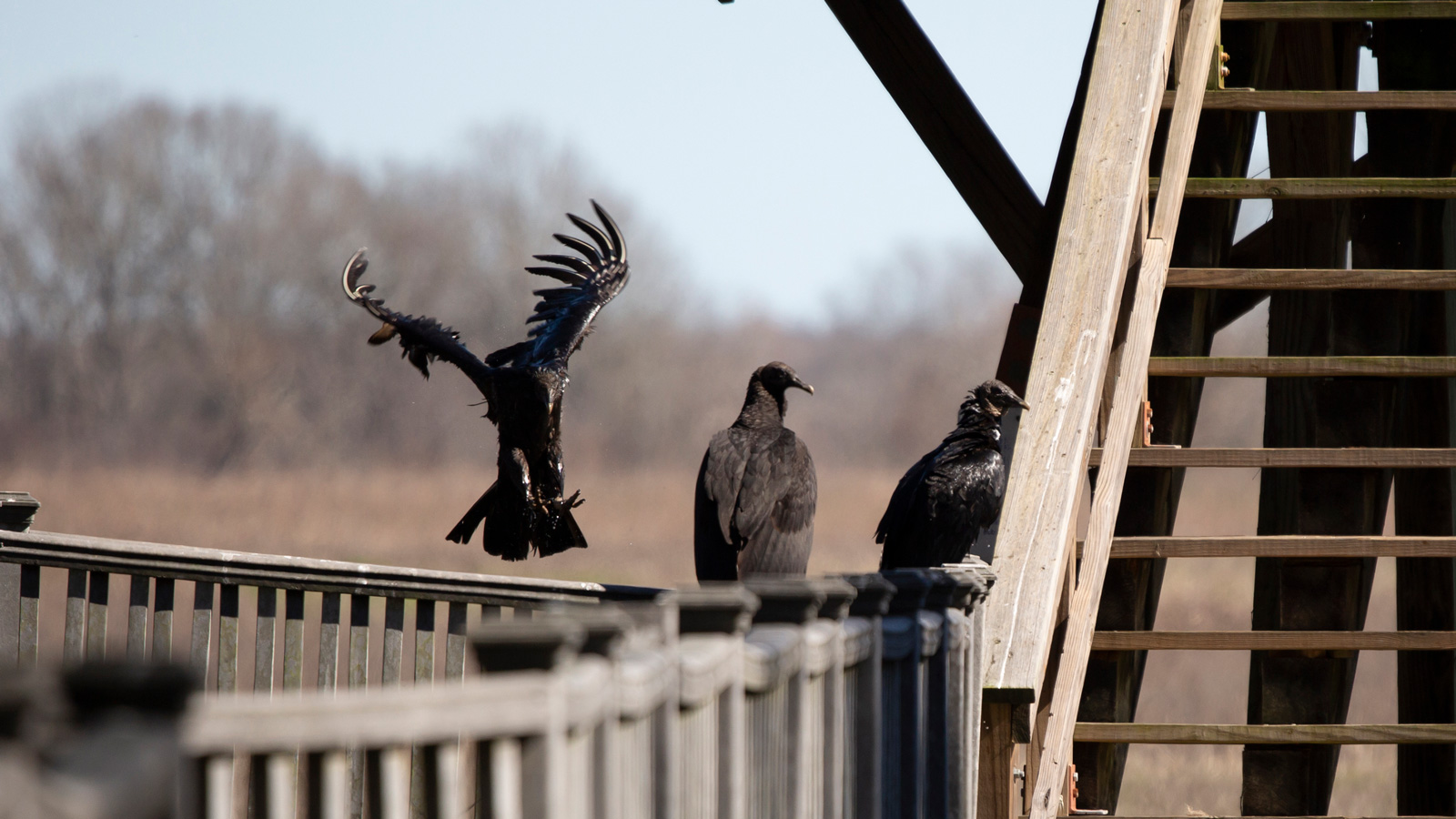
The Australian Sheep Blowfly occupies nearly every habitat type in the 26 parishes of North Louisiana. Urban areas offer garbage, pet waste, and the occasional dead animal under a porch. Suburban neighborhoods provide compost bins, roadkill along residential streets, and backyard barbecues. Rural areas — and North Louisiana has plenty — serve up livestock operations, manure, carrion from natural mortality, and the decomposing remains of whatever the coyotes and vultures didn't finish.
Pastures with cattle, sheep, goats, or horses attract these flies reliably. The combination of manure, warm hides, and the occasional wound or abrasion gives female flies everything they need for egg-laying. While flystrike on livestock in North Louisiana doesn't reach the catastrophic levels seen in Australian sheep operations — partly because fewer sheep exist per acre in Lincoln or Union Parish than in New South Wales — the potential remains anytime livestock sustain injuries during warm weather.
The specific habitats that produce the highest Australian Sheep Blowfly densities in the 26 parishes follow a predictable pattern. The bottomland hardwood corridors along the Red, Ouachita, Black, and Tensas Rivers generate steady supplies of carrion from the dense wildlife populations those riparian zones support. White-tailed deer, raccoons, opossums, nutria, feral hogs, and a full roster of smaller vertebrates die along these corridors year-round, and the warm, humid microclimate beneath the hardwood canopy accelerates decomposition and blowfly activity. Walk a levee trail in Concordia or Catahoula Parish during a May evening and the metallic green flashes in the undergrowth mark Australian Sheep Blowflies working the decomposition beat.
The pine uplands of Vernon, Natchitoches, Winn, and Grant parishes produce a different but equally active landscape. Roadkill concentrates along the two-lane highways threading through the piney hills — deer crossings near food plots and creek bottoms create reliable mortality zones that blowflies patrol daily. The drier microclimate under pine canopy means carcasses desiccate faster than in the bottomlands, compressing the window of blowfly activity on each individual food source but not reducing the overall population across the landscape.
Agricultural zones create their own dynamics. The row-crop parishes — Avoyelles, Rapides, Morehouse, Franklin, Richland — combine grain agriculture with cattle operations, producing both the manure-based breeding habitat and the carrion from livestock mortality that sustain year-round blowfly populations. Poultry operations, concentrated heavily in the parishes around Ruston and Farmerville, generate mortality events that draw blowflies to the farm periphery even when facility management keeps the main production areas clean.
Seasonal activity peaks during the warmest months. Expect the highest Australian Sheep Blowfly populations from May through September, when temperatures and humidity both run high enough to compress the life cycle and maximize the number of generations per year. Activity drops during winter but doesn't disappear entirely. Mild Louisiana winters allow some adults to survive in sheltered locations, and pupae in the soil remain viable through all but the hardest freezes. By mid-March, the first generation of the new year begins emerging, and the cycle resumes.
The flies don't restrict themselves to rural settings during peak season. Anyone who's sat outside at a restaurant in Shreveport, Ruston, or Alexandria during July and watched metallic green flies investigate their plate has likely hosted an Australian Sheep Blowfly. They patrol wherever organic material decomposes, and in warm weather, that includes every outdoor dining situation imaginable.
Insecticide Resistance
Here's a wrinkle that makes the Australian Sheep Blowfly particularly impressive and particularly annoying. This fly evolves resistance to pesticides faster than most insects. The history of chemical control against Lucilia cuprina in Australia reads like an arms race that the fly keeps winning. Dieldrin resistance emerged in Australian populations by the 1960s. Organophosphate resistance — specifically to diazinon — followed within a decade. Malathion resistance appeared next, driven by a single enzyme that the fly produces at roughly 45 to 50 times the normal level, one that breaks down the insecticide before the chemical can kill the fly.
Research on the enzyme responsible — a malathion carboxylesterase — showed it operates with remarkable efficiency. The purified enzyme from resistant flies breaks malathion down faster and more completely than any other insect esterase documented at the time of the study. Evolution, when under enough selective pressure, produces solutions that chemists struggle to outpace.
What does this mean for North Louisiana? It means that the standard household fly sprays and livestock insecticides work against Australian Sheep Blowflies, but only until they don't. Resistance genes spread through fly populations via normal reproduction and gene flow. Resistant individuals from one parish can colonize adjacent parishes within a single season. The 10-mile flight range means a resistant population near Grambling can share genes with flies near Choudrant within weeks.
The practical implication for livestock owners in North Louisiana: rotate chemical control methods, don't rely on a single insecticide class season after season, and prioritize wound management and hygiene in livestock. Preventing flystrike through good animal husbandry outperforms treating an established infestation every time.
Identification Tips
Separating the Australian Sheep Blowfly from other metallic-colored blowflies in the field takes some practice. The color alone doesn't cut it — several blowfly species in North Louisiana sport similar green or blue metallic sheens. Here's what to look for.
First, the overall color leans more bronze-copper-green than the deeper blue of the Shiny Blue Bottle Fly or the brighter green of the Common Green Bottle Fly (Lucilia sericata). Under direct sunlight, the Australian Sheep Blowfly's abdomen often flashes with warm coppery tones that the other species lack. The eyes glow distinctly reddish, which helps separate them from species with darker or more uniformly colored eyes.
Second, size. At 4.5 to 10 millimeters, the Australian Sheep Blowfly overlaps with many other calliphorid species but tends toward the smaller end compared to the Shiny Blue Bottle Fly. If you're looking at a metallic blowfly that measures closer to 12 or 14 millimeters, consider other species first.
Third, behavior. The Australian Sheep Blowfly arrives at carrion earlier than many competitors. If you find metallic green flies on an extremely fresh carcass — one that still looks relatively intact and smells only faintly — the first colonizers are often Lucilia cuprina. Later in the decomposition process, other blowfly species join and often outnumber them.
Fourth, habitat preference. Adults prefer bright, open, sunlit locations. Larvae prefer shade. Finding metallic green flies basking in direct sunlight on exposed carrion surfaces fits the Australian Sheep Blowfly profile perfectly.
For definitive identification, professionals examine the wing venation, the structure of the thoracic spiracles, and the arrangement of bristles on the body. Field identification to species level among blow flies remains genuinely difficult without magnification and entomological training — but knowing the Australian Sheep Blowfly as a distinct member of the local fauna beats lumping every green shiny fly into one mental category.
Why They Belong on the Site
North Louisiana Wildlife covers every parish from Vernon and Avoyelles north. In every single one of those 26 parishes, the Australian Sheep Blowfly operates as part of the decomposition cycle that recycles nutrients back into the soil. Without blow flies and their larvae, dead animals would decompose far more slowly, and the nutrients locked in carrion would take longer to re-enter the ecosystem. The forensic importance of the species adds another layer — this fly helps solve crimes in Louisiana and across the South.
The decomposition math deserves a closer look. A 150-pound deer carcass contains roughly 10 pounds of nitrogen, several pounds of phosphorus, and significant quantities of potassium, calcium, and trace minerals. Every gram of that nutritional payload needs to move from the dead animal's tissue into the soil, where plants can access and recycle the nutrients into new growth. Bacteria handle the chemical breakdown. Blow fly larvae handle the physical breakdown — chewing tissue into smaller particles, increasing the surface area available for bacterial colonization, and physically transporting material from the carcass into the surrounding soil when they migrate outward to pupate. A mature larva that fed on deer tissue for a week and then burrowed into the soil to pupate effectively delivered a concentrated package of processed nutrients to a new location. Multiply that movement by hundreds or thousands of larvae per carcass, and the nutrient distribution extends well beyond the original carcass footprint.
The Australian Sheep Blowfly's role in this process starts earlier than most competitors and continues through the critical first days of decomposition when the carcass transitions from intact tissue to the colonized, liquefying mass that later-arriving species will exploit. Without the early colonizers — and Lucilia cuprina ranks among the earliest — the initial breakdown phase would proceed more slowly, delaying the entire decomposition cascade.
They're not pretty. They're not charming. They carry bacteria from one disgusting surface to another and lay eggs in wounds. But the Australian Sheep Blowfly earned a place in the ecological machinery of North Louisiana by filling a niche that nobody else wants — processing the dead, recycling the forgotten, and doing the work that keeps the whole system turning over.
Even if that system occasionally includes your potato salad.
Accessibility
Sound comes first with this species. The Australian Sheep Blowfly produces a loud, buzzing flight tone that carries well across open areas. The buzz registers deeper than a housefly and more sustained than many smaller flying insects — a low, steady drone that intensifies when multiple individuals congregate around a food source. Near a fresh carcass or an open garbage container during warm months, the collective buzzing of dozens of Australian Sheep Blowflies creates an audible hum recognizable from several yards away. Visitors to rural areas, roadsides, or parks with decomposing material will hear the flies before seeing them.
On flat, paved surfaces like parking areas near agricultural operations, wheelchair and mobility device access stays clear. Roadside pull-offs along Highways 167, 71, and 80 during warm months often produce blowfly encounters near any visible carrion. The flies also visit rest stops, picnic areas, and outdoor dining spots where food scraps accumulate. Any outdoor location with organic waste during the warmer months offers a reasonable chance of encountering Australian Sheep Blowflies without leaving a maintained path or paved surface.
More Information
NABA (North American Butterfly Association): naba.org — general insect ecology resources iNaturalist: inaturalist.org — occurrence records and photos of Lucilia cuprina in Louisiana BugGuide: bugguide.net — species identification and range information for Calliphoridae University of Florida Featured Creatures: entnemdept.ufl.edu — detailed species profiles for forensically important blow flies
METADATA Title: Australian Sheep Blowfly (Lucilia cuprina) Subtitle: The One That Flew Halfway Around the World Just to Ruin Your Cookout Slug: australian-sheep-blowfly-north-louisiana Species: Lucilia cuprina Category: Insects Subcategory: Flies Parish Coverage: All 26 parishes Featured Image Alt Text: Metallic green Australian Sheep Blowfly with coppery reflections resting on a sunlit surface
SEO Focus Keyphrase: Australian Sheep Blowfly North Louisiana Meta Description: The Australian Sheep Blowfly lives across all 26 parishes of North Louisiana, arriving at carrion within minutes and playing a critical role in decomposition and forensic science. Secondary Keywords: Lucilia cuprina Louisiana, bronze bottle fly, blowfly identification, forensic entomology fly, metallic green fly Louisiana
Advertisement
Advertisement
Accessibility
## Accessibility
Sound comes first with this species. The Australian Sheep Blowfly produces a loud, buzzing flight tone that carries well across open areas. The buzz registers deeper than a housefly and more sustained than many smaller flying insects — a low, steady drone that intensifies when multiple individuals congregate around a food source. Near a fresh carcass or an open garbage container during warm months, the collective buzzing of dozens of Australian Sheep Blowflies creates an audible hum recognizable from several yards away. Visitors to rural areas, roadsides, or parks with decomposing material will hear the flies before seeing them.
On flat, paved surfaces like parking areas near agricultural operations, wheelchair and mobility device access stays clear. Roadside pull-offs along Highways 167, 71, and 80 during warm months often produce blowfly encounters near any visible carrion. The flies also visit rest stops, picnic areas, and outdoor dining spots where food scraps accumulate. Any outdoor location with organic waste during the warmer months offers a reasonable chance of encountering Australian Sheep Blowflies without leaving a maintained path or paved surface.
Advertisement

