Advertisement
Fun Facts
Did You Know?
During breeding season, males with active nests actively attack anything that enters their perceived territory, including pedestrians, cyclists, dogs, and large stationary objects that were placed near the marsh by other humans. The attack rarely makes contact, it passes close enough to the top of the head that most people instinctively duck, but the commitment to the performance is complete. The male does not distinguish between threats. A red-tailed hawk and a jogger with earbuds receive the same response
If This Animal Could Talk...
"Watch closely, respect my space, and let my habitat explain the rest of the story."
Anyone within thirty feet of a cattail marsh in North Louisiana between March and July will hear a red-winged blackbird explain, at close range and high volume, that this is not going to work for him. The red-winged blackbird (Agelaius phoeniceus) applies its territorial aggression to everything that moves, crows, hawks, herons, dogs, joggers, the FedEx truck, you personally. He has chased red-tailed hawks three times his size across open fields and returned to his cattail stem looking completely satisfied with how that went. The American bittern frozen in the reeds with its neck stretched vertical, doing its best impersonation of dead cattail, did not ask to be represented by the red-winged blackbird's alarm system. The bittern has opinions about this. If he had thumbs and access to the court system, he would file a restraining order against the sky.
Red-winged blackbirds breed across every one of North Louisiana's 26 parishes wherever cattail marshes, wet meadows, shrubby wetland edges, and dense vegetation near water exist, which is enough of North Louisiana that the very few parishes where you cannot find one within twenty minutes of trying. That covers a lot of North Louisiana. In winter, massive flocks numbering in the hundreds of thousands move into the agricultural eastern parishes, joining the mixed icterid aggregations that work the grain fields and form those pre-dawn roosts that darken the sky over Tensas and Madison Parishes. From the first territorial males singing from cattail stems in February to the enormous winter roosts of December, the red-winged blackbird is the most consistently present, consistently loud, and most structurally confident bird in North Louisiana's wetland and agricultural landscape.
Photo Gallery
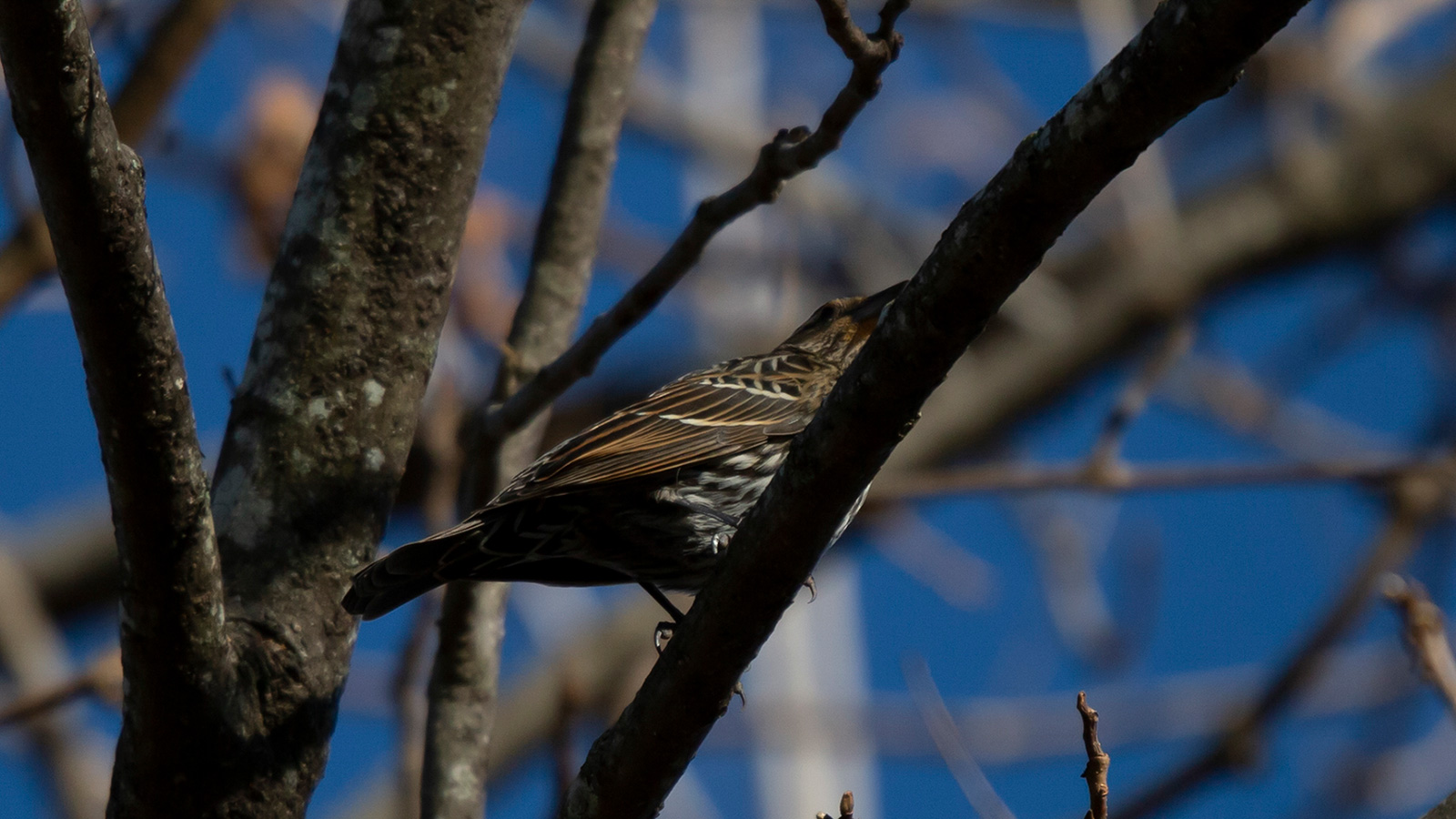
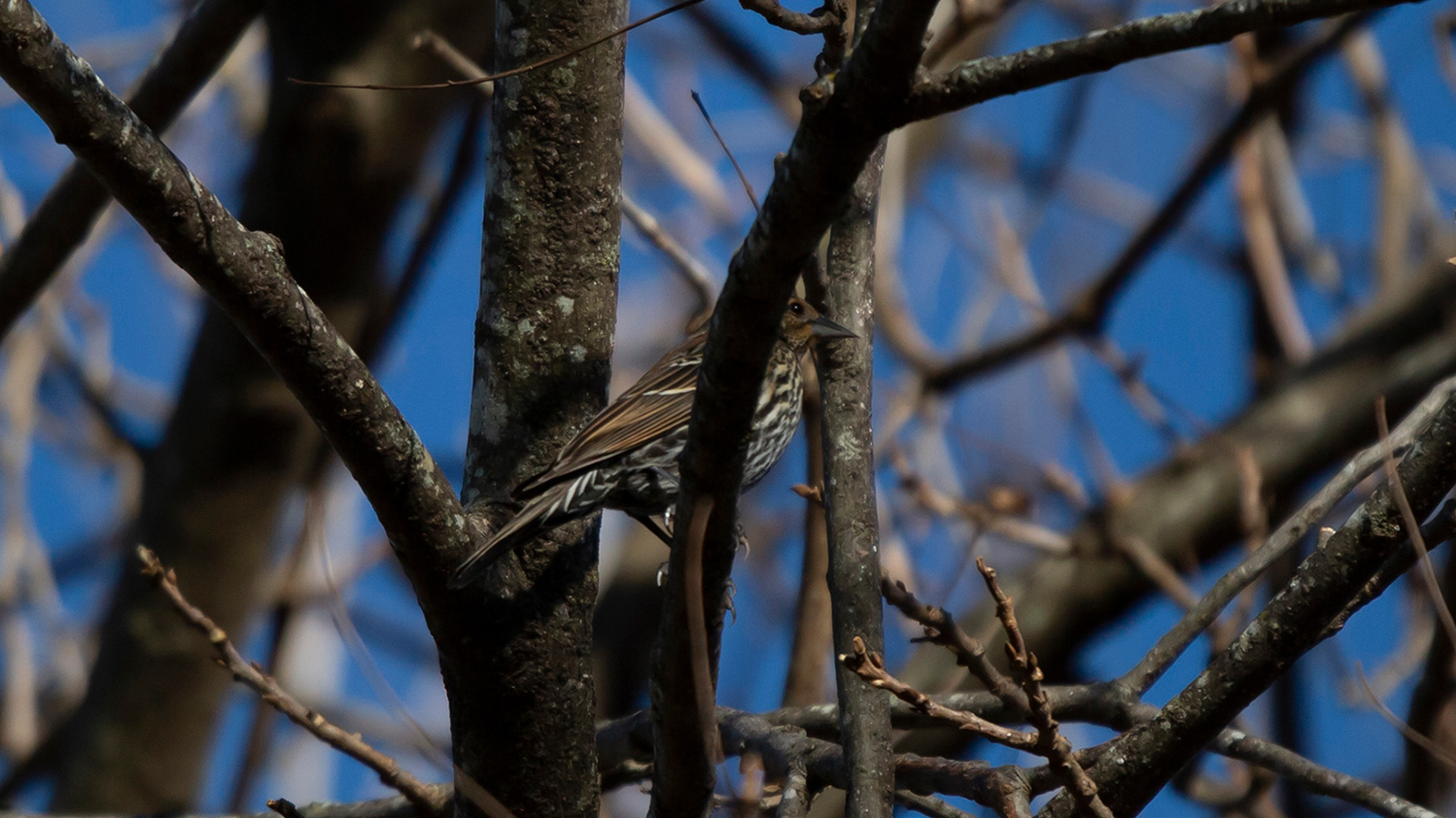
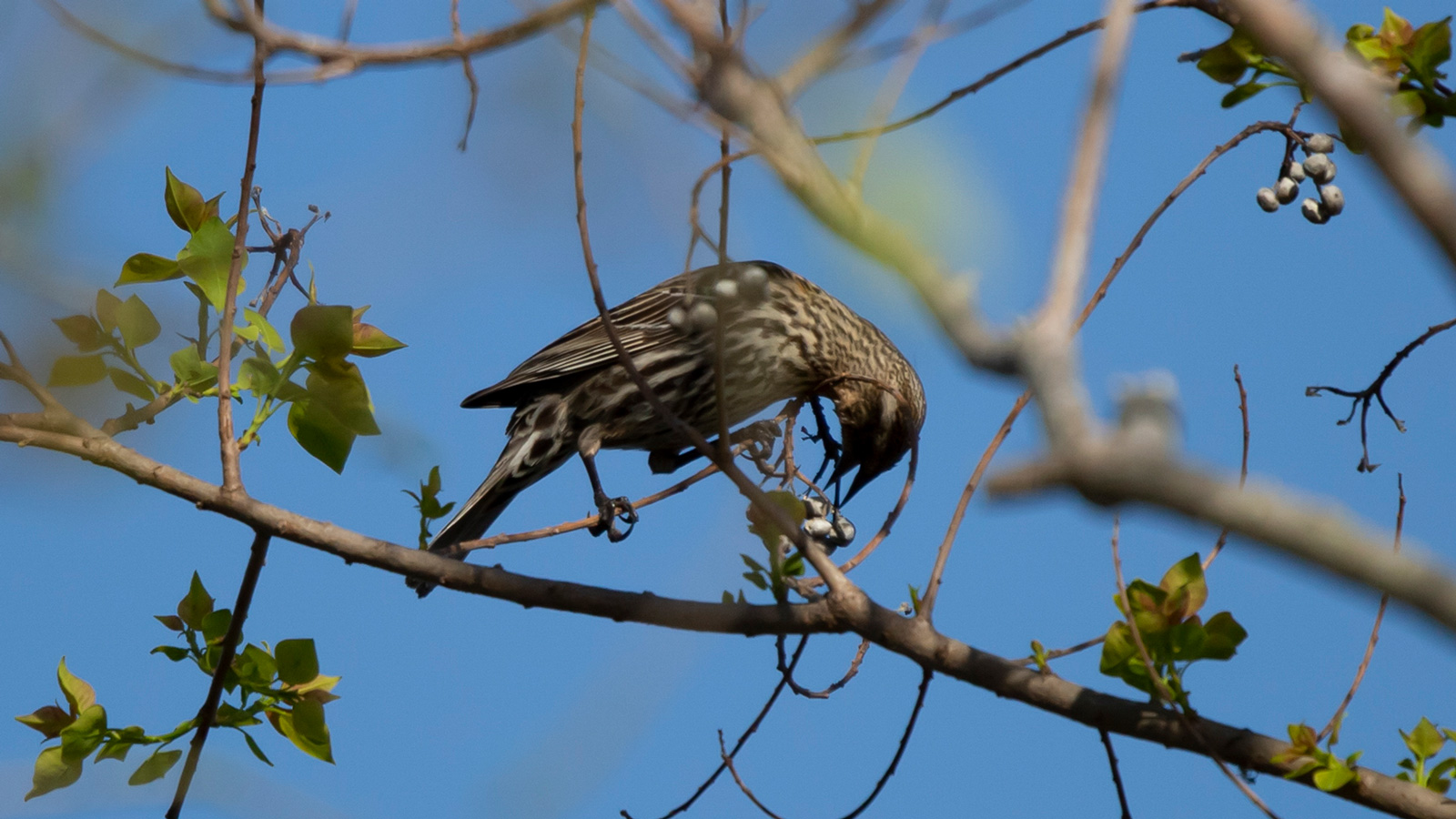
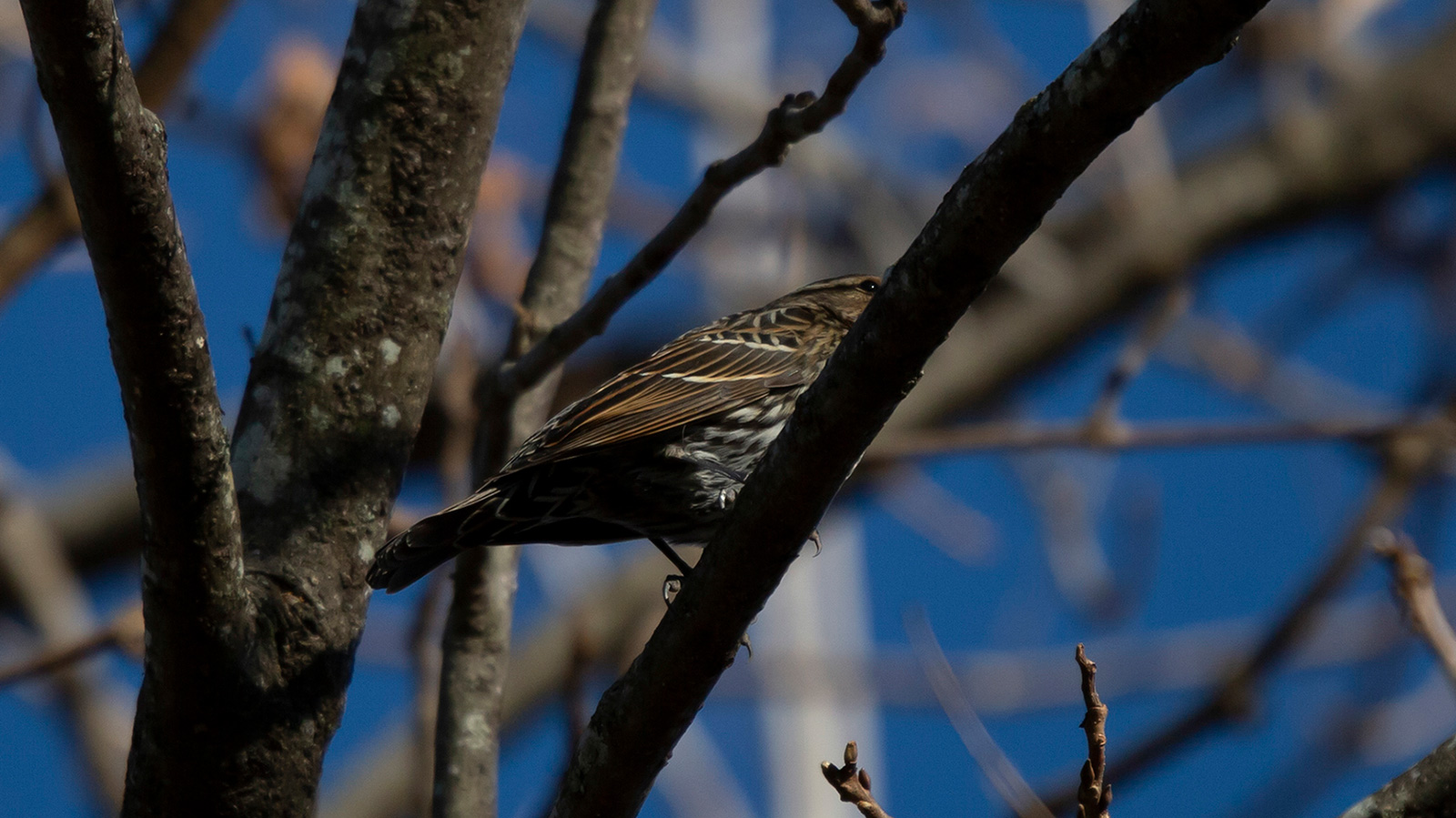
What Is the Red-Winged Blackbird Often Confused With?
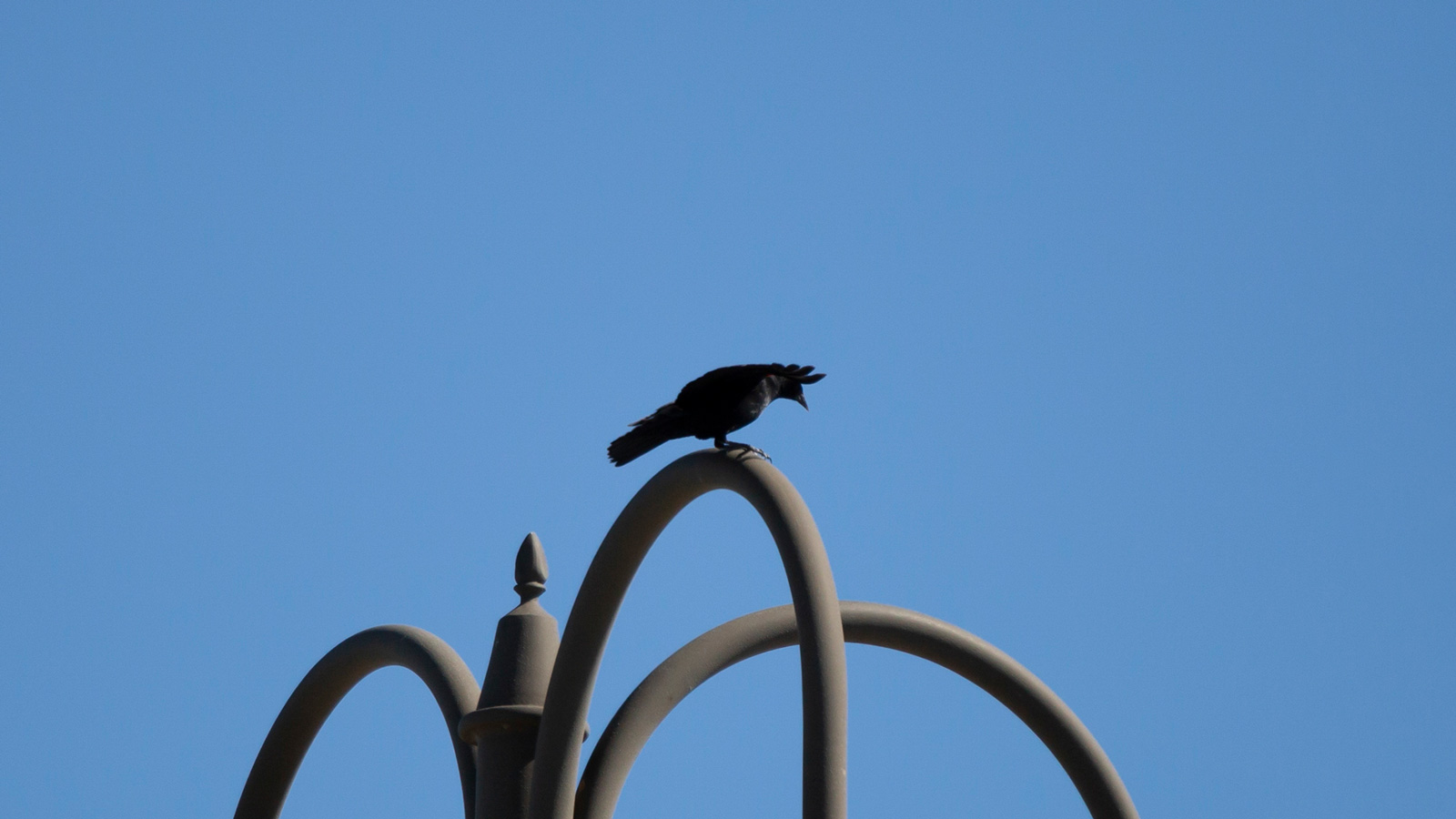
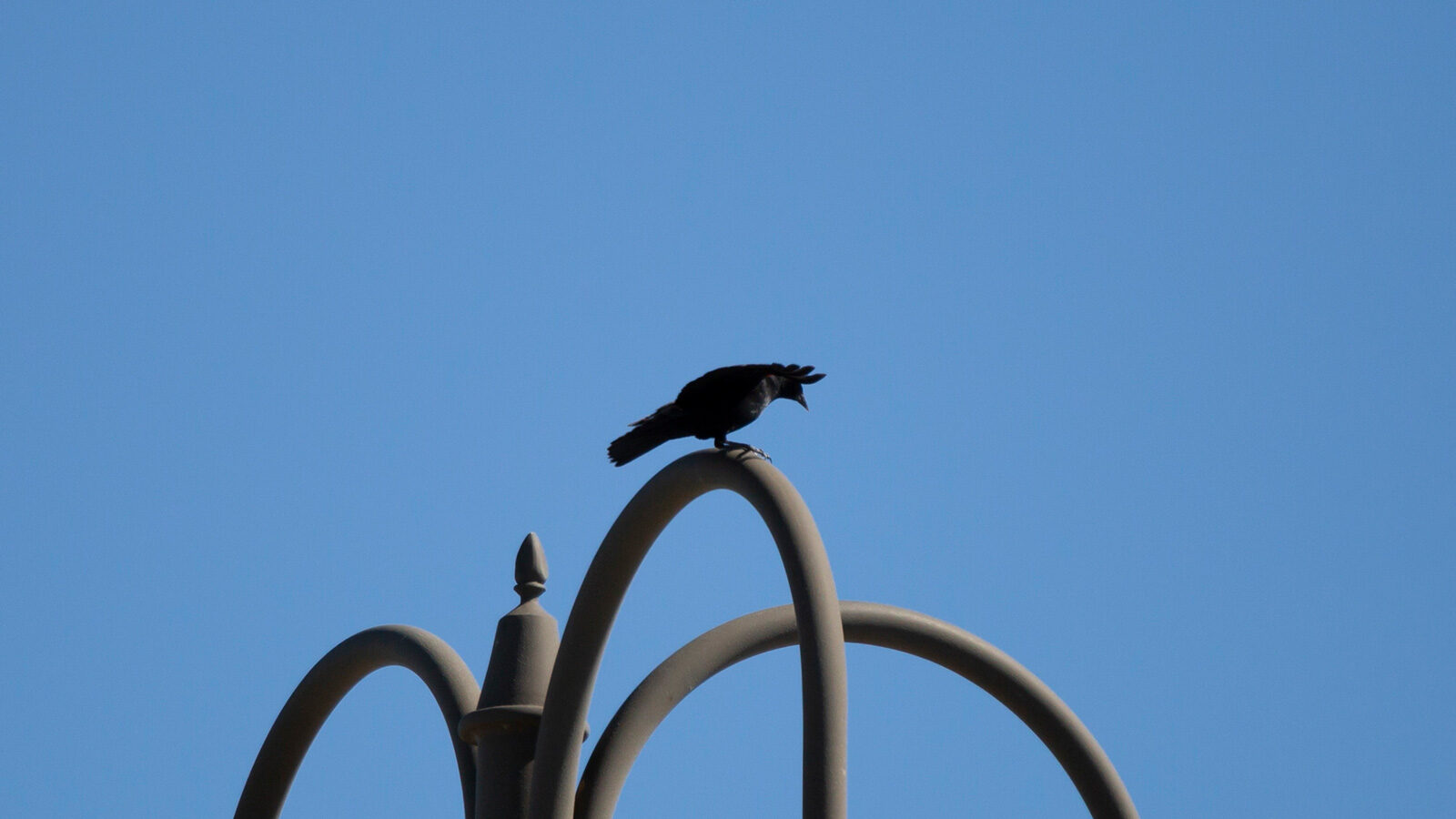
The adult male's field marks are, for a North American songbird, unusually direct: all-black body with red-and-yellow epaulets. No ambiguity. No subspecies confusion. No lighting-dependent color shift. You see the bird, you know what it is. on the shoulders. The epaulets are a status signal, and the male knows how to use them. When he displays from a cattail stem, body angled forward, wings half-spread, red patches fully exposed, producing the "conk-la-ree" at maximum output toward a rival male, he looks like a bird that has worked out that his entire reproductive success depends on this moment and has decided to commit fully to it. The effect justifies the whole trip to the marsh. When a male rests with wings folded, sometimes only a sliver of red shows at the shoulder and he can look almost entirely black until he moves. He has decided this situation does not require the credential. The shift from relaxed posture to full display, from "almost invisible dark bird on a stem" to "unmistakable, shoulder-lit, broadcasting at volume," happens in one motion. The decision to show the epaulets is a decision. He makes it deliberately and continuously throughout the breeding season.
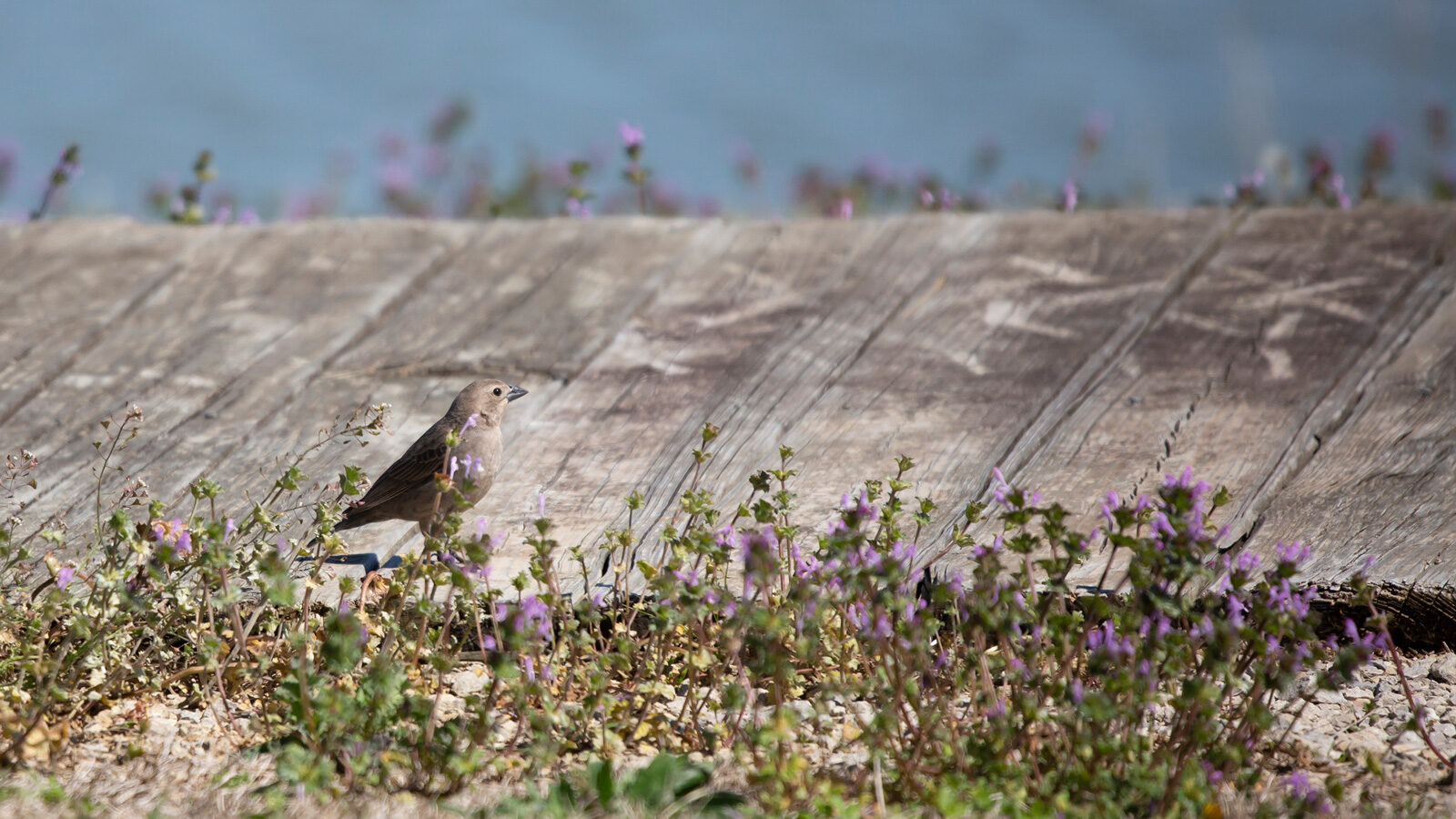
Drag the handle left and right to compare Red-Winged Blackbird side by side with the species it gets mistaken for most.
1 of 3
Advertisement
Accessibility
Accessibility
The "conk-la-ree" carries from a hundred yards across open marsh and field on calm mornings. It arrives before binoculars go up. From inside a parked vehicle with the windows down at any cattail marsh edge in North Louisiana between March and August, male red-winged blackbirds will be audible and visible on exposed singing perches within minutes of stopping. The males sing from the tops of cattail stems specifically because elevated exposed positions maximize the effectiveness of their territorial broadcast. This puts them at eye level or below for a seated observer in a vehicle at the marsh edge.
For winter flocks, the scale of the concentrations in the eastern agricultural parishes means the birds are visible from rural road shoulders without specialized access. The flocks work grain fields large enough to hold visible concentrations from a stationary vehicle at the field edge.
The alarm call, that sharp "check", carries through all ambient sound and announces red-winged blackbirds whether or not you can see them. If you're near cattail marsh in spring and everything in the marsh suddenly starts calling simultaneously, something moved near the water that wasn't supposed to. Look for the hawk.
Advertisement
Frequently Asked Questions
Does Red-Winged Blackbird live in North Louisiana?
Yes. Anyone within thirty feet of a cattail marsh in North Louisiana between March and July will hear a red-winged blackbird explain, at close range and high volume, that this is not going to work for him. Red-winged blackbirds breed across every one of North Louisiana's 26 parishes wherever cattail marshes, wet meadows, shrubby wetland edges, and dense vegetation near water exist, which is enough of North Louisiana that the very few parishes where you cannot find one within twenty minutes of trying. That covers a lot of North Louisiana.
How do you identify Red-Winged Blackbird?
The adult male's field marks are, for a North American songbird, unusually direct: all-black body with red-and-yellow epaulets. No ambiguity. No subspecies confusion. No lighting-dependent color shift. You see the bird, you know what it is. on the shoulders. The epaulets are a status signal, and the male knows how to use them. When he displays from a cattail stem, body angled forward, wings half-spread, red patches fully exposed, producing the "conk-la-ree" at maximum output toward a rival male, he looks like a bird that has worked out that his entire reproductive success depends on this moment and has decided to commit fully to it. The effect justifies the whole trip to the marsh. When a male rests with wings folded, sometimes only a sliver of red shows at the shoulder and he can look almost entirely black until he moves. He has decided this situation does not require the credential. The shift from relaxed posture to full display, from "almost invisible dark bird on a stem" to "unmistakable, shoulder-lit, broadcasting at volume," happens in one motion. The decision to show the epaulets is a decision. He makes it deliberately and continuously throughout the breeding season.
What does Red-Winged Blackbird eat?
The female handles nest construction, incubation, and most feeding of nestlings. The females build their own nests, incubate their own eggs, and handle most of their own nestling feeding. Each female builds her own nest, incubates her own eggs, handles most of her own nestling feeding
Is Red-Winged Blackbird dangerous to people?
The Nesting Geography
Female red-winged blackbirds build the nest. The male does not assist with this. He is on the perch. He considers the perch his contribution. The female has not filed a formal objection. He is on the perch. The female weaves wet cattail leaves and grass stems around upright vegetation using the mechanical tension of the surrounding stems as structure. The nest cup stiffens as the material dries under tension, holding its shape through the movement of the cattails in wind. The nest moves with the vegetation rather than pulling free. The construction method is specific to the habitat's physics.
The breeding season runs fast by songbird standards: eggs in roughly four days, incubation under two weeks, fledging in eleven to fourteen days after hatching. A pair can complete a nesting attempt, lose it to a predator, and begin again within days. The marsh in May is running multiple overlapping attempts simultaneously across dozens of territories, and the outcome of any individual nest matters less to the population than the total number of successful attempts across the season.
The Female Runs the Nesting Operation
The female builds the nest. Alone. She weaves wet cattail leaves and grass stems around upright stems, using the mechanical tension of the surrounding vegetation as structural support. The nest stiffens as the material dries, moves with the cattails in wind instead of pulling free, and is placed specifically inside the dense vegetation rather than at the edge where aerial predators have a clear approach angle. She has solved an engineering problem with available materials. The male, during this entire process, has been singing from the highest available perch.
The female incubates the eggs. She handles most of the early nestling feeding. The male's contribution increases as the nestlings grow and food demand rises beyond what she can supply alone. The arrangement has persisted through enough evolutionary time to indicate it works. It was not designed by committee. The female is running the nesting operation and the nesting operation is succeeding. She selects the territory she nests in, which means she is selecting the male indirectly, since the territory and the male are bundled. She builds the nest without assistance. She incubates the eggs.
She handles most of the nestling feeding in the early days, with the male's feeding contribution increasing as the nestlings grow and the food demand rises beyond what she can supply alone.
The male sings from the perch and defends the territory boundary. These are not small contributions: territorial defense affects the quality of the resources available to the female's nesting attempt, and the male's alarm responses protect the nest from predators the female cannot monitor from inside the vegetation. But the operational core of the nesting attempt is hers. The nest exists because she built it. The eggs are incubating because she incubated them. The nestlings are developing because she fed them.
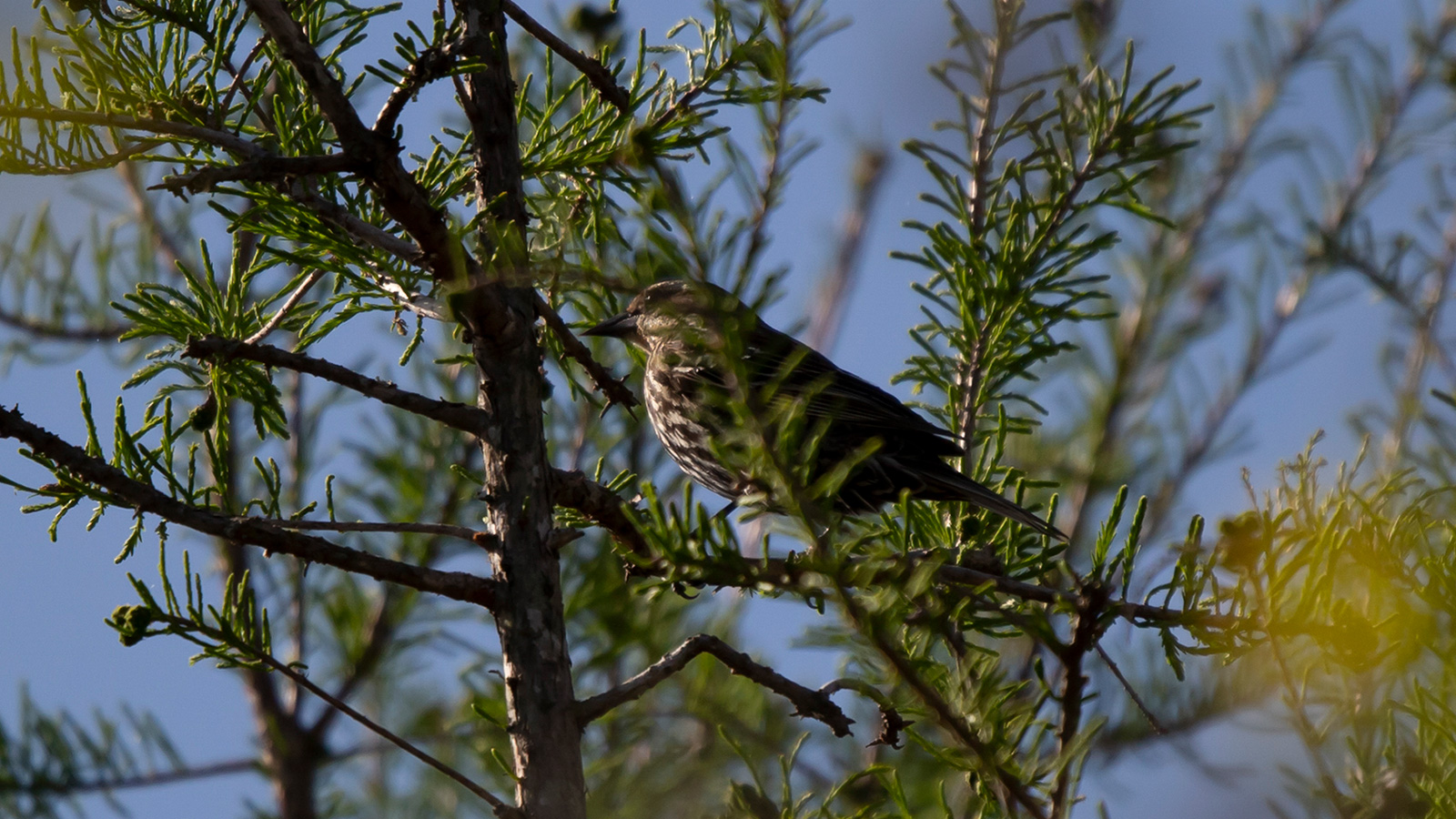
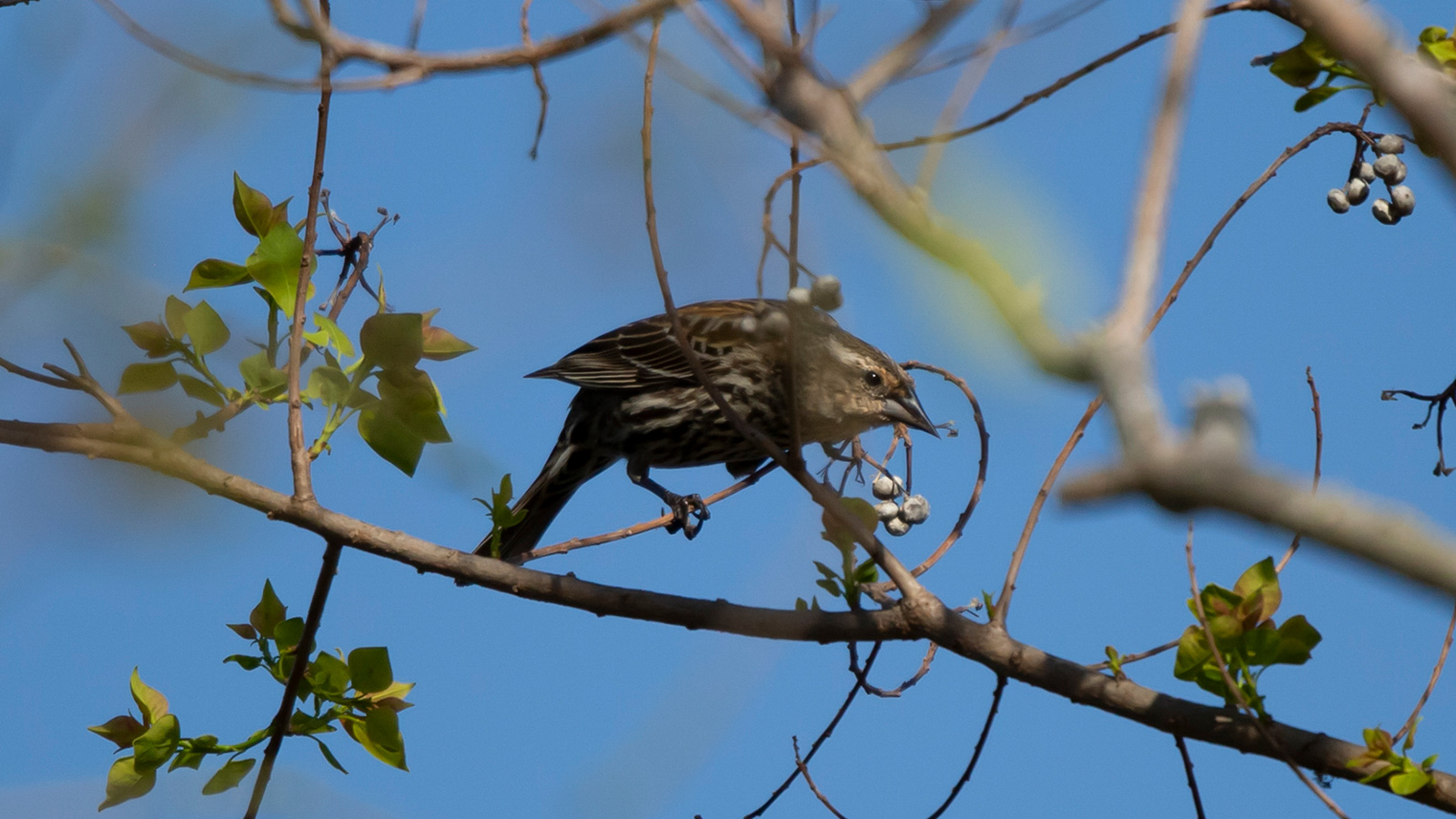
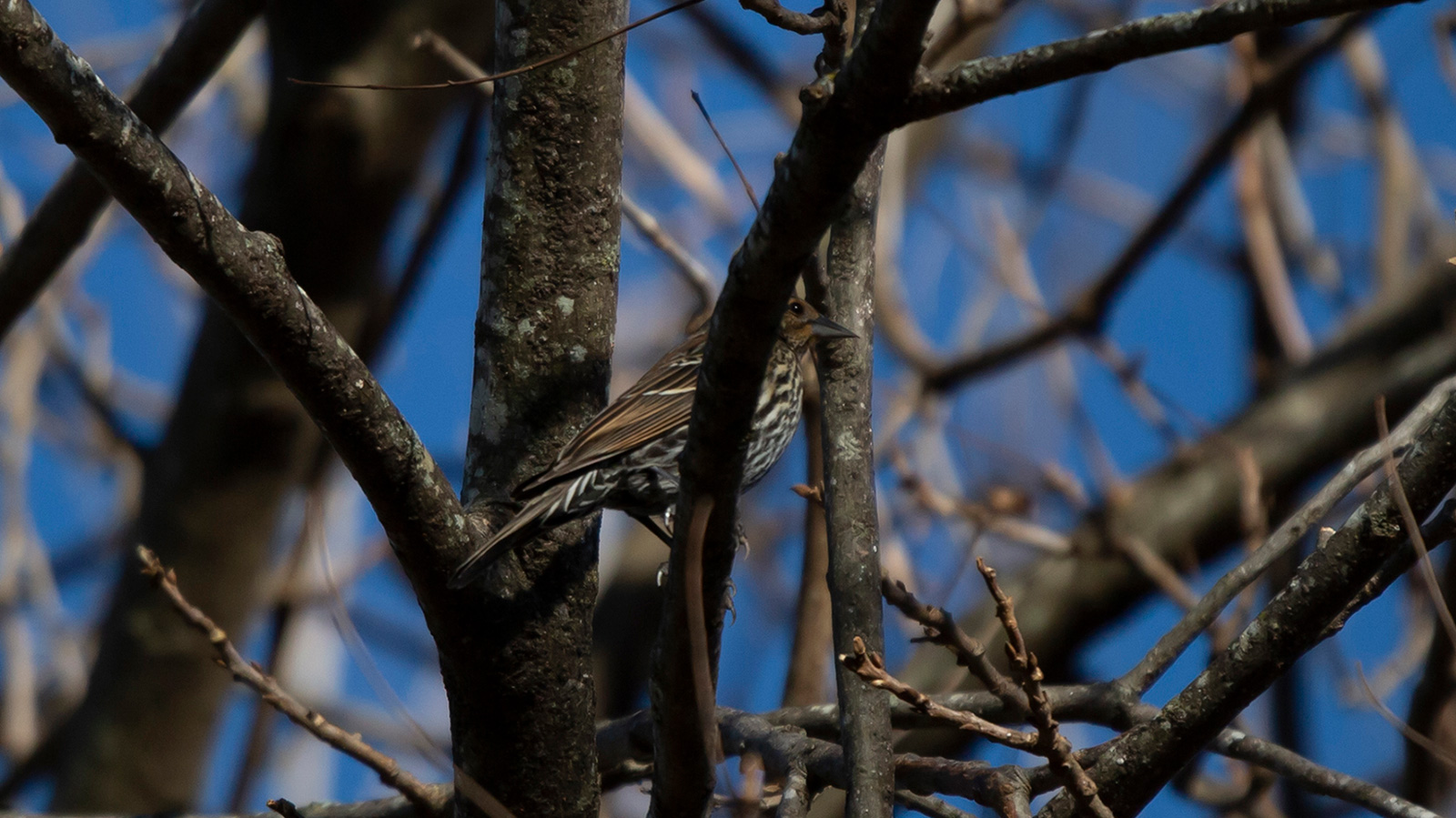
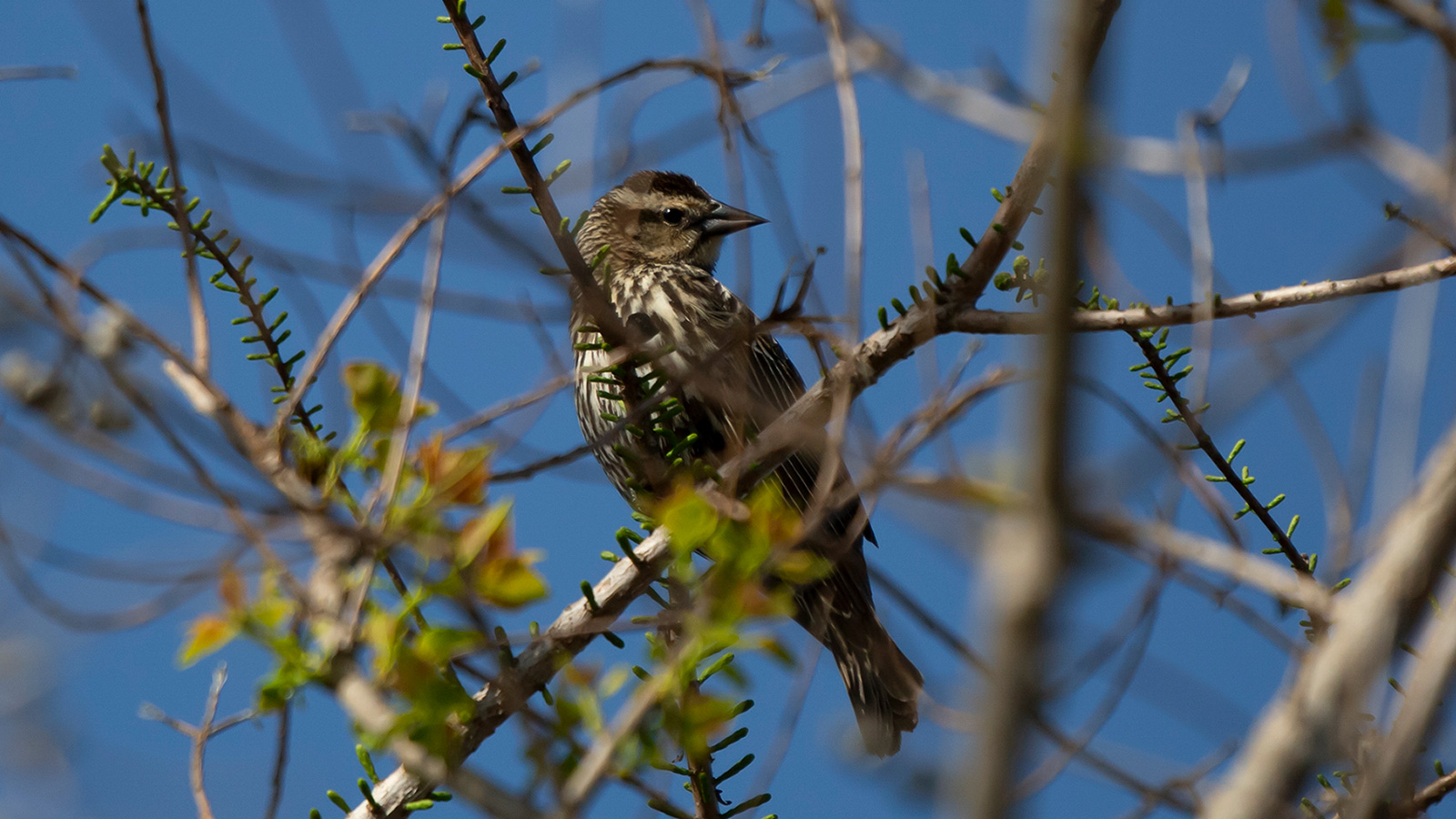
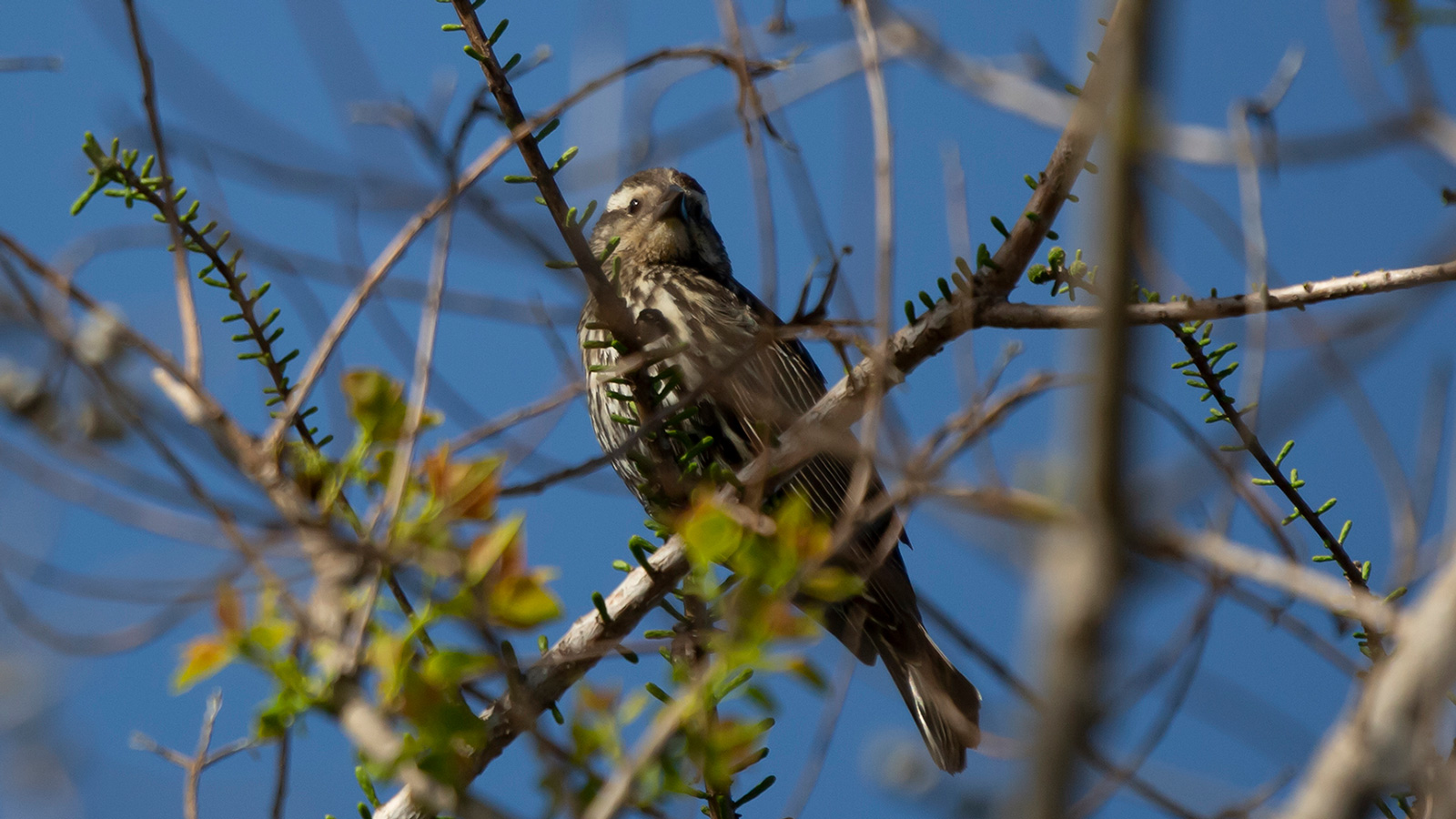
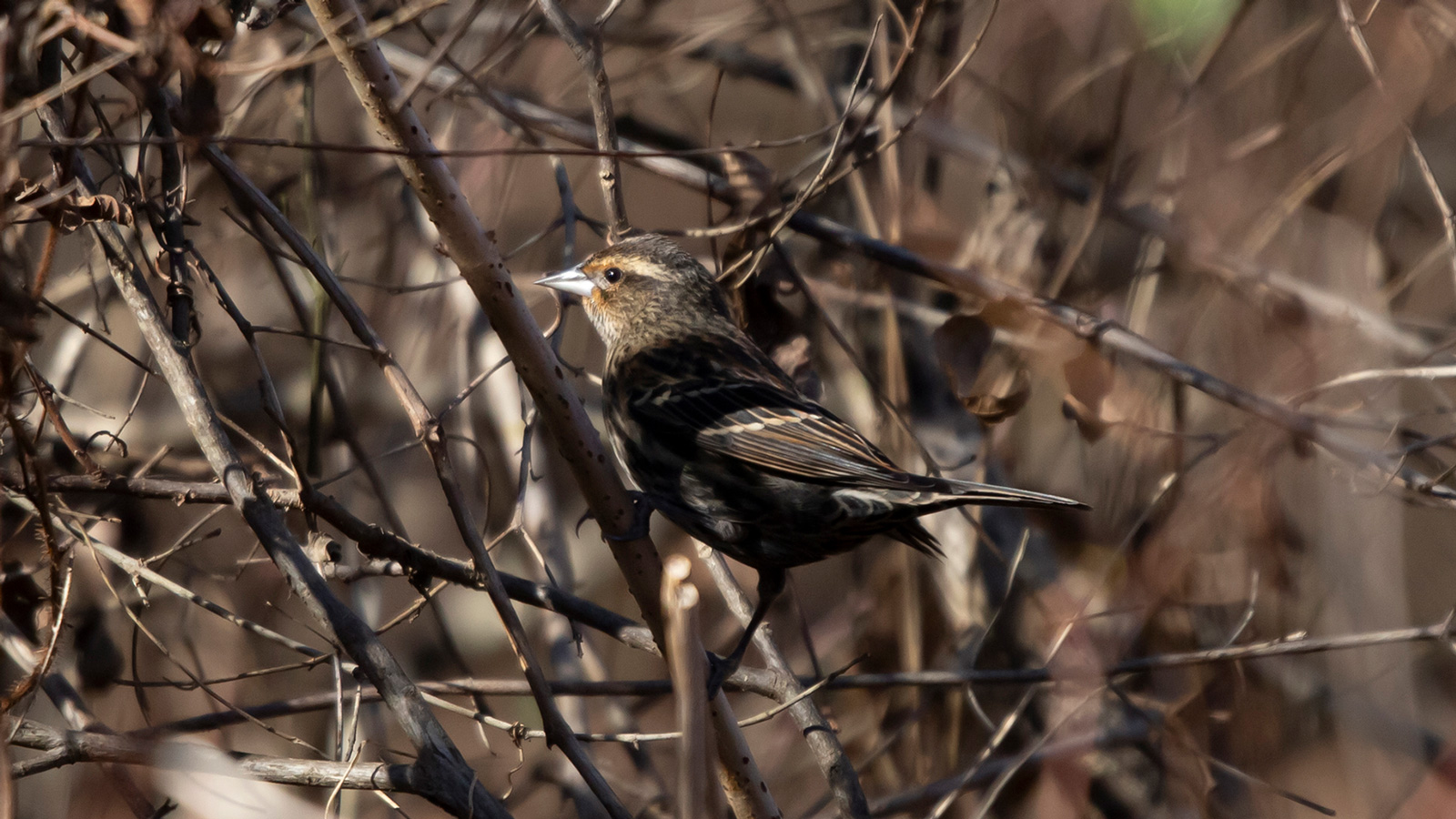
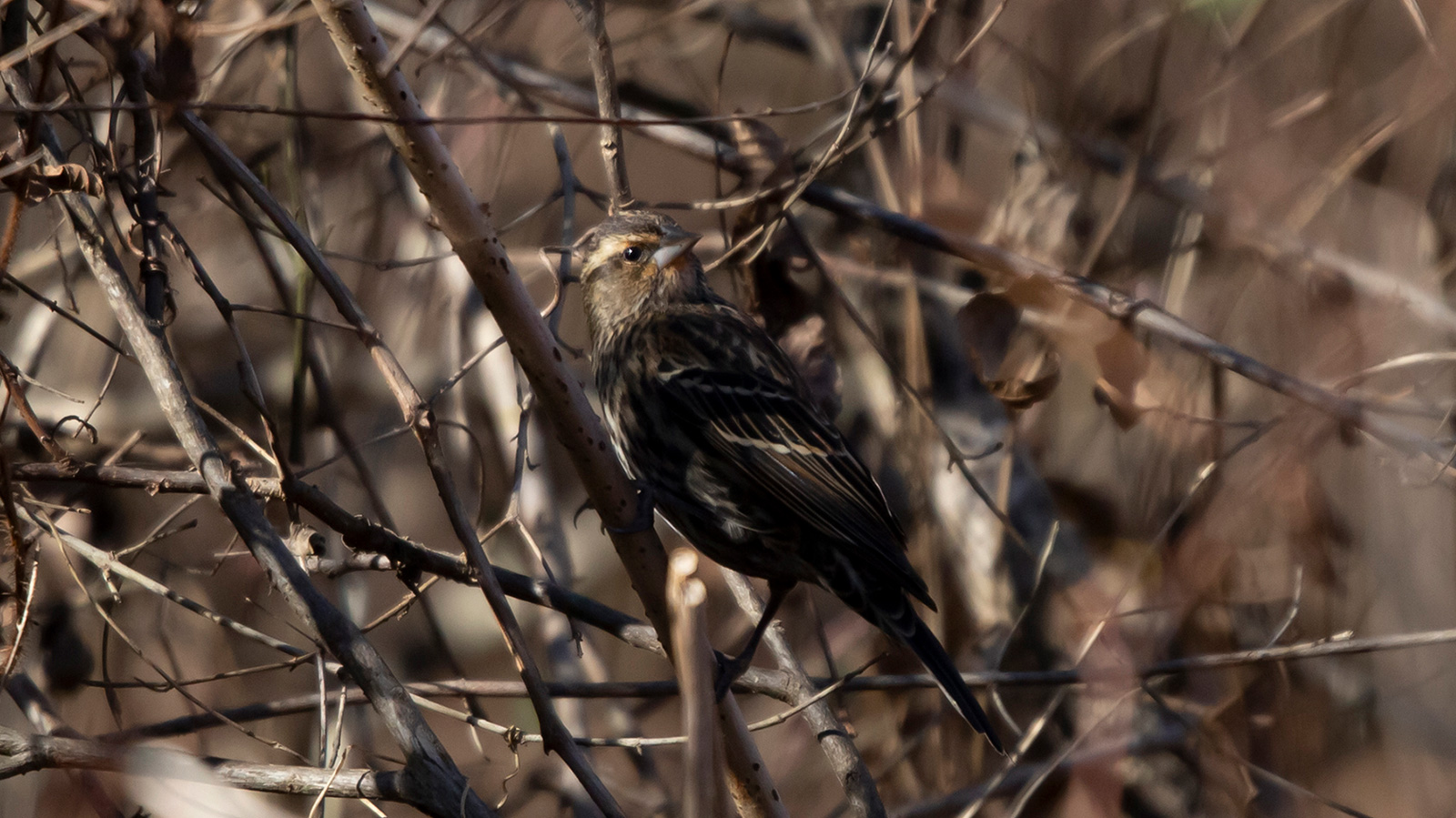
The female's brown streaked plumage, which most observers dismiss as dull compared to the male's display, is functional camouflage that makes her invisible on the nest at distances where the male's red epaulets are visible from a hundred yards. The drabness is the point. The nest survives, in part, because the bird sitting on it doesn't register as interesting from above.