Advertisement
Thanks to hundreds of deer-inflicted accident reports filed each year and a 1940s cartoon that disturbed several generations of viewers, the white-tailed deer ranks among the most well-known species in the U.S. Odocoileus virginianus also qualifies as one of the most visible animals in North Louisiana, and not in the way wildlife documentaries would have you believe. The white-tailed deer does not operate as a shy, elusive woodland creature that rarely encounters people. White-tailed deer occupy your yard, your road, and occasionally the front half of your vehicle after a miscommunication about right-of-way.
If you've ever been to North Louisiana, you know that deer are everywhere. They move through forested areas near roads, wander onto roads, camp out on roads, cross roads at the exact moment you were not expecting anything to cross the road, and, often, end up in the fender of your car. They sprint up to 30 miles per hour and leap ten feet high and thirty feet forward, which are impressive athletic statistics that do not prevent them from freezing in the middle of the highway when headlights approach. Deer treat cars as predators, which — correct. But the predator-response strategy deer evolved, freeze and assess, doesn't account for predators traveling at sixty miles per hour. A design flaw, and the deer population has not addressed it.
What Exactly Is a White-Tailed Deer
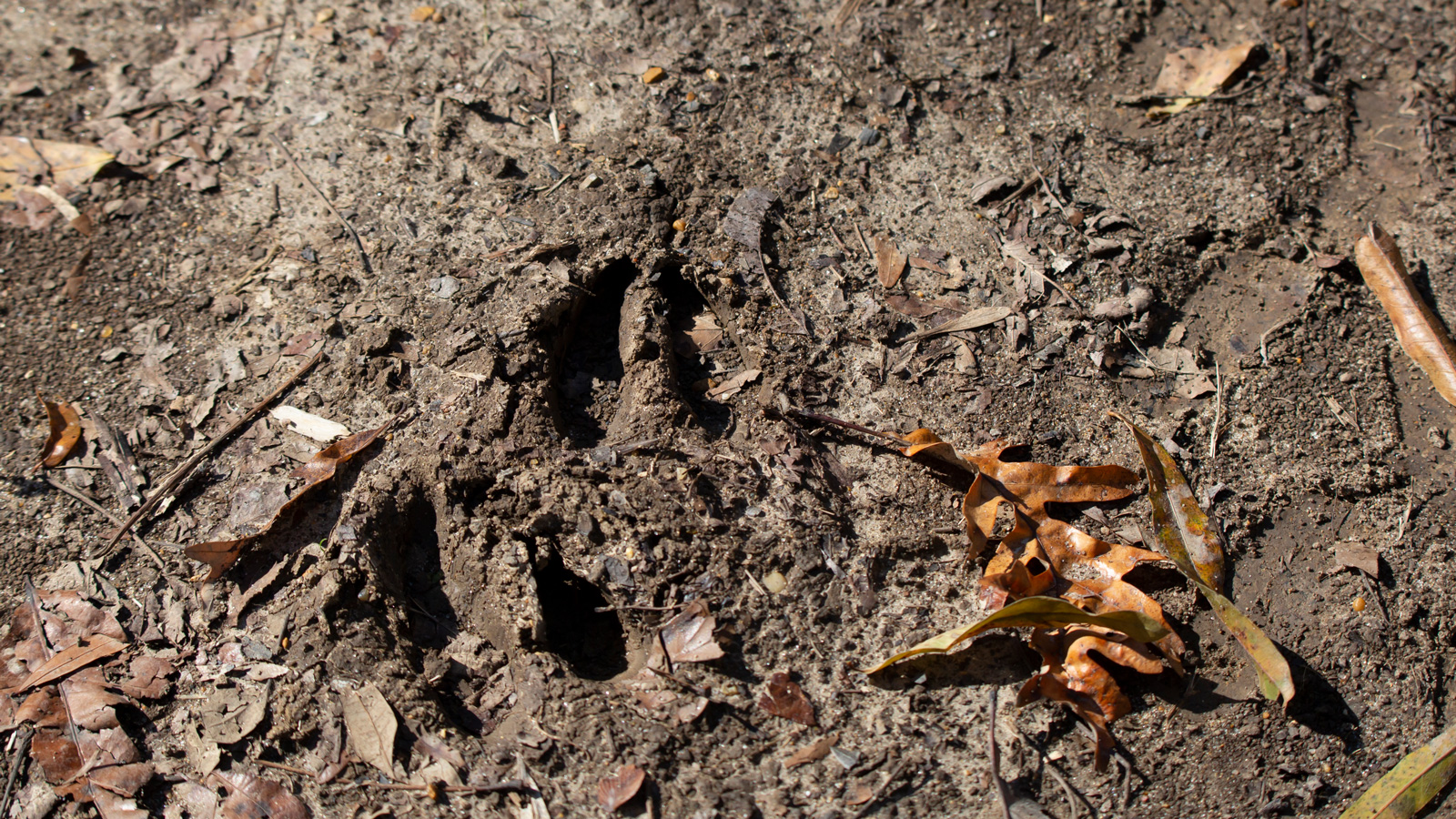
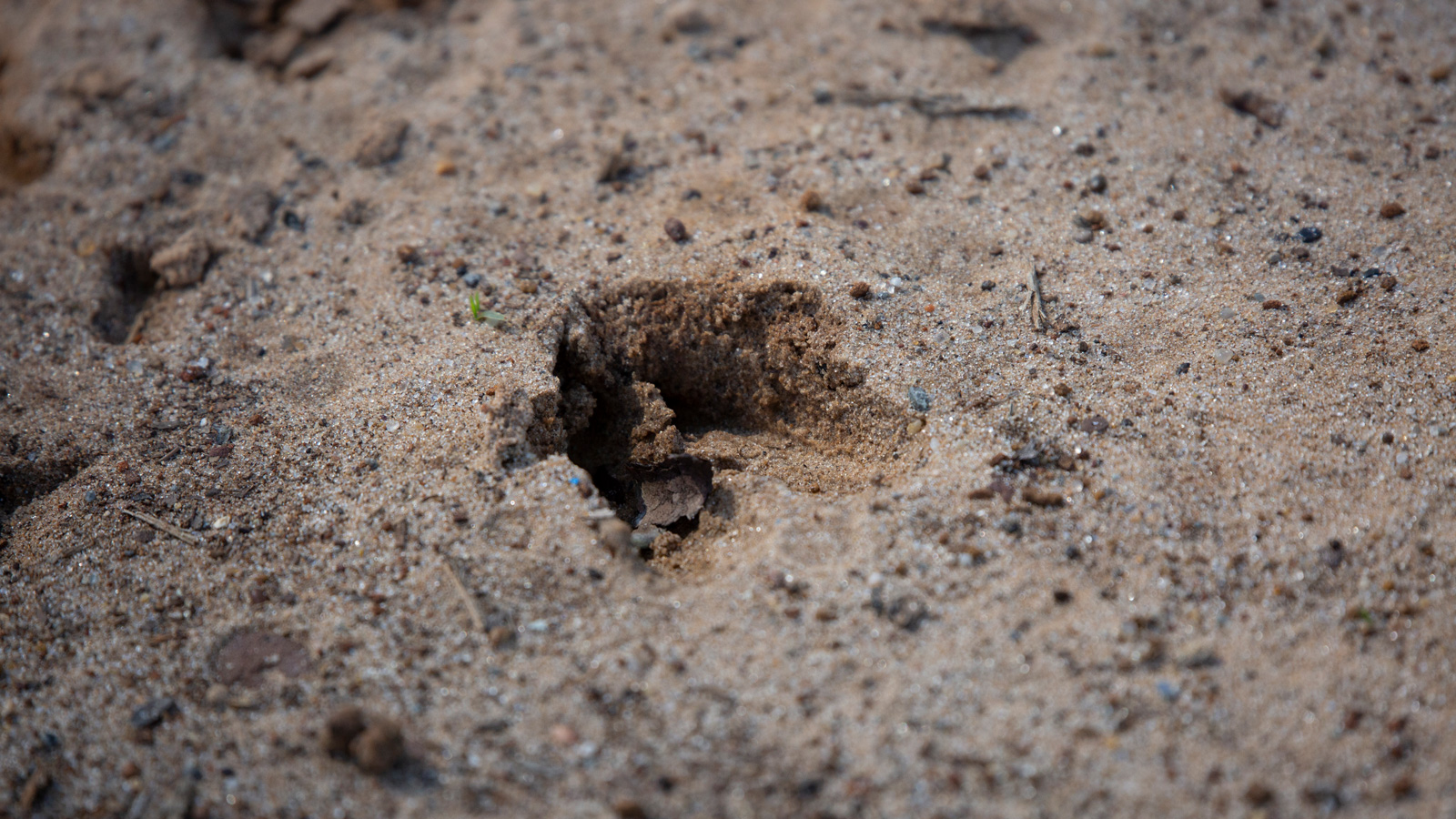
The white-tailed deer stands as the only native member of the order Artiodactyla in Louisiana, the hoofed mammals, a group that includes pigs, hippos, giraffes, camels, sheep, goats, and cattle. Feral hogs also roam Louisiana, but they arrived well after the deer and have never quite settled the question of whether they belong. The white-tailed deer qualifies as the native ungulate, present on this land considerably longer than the roads deer now refuse to yield to.
The species takes its name from the white underside of its tail, which deer raise as a flag when running. This alarm signal to the herd means danger, run now, ask questions later. A deer that spots another deer raising its tail bolts immediately without stopping to evaluate whether the threat was real. Efficient herd communication. Also the exact mechanism that sends fifteen deer across a road in five seconds after one deer spooks at a jogger, which explains most deer-vehicle collisions.
White-tailed deer live throughout North America from southern Canada to Central America, across nearly every habitat type except true desert. In Louisiana, they stay year-round without hibernating, migrating, or leaving. They move through summer. They move through winter. They move especially at dawn and dusk, when you drive to or from work, because deer are crepuscular, most active during low-light hours, which also happen to be the hours when visibility drops and deer are hardest to see until they materialize directly in front of your car.
Advertisement
What You're Actually Looking At
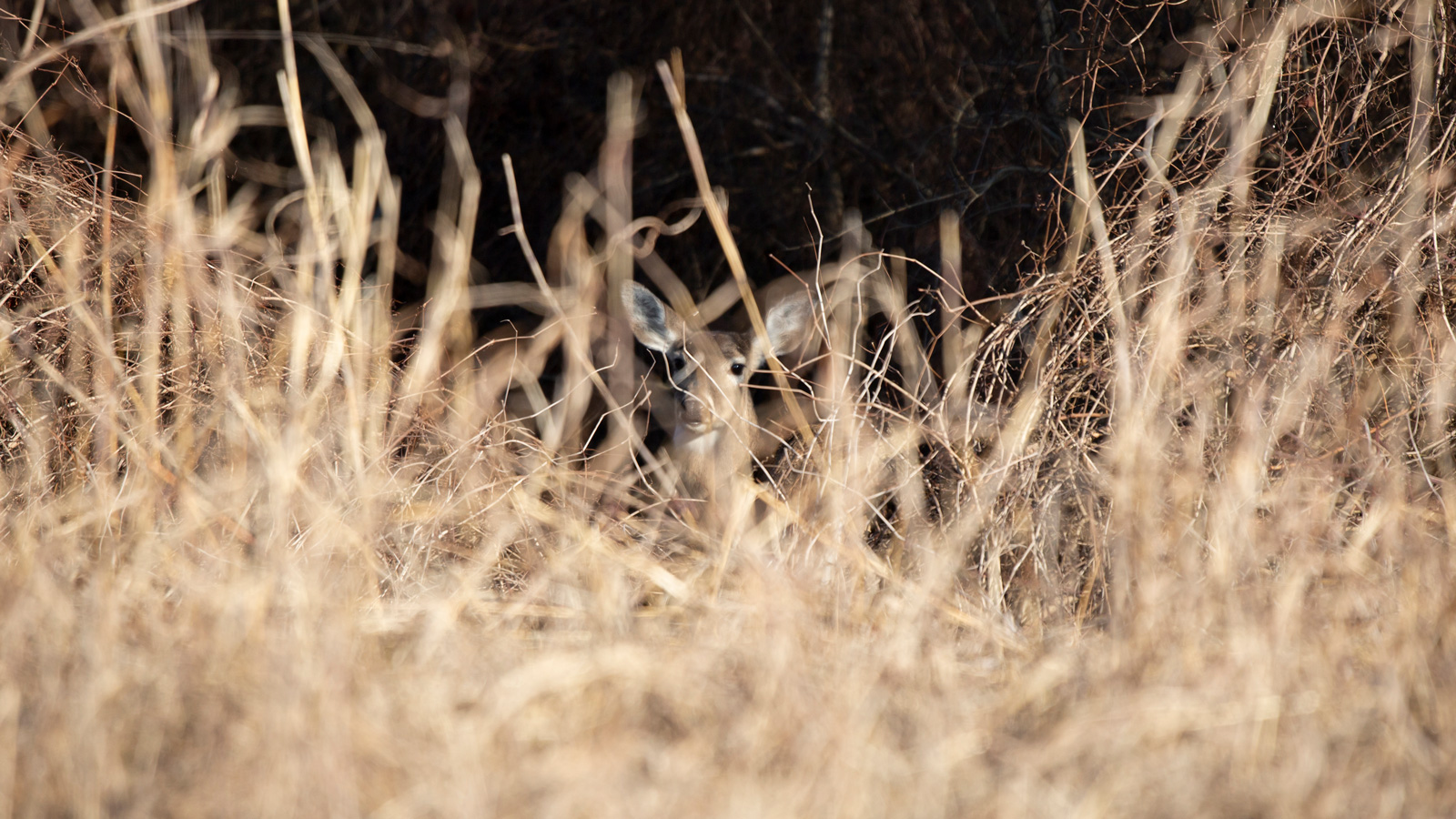
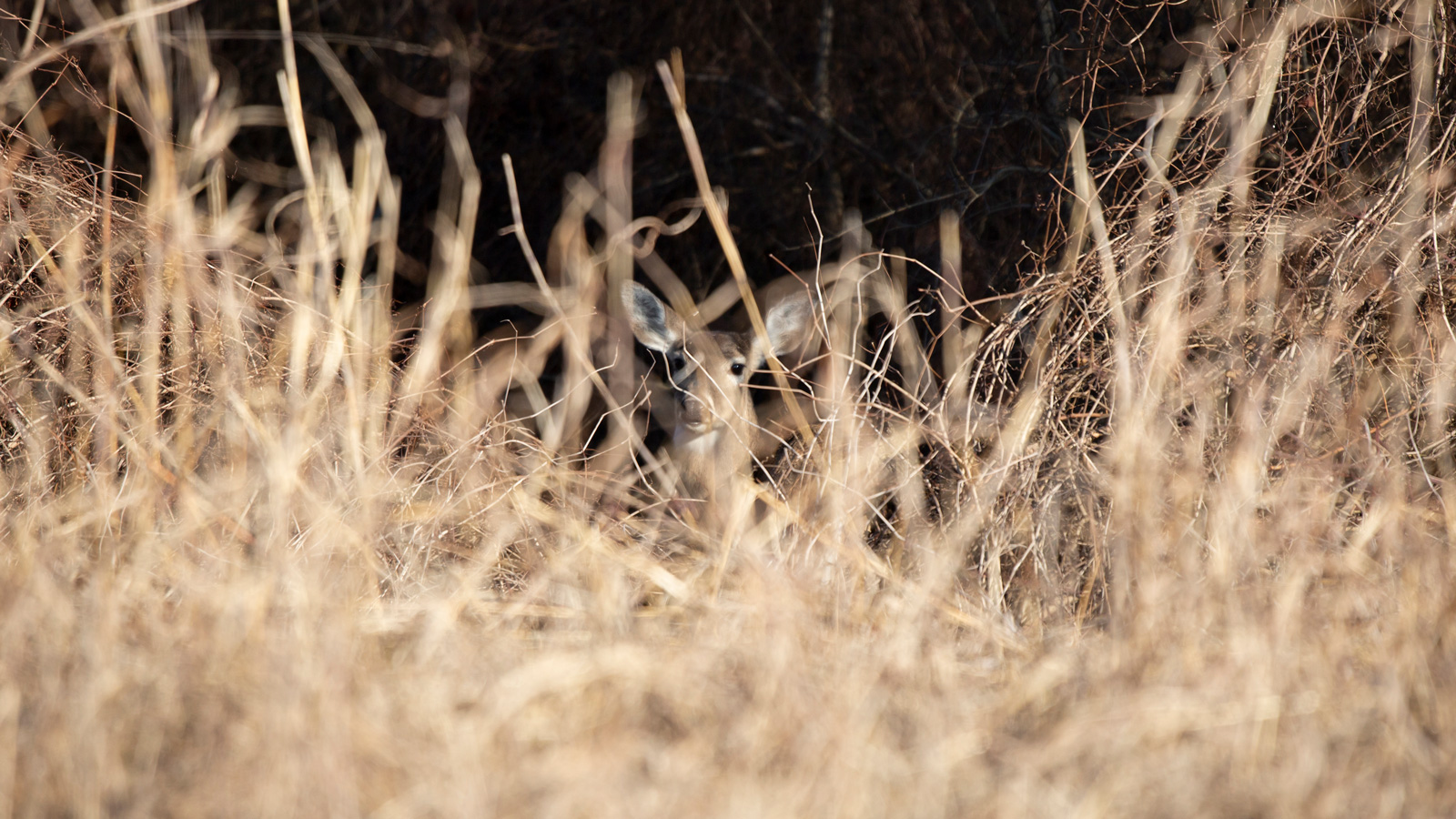
White-tailed deer are medium to large mammals with brown or tan coats in summer that fade to grayish-brown in winter. The throat, belly, and underside of the tail run white. The tail itself runs relatively long and bushy, and when deer raise it in alarm, it flashes white in a signal readable to other deer at considerable distance. That flash gives the species its name and also happens to be the field mark you're least likely to catch unless the deer already runs from you, at which point identification stops being your primary concern.
Males, bucks, grow antlers in spring, harden them in summer, deploy them in fall during the rut, and shed them in winter after breeding ends. Antlers are bone, not horn, and they regrow annually from pedicels on the skull. Among the fastest-growing tissues in the animal kingdom, a buck can grow a full set of antlers in three to four months, adding up to a quarter inch per day during peak growth. The antlers grow covered in velvet, a soft skin rich in blood vessels that supplies nutrients to the developing bone. When the antlers harden in late summer, the velvet dries and the buck rubs it off on trees, leaving shredded bark and bloody velvet that looks like a crime scene but amounts to normal deer maintenance.
The antlers don't serve decorative purposes. They work as weapons, used in combat with other bucks during the rut, and occasionally turned on dogs, people, and objects the buck has decided are problems. Bucks fight by locking antlers and pushing, attempting to force the opponent back or down. The fights rarely turn fatal but can result in broken antlers, broken legs, and exhaustion. Occasionally two bucks get their antlers locked together and cannot separate, in which case both die unless someone finds them and cuts them apart. This requires approaching two large, panicked, armed mammals in the middle of the worst day of their lives. Wildlife agencies receive calls about this every fall.
Does carry no antlers. Does run smaller than bucks, with a more delicate build and without the thick neck bucks develop during the rut. A doe defending a fawn does not bluff and will use her hooves on dogs, coyotes, and humans who made poor decisions about approaching fawns.
Does drop fawns in late spring with white spots on a reddish-brown coat. The spots provide camouflage in dappled forest light and fade by fall as the fawn matures. A fawn sitting alone in the woods didn't get abandoned. The mother parked it there while foraging and will return multiple times throughout the day. Wildlife rehabilitators will tell you the most common unnecessary rescue call they receive involves a fawn that needed nothing but time and a departure from the well-meaning humans who found it.
Advertisement
Nothing Else in North Louisiana Looks Like This
The white-tailed deer fills the only wild ungulate slot in North Louisiana. A large brown mammal with hooves and a tail in the woods? Deer. Wondering whether the large brown animal that just vanished into the brush might be something else? Also deer. Elk don't live in Louisiana. Mule deer don't either. Moose are not in the conversation. The landscape runs deer and feral hogs, and hogs come in shorter, darker, and antler-free.
Size helps with the distinction. Adult does weigh between 90 and 130 pounds and stand around three feet at the shoulder. Mature bucks push 150 to 200 pounds in North Louisiana, occasionally more in areas with quality food and cover. Feral hogs overlap in weight but look entirely different: lower to the ground, wider through the middle, with coarse dark hair and a blunt snout where the deer carries an elegant, pointed face.
Movement tells the rest of the story. Deer move with an almost liquid quality when undisturbed, placing feet carefully and lifting their heads frequently to check surroundings. Startled, they explode into bounding flight with all four feet leaving the ground simultaneously, covering ground in huge arcs that look like nothing else moving through Louisiana woods. Hogs trot and lumber. A deer at full speed in open woods does not leave you guessing.
The only real confusion comes from escaped livestock. Goats, cattle, and horses occasionally turn up reported as "unusual deer" by people unfamiliar with livestock. These reports resolve quickly once someone points out that deer don't have udders, cattle don't have antlers, and horses are substantially larger than any deer in North America.
Why Deer Moved to the Suburbs and Never Left
White-tailed deer figured out that suburban environments offer excellent habitat, and they relocated accordingly. Suburbs deliver abundant food in the form of landscaped yards, gardens, and ornamental plantings. Cover comes built-in: scattered trees, shrubs, and fenced yards that humans rarely enter. Safety follows because most suburbs prohibit discharge of firearms. Predation pressure drops because coyotes and bobcats stay scarce in suburban areas and face active removal when they do appear.
The result: suburban deer populations run larger, healthier, and more visible than deer in many natural habitats. A suburban doe with access to quality food and fewer predators raises more fawns that survive at higher rates, and the population grows until it saturates available space. This plays out across North Louisiana towns where deer appear daily in residential areas and homeowners complain about landscaping damage while simultaneously photographing the offending deer and posting them online. The relationship gets complicated.
Suburban deer also shed wariness of humans faster than forest deer. A suburban doe that encounters people daily, walking dogs, mowing lawns, checking mail, figures out that most human activity poses no threat. She stops fleeing at the sight of people and starts reading each specific situation for actual danger. A person walking past on the sidewalk doesn't register. A person moving toward her fawn does. The threat assessment sharpens and becomes context-dependent, which makes suburban deer less flighty and more willing to stand their ground.
This creates conflicts. A suburban buck during the rut runs no less aggressive than a forest buck, but he operates in an environment full of people, pets, and property. His aggression toward rival bucks or perceived threats can produce confrontations with humans who were not expecting to be challenged by a deer in their own yard. Suburban does defending fawns charge dogs and people with the same intensity as forest does, but these incidents happen in backyards, parks, and walking trails where people arrive completely unprepared.
Managing suburban deer populations is difficult because the tools that work in natural habitats, hunting, habitat modification, and predator presence, aren't available in suburbs. Most suburbs prohibit hunting. Habitat can't be meaningfully modified without eliminating the landscaping humans want. Natural predators are absent or actively removed when they do show up. The deer population climbs, complaints multiply, and the available responses are limited and none of them are popular. This plays out across North America and North Louisiana sits squarely in the pattern.
Advertisement
What a Deer Eats in Your Yard
White-tailed deer eat leaves, twigs, fruits, nuts, fungi, grass, and basically any plant matter within reach. In North Louisiana, they find abundant food year-round, which explains why the population stays large and why deer stay visible constantly. They are not starving. They are not struggling. They eat well, raise fawns successfully, and push into every available patch of habitat including suburban yards, golf courses, and city parks.
The diet shifts by season. In spring and summer, deer eat green vegetation: new leaves, grasses, forbs, agricultural crops where available. In fall, they shift to hard mast, acorns and nuts from oaks, hickories, and pecans, which deliver the high-calorie nutrition needed to build fat reserves for winter. In winter, they eat woody browse, twigs, buds, and evergreen vegetation, and keep pulling acorns wherever they find them.
Deer also hit ornamental plants enthusiastically, which explains why suburban deer stay such a persistent problem. A deer that locates your hostas, azaleas, or vegetable garden will return nightly until the food source disappears or someone builds an adequate fence. The deer isn't being malicious. The deer found a reliable food source and keeps coming back. You planted a buffet in established deer territory, and wasting a buffet goes against the whole point of having one.
Deer carry home ranges of several hundred acres depending on habitat quality and population density. They move through these ranges on established trails, visiting feeding areas, water sources, and bedding sites on predictable schedules. A yard sitting on a deer trail between bedding and feeding areas will see regular deer traffic whether the homeowner wants it or not. That trail predates the house and will continue seeing use until something shifts the cost-benefit calculation: a fence, a dog, or repeated negative encounters that make the route more trouble than the food at the end of it.
The Rut: When Buck Judgment Fails Completely
The breeding season, the rut, peaks in fall, October through December in Louisiana. Bucks grow increasingly aggressive and decreasingly rational as testosterone rises. They fight other bucks, thrash vegetation, scrape the ground, rub their antlers on trees to deposit scent marks, and chase does with single-minded determination that overrides normal caution about roads, humans, and other hazards.
This explains most buck-vehicle collisions. A buck chasing a doe will cross a road without looking, without slowing, and without any concern for the two-ton object approaching at sixty miles per hour. The doe may cross safely. The buck may not. Every November, Louisiana highways collect evidence of deer that made poor decisions while hormonally compromised.
Does breed during the rut and give birth approximately 200 days later, in late spring and early summer. Peak fawning in North Louisiana falls in May and June. Young does in their first breeding season usually drop a single fawn. Mature does in good condition run twins regularly and occasionally triplets.
The doe isolates before giving birth, finds a secluded spot with good cover, and gives birth alone. Fawns arrive with their eyes open and stand within hours. The mother parks them hidden in vegetation while foraging, returning several times a day to nurse. This continues for several weeks until the fawns grow strong enough to follow her. By fall the fawns are weaned and traveling with the mother, staying with her through their first winter.
Advertisement
What Deer Sound Like
Most of the time, nothing. Deer are not vocal animals. They communicate primarily through body language, scent marking, and visual signals like the raised white tail. But they do vocalize for specific situations.
The alarm snort comes first and loudest: a sharp, percussive blast of forced air that sounds like someone emptying their lungs through their nose at high speed, because that's exactly what the deer does. The snort alerts the herd to danger and usually triggers immediate flight. Standing in the woods and hearing a loud snort followed by multiple deer crashing away through the underbrush means you've been detected and the deer are done with the area.
Bucks grunt during the rut: a low, guttural sound used to communicate with does and signal presence to other bucks. The grunt doesn't carry far but moves through a quiet woods clearly enough. It tells anything in range that a buck is present, active, and looking for company or a fight, depending on what answers.
Does bleat to communicate with their fawns. The bleat is a soft, nasal call that fawns respond to when the mother returns from foraging. Fawns bleat when distressed, which brings the mother back at a run. Hunters use this call deliberately during certain seasons. Anyone else generating that sound in deer country during fawning season should expect the mother's full attention, delivered at speed.
What Actually Hunts Deer in North Louisiana
The main predators of white-tailed deer are humans, black bears, mountain lions, coyotes, and bobcats. In North Louisiana, the effective list gets shorter. Black bears exist in the region but don't run numerous. Mountain lions haven't established here. That leaves humans, coyotes, and bobcats.
Coyotes pull fawns reliably and occasionally pull adults that are injured, sick, or otherwise vulnerable. Bobcats also take fawns when they can catch them. But neither exerts meaningful predation pressure on healthy adult deer in North Louisiana. Human hunting, vehicle collisions, and disease do most of the population management, and not particularly well, which explains why deer stay abundant and visible throughout the region.
Hunters harvest over 200,000 white-tailed deer annually in Louisiana, generating significant economic activity. Deer hunting supports over 10,000 jobs statewide. Even at that harvest level, the deer population stays stable or grows in most areas. The reproductive rate runs high enough that annual fawn recruitment replaces harvest losses and then some.
Vehicles kill thousands of deer annually in Louisiana. Insurance claim data shows deer-vehicle collisions are common, expensive, and increasing as deer populations expand into suburban and urban areas with dense vehicle traffic.
Why Deer and Cars Keep Finding Each Other
Deer do not run into cars. Cars run into deer. Insurance companies will explain this distinction to you at length. But from a practical standpoint, the deer makes unpredictable decisions at the worst possible time.
Deer move most actively at dawn and dusk, also the low-light conditions when visibility drops and deer are difficult to see until close. They travel established trails that cross roads at specific locations. A road bisecting a deer home range gets crossed regularly at the same points regardless of traffic, because deer don't factor vehicle movement into route planning.
The freeze response creates the core problem. A deer detecting a fast-moving threat locks up and evaluates. Against predators that close distance at deer speeds, this works well. Against predators traveling at sixty miles per hour and already at point-blank range, the math falls apart. By the time evaluation finishes and flight begins, the car arrives. The freeze response evolved for wolves, and wolves don't drive on Louisiana highways.
Drivers on North Louisiana roads at dawn or dusk benefit from slowing down and watching field edges and forest borders carefully. One deer crossing a road almost certainly means more deer behind it. High beams help on rural roads without oncoming traffic. Deer crossing signs mark locations where collisions already happened frequently, not where they might theoretically happen someday.
A deer standing in a road ahead represents a situation where braking outperforms swerving. Swerving converts a single-animal incident into a potential multi-vehicle accident. Braking firmly while holding the lane gives the best odds regardless of what the deer decides. These are the numbers.
Advertisement
Where to Find White-Tailed Deer in North Louisiana
Everywhere.
White-tailed deer live in forests, at forest edges, in agricultural areas, in suburban neighborhoods, in city parks, on golf courses, and in any backyard carrying grass, shrubs, or anything else a deer might consider edible. The habitat generalist lifestyle deer developed over centuries works in almost any landscape North Louisiana offers, which covers a lot of landscape.
Black Bayou Lake NWR near Monroe carries abundant deer populations with accessible viewing areas. Bodcau WMA in Bossier and Red River parishes puts deer through the bottomlands and pine-hardwood mix throughout its range. Tensas River NWR in Madison Parish runs deer through its bottomland hardwood forests. D'Arbonne NWR carries them. Catahoula NWR carries them. Every wildlife management area, national wildlife refuge, state park, and unprotected forest tract in North Louisiana supports deer year-round, because white-tailed deer thrive wherever cover, food, and water exist, and that description fits most of North Louisiana.
Urban deer often outsize and outweigh many forest deer because urban habitat frequently beats forest habitat by a deer's measure. Abundant food, lower predation, no hunting season. The math consistently favors the suburban deer.
Peak deer movement runs at dawn, from first light until about two hours after sunrise, with a second push from late afternoon through dusk. Midday, deer bed down in cover to rest and digest. Watching field edges and forest borders at dawn or dusk delivers reliable sightings in any season. Or drive any North Louisiana road at twilight. Deer will appear. They are very good at finding drivers who weren't looking for them and materializing at the most inconvenient possible moment. Not malice. Just deer doing deer things: herbivorous, numerous, crepuscular, and running predator software written long before the internal combustion engine and badly in need of an update.
Accessibility
White-tailed deer announce themselves with sound more reliably than most large mammals in North Louisiana, and the sounds they make are distinctive enough to read even through ambient noise.
The alarm snort carries the farthest and hits the hardest: a loud, percussive blast of forced air that cuts through background sound at considerable distance. Once heard, it reads immediately as a large animal issuing a warning. What follows tells the rest of the story. Multiple heavy animals crashing through dry underbrush at speed means the deer detected a threat and are moving away from it. The sound of hooves under leaf litter carries differently than squirrel or bird activity: sustained, directional, and large-bodied.
In fall and winter, dry leaves amplify deer movement dramatically. A 150-pound animal moving through leaf litter in a hardwood bottom does not move quietly, and the direction of travel stays readable for a surprising distance. Bucks thrashing vegetation during the rut, rubbing antlers on saplings and small trees to deposit scent and shred bark, produce a distinctive woody crashing sound that carries well through still air. The sound starts as rhythmic impact against wood and breaks into tearing as the bark gives way. Nothing else in North Louisiana woods generates that particular sequence.
During the rut, bucks also grunt at ground level: a low, short, repeated sound that doesn't carry far but reads clearly at close range as mammal communication rather than environmental noise. Does and fawns exchange softer, higher bleats within the immediate area.
The dawn and dusk activity peaks that make deer so visible to sighted observers also make them more audible. More deer moving means more opportunity to pick up movement noise, snorts, and calls in open air. A quiet morning in a North Louisiana bottomland forest in fall or winter delivers deer sounds reliably.
For visitors using wheelchairs or with limited mobility, vehicle-based observation works well and often outperforms foot approaches. Deer habituate to slow-moving vehicles and allow closer approach than they permit on foot. Paved pull-offs along forest roads and WMA access roads give observation positions without walking. Black Bayou Lake NWR near Monroe offers paved paths and accessible facilities near deer habitat.
Advertisement
More Information
Louisiana Department of Wildlife and Fisheries — White-tailed Deer Management: https://www.wlf.louisiana.gov/page/white-tailed-deer
Louisiana Hunting Regulations (current season dates, zones, and bag limits): https://www.wlf.louisiana.gov/page/hunting-regulations
Black Bayou Lake National Wildlife Refuge: https://www.fws.gov/refuge/black-bayou-lake
Bodcau Wildlife Management Area: https://www.wlf.louisiana.gov/page/bodcau-wma
Tensas River National Wildlife Refuge: https://www.fws.gov/refuge/tensas-river
Frequently Asked Questions
Are white-tailed deer dangerous? Under most circumstances, no. A healthy deer that detects a person will leave. But does defending fawns will charge and strike with their hooves, bucks during the rut can become aggressive toward people and pets, and any deer feeling cornered may kick or strike. Getting between a doe and her fawn or approaching a buck during the rut qualifies as the kind of decision that ends with explaining things to a wildlife officer.
Should I feed deer? Feeding deer habituates them to human presence, concentrates them in areas where vegetation damage accelerates, creates disease transmission risks, and generates deer that lose appropriate wariness of humans. Once deer start expecting food at a specific location, they defend that expectation. The practice also pulls deer toward road-adjacent areas, which increases vehicle collision risk. The outcomes for the deer and the neighborhood are not good.
Why do deer freeze in headlights? The freeze-and-assess response evolved for predators that close distance at deer speeds. Against predators traveling at sixty miles per hour, the math falls apart completely. The deer runs a program built for a different threat environment, and that program hasn't been updated. The update is overdue.
What do I do if I hit a deer? Pulling over safely and turning on hazard lights cover the first steps. Calling local police or the sheriff's department documents the incident for insurance purposes and alerts other drivers to a potential carcass or injured animal in the road. An injured deer is dangerous and unpredictable, a situation best handled by animal control or law enforcement.
Can I keep a deer I find dead on the road? Louisiana law governs roadkill possession. LDWF carries current regulations on this, and checking before keeping any roadkill deer avoids a conversation nobody wants to have.
When is deer season in Louisiana? Season dates vary by zone, weapon type, and the sex of the deer. The current LDWF Hunting Regulations cover specific dates and bag limits.
Photo Gallery




Advertisement
Advertisement
Frequently Asked Questions
Are white-tailed deer dangerous?
Under most circumstances, no. A healthy deer that detects a person will leave. But does defending fawns will charge and strike with their hooves, bucks during the rut can become aggressive toward people and pets, and any deer feeling cornered may kick or strike. Getting between a doe and her fawn or approaching a buck during the rut qualifies as the kind of decision that ends with explaining things to a wildlife officer.
Should I feed deer?
Feeding deer habituates them to human presence, concentrates them in areas where vegetation damage accelerates, creates disease transmission risks, and generates deer that lose appropriate wariness of humans. Once deer start expecting food at a specific location, they defend that expectation. The practice also pulls deer toward road-adjacent areas, which increases vehicle collision risk. The outcomes for the deer and the neighborhood are not good.
Why do deer freeze in headlights?
The freeze-and-assess response evolved for predators that close distance at deer speeds. Against predators traveling at sixty miles per hour, the math falls apart completely. The deer runs a program built for a different threat environment, and that program hasn't been updated. The update is overdue.
What do I do if I hit a deer?
Pulling over safely and turning on hazard lights cover the first steps. Calling local police or the sheriff's department documents the incident for insurance purposes and alerts other drivers to a potential carcass or injured animal in the road. An injured deer is dangerous and unpredictable, a situation best handled by animal control or law enforcement.
Can I keep a deer I find dead on the road?
Louisiana law governs roadkill possession. LDWF carries current regulations on this, and checking before keeping any roadkill deer avoids a conversation nobody wants to have.
When is deer season in Louisiana?
Season dates vary by zone, weapon type, and the sex of the deer. The current LDWF Hunting Regulations cover specific dates and bag limits.